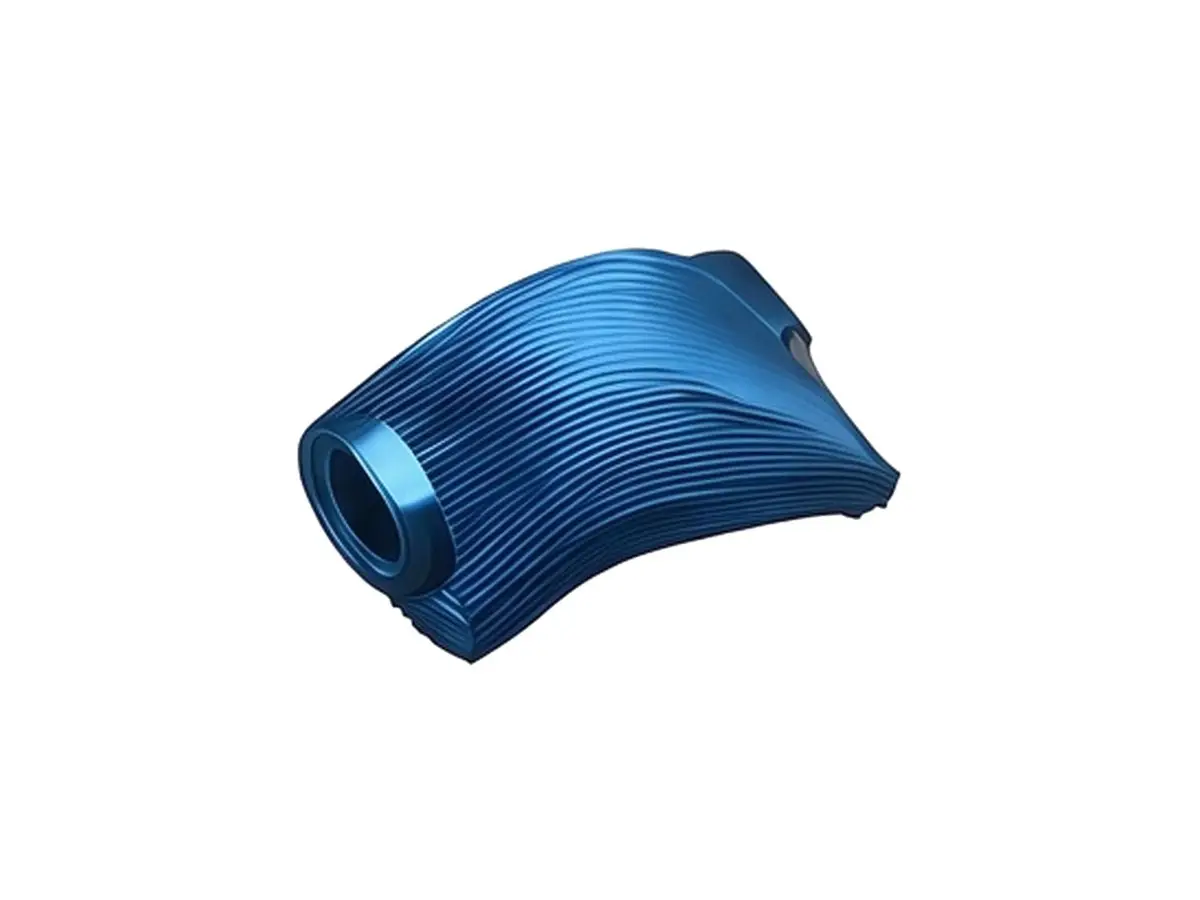


CNC Machined Aluminum Robot Joint Actuator Component
Custom CNC machined aluminium actuator components for robot joints, machined with concentric threads, a sealing face and wrench flats so the part screws in without binding and seals without a gasket gap.
- Concentric external and internal threads
- Material: 6061-T6 / 7075-T6 Aluminum
- Process: CNC Turning and Milling, 4-Axis
- Typical Tolerance: ±0.01–±0.03 mm
*Send the thread specification, mating part and torque requirement to confirm the design.
Robot Joint Actuator Component Overview
An actuator component in a robot joint sits between the drive and the joint housing. It usually carries an external thread into the housing, an internal thread or bore for the next element, and a face where the seal or bearing seats, so several features have to stay coaxial.
These parts are turned and milled from aluminium bar, with the thread and the sealing face produced in the same setup where possible. Milling is then used for hex flats, wrench features, cable passages or mounting lugs.
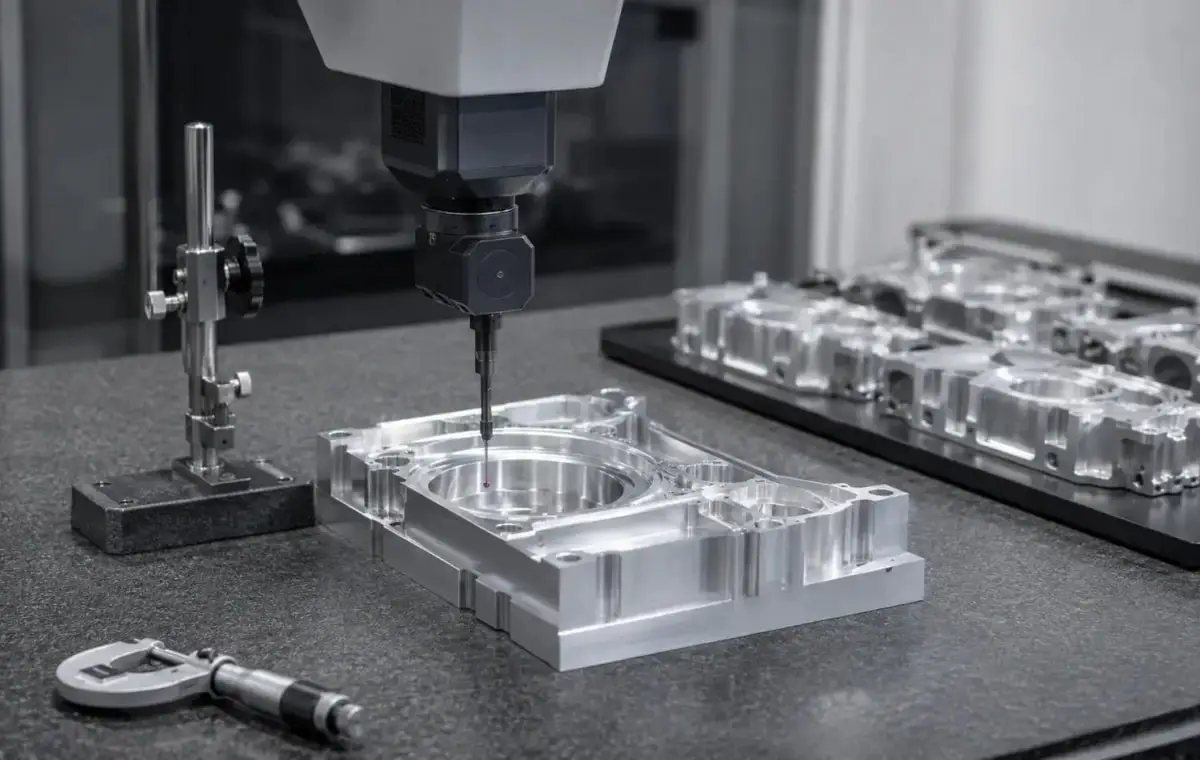
The critical controls are thread concentricity to the sealing face, thread depth and effective length, perpendicularity of the shoulder, and the surface finish under the seal. Threads are checked with gauges rather than by eye, and the sealing face is checked for flatness and Ra.
SINORISE machines actuator components in 6061 and 7075, including left-hand threads, fine pitches, relief grooves and matched male and female pairs produced together to guarantee fit.
6061 Aluminum
6061-T6 is used for most actuator bodies and adapters because it threads cleanly, keeps a good sealing surface, and anodises uniformly on both the thread flanks and the shoulder.
7075 Aluminum
7075-T6 is chosen where the thread carries higher preload or the wall between thread and bore is thin. It holds a sharper thread crest and higher strength, with hard anodising used where the thread is repeatedly assembled.
Thread class, coating allowance and torque should be reviewed together, because anodising changes the pitch diameter.
Robot Actuator Component Specifications
Machining data for threaded actuator components, agreed to the mating part and sealing requirement.
| Specification | Machining Data | Specification | Machining Data |
|---|---|---|---|
| Product | Robot Joint Actuator Component | Thread Machining | Thread Milling, Single-Point Threading, Tapping |
| Material | 6061-T6 / 7075-T6 Aluminum | Thread Types | Metric Fine, UNF, Left-Hand, Custom Pitch |
| Machining Process | CNC Turning, CNC Milling, 4-Axis Machining | Surface Finish | Hard Anodizing, Anodizing, Bead Blasting, As Machined |
| Typical Tolerance | ±0.01–±0.03 mm | Inspection | Thread Gauges, CMM, Roundness Tester, Surface Roughness Tester |
| Concentricity | 0.02 mm between thread and seal face | Production | Prototype, Small Batch, Medium Batch |
| Machined Features | External Thread, Internal Thread, Seal Face, Hex Flats, Relief Groove | Drawing Format | STEP, STP, IGES, DWG, DXF, PDF |
| Seal Face Roughness | Ra 0.8–1.6 μm | Lead Time | 5–10 Days (Prototype), 10–18 Days (Batch) |
| Customization | Thread Size, Length, Flats, Coating, Laser Marking | Packing | Thread Protection Caps, Individually Wrapped |
Key Features of Our Robot Actuator Components
A threaded joint part fails at the interface, so every feature is machined relative to the thread rather than to the outside diameter.
Thread and Seal Face Coaxial
The sealing face is machined in the same setup as the thread, so the seal sits square to the axis and does not leak or run out when the joint rotates.
Gauge-Checked Threads
Threads are cut to the specified class and verified with go and no-go gauges, including pitch diameter after coating, so the part screws in by hand before final torque.
Shoulder Perpendicularity
The shoulder that seats against the housing is faced square to the thread axis, which keeps the joint length repeatable when parts are swapped.
Wrench Flats Without Distortion
Hex or wrench flats are milled after threading with light cuts, so the thin wall under the flats is not crushed and the thread stays round.
Need a Threaded Actuator Part for a Robot Joint?
Surface Finishes for Robot Actuator Components
Coatings on threaded parts need to be specified with the thread class in mind, not only for corrosion.
| Finish | Main Purpose | Finish | Main Purpose |
|---|---|---|---|
| Anodizing | Corrosion protection and colour coding for part identification | Powder Coating | Protective coating for non-critical covers and guards |
| Bead Blasting | Uniform matte texture before anodizing | Passivation | Removes machining residue before assembly |
| Hard Anodizing | Wear resistance on locating and clamping faces | As Machined | Natural machined surface where no coating is needed |
*Hard anodizing on threads changes the pitch diameter; where the fit is critical, threads are masked or cut undersize before coating.
Put your CNC milling parts into production today
All information and uploads are secure and confidential.
Trusted for Precision CNC Machined Components
Supporting OEM projects with accurate machining, flexible production, and reliable component quality.
Trusted for Precision CNC Milling.
CNC Machining Process for Robot Actuator Components
Threaded joint parts are machined so the thread, shoulder and seal face share one axis.
01. Drawing and Thread Review
Confirm thread specification, class, mating material, seal type and torque before programming.
02. Bar Cutting and Facing
Cut aluminium bar and face both ends to establish the length and the first reference face.
03. Turning Thread and Seal Face
Turn the outside diameter, cut the thread and machine the seal face in the same clamping to keep them coaxial.
04. Milling Flats and Features
Mill hex flats, wrench features and any cable passages with light finishing cuts to avoid distorting the threaded wall.
05. Gauge Inspection and Coating
Check threads with gauges, verify concentricity and seal face roughness, then coat with thread protection in place.
Have a thread and seal interface to match? Send the mating part drawing and torque requirement for a machining review.
Robot Actuator Component CNC Machining FAQs
Yes. Both parts are machined in the same batch from the same thread specification, and the pair is trial-assembled before shipping so the fit is confirmed rather than assumed.
The thread and the seal face are machined in one clamping where the geometry allows, and concentricity is checked on a CMM or with a mandrel between centres. A typical value is 0.02 mm.
Anodising protects the thread but changes the pitch diameter, which can make a close fit tight. Threads are usually masked, or cut to allow for coating thickness, and the choice is agreed before production.
Metric fine and coarse, UNF and UNC, left-hand threads and custom pitches are all machined, with class 6g/6H as standard and tighter classes available on request.
Threads are fitted with plastic caps or protective sleeves and the parts are individually wrapped, so the first assembly is not affected by transit damage.
Prototypes are usually 5–10 days after drawing approval, and batches 10–18 days depending on thread gauging and coating requirements.
Other CNC Machined Mechanical Components
Explore additional precision CNC machined components manufactured for OEM applications and customized production needs.
Custom five-axis CNC milled aluminum impellers for centrifugal fans, blowers and vacuum pumps.
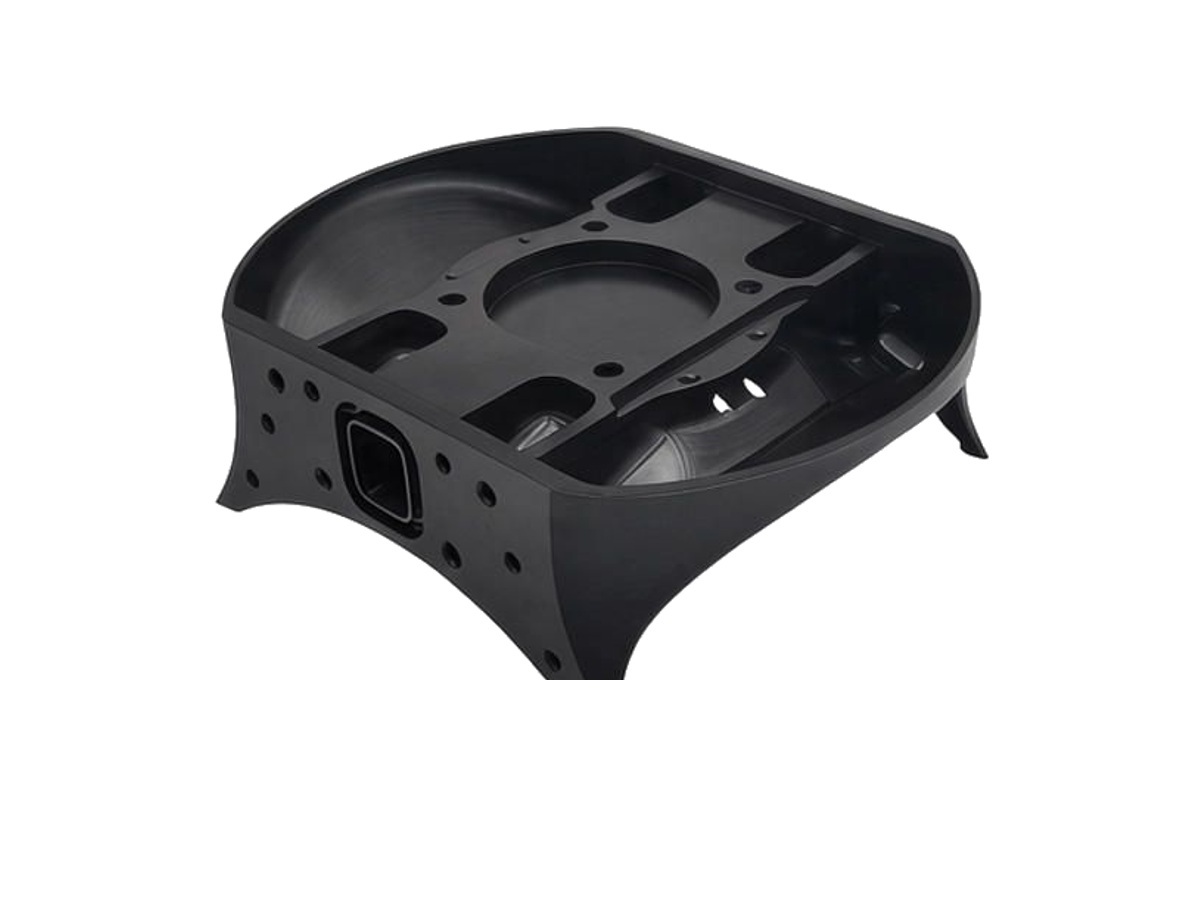
Custom CNC machined aluminium housings for automation and electronic equipment.
Custom CNC machined hardened steel sleeves for robotic joints and motion assemblies.
Custom CNC machined aluminum hollow sleeve connectors for robot arm segments and linear modules.
Custom CNC machined aluminium cavity bases for automation and electronic equipment.
Get high‑quality machined parts in as fast as 4 days with our expanded automated CNC milling!