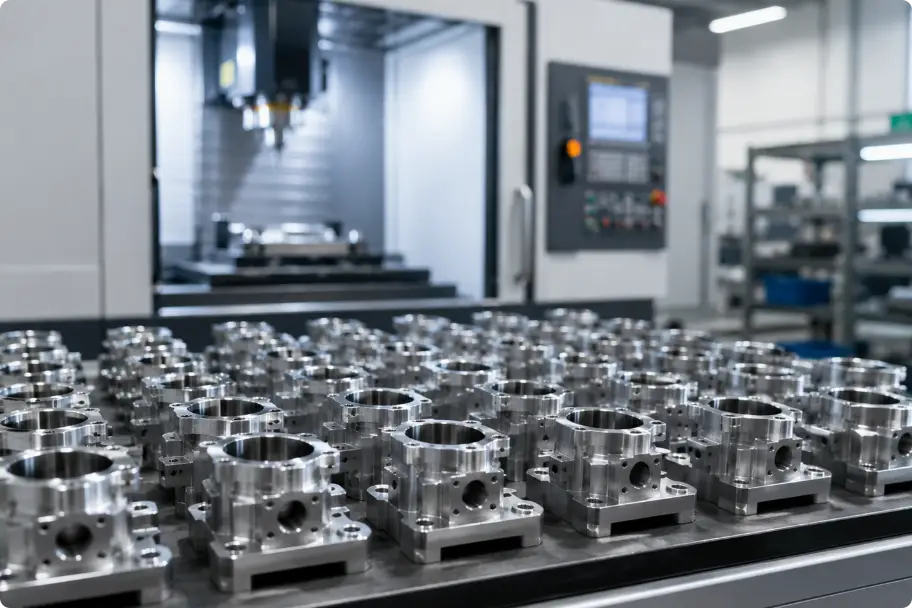
Global Multi-Process High-End CNC
Precision Machining Parts Manufacturer
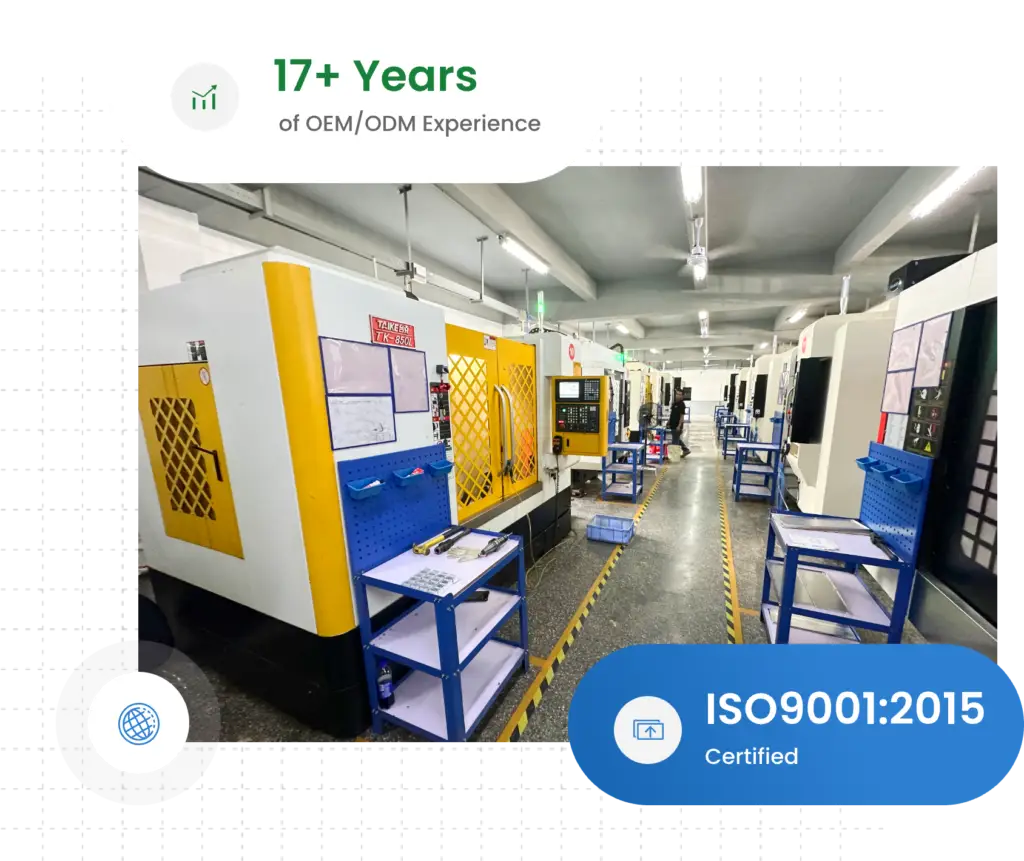
- 17+ Years of OEM/ODM Experience
- Fully Customized Service
- Flexible Small & Medium-Batch Production
- 98% On-Time Delivery
Our CNC Prototyping & Manufacturing Capabilities
At Sinorise Precision Manufacturing, we support your projects from prototype to full-scale production with instant quoting and global delivery.
Our Advantages of CNC Machining
Sinorise Provides Strong Support for Your Custom Parts Production
±0.005mm extreme precision · 35+ surface finishes · 80+ metals & plastics available
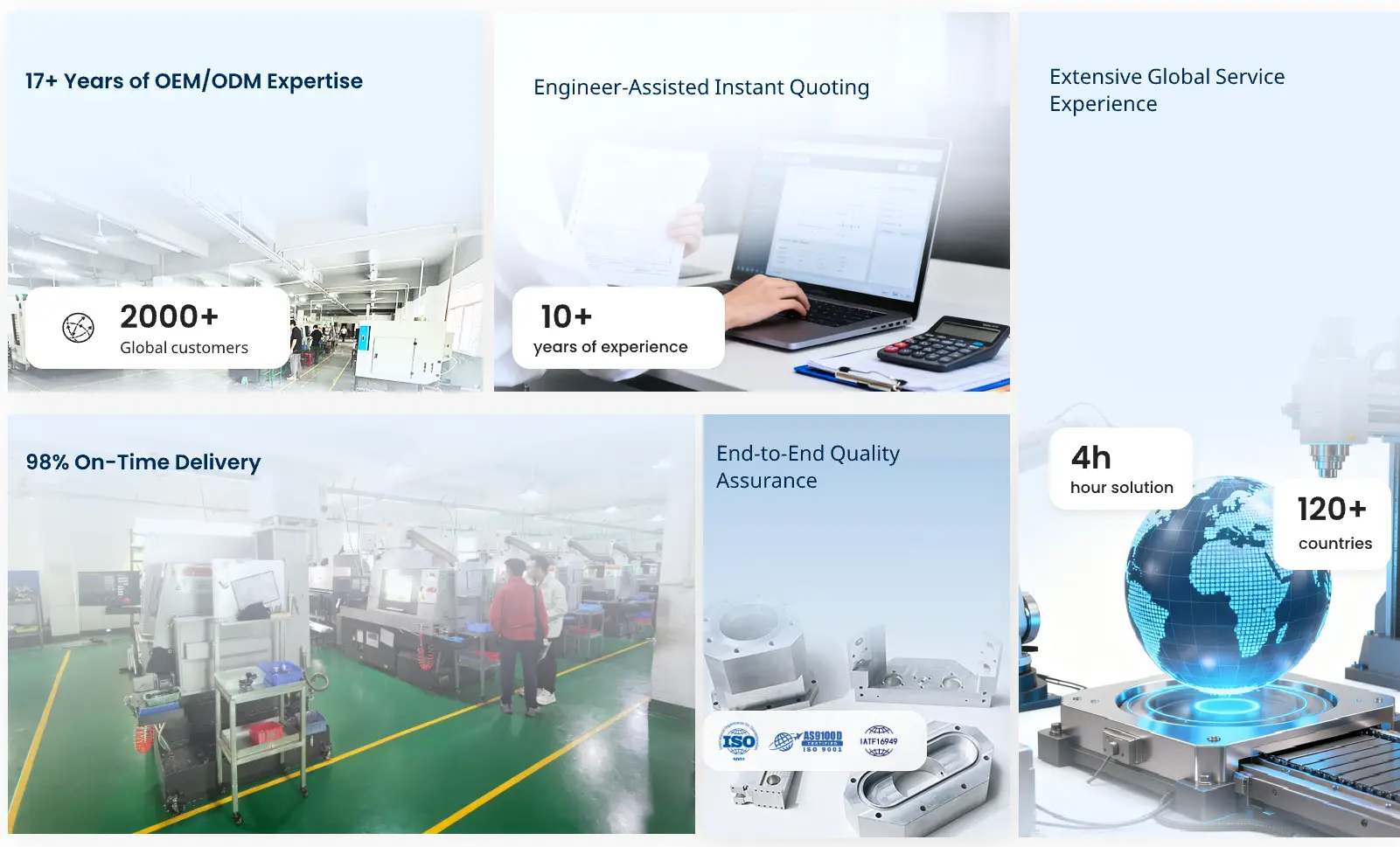
17+ Years of OEM/ODM Expertise
With over 100,000 parts manufactured, we serve 20,000+ global customers across 100+ industries.We fully understand industry-specific standards and pain points, offering fully customized material and process solutions to match your exact manufacturing needs.
Upload your drawings → Engineer review → Quotation within 4 hours(8–12 hours for highly complex projects)Our engineers average 10+ years of experience, enabling them to quickly break down complex geometries, optimize cost and efficiency, and avoid inaccurate automated estimates.Human-reviewed quotes = higher accuracy.
Powered by a global network of 700+ manufacturing centers, we provide multi-process, multi-capacity coordination.From one-piece custom orders to full-scale production, our flexible small–medium batch delivery ensures your production schedule stays on track.Full-process visual tracking keeps every step transparent.
Strict control from raw material to final inspection.
100% outbound inspection with complete Inspection Reports provided.Certified with ISO9001 / AS9100 / IATF16949 / FDA, delivering a 99% yield rate and moving toward zero-defect manufacturing.
Successfully serving customers in 120+ countries with worldwide shipping and door-to-door delivery.After-sales support responds within 2 hours with diagnostic feedback, followed by a solution within 4 hours, ensuring worry-free cooperation from start to finish.
High-End Precision Custom CNC Parts for All Industries
From prototyping to full-scale production, we have delivered precision manufacturing solutions to 20,000+ clients across 120+ countries.
How to Quickly Get CNC Machining Prototyping?
Fast, simple, and efficient—your one-stop solution from drawing to finished product.
01
Submit Your Drawings
02
Engineer Review
03
Accurate Quotation
04
Sample Production
05
Mass Production
06
Packaging & Delivery
Upload in 1 minute · Get a quote in 30 minutes
Engineer follow-up throughout the process for maximum pricing accuracy
Upload 3D Drawings
Manufacturing Process
Surface Finish
Sinorise — Your Reliable Long-Term Manufacturing Partner
Global Leader in Multi-Process High-End CNC Precision Manufacturing
Trusted by Customers Worldwide
Real feedback from around the globe — the preferred choice of 20,000+ clients.
Custom steel CNC parts were executed on time, and perfectly to the specs. Very friendly and professional communications. All in all -- excellent transaction, will do business again.
From Switzerland
I received my package safely.No problem at all! The quality is excellent. Very satisfied!
From United States
Hi Erry, I’m fine and i hope you are doing well too. Yes we have received the parts, Everything looks good. I really appreciate the packaging. you are doing a great job. Have a great day.
From United States
I have been treated with much respect and all product samples that I have received have been perfect parts. They spend the time to understand what I am needing and they take care of everything just as if it were done in my own factory. Thank you all so much!!
From United States
Latest Resources
Access free technical resources and connect with us through multiple channels — quickly and easily.
What to Confirm When You Order CNC Machined Parts from Chinese Factories
Verify Supplier Credibility Before Ordering Assess OEM/ODM Experience & Industry Track Record When looking at potential manufacturing partners, focus first on those who have actual OEM or ODM work history in our field. For aerospace components, we need to see evidence they handle tight tolerances properly. Medical device makers should be able to show they really understand working with materials that won’t harm patients. Ask for real examples of their past work on complex parts similar to what we need. Factories that’ve been doing specialized machining for at least five years tend to make fewer mistakes during production runs according to recent research (Precision Manufacturing Journal, 2024). Don’t just take their word for it either. Visit facilities if possible or ask them to prove they have multi-axis CNC machines and EDM systems which are basically required when making parts with complicated shapes. And when checking references, don’t stop at what they tell us. Look up what others say about them on sites like Alibaba and various manufacturing forums. Better yet, get actual contact info from previous clients who worked on similar projects so we can talk directly to people who’ve actually used their services before. Confirm ISO 9001, IATF 16949 & Export Compliance Docs Manufacturers should ensure they have valid ISO 9001:2015 certification for their quality management systems, plus IATF 16949:2016 specifically when dealing with automotive parts production. These industry standards basically force companies to implement strict process controls that help prevent defects from happening in the first place. Factories that meet these requirements typically keep their part rejection rates under 0.2%, according to recent data from Quality Standards Digest (2023). When shipping goods internationally, it’s absolutely critical to check all necessary paperwork upfront. Make sure those export licenses are in order, confirm proper CE markings, and don’t forget about those dual-use declarations either. The stats show that missing documents cause around 23% of all customs holdups. Always double-check certifications using the actual International Accreditation Forum (IAF) database instead of relying on printed copies alone. Companies need to ensure their material traceability systems aren’t just theoretical but actually work within everyday operations. Failure to comply can lead to massive fines sometimes over half a million dollars per violation not to mention serious disruptions across entire supply chains that take months to fix. Specify Materials & Technical Requirements Accurately Match Material Grades to Functional Demands Getting the material specs right matters a lot when placing orders for CNC machined components. Using the wrong materials can cause parts to fail early on. Take aluminum 6061-T6 for instance it works great for making those lightweight brackets used in aircraft but won’t last long in salty sea air. That’s where 316 stainless steel shines in marine conditions. When specifying parts, make sure to note down the exact material grades needed, along with surface finish requirements like Ra values below 0.8 microns. Don’t forget about certifications either ASTM and AMS standards are commonly required across many industries. These details might seem small but they really impact how well the final product performs over time. Mechanical loads: 4140 alloy steel delivers superior strength for high-stress gears versus standard 304 stainless. Environmental exposure: Saltwater applications demand corrosion-resistant alloys like titanium or super duplex stainless steel. Thermal limits: Copper C110 offers high thermal conductivity ideal for heat sink or thermal management components. Regulatory compliance: FDA-approved materials—including 303 stainless—are mandatory for food processing equipment. Integrate Design for Manufacturability (DFM) early: simplifying geometries for your chosen material can cut machining costs by 15–30% (Journal of Materials Processing, 2023). Always cross-validate mill test reports and material certifications against your technical drawings before production begins. Validate Precision Capabilities & Quality Control Confirm Multi-Axis CNC, EDM, ±0.005 mm Tolerance Capacity When ordering CNC machined components, checking what level of precision a manufacturer can actually deliver should be at the top of everyone’s checklist. These days, complicated parts often need multi axis CNC machines, preferably 5 axis or better, so they can handle all those tricky details without messing up during repositioning. EDM machining becomes really important too when working with hard materials that need tiny curves or microscopic features carved into them. The real deal breaker though? Making sure they can stick to around plus or minus 0.005 millimeters in tolerance. That’s roughly half the thickness of a single strand of hair. According to some recent industry reports from the Bureau of Industry Standards back in 2023, almost one third of all precision problems come down to mismatched tolerances. Always ask for proof like calibration documents and actual samples showing how well they measure things like bore concentricity and surface flatness. Top notch shops manage these standards because they invest in solid machine bases, keep their workshops at controlled temperatures, and install special mounts to absorb vibrations that might otherwise ruin delicate work. Require CMM Reports, In-Process Logs, Lot-Level Traceability Good quality documentation serves as the main defense line against product defects. When dealing with critical dimensions, manufacturers should require complete CMM reports. These need to be checked through optical comparators or laser scanning equipment. The reports absolutely must contain GD&T specifications along with surface finish measurements like Ra and Rz values. Don’t overlook in process inspection records either. These documents track verification points throughout production stages including when materials arrive, during rough machining operations, after finishing cuts, following deburring steps, and right before final cleaning processes. Lot level traceability remains essential for true accountability. Every batch produced needs a distinct identification number that connects directly back to material certificates, who operated the machines, what machines were used, and exactly when inspections took place. Industry data shows automotive grade suppliers implementing these kinds of traceable systems see around 34 percent reduction in scrap compared to those without them according to research published in Precision Manufacturing Journal last year. Clarify Production Scalability & Realistic Lead Times For companies sourcing CNC machined components from China, having clear agreements about scaling production is absolutely necessary when dealing with changing order volumes. Reputable suppliers should back up their capacity promises with real data on past output and detailed resource planning. Ideally they can handle around 20% changes in volume without affecting part dimensions or quality specs. Understanding lead times matters a lot too. Small prototype batches under 100 pieces usually take between 15 to maybe 25 days total including programming work, machine setup, and getting that first sample approved. Large orders over 10k units tend to stretch out to 40-60 days because of longer machining processes and multiple quality checks throughout production. Don’t forget about shipping delays either. Ocean freight alone can eat up 15 to 35 extra days depending on routes, plus there’s always uncertainty with customs paperwork. Smart buyers include penalties in contracts for suppliers missing deadlines and insist on seeing actual documentation proving their manufacturing capabilities. This helps keep projects on track and maintains business operations even when things don’t go perfectly smooth.
How to Ensure the Quality of Precision CNC Machined Components for Industrial Use
Defining Quality: Tolerances, Accuracy, Dimensional Consistency Why Tight Tolerances Are the Core Benchmark The concept of tolerances basically means how much parts can vary from their intended size while still working properly. Parts made with tight tolerances around ±0.005 mm handle tough operating conditions much better than those with wider tolerances, which helps avoid breakdowns when putting together complicated equipment. Getting these tight dimensions right takes some serious work though. It involves sophisticated computer programming for the machines, sturdier equipment, running at slower speeds, and lots of quality checks usually done on these big coordinate measuring machines we call CMMs. Cutting down tolerance ranges even just 0.001 mm generally adds about 5 to 10 percent to production costs because it takes longer to make and test everything. Still, nobody argues about spending extra money on critical parts for things like airplane control systems or surgical implants. We’ve seen what happens when tiny measurement errors occur in these situations – sometimes literally life or death matters depend on getting those decimal points right. Industry Accuracy Requirements: Aerospace, Medical, Automotive Different industries set their own standards for precision depending on how risky operations are and what regulations apply. Take aerospace parts for instance; turbine blades need to stay within about 0.0005 inch tolerance (roughly 0.013 mm) because even small expansions from heat can cause engines to fall apart completely. The medical field has its own strict rules too. Implants must have surfaces smoother than 0.2 micrometer Ra to stop bacteria from growing on them, something the FDA really emphasizes when talking about safe devices. Automotive transmissions require gear profiles accurate to around 5 microns just to keep noise, vibration and harshness at bay so cars don’t break down after a few years. These numbers aren’t just engineering goals though. They represent real compliance issues backed by FAA tests for stress resistance, biocompatibility checks aligned with ISO 13485 standards, and quality control measures required under IATF 16949. Manufacturers who ignore these specs end up facing serious consequences beyond just poor performance. Robust Quality Control Processes In-Process Verification: Real-Time Monitoring & Automated Inspection CNC machining today relies heavily on sensors and automated checks to keep parts within spec during manufacturing. The real time monitoring systems actually watch for things like tool wear down to about half a thousandth of a millimeter, track how temperatures change, and measure vibrations that might affect quality. When something starts going off track, these systems kick in right away to fix problems before they get too bad. For bigger production runs, companies use automated coordinate measuring machines along with optical scanners that take measurements without touching the part. These devices check at set times throughout the process and catch defects in about 99 out of every 100 cases. The whole system works together so well that factories see anywhere from 25% to almost 40% less waste material. Plus, the surfaces come out smooth enough to meet those tough Ra 0.4 micrometer standards needed for airplane parts and medical equipment where precision really matters. Statistical Process Control (SPC) for Stable Output Statistical Process Control takes all that raw production data and turns it into something manufacturers can actually use for quality management. With tools like control charts and capability analysis, companies keep an eye on important variables such as diameter consistency around plus or minus 0.01 mm and where parts end up positioned in each batch. These systems pick up on developing problems before they become major issues, often catching signs that tools are wearing out or materials aren’t performing quite right anymore. Factories that implement SPC typically see about a third reduction in unexpected stoppages during production, plus their CpK scores tend to jump above 1.67 which is what Six Sigma considers good enough. The real time dashboards these systems provide will alert operators when measurements start moving outside those three sigma boundaries, so adjustments happen before anything goes wrong. This means consistent dimensions throughout large production runs of over ten thousand units without needing someone to constantly check everything manually. Certification, Traceability & Compliance for Industrial-Grade Parts AS9100D, ISO 13485, IATF 16949: Aligning QC with Sector Standards Getting certified to those industry specific standards isn’t just something nice to have it’s actually essential when making reliable precision parts through CNC machining. Take AS9100D for instance this one applies specifically to aerospace manufacturing where they require strict risk management protocols and thorough validation processes for anything that goes into aircraft. Then there’s ISO 13485 which keeps medical device manufacturers on track regarding sterile conditions in their facilities plus makes sure materials used won’t cause any adverse reactions in patients during production runs. Automotive suppliers follow IATF 16949 standards that push them to incorporate mistake prevention techniques along with multiple layers of process checks right into everyday work routines. When all these different certification frameworks come together, they create consistent quality control measures throughout international supply networks resulting in products that can be traced back, replicated accurately, and subjected to proper audits whenever needed. Full Material Traceability & Audit-Ready Documentation Tracking materials all the way through to finished parts is really what makes quality control work properly. When we look at those precision CNC machined components, each one gets its own special ID number that connects back to everything important like mill test results, heat treatment records, calibration data, and those final inspection papers. Our digital system keeps detailed records of every step in production, right down to when tools were changed, who operated the machines, and exactly when measurements were taken. All this paper trail means we’re always ready for audits, helps us find problems faster when something goes wrong, and keeps regulators happy whether it’s the FAA coming in or FDA folks checking our facilities. Foundational Enablers: Machine, Tooling, Human Factors Preventive Maintenance, Calibration, Tool Life Management Getting consistent quality starts with taking good care of machines. When machines get regularly calibrated, they don’t drift out of spec because of heat changes or parts wearing down over time. Preventive maintenance matters too – keeping things lubricated on schedule and making sure those ball screws stay aligned helps maintain accurate positioning. Tool life management is another key factor. If tools are changed before they really need it, surfaces stay smoother and dimensions remain true. Research from Machining Analytics in 2023 showed something interesting: swapping out end mills when they’re only half worn actually cuts dimensional errors by about 18%. All these elements work together like gears in a clock. Machines that stay calibrated produce predictable movement patterns. Components that receive proper maintenance create less vibration related problems. And tools that aren’t pushed beyond their limits cut consistently throughout production runs. Together, they help keep manufacturing processes precise for longer periods without unexpected issues popping up.
How to Order Custom Machined Aluminum Parts for Diverse Industrial Applications
Why Aluminum Is Preferred for Custom Machined Parts Superior Machinability, Strength-Weight, Corrosion Resistance for Aerospace, Auto, Medical When it comes to making custom machined parts, aluminum has become the go to material across many industries including aerospace, automotive manufacturing, and medical device production. Why? Because it combines several important properties that make machining easier while still maintaining structural integrity even under tough conditions. Aluminum isn’t as hard as steel, plus it conducts heat really well, so tools last longer and machines can work faster. This means factories save time on production runs sometimes cutting down cycle times by around 70 percent when switching from steel components. And those savings translate directly into lower costs per part when producing large quantities. Another big advantage is how light yet strong aluminum actually is. The strength to weight ratio is about twice what we see in mild steel, allowing engineers to build parts that support heavy loads without making vehicles or planes unnecessarily heavy something absolutely essential for electric cars trying to maximize range and airplanes needing to carry more cargo efficiently. Plus there’s the fact that aluminum naturally forms a protective oxide layer over time, which helps resist corrosion. For applications where this matters most like boats exposed to saltwater, surgical instruments requiring sterilization, or equipment used outdoors in harsh weather conditions manufacturers often apply additional coatings through processes like anodizing to boost durability even further. 6061-T6 vs 7075-T6: Cost, Strength, Finishability for Custom Parts Choosing between 6061-T6 and 7075-T6 hinges on application priorities—not just performance, but manufacturability and total cost of ownership. Property 6061-T6 7075-T6 Cost Lower, cost-effective for budgets Higher, premium pricing Strength Moderate, suitable for structural High, excels in high-stress uses Finishability Excellent, easy to anodize/polish Good, but harder to machine Applications General industrial, automotive Aerospace, defense components When it comes to prototypes, enclosures, and those medium duty structural components, 6061-T6 is still the material of choice for many shops. The reason? It machines pretty easily, welds without too much trouble, and gives that nice consistent finish after anodizing. On the flip side, 7075-T6 presents some real challenges during milling operations and can be quite unforgiving when working with thin walls or tight tolerances. But what this alloy lacks in workability, it makes up for in sheer strength that rivals aerospace standards. For applications where maximum performance is absolutely necessary despite higher costs and manufacturing difficulties, 7075-T6 might be worth considering. Most experienced engineers know to start by looking at what the part needs to do functionally before worrying about how to make it. Getting suppliers involved early helps avoid those unpleasant surprises later on down the road. End-to-End Ordering Process CAD, GD&T, Surface Finish: Ensuring Manufacturability & Compliance Getting things right starts with a good CAD model that can actually be manufactured. The geometry needs to be clean and watertight, with all materials specified properly like AL 6061-T6, along with heat treatment details and proper feature markings. When engineers include GD&T standards from ASME Y14.5 right in the design, they tend to cut down on revisions by around 30% as found in a study published in the Journal of Manufacturing Systems last year. These geometric dimensioning and tolerancing specifications really help clarify what parts need to do functionally speaking. For instance, they show exactly where mounting holes should go and how much runout is acceptable on rotating components. This prevents those expensive misunderstandings later on during production. And don’t forget surface finishes either. Choosing the right finish isn’t just about looks it has to meet both performance requirements and regulatory standards too. Finish Type Typical Ra (μm) Common Application As-Machined 3.2 Non-critical enclosures Anodized 0.4–0.8 Wear-resistant aerospace components Bead Blasted 1.6–2.5 Aesthetic medical devices For regulated industries—such as FDA-regulated food processing or ISO 13485-certified medical devices—specify coatings and processes validated for biocompatibility or cleanability, not just appearance. Supplier Evaluation: ISO 9001, Metrology, NDA, Rapid Prototyping The best suppliers function more like extended members of the engineering team rather than mere vendors. Look for companies with ISO 9001:2015 certification since studies from Quality Progress show these firms tend to have around 48% fewer defects in their products. When vetting potential partners, check if they actually do their final inspections on site with proper equipment. Most good ones will use CMM machines to verify dimensions, optical comparators to check profiles, and special testers to measure surface roughness. With designs that contain sensitive intellectual property, make sure there are solid NDAs in place along with real cybersecurity measures. Think about things like encrypted transfers or secure portals for sharing files. And don’t forget about how quickly they can prototype. The really top notch suppliers can get CNC machined working prototypes out the door within three days flat. This kind of speed helps validate designs faster and can cut down time getting products to market by somewhere between 35-45% depending on circumstances. Cost & Lead Time Optimization for Custom Aluminum Parts DFM Levers: Part Consolidation, Standard Holes, Tolerance Rationalization Design for Manufacturability doesn’t mean sacrificing functionality; it’s really about cutting out unnecessary expenses. When companies merge multiple components into one custom machined aluminum piece, they slash down on inventory management headaches, cut back on assembly work hours, and eliminate those pesky weak spots that tend to fail first. Taking standard hole sizes seriously matters too (#43, quarter inch, M6 are good bets). No need to spend extra bucks on special tools when regular ones will do just fine. The biggest money saver? Getting smart about tolerances. Tight specs like plus or minus 0.002 inches should be reserved for areas where things actually need to fit together properly. Looser tolerances elsewhere save tons of time at the machine shop. We’ve seen cases where going from 0.005 to 0.010 inch tolerance shaved off 40% of milling costs alone. All these thoughtful decisions typically knock between 15 and 30 percent off overall production costs without hurting product quality, plus orders get delivered faster as well. Early Supplier Engagement Cuts Iterations, Speeds Time-to-Part 40% Getting the manufacturer involved during the design phase before locking down those final drawings turns potential problems into advantages. Real world machinists see things that just don’t show up on computer models. They notice stuff like those tricky undercuts that need EDM work, thin walls that will chatter during machining, or those deep pockets that go beyond what regular tools can handle. These experts then suggest better ways forward. According to manufacturing stats we’ve seen, this kind of teamwork reduces the number of times products need to be redesigned by around two thirds. Combine this approach with having prototypes made in house, and the whole feedback cycle goes from taking weeks down to just days. First article approvals come through about 40 percent quicker compared to when companies follow the old school method of designing everything first and then handing it off to manufacturing later. Plus, getting early input helps pick the right materials, figure out where coolants should go, and design proper fixtures for holding parts in place. All these factors contribute to better accuracy, consistent results, and improved production rates across the board.

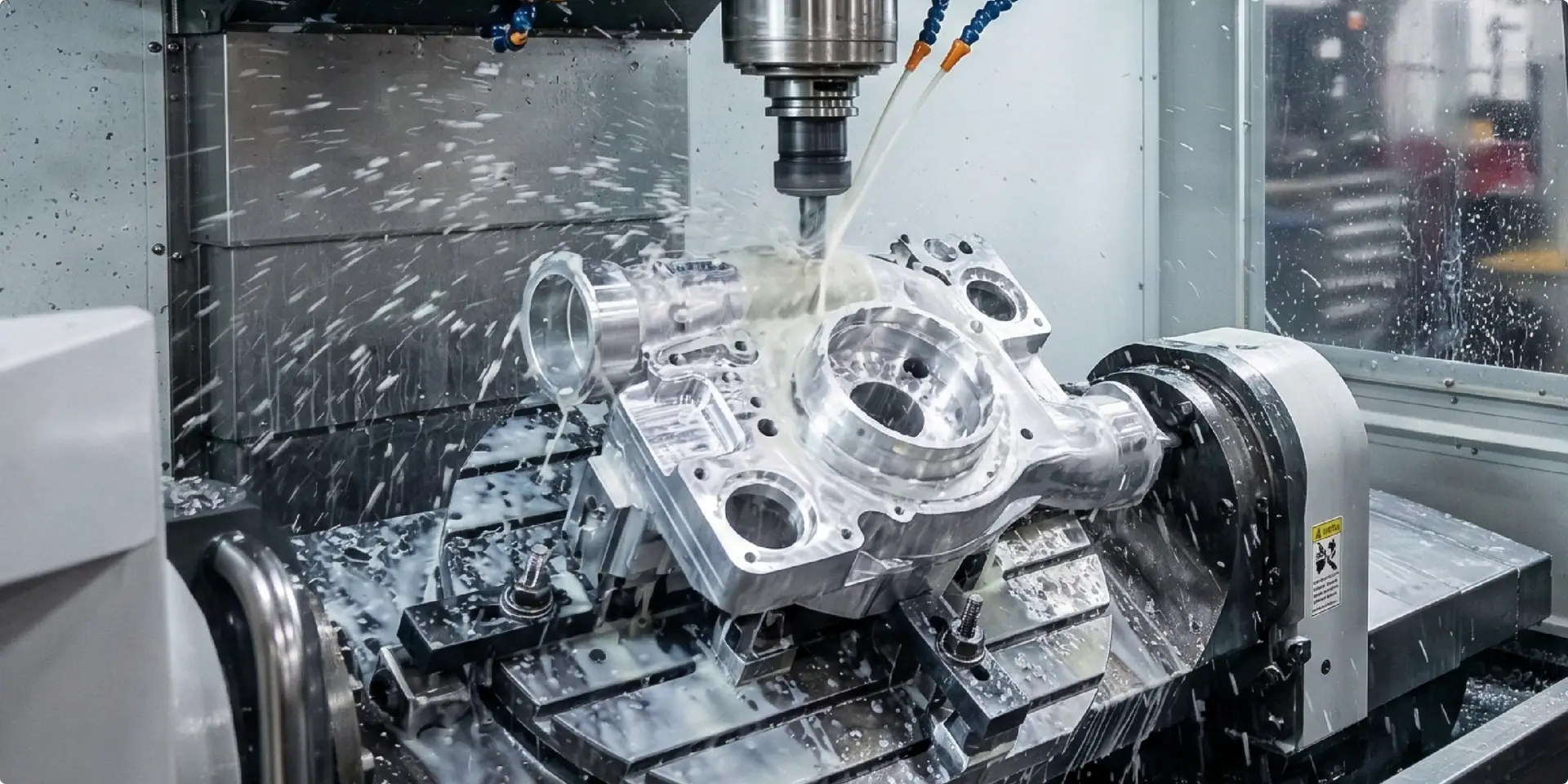
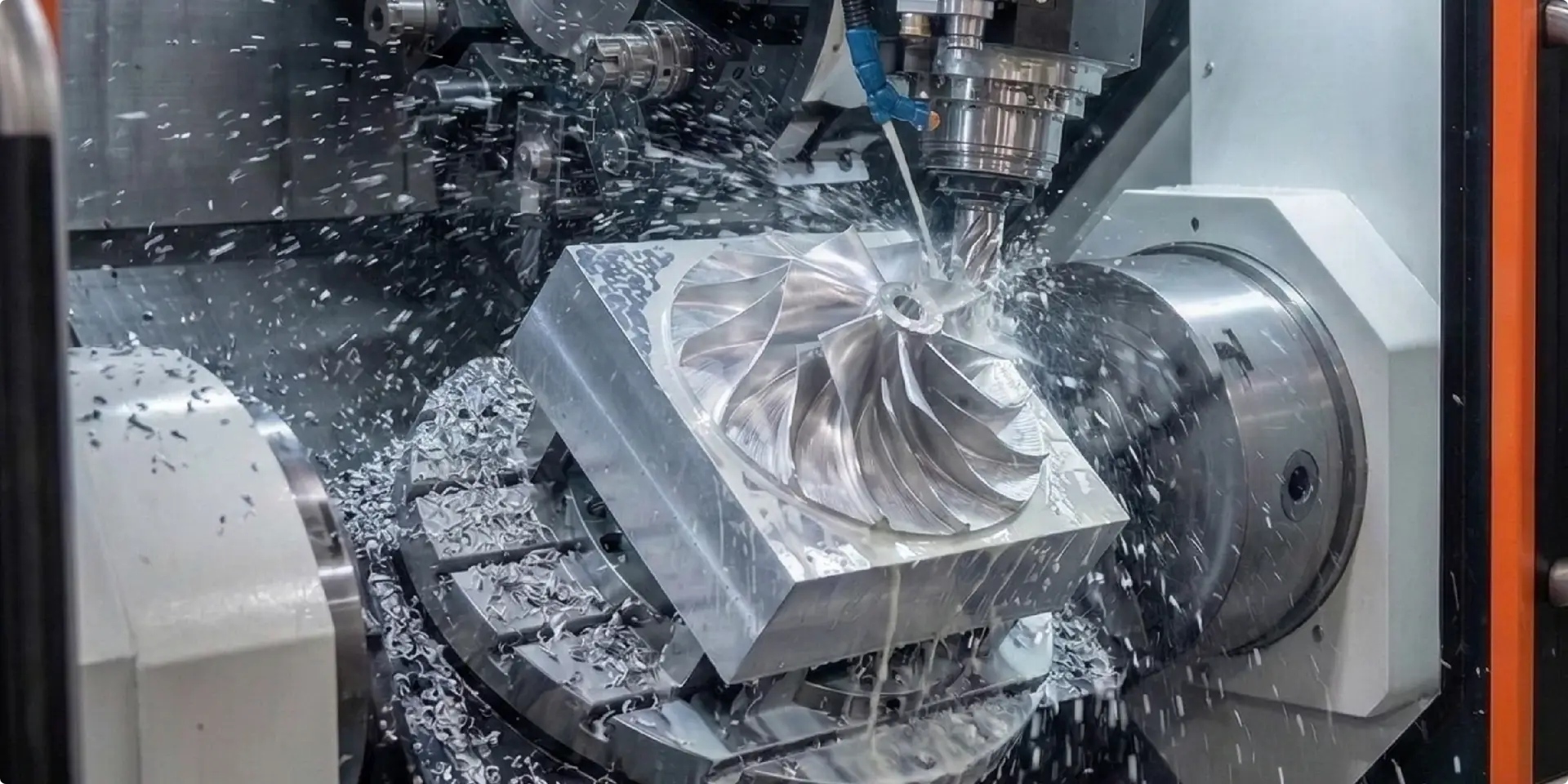
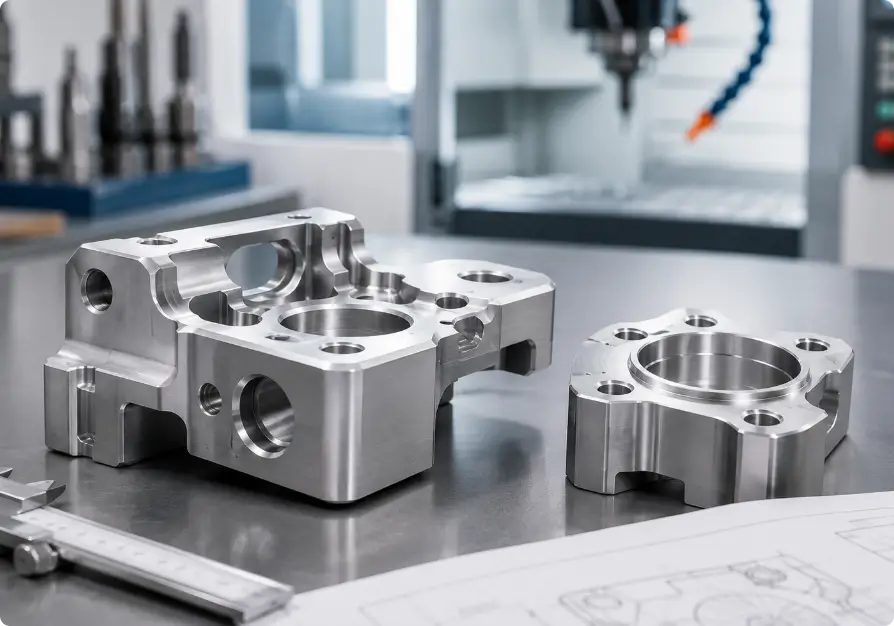
For projects ranging from prototypes to production runs, with precision up to ±0.005mm. Equipped with 5-axis capabilities, suitable for both metals and plastics.
CNC Machining