CNC Turned Stainless Steel Filter Ring
Filter rings turned from 304 stainless tube and plate, with faces flat and parallel to 0.02 mm, inside diameter within ±0.05 mm, a mesh seat cut 0.5 to 2 mm deep at ±0.05 mm and every edge broken 0.3 mm. Rings are passivated and checked on granite before packing.
- Faces Flat to 0.02 mm
- Inside Diameter ±0.05 mm
- Mesh Seat Deburred
- No Weld, No Distortion
*Send the mesh grade and the housing bore. The seat depth has to match the mesh thickness plus its support, and a seat 0.1 mm shallow lets the screen lift at pressure and bypass the filter.
Stainless Filter Ring Overview
A filter ring holds a screen or a mesh disc against a housing. It looks simple, but the seat depth and the face flatness decide whether the mesh seals at its edge or lets unfiltered fluid past.
Tube or plate is turned to diameter, bored to the inside size, the mesh seat is cut in the same set-up and the ring is parted and faced so both faces stay parallel within 0.02 mm.
304 Stainless
304 is used because a filter ring sits in the flow path and has to resist the fluid as well as the cleaning cycle. It also keeps its flatness after machining better than aluminium at the same section.
316L or 316Ti
316L is specified for chloride-bearing fluids and marine filters. 316Ti is used where the ring sees elevated temperature and intergranular corrosion is a risk.
Below a 1.5 mm section the ring will not stay flat after parting; it springs into a saddle and the mesh leaks at two opposite points.
Stainless Filter Ring Specifications
Turning data for filter rings, with the seat, flatness and diameter values that decide whether the mesh seals.
| Specification | Machining Data | Specification | Machining Data |
|---|---|---|---|
| Product | Filter Ring / Mesh Support Ring | Machining Process | CNC Turning, Boring, Parting, Facing |
| Material | 304 Stainless, 316L on Request | Envelope | Ø 40 – 300 mm, Width 4 – 30 mm |
| Inside Diameter | ±0.05 mm | Outside Diameter | ±0.10 mm |
| Face Flatness | 0.02 mm | Face Parallelism | 0.02 mm |
| Section Thickness | 1.5 – 6 mm | Ring Width | ±0.10 mm |
| Mesh Seat | Step 0.5 – 2 mm Deep, ±0.05 mm | Edge Break | 0.3 mm Both Faces |
| Concentricity | 0.05 mm ID to OD | Surface | Ra 1.6 µm |
| Customization | Perforations, Tabs, Spot Welds, Groove, Laser Marking | Lead Time | 4 – 6 Days Sample, 10 – 14 Days Batch |
| Inspection | CMM Diameters, Granite Flatness, Mesh Trial Fit | Packing | Interleaf, Stacked Flat, Crate |
Key Features of Our Filter Rings
Faced both sides in one set-up, seat cut to mesh thickness, passivated.
Both Faces in One Set-up
The ring is faced on both sides before it is released, holding parallelism at 0.02 mm so the mesh seat does not rock in the housing.
Seat Cut to the Mesh
The seat depth is machined to the mesh and support thickness you specify, within 0.05 mm, which is what stops the screen lifting at pressure and bypassing the filter.
Turned From Tube Where Possible
Rings above 80 mm are turned from tube rather than plate, which removes the cross-grain movement that makes a plate ring go oval after machining.
Passivated, Not Plated
Passivation cleans the surface without adding a layer, so the inside diameter stays on size and the ring still fits after cleaning.
Ring that has to hold a mesh flat?
Surface Finishes for Filter Rings
A filter ring is functional hardware: the finish has to survive the fluid, not impress anyone.
| Finish | Main Purpose | Finish | Main Purpose |
|---|---|---|---|
| Passivation | Removes free iron, improves corrosion | Electropolishing | Bright finish and burr removal |
| Glass Bead Blasting | Matte surface that hides marks | Pickling | Removes heat tint after laser cutting |
| Masking | Keeps the mesh seat bare | Laser Marking | Ring size and mesh grade |
| Coating Build | None, rings are used bare | Ultrasonic Clean | Before Packing |
| Salt Spray | 480 h on passivated 304 | Edge Polish | Removes burr from the seat |
| Flatness Check | After Coating if Applied | Stack Packing | Prevents Distortion in Transit |
*Electropolishing removes 2 to 5 µm and slightly rounds the seat edge, which can let a fine mesh slip. Rings for 50 µm mesh and finer are polished before the seat is finished.
Put your CNC milling parts into production today
All information and uploads are secure and confidential.
Trusted for Precision CNC Machined Components
Supporting OEM projects with accurate machining, flexible production, and reliable component quality.
Trusted for Precision CNC Milling.
Machining Process for Filter Rings
The ring is turned from tube and faced on both sides in one set-up, so the mesh seat stays parallel and the screen sits flat instead of bowing.
01. Mesh and Housing Review
Check the mesh grade, its support thickness and the housing bore, then set the seat depth and the ring width.
02. Turn the Blank
Turn the outside diameter and face the first side, holding the blank in soft jaws so a thin ring is not distorted by chuck pressure.
03. Bore and Cut the Seat
Bore the inside diameter and cut the mesh seat in the same set-up, gauging both with a micrometer before parting.
04. Part and Face
Part off with a narrow tool, then face the second side parallel to the first within 0.02 mm.
05. Passivate and Check
Deburr both edges, passivate, check flatness on granite and trial fit a sample of mesh before stacking the rings flat.
Send the mesh specification and the housing bore, and we will quote a ring with the seat cut to your screen.
Stainless Filter Ring FAQs
0.02 mm on both faces, which is what keeps the mesh sealed at its edge. A ring that is 0.05 mm out lets fluid bypass at two points opposite each other.
Yes, the seat depth is machined to the mesh plus its support, within 0.05 mm. Send the mesh grade and we will match the depth to it.
We can supply the ring only, or a ring with the mesh spot welded on request. Welding distorts a thin ring, so welded assemblies are faced after welding.
Not when it is turned from tube. A ring cut from plate can move 0.1 mm out of round after machining because of the rolled grain, which is why we use tube above 80 mm.
Holes are added after turning, positioned from the inside diameter rather than the outside, so the pattern stays centred even if the outside runs slightly off.
Stacked flat with interleaf paper and crated, because a ring that is packed on edge will take a set in transit and never sit flat again.
Other CNC Machined Mechanical Components
Explore additional precision CNC machined components manufactured for OEM applications and customized production needs.
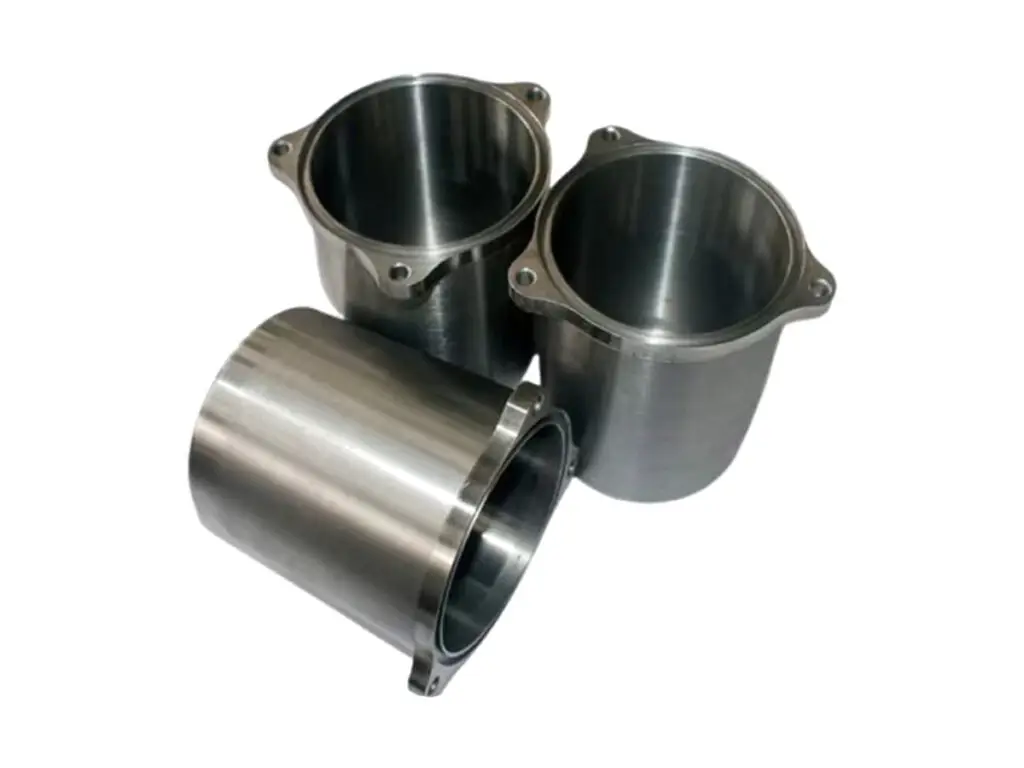
CNC turned 316L stainless cylinder cups with a thin uniform wall, a flat closed end and a bore to H8, machined from solid bar and.
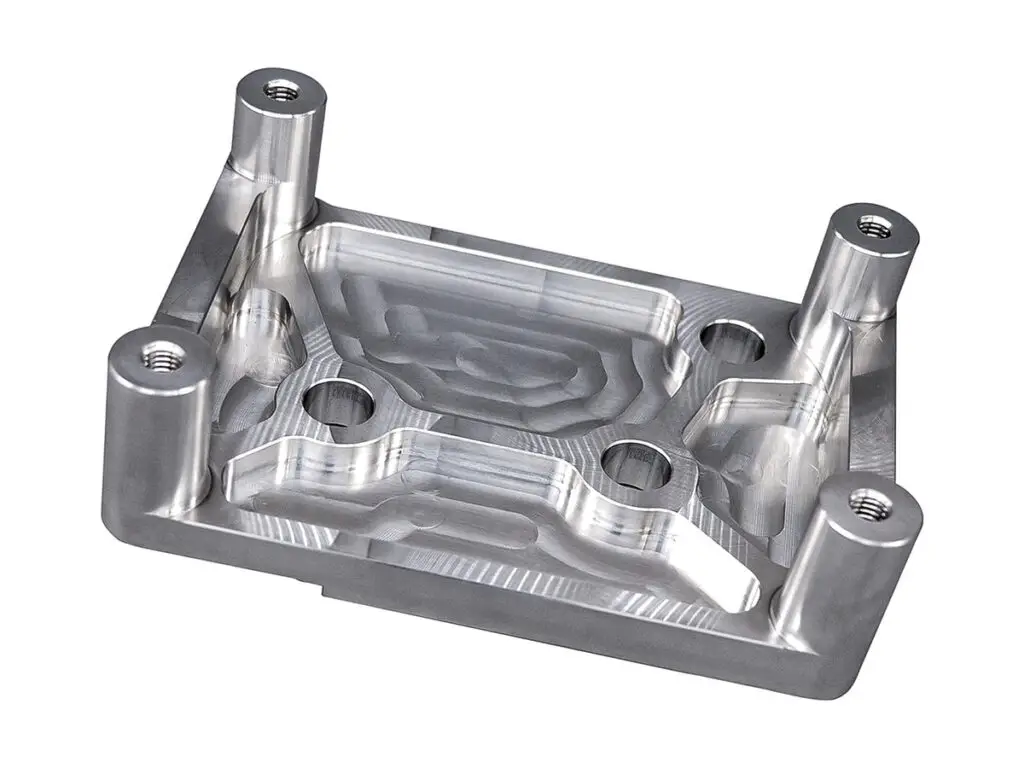
CNC machined 6061-T6 aluminium servo actuator housings with a bored bearing register, ribbed walls and a machined gasket face,.
CNC turned 316L stainless valve spools with lands held to 0.01 mm, groove widths to ±0.02 mm and a lapped bore fit for hydraulic.
CNC turned aluminium threaded sensor housings in 6061-T6, thread and bore concentric to 0.02 mm, blue or black anodized, with.
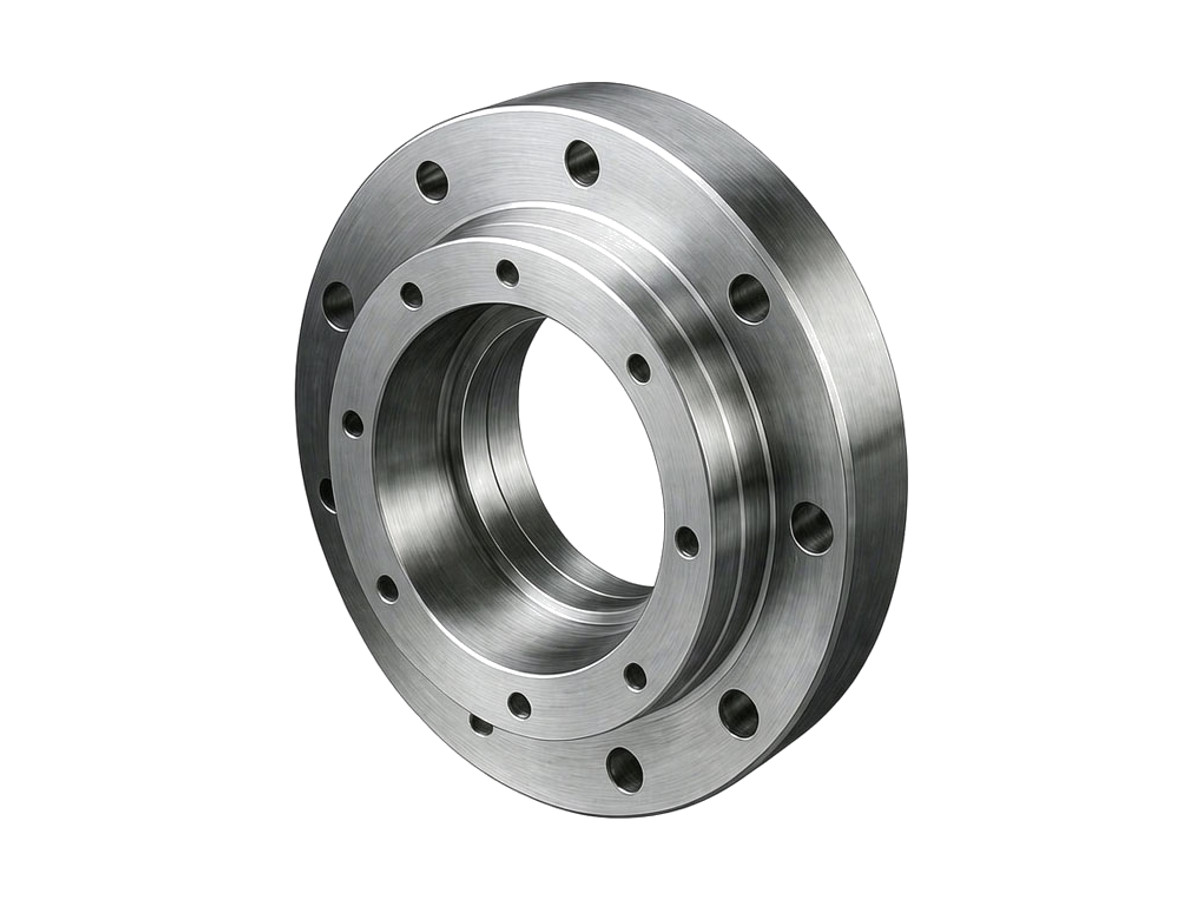
Precision CNC machined steel locating flanges for robot joints.
Get high‑quality machined parts in as fast as 4 days with our expanded automated CNC milling!