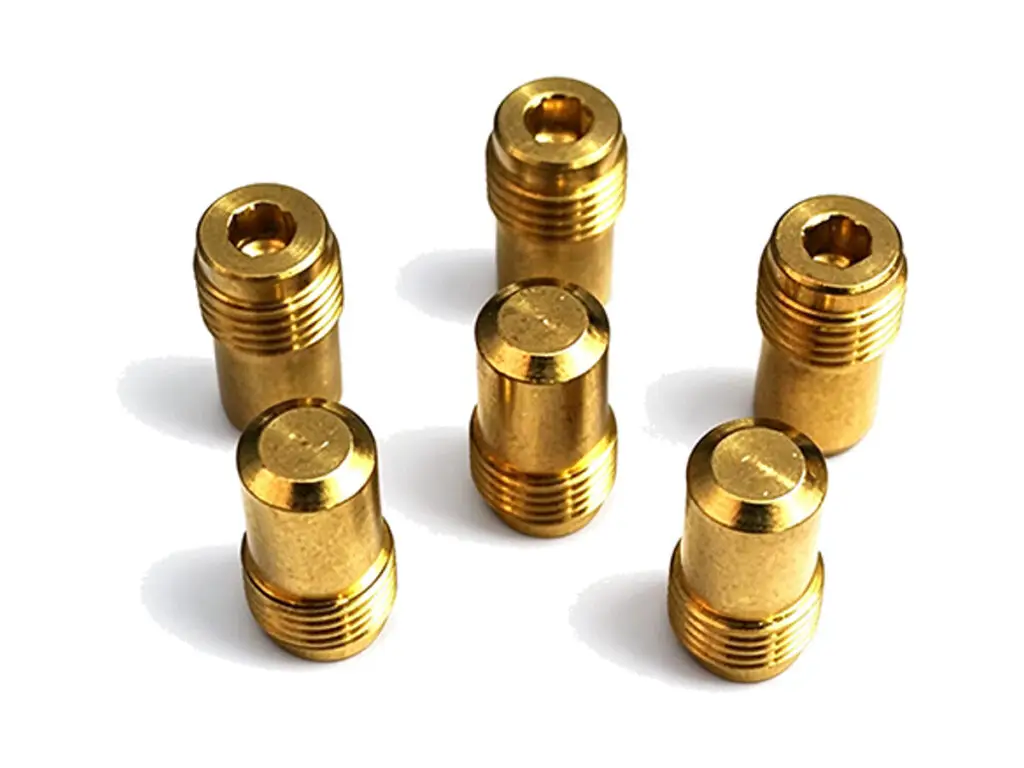
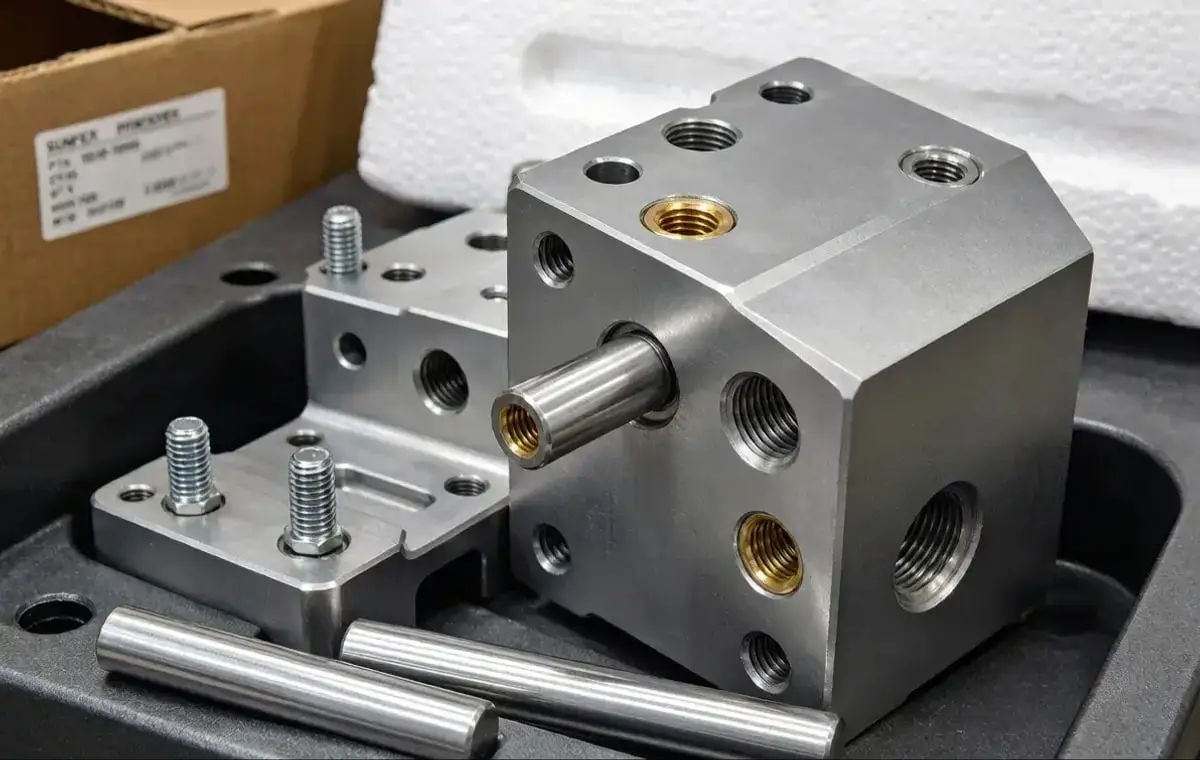


CNC Turned Brass Threaded Insert Set
Threaded inserts and knurled bushings turned from C36000 brass, with an M3 to M12 thread held to 6H and coaxial to the OD within 0.03 mm, a knurled outside diameter at ±0.05 mm and ends faced square with a 0.5 × 45° chamfer on both.
- Thread Held to 6H
- Knurl Depth ±0.05 mm
- Chamfer Both Ends
- Set Lengths Matched 0.05 mm
*Send the hole size the insert presses into and the material it goes into. Brass into aluminium needs 0.02 mm more interference than brass into steel, or the insert spins under torque.
Brass Threaded Insert Overview
An insert puts a durable thread into a soft material. It holds by interference on its knurled outside diameter, so the knurl and the thread have to be concentric or the insert goes in at an angle.
The insert is turned from brass bar, the knurl is formed in the same clamping as the OD, the thread is tapped through, and both ends are chamfered before the parts are sorted by length into sets.
C36000 Brass
Free-cutting brass machines at high speed with a clean knurl and takes a thread that does not gall. It is the standard insert material for plastics, aluminium and die-cast housings.
C37700 or 303 Stainless
C37700 is used where the insert is hot-pressed into a plastic boss, and 303 stainless where the insert sits in a corrosive environment and the brass would dezincify.
A 1.5 mm wall between the thread and the knurl root is the minimum; thinner than that, pressing the insert collapses the thread and the screw will not enter.
Threaded Insert Specifications
Turning, knurling and tapping data for inserts, with the OD and concentricity values that decide whether the insert presses straight.
| Specification | Machining Data | Specification | Machining Data |
|---|---|---|---|
| Product | Threaded Insert / Knurled Bushing | Machining Process | CNC Turning, Knurling, Thread Tapping |
| Material | C36000 Free-Cutting Brass | Envelope | Ø 6 – 25 mm OD, 8 – 40 mm Long |
| Thread | M3 – M12, 6H, Through | Thread Coaxiality | 0.03 mm to the OD |
| OD | ±0.03 mm, Knurl Diameter ±0.05 mm | Knurl | Straight or Diamond, 0.5 mm Pitch |
| End Faces | Square to 0.05 mm, Chamfer 0.5 × 45° | Length | ±0.05 mm Within a Set |
| Wall Section | 1.5 mm Minimum | Concentricity | 0.03 mm Bore to OD |
| Weight | 4 – 45 g per Piece | Coating | Nickel or Tin on Request |
| Customization | Thread Size, Knurl Type, Flange, Slot Drive, Length Set | Lead Time | 4 – 6 Days Sample, 10 – 14 Days Batch |
| Inspection | Thread Plug Gauge 6H, Micrometer on OD, Length Sorted by Set | Packing | Bagged by Size, Foam Tray |
Key Features of Our Brass Inserts
Knurl and thread in one clamping, chamfer both ends, lengths sorted into sets.
Knurl and Thread in One Clamping
The knurl is formed while the part is still held on the turned OD, so the knurl axis and the thread axis stay within 0.03 mm and the insert presses in square.
Chamfer Both Ends
Both ends are chamfered 0.5 × 45°, which lets the insert start in the hole without shaving material and stops a burr from lifting the insert out of a blind hole.
Through Thread, Gauge Checked
Every batch is checked with a 6H plug gauge at both ends; a thread that is tight at the far end means the tap wandered, and the insert will not take a screw after pressing.
Lengths Sorted Into Sets
Parts are measured and sorted so a set is within 0.05 mm of each other, which matters when the inserts sit under a plate that has to lie flat.
Insert that must not spin under torque?
Finishes for Brass Inserts
Bare brass for pressing, plated where corrosion or contact resistance matters.
| Finish | Main Purpose | Finish | Main Purpose |
|---|---|---|---|
| As Turned | Bare brass for press-in inserts | Nickel Plating | Corrosion resistance and solderability |
| Tin Plating | Electrical contact and low friction | Clear Lacquer | Stops tarnish in storage |
| Passivation | Removes tarnish before plating | Ultrasonic Clean | Removes knurling oil |
| Thread Masking | Thread stays 6H after plating | Length Sorting | Set lengths within 0.05 mm |
| Anti-Tarnish Bag | Keeps brass bright for a year | Bulk Count | Weight-checked against the count |
| Salt Spray | 96 h on Nickel Plated Brass | Thread Recheck | 6H After Plating |
*Nickel plating adds 5 to 8 µm inside the thread as well as outside; inserts that are plated have the thread masked or are tapped 0.05 mm oversize beforehand.
Put your CNC milling parts into production today
All information and uploads are secure and confidential.
Trusted for Precision CNC Machined Components
Supporting OEM projects with accurate machining, flexible production, and reliable component quality.
Trusted for Precision CNC Milling.
Turning a Brass Insert
The knurl and the thread are cut in one clamping, so the insert presses in straight and the screw still starts by hand at the far end.
01. Hole and Load Review
Confirm the host material, the hole size and the torque the insert has to take, then set the knurl diameter and the wall thickness.
02. Turn the OD
Turn the outside diameter and face the first end, holding the bar in a collet so the knurl runs concentric with the spindle.
03. Knurl and Chamfer
Form the knurl in the same clamping, chamfer both ends and part off with a 0.5 mm chamfer on the back face.
04. Tap Through
Tap the thread through in a second operation, gauging at both ends, and blow out the chips before the part is counted.
05. Sort, Plate, Pack
Measure lengths and sort into sets, plate or lacquer if specified, then bag by size with a count check.
Send the hole size, the host material and the torque, and we will quote inserts with the knurl and thread cut in one clamping and the lengths sorted.
Brass Insert FAQs
0.05 to 0.08 mm on diameter into aluminium, 0.03 to 0.05 mm into steel, and 0.10 mm into most plastics. Too little and the insert spins; too much and it splits the boss.
Brass presses without galling, does not rust, and takes a thread that releases a screw cleanly. Steel inserts are used where the thread takes high torque or the environment is corrosive.
Yes, nickel or tin at 5 to 8 µm. The thread is masked, otherwise the plating closes it by 0.015 mm and a 6H insert becomes a 5H one.
Within 0.03 mm of the hole axis when the hole is reamed and chamfered. A drilled hole with a drill point at the bottom pushes the insert off axis.
Yes, a shouldered mandrel that bears on the insert end rather than the thread, which stops the insert from being pressed in by its weakest feature.
±0.05 mm, and sets are sorted so all inserts under one plate are within 0.05 mm of each other rather than each one being at the opposite end of the band.
Other CNC Machined Mechanical Components
Explore additional precision CNC machined components manufactured for OEM applications and customized production needs.
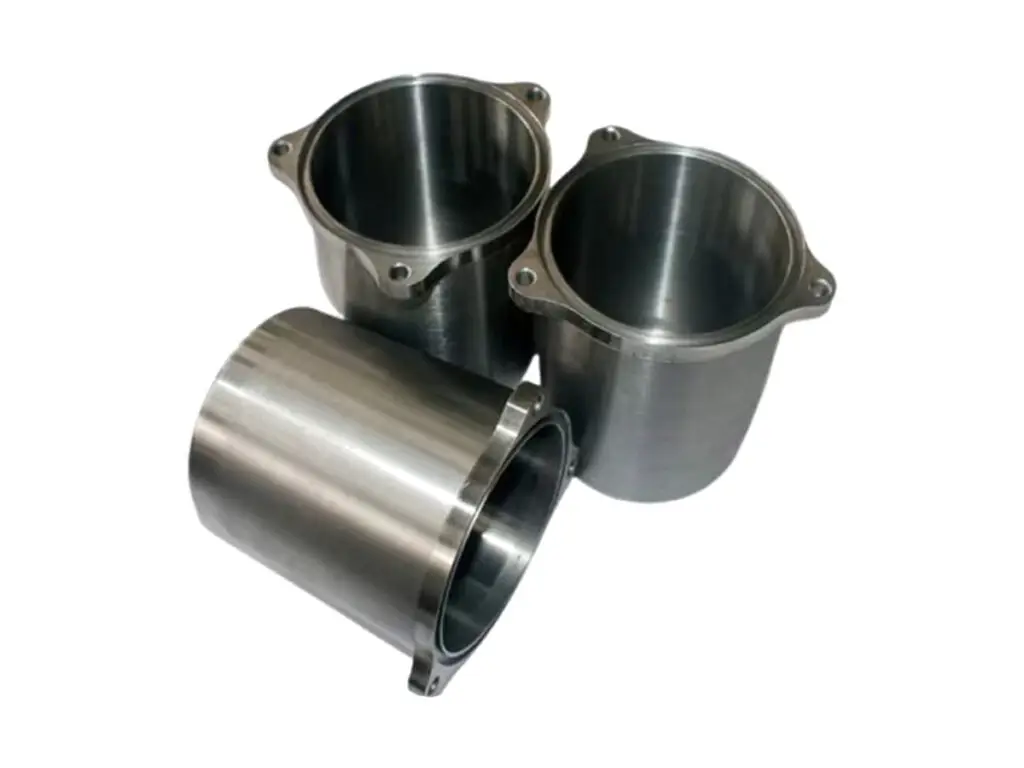
CNC turned 316L stainless cylinder cups with a thin uniform wall, a flat closed end and a bore to H8, machined from solid bar and.
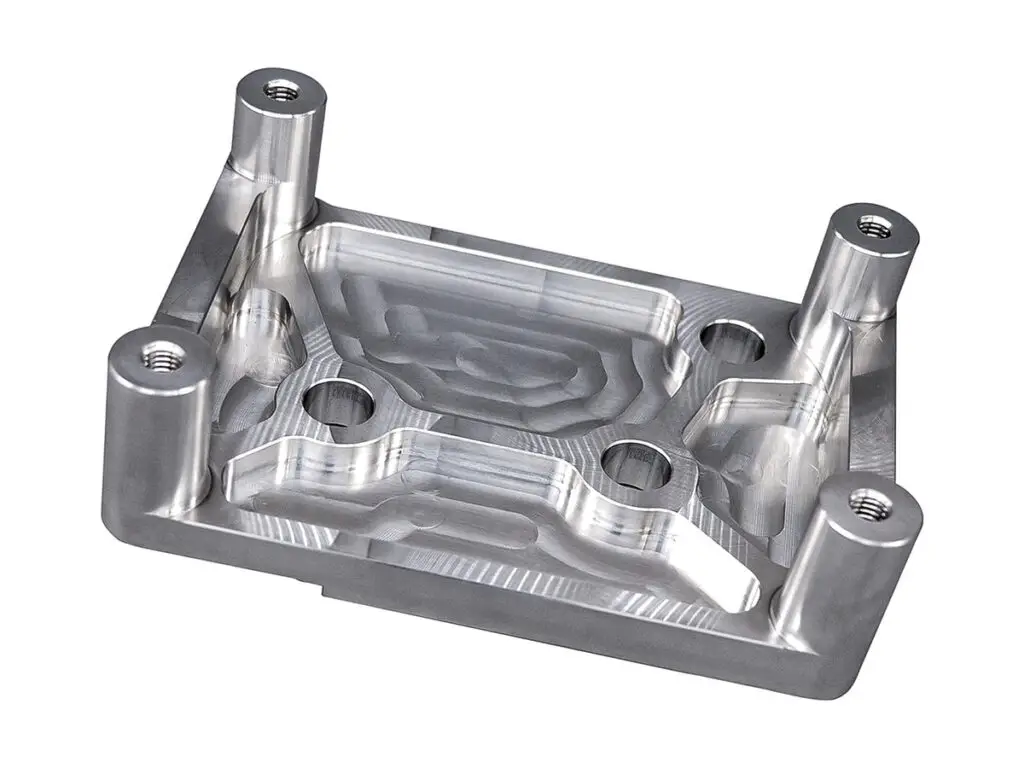
CNC machined 6061-T6 aluminium servo actuator housings with a bored bearing register, ribbed walls and a machined gasket face,.
CNC turned 316L stainless valve spools with lands held to 0.01 mm, groove widths to ±0.02 mm and a lapped bore fit for hydraulic.
CNC turned aluminium threaded sensor housings in 6061-T6, thread and bore concentric to 0.02 mm, blue or black anodized, with.
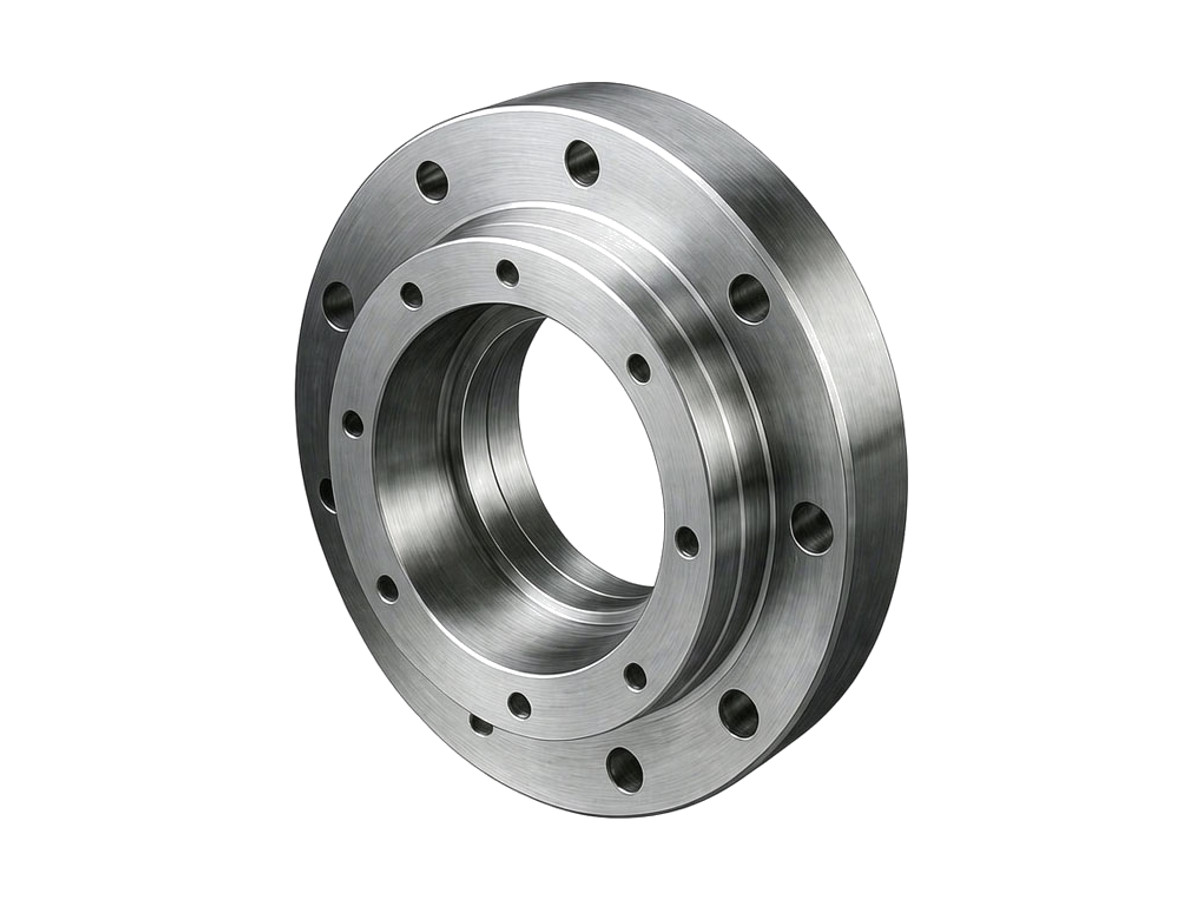
Precision CNC machined steel locating flanges for robot joints.
Get high‑quality machined parts in as fast as 4 days with our expanded automated CNC milling!