

Home / CNC-Machining / CNC Milling / CNC Machining Milling Aluminum Robot Base Frame
robot base frame main

CNC Machining Milling Aluminum Robot Base Frame

Custom CNC machining milling aluminum robot base frames for industrial robots, collaborative arms and automation equipment, supporting complex mounting geometry, multiple aluminum grades, anodized and other surface finishes, and drawing-based production.

*Send your drawings with material, quantity and surface finish requirements to get started.

Aluminum Robot Base Frame Overview

Aluminum is suitable for robot base frames because it balances stiffness, weight, machinability, and long-term dimensional stability.

An aluminum robot base frame is the structural foundation that carries a robot arm, a linear axis, or an automation module and transfers machining and payload forces into the floor plate, machine bed, or fixture base.

Unlike a simple flat mounting plate, a robot base frame usually combines a large flat datum surface, a precision bore or locating register for the arm flange, drilled and tapped mounting patterns, ribbed or pocketed sections for stiffness, and clearance features for cable routing and fasteners. These features must be machined in one reference system, because small angular errors at the base are amplified at the end of the robot arm.

SINORISE manufactures customized aluminum CNC machining parts for robot and automation applications, including base frames produced according to customer drawings, 3D models, samples, and technical requirements. Aluminum alloys are commonly selected where stiffness, weight, vibration behavior, and corrosion resistance must be balanced.

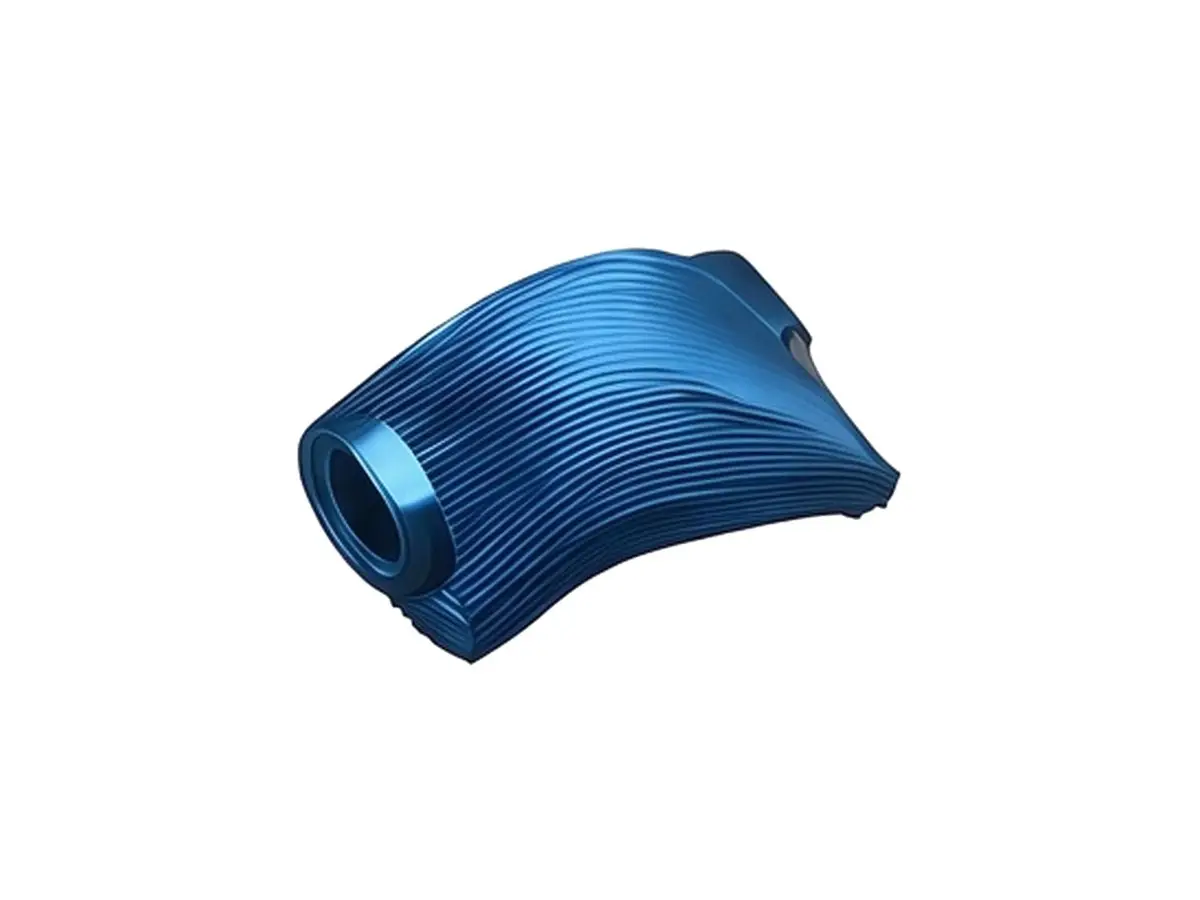
Five-axis milling of an aluminum wrist housing for a robot arm
6061-T6 aluminium flat plate stock for CNC milling

6061 Aluminum

6061-T6 is the standard choice for CNC-milled robot base frames because it provides a practical combination of stiffness, machinability, dimensional stability after stress relief, and reliable anodizing response.

It is suitable for base plates, risers, adapter frames, and mounting blocks where flatness and repeatable positioning matter more than ultimate strength.

7075-T6 aluminium billet block stock for CNC milling

7075 Aluminum

7075 aluminum provides noticeably higher strength and stiffness than 6061, and may be considered for compact frames, cantilevered risers, or lightweight structures carrying higher moments.

Material selection should ultimately be based on payload, reach, stiffness target, mounting interface, and the operating environment of the robot.

Different aluminum grades can be selected depending on the payload, stiffness target, and operating requirements of the base frame. Send us your drawing for material and machining recommendations.

CNC Machining Aluminum Robot Base Frame Specifications

Our CNC machining aluminum robot base frames support 6061, 6063, and 7075 aluminum, with 3-axis, 4-axis, and 5-axis CNC milling for large datum faces, precision bores, and multi-face mounting patterns. Tolerances, flatness, surface finish, and inspection requirements can be customized according to drawings.

SpecificationMachining DataSpecificationMachining Data
ProductAluminum Robot Base FrameHole MachiningDrilling, Reaming, Tapping, Counterboring, Boring
Material6061 / 6063 / 7075 AluminumThread OptionsMetric / Imperial Threads, Thread Inserts
Machining ProcessCNC Milling, 3/4/5-Axis MachiningSurface FinishAnodizing, Bead Blasting, Passivation, Powder Coating, PVD, As Machined
Typical Tolerance±0.01–±0.05 mmInspectionCMM, 2.5D Measuring System, Digital Height Gauge
Surface RoughnessRa 0.8–3.2 μmProductionPrototype, Small Batch, Medium Batch
Machined FeaturesDatum Faces, Bores, Pockets, Ribs, Mounting Patterns, Cable ClearanceDrawing FormatSTEP, STP, IGES, DWG, DXF, PDF
Datum Flatness0.02–0.05 mm per 300 mmLead Time3–7 Days (Prototype), 7–15 Days (Batch)
CustomizationMaterial, Dimensions, Tolerance, Finish, Hole LayoutSurface Roughness RangeRa 0.4–6.3 μm on Request

Key Features of Our Aluminum Robot Base Frames

Our aluminum robot base frames are designed for stable mounting, repeatable positioning, and long-term dimensional stability in robot and automation assemblies.

Large Datum Surface Machining

A robot base frame only performs as well as its mounting face. Datum faces are milled in the same setup as the bore and mounting pattern, then checked for flatness and parallelism so the arm sits square to the floor plate or machine bed.

Precision Bore and Locating Register

The arm mounting bore, spigot register, and bolt circle determine the position of the entire kinematic chain. They are bored and interpolated to drawing tolerance and inspected relative to the datum faces rather than to the raw stock.

Ribbed and Pocketed Structures

Pockets, ribs, and lightening windows reduce mass without sacrificing stiffness. Because these features are machined from solid or from stress-relieved stock, wall thickness and rib transitions stay consistent from part to part.

Custom Surface Finishing

Base frames can be supplied anodized, bead blasted, passivated, powder coated, or PVD coated depending on corrosion exposure, cleanroom requirements, and the appearance expected by the end customer.

Looking for a Reliable Robot Base Frame?

Surface Finishes for Aluminum Robot Base Frames

Different surface treatments can be selected depending on how the finished base frame will be used.

FinishMain PurposeFinishMain Purpose
AnodizingCorrosion protection, wear resistance and color identification for aluminum base framesPowder CoatingProtective colored coating for frames, covers and visible structures
Bead BlastingUniform matte surface texture before anodizing or coatingPassivationRemoves free iron and machining residue before assembly
PVD CoatingHard decorative coating for high-wear contact areasAs MachinedMaintains the natural CNC-machined surface where no coating is required

*Surface finish selection should consider assembly fit, operating environment, appearance, corrosion exposure, and whether specific surfaces must remain untreated.

logo

Put your CNC milling parts into production today

All information and uploads are secure and confidential.

Trusted for Precision CNC Machined Components

Supporting OEM projects with accurate machining, flexible production, and reliable component quality.

Mechanical Equipment Customer
The aluminum robot base frame samples matched our design requirements accurately, and the machining quality was consistent throughout the prototype stage.

Industrial Components Buyer
The engineering support helped us optimize the design before production, reducing potential machining issues.

Equipment Manufacturer
The CNC machined robot base frames achieved the required fit and surface quality for our assembly application.

OEM Customer
OEM Customer
The production process was smooth from prototype validation to small batch manufacturing, with good communication and delivery performance.

Automation Industry Customer
The customized machining solution provided the dimensional accuracy required for our rotating equipment components.

Trusted for Precision CNC Milling.

CNC Machining Process for Aluminum Robot Base Frames

Producing a robot base frame usually requires more than machining its external shape. Datum faces, bores, and mounting patterns must be processed in the correct sequence so that the final geometry stays in tolerance throughout production.

01. Material Preparation

The process begins with selecting the required aluminum alloy and preparing stress-relieved stock sized to the finished frame plus machining allowance. Large frames are rough machined first and allowed to relax before finishing.

02. CNC Milling

Datum faces, profiles, pockets, ribs, and lightening windows are machined using 3-axis, 4-axis, or 5-axis CNC milling. Features on different faces are machined with as few re-clampings as possible to protect the relationship between mounting surfaces.

03. Bore and Mounting Feature Machining

The arm mounting bore, locating register, bolt circles, dowel holes, and threaded inserts are machined according to the technical drawing. Position, perpendicularity, and concentricity are referenced back to the main datum faces.

04. Inspection

Flatness, parallelism, bore position, and mounting pattern spacing are inspected before shipment. SINO-V-RISE is equipped with precision inspection equipment including CMM, 2.5D measuring systems, and digital height gauges for dimensional quality control.

05. Deburring and Surface Finishing

Machined edges, cable windows, and threaded holes are deburred before the selected surface treatment is applied, so that anodizing or coating does not bridge critical fits or assembly surfaces.

Have a similar part to manufacture? Send your drawings, material requirements and quantity to discuss machining feasibility and receive a custom quote.

CNC Machining Milling Aluminum Robot Base Frame FAQs

6061-T6 is the most common option because it combines good machinability, corrosion resistance, dimensional stability, and anodizing performance. Higher-strength grades such as 7075 can also be considered where greater stiffness is required in a more compact frame. The final material should be selected according to the drawing, payload, and mounting standard of the robot.

Yes. CNC machining milling aluminum robot base frames can be manufactured according to 2D drawings, 3D CAD files, samples, or other technical documentation. The model should ideally define datum faces, the arm mounting interface, hole patterns, thread specifications, tolerances, and any flatness or perpendicularity requirements.

Datum faces are machined first and used as the reference for all subsequent operations. Bores and mounting patterns are machined in the same setup where possible, or re-referenced to the datum faces, then verified on a CMM before shipment. For large frames, rough machining and stress relief are performed before finish machining.

Available options can include anodizing, bead blasting, passivation, powder coating, PVD coating, and as-machined finishes. The appropriate finish depends on corrosion exposure, cleanroom or ESD requirements, wear at contact surfaces, and the appearance specification of the project.

Yes. Prototype, low-volume, and medium-batch production can be evaluated according to the frame design and project requirements. Prototype frames are often used to verify mounting interfaces, cable routing, and stiffness before fixtures and production quantities are finalized.

A 2D drawing or 3D CAD model is the most important starting point. Material grade, quantity, surface finish, tolerance and flatness requirements, thread specifications, and the robot mounting standard should also be provided when available. The more complete the technical information is, the more accurately the machining process and quotation can be evaluated.

Other CNC Machined Mechanical Components

Explore additional precision CNC machined components manufactured for OEM applications and customized production needs.

Custom CNC machined aluminium robot joint actuator components with concentric threads, sealing faces and hex flats.

Custom five-axis CNC milled aluminum impellers for centrifugal fans, blowers and vacuum pumps.

Custom CNC machined aluminium housings for automation and electronic equipment.

Custom CNC machined hardened steel sleeves for robotic joints and motion assemblies.

Custom CNC machined aluminum hollow sleeve connectors for robot arm segments and linear modules.

Get high‑quality machined parts in as fast as 4 days with our expanded automated CNC milling!

Scroll to Top