
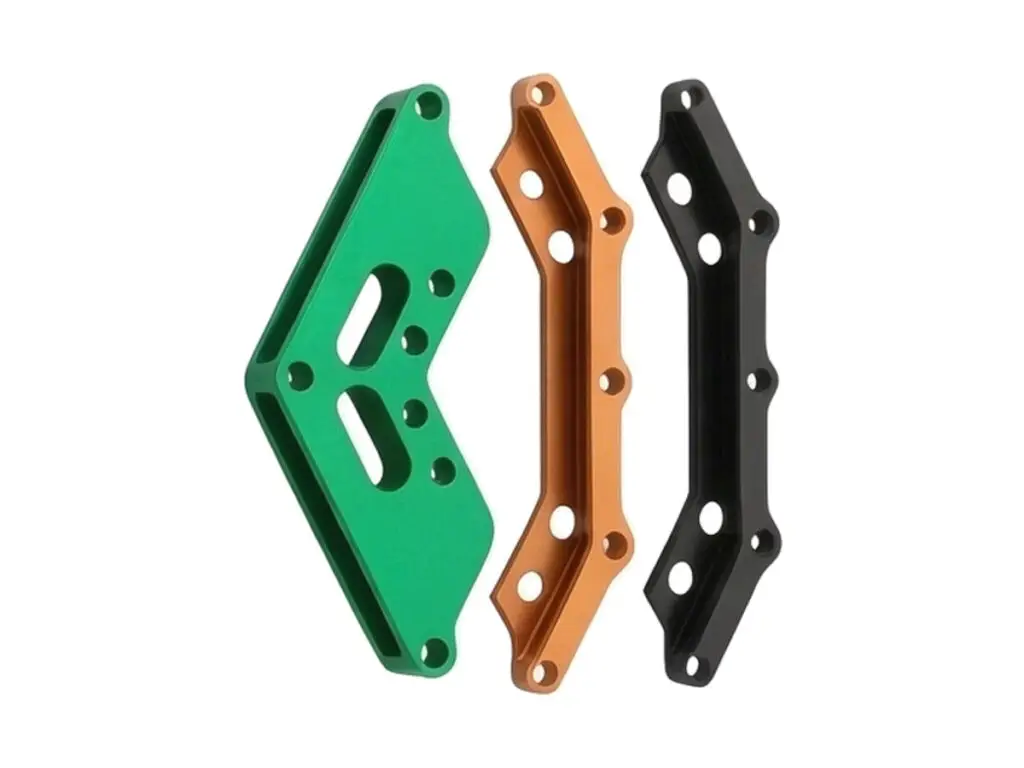


Home / CNC-Machining / CNC Milling / CNC Machined Aluminum Connecting Plate
CNC Machined Aluminum Connecting Plate - CNC machined component

CNC Machined Aluminum Connecting Plate

Custom CNC machined aluminum connecting plates for robot modules, linear stages and automation frames. Cut from 6061-T6 or 7075-T6, faced on both sides, and drilled from the mating interface so the module lands on the holes without slotting. Flatness is held to 0.03 mm over 200 mm.

*Send the module footprint and the cable routing, because the opening layout decides how much stiffness is left in the plate and where the ribs have to stay.

Aluminum Connecting Plate Overview

A connecting plate is the interface between two modules that were designed separately. It has to carry the bolt pattern of both, pass cables through without cutting the section that carries the load, and stay flat enough that neither module is stressed when the screws are tightened.

The plate is milled from plate stock and faced on both sides after a stress-relief pause, which is what keeps it flat when a large opening is cut. Inserts are pressed or bonded after anodizing so the thread does not sit in a coating, and the edge is chamfered so a cable pulled across the plate does not wear through its jacket.

Anodizing of a flanged manifold housing and a cylinder head deck plate
6061-T6 aluminium flat plate stock for CNC milling

6061-T6 Aluminum Plate

6061-T6 is the default for brackets and plates that are anodized after machining. It cuts cleanly at high spindle speed, keeps a flat face through thin sections, and takes a uniform dye colour without blotching, which matters when two parts have to match visually.

7075-T6 aluminium billet block stock for CNC milling

7075-T6 Aluminum Billet

7075-T6 is used where the part carries load or runs at high cycle rate. Its yield strength is close to mild steel at a third of the weight, so a bracket can be thinner and still hold stiffness. It anodizes to a deeper colour and machines with a better surface, at a higher billet cost.

Plate thickness and opening size are linked: a 200 mm opening in a 6 mm plate will bow under bolt load, where the same opening in 12 mm plate stays flat.

Aluminum Connecting Plate Specifications

Machining data for module interface plates, agreed against the two bolt patterns and the flatness the assembly can tolerate.

SpecificationMachining DataSpecificationMachining Data
ProductConnecting Plate / Module Interface PlateMachining Process3-Axis CNC Milling, Double-Sided
Material6061-T6 / 7075-T6 AluminumTypical Tolerance±0.03 mm on Outline, ±0.02 mm on Hole Position
Plate Thickness5 – 20 mmFlatness0.03 mm over 200 mm
Typical Envelope80 × 80 mm to 500 × 400 mmParallelism0.03 mm Between Faces
OpeningsRectangular, Circular, Cable Pass-ThroughSurface FinishRa 1.6 µm, Ra 0.8 on Sealing Faces
Hole WorkThrough Holes, Counterbores, Inserts, Tapped M3 – M12AnodizingType II or Type III, Both Faces
Edge ConditionChamfered 0.5 mm, Deburred on All EdgesDrawing FormatSTEP, STP, IGES, X_T, DWG, DXF, PDF
CustomizationOpening Layout, Insert Type, Colour, EngravingLead Time5 – 8 Days (Prototype), 10 – 18 Days (Batch)
InspectionCMM Flatness and Hole Position, Thread GaugesPackingFoam Separated, Edge Protected, Carton

Key Features of Our CNC Machined Connecting Plates

Flat before bolting, and still flat after the module is torqued down.

Double-Sided Facing

Both faces are machined after a stress-relief pause, so the plate does not bow when a large opening releases the internal stress in the stock.

Openings Cut Without Distortion

Large cut-outs are roughed, allowed to relax, then finished, which keeps the surrounding face flat instead of pulling it into a saddle around the opening.

Interface Transferred Datum

Holes are drilled from the mating module datum rather than from the plate outline, so the two bolt patterns line up without reaming or slotting at assembly.

Inserts Fitted After Coating

Threaded inserts and dowel bushes are installed after anodizing, so the thread stays to size and the coating does not flake when a screw is run in.

Need a plate that stays flat with a large opening?

Surface Finishes for CNC Machined Connecting Plates

A connecting plate is usually visible between two modules, so the finish is specified on both faces and the edges are protected.

FinishMain PurposeFinishMain Purpose
As MachinedBare face where the plate is covered by the moduleType II AnodizingColour coding and corrosion protection on both faces
Bead BlastingEven matte face before dyeing, removes fine tool marksHard AnodizingWear resistance where cables or slides rub the plate
Laser EngravingPort and revision marking on the visible faceMasked AnodizingBare pads left for grounding and EMI contact

*Anodizing is a dielectric. Where the plate carries a ground path, the contact pads are masked before the bath or left as bare machined areas.

logo

Put your CNC milling parts into production today

All information and uploads are secure and confidential.

Trusted for Precision CNC Machined Components

Supporting OEM projects with accurate machining, flexible production, and reliable component quality.

Mechanical Equipment Customer
The plate stayed flat after the module was torqued down, which was the whole reason we changed the design.

Industrial Components Buyer
Both bolt patterns lined up without slotting, and the dowel holes were a light press fit out of the box.

Equipment Manufacturer
Colour matched the two sample plates we sent, including on the machined edge where dye usually reads differently.

OEM Customer
OEM Customer
They cut the opening in two passes so it did not bow, and the flatness report showed it.

Automation Industry Customer
The customized machining solution provided the dimensional accuracy required for our rotating equipment components.
Trusted for Precision CNC Milling.

CNC Machining Process for Aluminum Connecting Plates

The plate is faced on both sides after stress relief, so it stays flat once the module is bolted down.

01. Interface Review

Compare the two bolt patterns, the opening layout and the cable path against the plate thickness, and flag any web that is too thin to hold flatness after the opening is cut.

02. Stock Preparation

Select plate with 1 mm of stock per face, saw to size, then face both sides and leave the part to relax before the finishing pass.

03. Milling and Drilling

Rough the openings and the profile, finish the faces, then drill, bore and tap from the mating datum. Inserts seats are bored to the interference the insert maker specifies.

04. Anodizing and Insert Fitting

Anodize to the agreed class with the grounding pads masked, then press or bond the inserts and check each thread with a go/no-go gauge.

05. Flatness Inspection

Measure flatness on a surface plate or CMM with the plate free of clamping, check hole position against the interface drawing, and pack with edge protection.

Have two modules that will not line up? Send both interfaces and the opening layout, and we will quote the plate that joins them.

CNC Machined Aluminum Connecting Plate FAQs

A useful rule is that the remaining web on each side of the opening should be at least the plate thickness. A 200 mm opening in 10 mm plate with 10 mm webs stays flat; the same opening in 6 mm plate bows under bolt load even if it is flat when it leaves the machine.

Yes, when both interfaces are supplied. The plate is programmed from the two patterns in one coordinate system, so the position error is the machine error rather than the sum of two separate set-ups.

Yes. Inserts are installed after anodizing so the coating does not sit in the thread, and each one is gauged. Press-fit, bonded and keyed inserts are all available depending on the pull-out load.

Anodizing adds a thin oxide that does not move the part, provided the plate was stress-relieved before finishing. Parts that bow after coating usually bowed before it, and the cause is stock stress rather than the bath.

Yes, with masking. One colour is applied, the areas to stay bare or take the second colour are masked, and the part returns to the bath. Two-colour work adds roughly two days and needs a mask drawing.

One piece. Prototype plates are quoted from a STEP file with the two interfaces, and the same program runs the production batch, so the second order does not repeat the programming cost.

Other CNC Machined Mechanical Components

Explore additional precision CNC machined components manufactured for OEM applications and customized production needs.

Custom CNC machined aluminium housings for automation and electronic equipment.

Custom CNC machined aluminium indexing disks for rotary positioning systems.

Custom CNC machined stainless steel multi jaw clamping plates for lathe, grinder and wheel hub fixtures.

CNC Machined Aluminum Intake Manifold

Custom CNC machined aluminium mounting brackets for robots, automation and equipment mounting.

Get high‑quality machined parts in as fast as 4 days with our expanded automated CNC milling!

Scroll to Top