


Home / CNC-Machining / CNC Milling / CNC Machined Stainless Steel Multi Jaw Clamping Plate
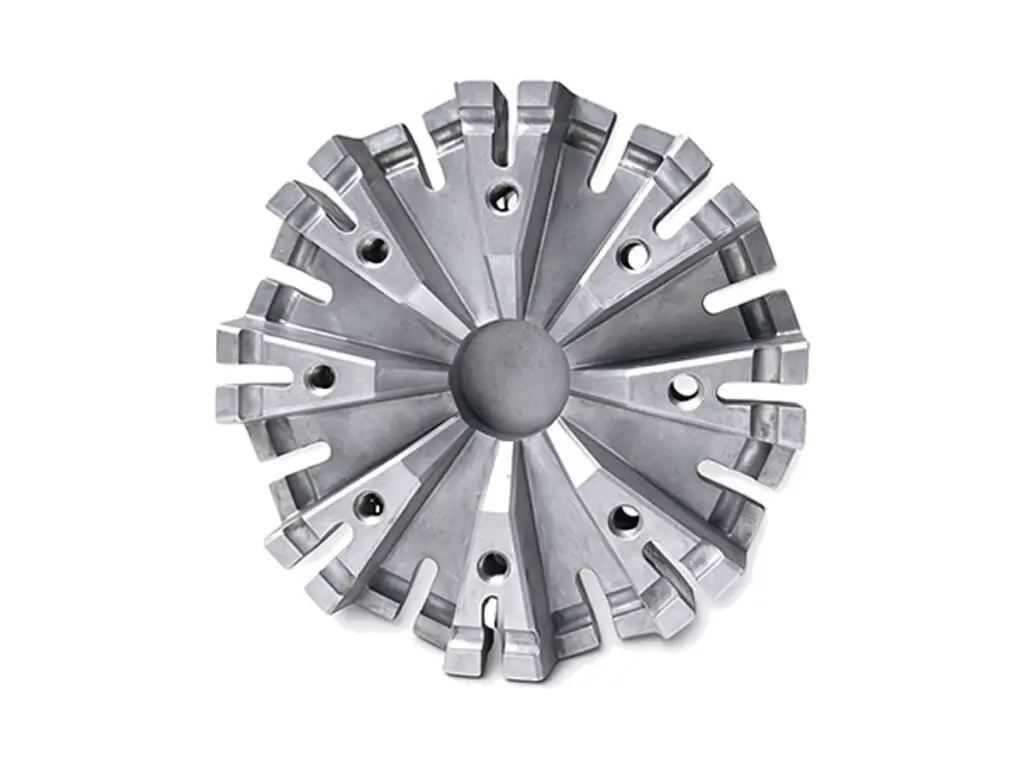
Stainless steel multi jaw clamping plate with eight jaw slots

CNC Machined Stainless Steel Multi Jaw Clamping Plate

Custom stainless steel multi jaw clamping plates for lathe chucks, grinding fixtures and wheel hub clamping, with the jaw slots, bolt circle and register step machined from one setup so the plate seats flat and indexes true.

*Send the chuck interface and the workpiece diameter before the jaw slots are cut, as the slot pitch and the register step depend on both.

Multi Jaw Clamping Plate Overview

Stainless clamping plates that hold a workpiece flat and centred, with jaw stations that repeat to a hundredth of a degree.

A multi jaw clamping plate is the interface between a chuck and the part: it carries the jaw slots, sets the axial position through a register step, and spreads the clamping load across as many contact points as the workpiece can take. On thin rings and wheel hubs the plate is what prevents the part from going oval when the jaws close.

Everything depends on the plate being flat and the stations being equally spaced. If the face is dished, the workpiece rocks and the machined feature inherits the error. If one station is out of position, the clamping force is uneven and the part deflects toward the tight jaw. Both are machining problems rather than assembly problems, which is why the face is ground after milling and every station is cut from a single rotary datum.

SINORISE produces plates from Ø80 to Ø500 mm in 304, 316L and 17-4PH, with three, four, six or eight jaws, equal or unequal spacing, T-slots, relief grooves and register steps. Single plates, matched pairs and small batches are all normal, including replacements for a chuck whose original plate is no longer available.

CNC turning of a brass threaded flange bushing, an aluminum bearing sleeve and a retaining cover disc
304L stainless steel round bar stock for CNC machining

304 / 316L Stainless Steel

304 is the general-purpose choice for clamping plates that see coolant, wash-down and normal workshop humidity. It machines to a clean face, takes a uniform passivation and does not need coating, which keeps the plate dimensionally stable over repeated mounting.

316L is used where the plate is exposed to chlorides, such as salt-spray test fixtures or marine components. It is slightly tougher to machine and more prone to work hardening, so cuts are kept light and the tool never dwells in the slot.

304L stainless steel plate and block stock for CNC machining

17-4PH Stainless Steel

17-4PH is chosen when the jaw slots carry sliding wear or the plate has to hold flatness after repeated clamping. Aged to H900 it reaches about 44 HRC while still being machinable in the solution-treated condition, so the slots are cut first and the plate is aged afterwards.

The trade-off is distortion during ageing. Plates are rough machined with stock left on the face, aged, then finished and ground, so the flatness is produced after the heat treatment rather than before it.

Jaw count, plate diameter and hardening should be specified together, since each changes the slot depth and the grinding allowance.

Multi Jaw Clamping Plate Specifications

Machining, flatness and indexing data for clamping plates, agreed to the chuck interface and the workpiece.

SpecificationMachining DataSpecificationMachining Data
ProductMulti Jaw Clamping Plate / Jaw AdapterJaw Slot MachiningMilling, Slotting, Wire EDM, Grinding
Material304 / 316L / 17-4PH Stainless SteelMounting FeaturesBolt Circle Drilling, Counterbores, T-Slots
Machining ProcessCNC Milling, CNC Turning, Surface GrindingSurface FinishRa 1.6 \\\\µm, Ra 0.4 on Ground Faces
Typical Tolerance\\\\±0.02 mmFlatness0.02 mm over the Full Face
Outer Diameter\\\\Ø80 \\\\– \\\\Ø500 mmIndexing Accuracy\\\\±0.01\\\\° Between Jaw Stations
Jaw Configuration3 / 4 / 6 / 8 Jaws, Equal or Unequal SpacingJaw Slot Width+0.02 / 0 mm to Drawing
Machined FeaturesJaw Slots, Bolt Circle, Register Step, Relief GroovesDrawing FormatSTEP, STP, IGES, DWG, DXF, PDF
Hardening17-4PH to H900 (44 HRC) on RequestLead Time7\\\\–12 Days (Prototype), 12\\\\–20 Days (Batch)
InspectionCMM, Surface Plate, Slot Gauge, Indexing CheckPackingOiled, VCI Bag, Padded Crate

Key Features of Our Clamping Plates

Made to hold a part flat, centred and square, batch after batch.

Single-Datum Jaw Stations

Every jaw slot is cut from the same rotary datum in one setup, so the angular spacing is a machine result rather than an assembly result, and the stations stay within ±0.01° of each other.

Ground Flat Face

The plate is milled, stress-relieved and surface ground so the face stays flat to 0.02 mm. A flat face is what stops thin rings from rocking and going oval under clamp load.

Chuck Interface Machining

Register step, bolt circle and counterbores are machined to the existing chuck dimensions, so the plate mounts without shimming and repeats its position when removed and refitted.

Wear and Corrosion Options

17-4PH is aged to H900 for sliding wear, austenitic grades are passivated or electropolished, and hard chrome or nitriding is available on jaw faces that see constant movement.

Need a plate that repeats on the chuck?

Surface Finishes for Stainless Clamping Plates

Finishing on a clamping plate is mostly about cleanability and wear, since the functional face is ground rather than coated.

FinishMain PurposeFinishMain Purpose
As MachinedBare milled surface for welded or painted fixturesPassivationRemoves free iron and machining residue from stainless
ElectropolishingDeburrs jaw slots and improves cleanabilityBead BlastingUniform matte face before coating or marking
Hard ChromeWear resistance on sliding jaw facesLaser MarkingStation numbers and jaw identification

*Coating thickness on a register step or jaw slot changes the fit, so coated surfaces are masked or machined oversize before treatment.

logo

Put your CNC milling parts into production today

All information and uploads are secure and confidential.

Trusted for Precision CNC Machined Components

Supporting OEM projects with accurate machining, flexible production, and reliable component quality.

Mechanical Equipment Customer
Both plates in the pair indexed the same, so we could swap them on the chuck without re-tramming.

Industrial Components Buyer
The face stayed flat after the first month of clamping, which was the problem with the previous supplier.

Equipment Manufacturer
Jaw slots were cut to the width we asked for, and the mounting bolts went in without reaming.

OEM Customer
OEM Customer
They measured our chuck before machining, which avoided a fitting issue later in assembly.

Automation Industry Customer
The customized machining solution provided the dimensional accuracy required for our rotating equipment components.

Trusted for Precision CNC Milling.

CNC Machining Process for Clamping Plates

Each plate follows one route from chuck measurement to indexing report, so the face, the register and the jaw stations are all produced against the same datum.

01. Interface Measurement

Measure or model the chuck bolt circle, register diameter and jaw slot pitch, then agree the workpiece diameter and jaw count.These three dimensions fix the plate geometry before any material is cut.

02. Rough Machining

Turn the outside diameter and register step, mill the face with stock left for grinding, and drill the bolt circle. 17-4PH plates are aged at this point, before the jaw slots are finished.

03. Jaw Slot Machining

Cut the jaw slots from a single rotary datum, with the slot width held to +0.02 / 0 mm and the slot floor square to the face. Relief grooves and T-slots are machined in the same operation.

04. Grinding and Finishing

Surface grind the face to 0.02 mm flatness, then deburr the slots and apply the specified passivation, electropolishing or hard chrome with the functional faces masked.

05. Indexing Inspection

Check each station on a CMM against the first, measure flatness on a surface plate, and gauge the slot width. The indexing spread and flatness figures are reported with the plate.

Replacing a worn plate or building a fixture around a new chuck? Send the interface dimensions and the workpiece to start the review.

CNC Machining Milling Clamping Plate FAQs

The part being held. Three jaws suit round and hexagonal work, four jaws suit square and rectangular work or independent centring, and six or eight jaws are used where the clamping load has to be spread to avoid distorting a thin ring or a wheel hub.

Yes. Send the chuck model or measure the bolt circle, register diameter and jaw slot pitch on the existing plate. The new plate is machined to those interfaces and checked against a drawing before the jaw slots are cut.

Each jaw station is machined from the same rotary datum, then checked on a CMM against the first station. The reported figure is the total spread across all stations, not the repeatability of one station.

17-4PH plates are aged to H900, about 44 HRC, when the jaw slots carry sliding wear. Austenitic grades such as 304 and 316L cannot be hardened by heat treatment, so wear faces are either nitrided or fitted with hardened inserts.

0.02 mm over the full face is standard for plates up to Ø300 mm, and 0.03 mm for larger plates. Finer flatness is produced by surface grinding after milling, with the plate stress-relieved between the two operations.

Yes. Plates are usually supplied in pairs, bored and slotted together, with the register step and bolt circle matched so either plate can be mounted on the same chuck without re-tramming.

Other CNC Machined Mechanical Components

Explore additional precision CNC machined components manufactured for OEM applications and customized production needs.

Custom CNC machined aluminium fuel pump blocks for automotive and motorsport fuel systems.

Custom CNC machined aluminium brake booster check valve bodies for motorcycles and automotive systems.

Custom CNC machined steel hydraulic connectors and adapters for 350 bar systems.

Custom CNC machined aluminium filament stand brackets for 3D printer spool holders.

Custom CNC machined aluminium drone components, including arm mounts, motor mounts and frame fittings.

Get high‑quality machined parts in as fast as 4 days with our expanded automated CNC milling!

Scroll to Top