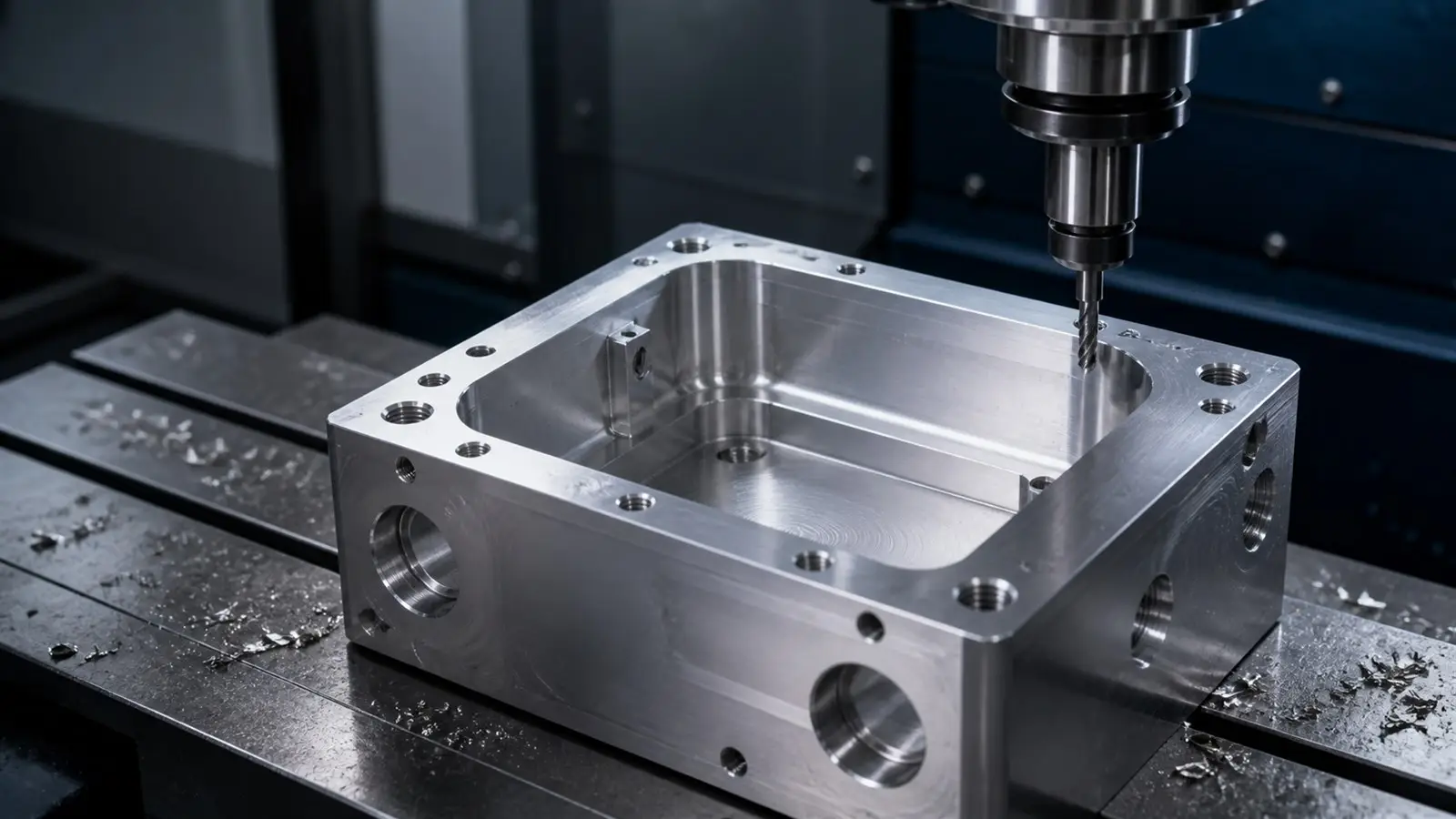
How to Choose Reliable CNC Machining Services for Precision Parts

Certifications and Quality Systems: The Foundation of Reliable CNC Machining Services Why ISO 9001, AS9100, and ITAR Compliance Signal Process Rigor and Traceability Having proper certifications is really what makes CNC machining services reliable and credible. The ISO 9001 standard basically sets up a whole system for managing quality. It needs written down procedures, ongoing improvements, and processes that actually focus on customers. For aerospace work specifically, there’s this other certification called AS9100 which takes things even further. It brings in strict ways to handle risks, control how parts are configured, and check the very first article made. Then we have ITAR compliance too, which means sensitive defense information gets handled properly and isn’t exported illegally. All these standards together make sure materials can be tracked from start to finish, keep detailed records that can be checked anytime, and maintain complete documentation throughout. These aren’t just nice to have features anymore they’re absolute must haves when working in tightly controlled industries such as aerospace manufacturing, making medical equipment, or anything related to national defense. How Certified Processes Enable Consistent Achievement of Tight Tolerances (±0.0002″ or Better) When it comes to manufacturing, certified systems really make the difference between theory and actual results that hold up from one batch to another. Getting those tight tolerances down to around ±0.0002 inches isn’t just about buying expensive machinery. It takes serious discipline on the shop floor too. Think about maintaining stable temperatures to prevent parts from expanding or contracting unexpectedly, keeping tabs on how tools wear down over time, and making sure machines stay calibrated using laser interferometers at regular check points. Coordinate measuring machines, or CMMs as they’re commonly called, aren’t just for checking finished products anymore. These devices verify dimensions while parts are still being machined, which allows technicians to catch issues right away rather than waiting until after everything’s done. What makes all this work so well is the feedback loop built into these quality standards. Studies show this approach cuts down on dimensional variations by roughly 78% when compared to shops without proper certifications. Manufacturers end up with consistently accurate parts even when dealing with intricate shapes, no matter if they’re producing single units or running large production batches. Technology and Capability Alignment: Matching CNC Machining Services to Your Part’s Complexity When looking for CNC machining services, it’s important to match what the machines can do with what the part actually needs geometrically and functionally. Parts that are really complex like turbine blades, those orthopedic implants people need for surgery, or even parts for satellites typically need multi axis machining either 4 or 5 axis systems to reach all those tricky shapes and deep pockets without having to constantly move the part around manually. Take aerospace impellers for instance. The 5 axis option reduces setup mistakes by about two thirds and maintains super tight tolerances around plus or minus .0002 inches. Another big factor? Operators who truly understand GD&T which stands for Geometric Dimensioning and Tolerancing. They need to read those profile specs, position requirements, and runout measurements correctly when dealing with curved surfaces, asymmetrical designs, and those delicate thin walled sections that break so easily. Integrated CAM software serves as the computational bridge between design intent and physical output by: Simulating toolpaths to prevent collisions in delicate geometries Optimizing feed/speed parameters for heat-sensitive alloys like titanium Enabling adaptive adjustments during high-speed milling When paired with preventive maintenance, ceramic or polycrystalline diamond (PCD) tooling, and metrology-trained personnel, this integrated approach reduces dimensional variability by 45%—especially vital for mission-critical parts with wall thicknesses under 0.004″. Material Expertise and Design for Manufacturability (DFM) Partnership Proven Experience with Challenging Alloys (Titanium, Inconel, Composites) as a Benchmark for Reliability Working with titanium, Inconel, and those tough composite materials goes way beyond having stronger cutting tools. The problems are different for each material. Take titanium – it doesn’t conduct heat well so hot spots build up during machining. Inconel gets harder as it works, which wears down tools faster than anyone wants. And carbon fiber? Cut it wrong and it starts coming apart layer by layer. Shops that actually have experience with these materials show something more than what their equipment specs say. They know how to manage heat distribution, get chips out efficiently, and sequence operations to keep parts from warping or breaking. This kind of know-how makes all the difference when trying to hit those tight tolerances around +/- 0.0005 inches or better. It also creates better communication between design teams and manufacturing folks early on. Real engineers who’ve spent years making titanium brackets or working on Inconel manifolds will spot trouble spots before they become problems. They might suggest changing draft angles to prevent vibration issues or recommend specific stress relief techniques before doing final finishes. This approach cuts down on waste by roughly 30% and speeds up getting prototypes ready. Look for companies that can show actual project examples rather than just listing alloys they handle. Practical experience tells the real story about whether someone can be trusted with complex machining jobs. Inspection, Metrology, and Full Traceability in CNC Machining Services CMM Validation, In-Process Gauging, and Lot-Level Traceability from Raw Material to Final Shipment Good CNC machining shops don’t just use metrology at the end of production. Instead they integrate it throughout the whole process as part of their real time quality control. CMMs can check complex shapes and tight tolerances automatically with measurements accurate to within 0.0002 inches. Meanwhile during actual machining operations, touch probes or laser scanners spot problems early on, which then triggers automatic adjustments to the cutting path. The tracking system is pretty comprehensive too. Every single part gets linked back to where it came from including material certifications like mill test reports, heat treatment records, what machine made it, who operated it, and all inspection data. All this info stays connected through special codes that make everything traceable. Having such complete documentation makes finding the source of issues much faster. It also meets those tough industry standards like FDA regulations for medical devices, aerospace specs under AS9100, and general manufacturing requirements from ISO 13485. According to recent industry stats from 2023, this approach cuts down on defective products escaping detection by almost half compared to old fashioned end of line checks. Operational Discipline: Lead Time Realism, Scalability, and Collaborative Communication What really sets reliable CNC partners apart from those who just want to make a quick sale is their operational discipline. Good companies stick to realistic lead times based on actual production capabilities instead of trying to hit arbitrary sales numbers. This approach keeps quality intact even when schedules get tight. When business scales up or down, smart shops handle the changes through standard operating procedures, staff trained in multiple areas, and built-in buffer capacities rather than resorting to overtime work or outsourcing parts out. Communication isn’t just about sending regular progress reports either. The best partners give input during initial design stages, have clear processes for resolving issues with component tolerances, and let clients see real time data from shop floor systems. Beyond simply avoiding project delays, these methods cut down on expensive corrections later on, preserve dimensional accuracy throughout production increases, and most importantly create lasting relationships based on predictable performance over time.

Read More »

Trends in Machining Small Parts CNC for High-Volume Production

Parametric Cost Optimization & Enterprise-Grade Scalability in High-Precision Small-Part CNC Machining For high-volume production environments, CNC machining of small parts delivers unparalleled cost efficiency and scalability through deliberate process optimization. Two fundamental approaches drive significant per-part cost reduction while maintaining production flexibility. Per-Part Cost Rationalization via Strategic Cycle Time Optimization & Setup Streamlining Getting those cycle times down starts with better toolpaths such as trochoidal milling and what’s called HEM (high efficiency machining). These approaches can really boost how much material gets removed from parts, maybe around 30 to 50 percent more than traditional methods, plus they tend to be gentler on cutting tools. At the same time, shops need to cut down all that downtime between cuts. Quick change tool systems help here since swapping out worn bits takes less than half a minute now instead of minutes. Pallet changers keep things moving without stopping the machine when switching workpieces. And programming away from the actual machine means no wasted hours waiting for setups. All these improvements together mean machines stay busy cutting rather than sitting idle. Since spindle time is basically money in CNC shops, this kind of optimization makes a huge difference in bottom line costs especially when running big production runs. Enterprise-Level Economies of Scale via Unified Tooling, Fixturing & Batch Programming Standardization Standardization transforms scalability in small part manufacturing through three key pillars: Standardization Pillars Scalability Amplification Impact Cost Reduction Mechanisms Modular tooling systems 70% faster job changeovers Reduced tool inventory & setup labor Unified fixturing interfaces Single-minute exchange of dies (SMED) capability Elimination of custom fixture costs Batch programming logic Concurrent machining of multiple components 40% less programming time per part This approach enables lights-out production of identical small parts across extended runs. Nesting multiple components within single fixtures further amplifies material yield and machine utilization. As volumes increase, standardized workflows consistently lower per-unit costs by 20–30% while maintaining micron-level precision—making CNC machining ideal for scalable production. Cutting-Edge Multi-Axis CNC Capabilities for Micron-Level Precision Small-Part Machining Micron-Level Accuracy & Geometric Complexity Maximization via 5-Axis Machining: Secondary Operation Eradication The latest 5 axis CNC machines have really changed how we machine those tiny components. These systems let the cutting tool move at the same time in several different directions. What does this mean for actual work? Well, complicated shapes like turbine blades or medical implants can all get made in one go instead of needing multiple setups. This cuts down on extra work steps by somewhere around 40 to maybe even 60 percent depending on what’s being made. The shorter tools used in these processes actually give better surface quality too, and they don’t shake as much which means fewer mistakes from vibrations. Those tricky curves and angles that once needed constant adjusting by hand are now handled automatically with tolerances right around plus or minus 0.005 mm. Getting rid of all those fixture changes saves time and money because there’s no need to realign everything every time. Production runs faster without losing precision, which is why so many shops are making the switch these days. Micron-Level Repeatability Assurance via Precision Thermal Compensation & Rigid Machine Engineering Getting consistent precision at the micron level requires special engineering to fight off thermal drift and mechanical stress issues. Most modern machines use rigid cast iron frames filled with polymer concrete to absorb those annoying harmonic vibrations when doing high speed cutting operations. Some systems now have real time thermal sensors built right into the spindle housing and ball screws. These sensors kick in compensation algorithms that can tweak tool paths anywhere from 2 to 5 microns for every degree Celsius temperature change according to recent research from ASME’s Machine Tool Study in 2024. And don’t forget about linear motor drives which keep positioning accuracy under 1 micrometer even after running through batches of 10,000 parts. All these technical tricks mean manufacturers can produce parts where the very first piece looks exactly like the last one, meeting those tough aerospace standards consistently throughout entire production runs. Intelligent Automation & Autonomous Lights-Out Manufacturing for High-Volume CNC Production Ultra-Precision Part Handling via Collaborative Robotics & Intelligent Servo-Gripper Integration Today’s CNC shops are seeing amazing boosts in productivity thanks to collaborative robots with those fancy servo electric grippers. These robotic systems can hold their position within just 0.02 mm during part transfers, which means factories can run nonstop day after day without needing someone to watch over them constantly. What really stands out though are these advanced grippers that sense force levels. They adjust on the fly to tiny differences in parts size something absolutely essential when dealing with things like tiny medical implants or those delicate electronic connectors we all rely on. One big name in automation recently shared some impressive numbers their clients saw 40% quicker setup times when they switched to standard tooling interfaces. Plus, they knocked down their reject rate to under 0.1% simply by keeping grip pressure consistent across all operations. Getting rid of human mistakes during fast paced transfers makes a huge difference, especially important for aerospace work where even the smallest scratch can mean millions in lost revenue. Autonomous Unattended Operation Enablement via Integrated Automated Workflows (Loading, Machining & Inspection) Modern lights out manufacturing setups bring together things like automatic pallet changers, process checking devices, and smart cameras all working together as one smooth operation. The whole system keeps checking quality as parts are being made, and special temperature adjustment features help maintain super tight measurements even when machines run non stop for long periods without anyone around. Looking at what’s happening across the industry, companies that have gone fully automated tend to see their return on investment triple within about a year and a half. This happens mainly because they save so much money on wages and don’t lose any time switching between different work shifts anymore. Intelligent CNC Ecosystems: IoT & AI-Powered Predictive Process Governance Proactive Tool Wear Detection via Real-Time Spindle Load & Vibration Monitoring Today’s CNC machines are equipped with IoT sensors that monitor how much stress the spindle is under and pick up on vibration patterns when running at high volumes. For small part manufacturing especially, something as simple as a worn down cutting tool can throw off dimensions enough to cost around $740,000 each year just for fixing mistakes according to Ponemon’s research from last year. The system creates what we call baseline profiles first, then uses artificial intelligence to spot tiny shifts in how hard the material resists cutting plus strange sounds coming through the machine. These signals tell operators about tool wear long before anyone actually sees any damage happening. With this kind of constant watch, shops can replace tools right when they schedule maintenance breaks instead of dealing with surprise breakdowns. Most importantly, all these improvements help keep products within really tight specifications, usually staying within about half a thousandth of a millimeter difference between batches. Dimensional Drift Prediction & Correction via ML-Powered SPC Data Analytics Machine learning turns SPC data into something manufacturers can actually use for predictive maintenance. When looking at past machining numbers versus actual dimensions, the system spots patterns nobody would catch manually. Thermal expansion issues or variations in materials often lead to tiny shifts at the micrometer level over long production runs. Smart algorithms pick up on these subtle changes by watching how temperature builds up and how cutting forces behave before parts start going out of spec. Once it detects problems, the system makes automatic tweaks to things like feed speed or coolant delivery to fix what’s happening on the shop floor. Factories report around a 60% drop in scrap when running this kind of setup for making lots of small components. What’s really nice about this whole process is that quality stays steady throughout production shifts, no matter if workers are present or not during overnight runs. Predictive Monitoring Modalities Core Performance Metrics Small-Part Production Impact Spindle Sensors Load variance, Vibration frequency Prevents micro-burrs and surface defects SPC Analytics Thermal drift, Cutting force patterns Maintains micron-level geometric accuracy

Read More »

Innovations in Multiaxis CNC Machining Complex Parts for Industrial Applications

Advanced Multiaxis CNC Machining: Enabling High-Precision Complex Part Fabrication Simultaneous 5-Axis Kinematics & Geometric Freedom for Intricate Feature Machining Multiaxis CNC machining revolutionizes how complex parts get made because it lets machines move along five different axes at once. Think of it as having cutting tools that can rotate while moving forward/backward, left/right, and up/down all within one operation. No more stopping to manually adjust positions when working on intricate shapes like those seen in airplane engine components or surgical devices. Traditional three-axis machines need several setups and lots of adjustments, but five-axis tech hits around plus or minus 0.01 millimeters accuracy and cuts down production time by almost two thirds for things such as turbine blades. What makes this so powerful is the ability to create tricky geometries that just aren’t possible with older methods. Fewer fixtures mean less chance for mistakes during setup. Plus, keeping the tool constantly engaged with the material results in smoother finishes reaching about Ra 0.4 microns roughness level, which matters a lot for proper function in automotive fuel injection systems where even tiny irregularities affect performance. Precision Engineering Paradigms: Sub-Micron Tolerance Achievement in Complex Part Machining Multiaxis CNC machines can achieve incredibly tight tolerances down to around 0.005 mm thanks to their sturdy construction, built-in thermal compensation features, and constant feedback mechanisms. These systems monitor spindle performance at high frequencies to adjust for tool bending when working on tough materials like titanium used in aircraft brackets. Special linear measuring devices pick up even the tiniest size variations at the micron level. The importance of this kind of accuracy becomes clear in medical fields where things like spinal implants need to stay stable within just 5 microns for proper bone integration. When all machining steps happen in one go rather than multiple setups, overall error accumulation drops dramatically – studies show about a 90% reduction in cumulative tolerances. What really makes these advanced systems tick? A combination of smart engineering design and cutting edge sensor technology working together seamlessly. Precision Factor Impact on Complex Parts Volumetric error compensation Corrects positional drift across large work envelopes Adaptive toolpath control Maintains consistent chip load in deep-pocket milling Micro-tool capabilities Machines features as small as 0.2 mm in watch gears Integrated probing systems validate dimensional accuracy during lights-out production, ensuring compliance with AS9100 aerospace standards without reliance on post-process inspection. Operational & Economic Value Propositions of Multiaxis CNC Machining for Complex Parts Setup Minimization, Cycle Time Optimization & Autonomous Lights-Out Manufacturing Efficiency Multiaxis CNC machining makes production faster because it combines several steps into just one setup. When using those 5-axis machines with both A and B axis movement at once, manufacturers can work on complicated shapes without stopping to reposition parts. Setup times drop around 80%, while actual machining takes about 75% less time according to what we see across the industry. For example, making turbine blades gets four times more efficient with these systems. Running machines without constant supervision allows factories to operate overnight when nobody’s there, which saves money on labor costs somewhere around $740k each year according to Ponemon’s research from last year. Plus, doing everything in one go means fewer mistakes pile up over time, keeping tight tolerances right down to plus or minus 0.0002 inches across all produced items. Superior Surface Integrity & Dimensional Consistency Across Complex Geometries Multiaxis systems employ sophisticated toolpath techniques that help keep cutting angles just right when working on those complex curved surfaces. This approach cuts down on tool deflection and unwanted vibrations during operation. When rotational axes are properly positioned, tools don’t need to stick out as far, which makes everything stiffer and results in smoother finishes under 8 Ra microns without needing any extra polishing steps. For industries like aerospace and medical device manufacturing, this kind of consistency matters a lot because even tiny cracks caused by uneven machining can cause parts to fail way before their expected lifespan. Some manufacturers report around a 40% reduction in heat affected areas using hybrid toolpaths, which helps maintain the structural properties of tough materials such as titanium and Inconel that are commonly used in demanding applications. Critical Industrial Verticals Driving Multiaxis CNC Machining Innovation Aerospace Sector: Turbine Blades, Structural Brackets & Ultra-Tight-Tolerance Complex Components The aerospace industry relies heavily on multiaxis CNC machining for creating those vital parts that keep planes flying safely. Think turbine blades with intricate internal cooling channels or structural brackets that need tolerances down to less than 0.01 mm. When working with tough materials like titanium and nickel-based superalloys, the simultaneous movement across five axes really makes a difference. This approach cuts down on wasted material significantly, around 40% less scrap compared to traditional three-axis techniques. Getting surface finishes under 0.4 micrometers roughness average is no small feat either, something that meets those strict performance standards demanded in aviation. And let’s not forget about all those complicated fuel system housings and landing gear components. With single setup machining, manufacturers see better results in production speed while maintaining consistent dimensions across batches, which matters a lot when every part counts. Medical & Robotics Domains: Implants, Surgical Guides & Miniaturized Complex Components In both medical and robotics fields, multiaxis CNC machining plays a vital role in creating those biocompatible titanium spinal implants we see today. These implants have specially designed porous surfaces that help them integrate better with bone tissue. When it comes to surgical guides, they maintain around 5 microns of dimensional stability which helps doctors get things aligned just right during surgery. What makes this technology impressive is how it works with really tiny components too small for most other machines. Think about those little joints in robotic forceps or sensor mounts measuring less than 2 millimeters across. The system actually checks these microscopic features as they’re being made through built-in probing mechanisms. Manufacturers find that cutting out about two thirds of the extra steps needed after initial production leads to better overall yields and fewer issues when meeting regulatory standards. Emerging Technological Innovations Accelerating Multiaxis CNC Complex Part Machining The hybrid manufacturing approach is changing what’s possible with multiaxis CNC machines when it combines additive processes with traditional subtractive techniques all on one platform. Parts can now be built closer to their final shape with complex internal structures and organic forms, then finished with incredibly fine surface details at the micron level. Look at the latest generation of 6-axis machines with direct drive rotary tables – they spin at speeds above 40 RPM but still hold tight tolerances around 0.0002 inches, cutting down production cycles by as much as three quarters compared to older equipment. Factories are starting to integrate IoT sensors alongside machine learning software that constantly tweaks machining settings based on factors like vibrations, heat buildup, and how worn tools get during operation. These intelligent manufacturing setups use predictive maintenance routines and automatic pallet switching to run complex aerospace and medical parts without constant human oversight. And as AI vision systems continue improving, quality checks happen in real time so surface finishes stay consistently smooth, often under 0.4 microns Ra even on tricky curved surfaces and irregular shapes.

Read More »

Advantages of Anodized Aluminum Metal CNC for Aerospace and Automotive Industries

Premium Corrosion Resilience & Structural Robustness of Anodized Aluminum CNC Components Aerospace & Automotive Sector Imperatives: Extreme Environmental Resilience Requirements Components used in aerospace and automotive applications have to deal with some truly brutal operating conditions. For aircraft parts, there’s the constant battle against sudden changes in atmospheric pressure, moisture at high altitudes, and those harsh deicing chemicals that eat away at materials over time. On the ground side of things, car parts are constantly battling road salt – sometimes as much as 1.2 tons per mile gets spread each year – plus all sorts of acidic stuff from exhaust fumes that causes pits and cracks in metal surfaces. When aluminum components aren’t properly protected, they start corroding rapidly whenever they touch different types of metal like steel bolts. This leads to problems across various applications including wing brackets on planes, battery trays in electric vehicles, and suspension parts in cars breaking down way before their expected lifespan. The aerospace and automotive sectors need materials that can hold up structurally and keep performing mechanically for at least 15 years despite all this wear and tear from temperature fluctuations and physical stress. Electrochemical Anodization: Forging a Hard, Non-Reactive Oxide Barrier on Precision Aluminum CNC Components When we talk about electrochemical anodization, what we’re really looking at is a process that takes precision machined aluminum and turns it into something much tougher on the surface. How does this work? Simple enough actually – immerse the aluminum in sulfuric acid electrolyte while applying some controlled voltage. What happens next is pretty interesting. The aluminum gets oxidized right there where it sits, forming a thick, crystalline layer of alumina (Al2O3) that grows straight out from the surface itself. Think about how different this is compared to regular paint jobs or plating techniques which just stick onto the metal surface. With anodization, the oxide actually forms bonds at the molecular level with the original aluminum material underneath. This creates a bond so strong that… 1200–1500 Vickers hardness, far exceeding untreated aluminum (150–200 HV) Neutral pH stability across a broad 3–11 range Sealed nanopores via hydrothermal treatment, effectively blocking chloride ion ingress This integrated barrier isolates the aluminum core from environmental contaminants while preserving dimensional stability within ±0.003″ tolerances—making anodized CNC parts ideal for salt spray testing beyond 2000 hours and certified for AS9100 and IATF 16949-compliant applications. Precision Engineering Paradigms: Micron-Level Tolerances & Repeatable Quality in Anodized Aluminum CNC Flight-Critical Avionics & EV Powertrain: Micron-Level Accuracy Imperatives Even tiny micron-level changes won’t cut it when we’re talking about flight critical systems or anything dealing with high voltage. For avionics housing parts, keeping things stable within plus or minus 0.0001 inches is absolutely essential if sensors are going to stay aligned despite all that vibration and temperature swings during flight. And don’t get me started on electric vehicle powertrains. Motor controllers and those battery contact points need to be flat within about 0.0002 inches to stop those pesky micro-arcs from happening and wasting precious energy. Let’s put this into perspective: just a 25 micron misalignment in battery busbars can boost electrical resistance by around 15%, which means higher chances of dangerous thermal runaway situations. That’s why anodized aluminum CNC machining has become so important. With modern coordinate measuring machines (CMMs) that can check details down to half a micron, manufacturers can ensure their products remain consistent batch after batch, meeting these incredibly tight specifications day in and day out. CNC Machining Best Practices: Preserving Dimensional Stability Pre & Post-Anodization Achieving consistent precision requires intentional process control before, during, and after anodization: Pre-machining compensation: Undersizing critical dimensions by 100–300% of expected anodic growth (typically 0.0005″–0.002″) ensures final geometry remains within spec Thermal management: Stabilizing workpiece temperature during machining mitigates aluminum’s high coefficient of thermal expansion (23 µm/m·°C), reducing post-machining distortion Post-anodization validation: Automated CMM-based statistical process control (SPC) detects sub-micron dimensional shifts—critical for turbine sensor mounts and power inverter housings requiring ±0.0003″ positional accuracy These protocols ensure the combined benefits of CNC precision and anodized protection meet stringent aerospace and automotive quality standards. Lightweight High-Performance Paradigm: Weight Optimization Without Structural Compromise Reducing weight continues to be one of the most important goals for engineers because it affects so many aspects like fuel consumption, how far something can go, what gets emitted into the air, and how well it handles. Components made from anodized aluminum through CNC machining offer really good strength compared to their weight. Aluminum weighs about 60 percent less than steel but still holds up under similar loads. What makes this even better is that when we apply an anodized coating, it doesn’t add much extra weight at all. This means we keep all those benefits of being light while also getting harder surfaces and maintaining accurate dimensions over time. The result is measurable performance gains: 7–12% improved fuel efficiency in commercial aircraft 15–20% extended driving range in electric vehicles Reduced lifecycle emissions across transportation sectors Precision CNC machining further enhances this benefit by removing excess material only where structurally unnecessary—retaining strength where loads concentrate. Tested under real-world vibration and fatigue cycles, anodized aluminum outperforms conventional alternatives, offering durability that aligns with both safety-critical design requirements and sustainability goals. Thermal Management & Electrical Functionality: Dual Advantages of Anodized Aluminum CNC Components Balancing Core Thermal Conductivity & Anodized Layer Electrical Insulation Anodized aluminum CNC components bring together two important properties that make them stand out in today’s aerospace and electric vehicle applications. They conduct heat really well but also provide good electrical insulation at the same time. This combination is pretty critical for these industries. The actual aluminum part helps get rid of excess heat from delicate electronic components inside things like batteries and aircraft computer systems. Meanwhile, the special anodized coating forms a kind of protective shield against electricity leakage. This matters a lot when dealing with high voltage situations we see in electric car power systems or aircraft movement controls where accidental short circuits could cause serious problems. Compared to polymer coatings or thermal interface materials, the oxide layer that forms through metallurgical bonding keeps its insulating properties stable even when temperatures swing from -40 degrees Celsius all the way up to 150 degrees Celsius. Plus it holds up after many cycles of heating and cooling. No extra insulators or thermal pads are needed anymore, which cuts down on parts and simplifies assembly processes quite a bit, maybe around 30 percent in those tight spaces where components are packed closely together. What this means for designers is products that are not only safer but also lighter weight with better heat handling capabilities. And best of all, there’s no longer that frustrating compromise between getting good cooling and maintaining proper electrical separation. Industrial Validation & Adoption: Aerospace & Automotive Leader Endorsements Boeing 787 Structural Brackets & Tesla Model Y Battery Enclosure Components Major players in manufacturing aren’t just testing anymore; they’re rolling out these technologies across entire production lines now. Take Boeing for instance. The company uses anodized aluminum CNC components throughout the structural brackets of its 787 Dreamliner aircraft. Why? Because this material stands up to corrosion, handles repeated stress without failing, and maintains its shape even when subjected to the harsh conditions of commercial aviation. Tesla has done something similar with its Model Y electric vehicles. The automaker incorporates anodized aluminum CNC parts into the battery enclosures where electrical insulation matters most, while also benefiting from better heat dissipation properties and added protection during collisions. These real world applications show how critical material selection becomes when engineering products that need to perform reliably over time. The numbers back it up: parts made from anodized aluminum last at least five times longer in those standard salt spray tests compared to regular untreated pieces according to research published in the Materials Performance Journal last year. What really matters though is how consistent these parts stay throughout production runs. The precision machining process works reliably both before and after applying the anodization treatment, maintaining measurements down to the micron level even when manufacturing tens of thousands of identical components. Automotive manufacturers, aerospace companies, and medical device makers all rely on this technology for critical applications where failure just isn’t an option. When safety standards demand absolute reliability and parts need to last through harsh conditions without corroding or breaking down, anodized

Read More »

Finding the Best Machined Part CNC Provider for Your Industrial Needs

Ultra-Precision, Process Repeatability & Quality Assurance Paradigms in CNC Machined Part Production Tolerance Mastery & Statistical Process Control (SPC): Cornerstones of Reliable CNC Machined Part Output Getting tight tolerances right means parts fit together properly when they come off the CNC machine. Statistical Process Control or SPC helps manufacturers keep tabs on what’s happening during production runs. Big shops rely on SPC systems to catch problems as they happen, like when machines start drifting due to heat buildup or tools begin wearing down. Some plants report cutting their scrap rates between 30 and 40 percent just by implementing good SPC practices for large batches. Take automotive valve seats for instance. These need to stay within about half a thousandth of an inch tolerance. If they don’t, engines can fail completely. The Ponemon Institute put the average cost of such quality issues at around $740,000 back in 2023. When SPC isn’t in place, small changes in the manufacturing process go unnoticed until it’s too late. Even if parts technically meet specs, inconsistencies from one batch to another can still lead to reliability problems down the road. Cpk Metrics & First-Article Inspection (FAI): Real-World Impact on Aerospace & Medical CNC Machined Part Deliverables When talking about aerospace components or medical equipment, the Cpk value tells us whether a manufacturing process stays within required specifications most of the time. Getting a Cpk score above 1.33 means we’re looking at around 99.99% conformity rate. This matters a lot when making things like titanium spinal rods or jet engine turbine blades because even tiny defects can lead to expensive revision operations or worse, mid-air failures. First Article Inspection, commonly called FAI, checks if the first batch of products actually matches what’s on those engineering blueprints and meets all necessary regulations. Aerospace industries follow AS9102 guidelines while medical device manufacturers stick to ISO 13485 requirements. Nobody skips FAI these days since it forms the foundation for tracking product history and holding everyone accountable. Take spinal implants as an example. When companies do full FAI checks on every single unit, they prevent costly revision procedures that run anywhere from fifty thousand to a hundred grand each time something goes wrong. Plus, this approach significantly reduces potential legal problems down the road. Industry-Aligned Certifications, Technical Capabilities & Readiness Benchmarks for CNC Machined Part Providers AS9100, ISO 13485 & IATF 16949: Strategic Certification Alignment for CNC Machined Part Applications Certifications aren’t just boxes to check off on a form. They actually show whether a company has built quality into its operations from day one. Take AS9100 for example it demands strict statistical process control, complete tracking of materials throughout production, and proper handling when things go wrong these are absolute must haves for parts that literally go into aircraft. Then there’s ISO 13485 which focuses heavily on proving materials won’t harm patients, setting up safe sterilization methods, and designing medical devices with risks in mind. The automotive world relies on IATF 16949 standards too. This framework pushes companies to prevent defects before they happen, conduct regular process checks, and establish clear procedures for escalating issues within supplier networks. Companies that skip getting certified for their specific industry simply don’t have the proven systems required for critical applications. Medical device makers who ignore ISO 13485 tend to get rejected by the FDA at around 73% higher rate than those with proper certification. Similarly, aerospace vendors without AS9100 compliance usually fail the first round of audits from major aircraft manufacturers. Industry Required Certification Key Quality Focus Aerospace AS9100 Material traceability Medical Devices ISO 13485 Sterilization validation Automotive IATF 16949 Defect prevention systems Matching certification to application isn’t about compliance alone—it’s about ensuring your supplier’s quality infrastructure aligns with your product’s risk profile and regulatory pathway. CNC Machine Technology Alignment: Precision Platform Selection for Machined Part Geometry & Production Volume 3-Axis vs. 5-Axis Mill-Turn Systems: Optimizing Geometric Complexity, Setup Efficiency & Lead Time in Precision CNC Machining When deciding between 3-axis and 5-axis mill-turn platforms, geometry plays a bigger role than many people realize, though budget certainly matters too. Three axis machines work great for making lots of simple shaped parts, but they need several different setups when dealing with complicated shapes. This leads to longer handling times, higher chances of alignment errors, and overall production delays of around 30 to 50 percent according to research published in the Precision Engineering Journal last year. Five axis systems handle all those tricky curves, recesses, and angled surfaces during just one setup process. No need to keep repositioning components means less manual handling (about 60% reduction) and significantly shorter cycle times, sometimes cutting them down by nearly half. For things like aircraft engine components or tiny surgical screws, this makes all the difference since repeated setups can actually cause dimensional problems that violate GD&T standards. Key alignment factors: Complexity: 5-axis handles organic, asymmetric, or highly contoured geometries; 3-axis suits planar, symmetrical parts Volume: 3-axis delivers lowest cost-per-part for simple, high-run volumes; 5-axis improves ROI for low-to-medium batches of complex parts Lead time & precision: Fewer setups mean tighter geometric control and faster delivery—especially when secondary operations would otherwise be required Investment in 5-axis capability pays off not in machine hours alone, but in reduced inspection burden, lower scrap, and fewer engineering change orders driven by as-built inconsistencies. Transparent Cost-Per-Part Analysis: Strategic Sourcing Frameworks for CNC Machined Parts True cost-per-part evaluation goes beyond quoted rates—it requires visibility into how value is created and preserved. Leading suppliers break down costs across five validated drivers: Material Selection: Alloy grade, form factor (bar vs. billet), and volume discounts directly impact raw stock cost Setup Complexity: Includes CAM programming, custom fixturing, and machine calibration—not just “machine time” Cycle Efficiency: Runtime measured against realistic shop rates ($10–$40/hour, depending on axis count and spindle capability) Post-Processing: Anodizing, passivation, heat treatment, or metrology-intensive finishing add measurable cost and schedule risk Validation Protocols: FAI documentation, CMM reporting, and statistical sampling aren’t overhead—they’re risk mitigation built into the quote When suppliers offer detailed breakdowns of their costs item by item, it opens up possibilities for smart choices in manufacturing. For instance, tweaking draft angles can shave about 12 percent off cycle times, while going with an easier to machine metal might bring down tooling expenses around 22 percent give or take. This kind of openness stops those sneaky extra charges that pop up when tools break unexpectedly, when documents need rushing through, or when parts have to be redone. What happens then is something pretty interesting: what used to be just a purchasing decision becomes a real partnership between buyers and engineers working together on solutions.

Read More »

Why Are CNC Machining Parts with Tight Tolerances Critical for Precision Products

How CNC Machining Achieves Tight Tolerances with High Precision Sub-Micron Accuracy Through Advanced CNC Technology and Automation CNC machining today can hit sub-micron accuracy thanks to computer controlled systems that take out the guesswork from manual operations. The combination of high resolution encoders and those super accurate servo motors makes sure tools are positioned exactly where they need to be. Real time feedback loops keep things on track when there’s even the slightest deviation during cutting processes. Most shops can now maintain tolerances around plus or minus 0.0001 inches which is about 2.5 microns give or take. Some manufacturers are starting to integrate AI into their machines too. These smart systems predict issues like heat expansion, tool wear over time, and vibrations that might affect finished parts. They make adjustments automatically long before these problems actually show up in the final product, saving both time and material waste. Machine Precision, Tooling, and Equipment Requirements for Dimensional Accuracy Getting down to those really tiny tolerance ranges requires machines built with exceptional precision in mind. Stability and consistency are absolutely essential here. When talking about critical parts, we’re looking at things like linear guides that need to move smoothly without play, ball screws designed to have almost no backlash, and spindles where the runout gets measured in actual microns. The foundation matters too. Most shops go with granite bases because they stay dimensionally stable even when temperatures fluctuate, though some newer setups use polymer concrete which also resists warping over time. Tool selection can’t be overlooked either. Carbide end mills coated with diamond-like carbon last longer and keep their cutting edges sharp much better than regular tools. For intricate details, micro grain carbide tools provide that extra stiffness needed to hold shape during complex cuts. And let’s not forget about how tools get held in place. Good quality hydraulic or shrink fit chucks make all the difference by keeping TIR readings extremely low, which means parts come out exactly as intended even when running at top speeds. Thermal Compensation and Environmental Controls in CNC Systems Changes in temperature are still one of the biggest headaches when it comes to getting accurate dimensions in precision machining work. Modern CNC machines fight back against these issues by incorporating built-in thermal sensors that keep track of everything from spindle temps to bed temperatures and component readings, making automatic adjustments as materials expand or contract. Shops usually try to keep their ambient temps pretty tight, often within about plus or minus 1 degree Celsius through climate control systems. Coolant management also plays a big role here since stable coolant temps help prevent unwanted growth in workpieces caused by heat buildup. At the top end of the market, some really sophisticated operations go even further with fully climate controlled machining areas where both temperature and humidity levels are carefully regulated. This helps reduce material expansion over time and maintains that critical dimensional stability needed for those super fine tolerances down at the sub-micron level. Critical Applications of Tight Tolerance CNC Machined Parts in Key Industries Aerospace and Medical Devices: Demanding Tolerance Ranges (±0.0001″ to ±0.005″) The aerospace and medical manufacturing industries cannot afford even tiny measurement errors because these often result in complete system failures. Take turbine blades for instance they need tolerances as tight as plus or minus 0.0001 inches just to handle the intense stresses during flight operations. The same goes for critical parts like structural airframe elements and landing gear systems. When it comes to medical devices, things get equally demanding. Implants and surgical tools must satisfy strict biocompatibility rules while maintaining exact geometric specifications that literally determine whether patients stay safe or face complications from poorly functioning equipment. Both fields have regulatory bodies watching closely, so manufacturers must keep detailed records and stick strictly to those tolerance specs. This is why most companies rely heavily on CNC machining not only to meet legal requirements but also to maintain day-to-day reliability across their production lines. Automotive and Semiconductor Manufacturing: Reliance on Precision Components Cars depend heavily on parts machined with extreme precision including engine blocks, fuel injectors, transmission gears, and brake components. These need measurements accurate down to thousandths of an inch so engines run efficiently, produce fewer emissions, and keep passengers safe during operation. When it comes to making semiconductors, things get even smaller since features are measured in nanometers. A tiny mistake in dimensions here means whole batches of wafers might be thrown away. That’s why CNC machining plays such a vital role in creating those super precise molds, fixtures, and other critical parts needed for photolithography processes and wafer handling equipment. The quality of these machined components actually affects how many good chips come out of each batch and determines whether products perform reliably when manufactured at large volumes. Impact of Tight Tolerances on Product Performance, Safety, and Reliability Tight tolerances are not arbitrary design constraints—they are foundational to the safe, reliable operation of complex mechanical and electronic systems. Deviations beyond specified limits compromise fit, function, and longevity, potentially leading to catastrophic failures in mission-critical applications. Consequences of Tolerance Failure: Assembly Issues and Safety Hazards When components don’t meet their specified tolerances, they usually cause problems during assembly like parts not lining up properly, getting stuck together, or having too much space between them. This kind of issue leads to faster wear on equipment, creates annoying vibrations, and makes machines more likely to break down completely. The consequences are especially serious in industries like aviation and healthcare where part failure isn’t just expensive but potentially deadly. According to industry reports, parts that don’t conform to tolerance specs account for a major chunk of production rework, project delays, and violations of regulations. Manufacturers who want to stay competitive simply cannot afford sloppy tolerance control if they’re going to produce reliable products consistently. Dimensional Accuracy and Part Fit: Ensuring Functional Integrity Getting parts to fit together right from batch to batch depends heavily on tight dimensional control. When it comes down to things like pressing bearings into place or setting up optical mounts, the whole thing hinges on having just the right amount of space between components. CNC machines handle all this because they run stable operations, follow precisely measured cutting paths, and constantly check themselves during production. Parts end up fitting exactly how they should. What does this mean for actual use? Components perform predictably when put into service, require less frequent adjustments, and generally last longer even under tough operating conditions where tolerances matter most. Material Behavior and Dimensional Stability Under Operational Stress When materials are subjected to heat changes, physical forces, or different environmental conditions after being machined, they tend to change shape over time. Things like expanding when heated, releasing built-up internal stresses, and gradual deformation under constant load all impact how stable parts remain in the long run, especially with advanced metal alloys and plastic compounds used in critical applications. Today’s computer numerical control systems try to handle these issues by predicting potential problems ahead of time, incorporating special cooling periods during production, and making adjustments while the part is still on the machine. Most shops combine careful temperature management with flexible machining approaches so finished products keep their exact measurements even when exposed to varying pressures and temperature swings during actual operation. Quality Control and Metrology in Tight Tolerance CNC Machining Inspection Methods: CMM, Laser Scanning, and In-Process Metrology Getting those tight tolerances right starts with having really accurate measurements. Coordinate measuring machines, or CMMs as they’re often called, can get down to microns when checking important features on parts. Meanwhile, laser scanners handle those complicated 3D shapes quickly and with lots of data points. Some shops have gone even further by putting measurement probes right inside their CNC machines. These in-process systems let operators catch issues as they happen during actual production runs, so problems don’t build up over time. Most quality control folks follow what’s known as the ten-to-one rule in practice. Basically, whatever measuring tool is used needs to be at least ten times more precise than the tolerance requirements for the part being made. This helps keep things from slipping through quality checks when components are actually outside spec limits. Compliance with SPC, ISO 9001, and AS9100 Standards for Traceability Getting consistent quality right in precision machining really comes down to having good process control systems in place plus being able to track everything back through the production line. Statistical Process Control or SPC as it’s known tracks important stuff like when tools start wearing out and how parts might slowly change dimensions over time. This helps spot problems early before they actually mess up the final prod

Read More »

What Are the Key Techniques in Sheet Metal Forming for Precision Parts

How Laser Cutting Ensures Precise Blanks for Downstream Forming Operations Laser cutting gets things right from the start when it comes to dimensions during fabrication. It creates blanks with really clean edges and maintains tolerances around plus or minus 0.1 mm even through materials as thick as 25 mm. Instead of using physical tools that wear down over time, lasers actually vaporize the metal they cut. This approach eliminates those annoying inconsistencies we see with traditional methods like punching or sawing where tools get dull and affect results. Top quality machines can repeat positions accurately within just 5 microns thanks to advanced linear encoders. For manufacturers running large batches of parts that need to be stamped or bent consistently, this level of precision makes all the difference in maintaining product quality across thousands of units. Integration with CAD/CAM Systems for Seamless Workflow in Precision Metal Forming Laser cutting services these days work hand in hand with CAD/CAM systems, which makes it possible to automatically create nesting patterns and generate toolpaths. A recent 2024 study on sheet metal production found that when manufacturers connect their equipment this way, they save around three quarters of the setup time normally needed for manual programming. The machines can actually adjust laser settings like pulse frequency ranging from 100 to 2000 Hz, plus tweak assist gas pressure between 0.5 and 20 bar, all based on information from 3D models. This means the cuts stay consistently good whether working with stainless steel, regular aluminum, or those special alloy materials, and there’s no need for someone to constantly monitor the process either. Achieving Sub-0.05mm Kerf Widths with Fiber Laser Technology Fiber lasers can cut materials with incredibly narrow kerf widths, sometimes as small as 50 micrometers which is actually thinner than a single strand of human hair. This level of fine cutting makes them ideal for creating tiny parts used in electronic gadgets and medical equipment where space matters most. These laser systems work at around 1.07 micrometer wavelength and deliver power densities between 300 to 400 watts per square millimeter. What this means practically is that they create much smaller heat affected areas during cutting and cut down on wasted material by about 23 percent when compared to traditional CO2 lasers. When working with 2mm thick cold rolled steel sheets, operators regularly get surface finishes with roughness measurements under 1.6 micrometers. Such smooth surfaces are critical for subsequent manufacturing steps that require extremely tight tolerances. High-Repeatability Bending Through Press Brake Forming CNC press brakes deliver ±0.1° angular accuracy using servo-electric drives and laser-assisted angle measurement. Automated bend sequencing ensures consistent results across production runs exceeding 10,000 cycles, achieving 99.8% repeatability. This level of control is essential for complex multi-bend parts like electrical enclosures and machinery brackets, where geometric consistency impacts final assembly performance. Role of CNC Press Brakes and Advanced Tooling in Maintaining Dimensional Accuracy Key innovations enhance tolerance control in modern press brakes: Dynamic crowning systems: Compensate for frame deflection, preserving flatness in long parts over 2 meters Multi-axis back gauges: Position material with 0.01mm precision via linear encoders Precision-ground tooling: Carbide-insulated dies extend tool life by 40% compared to standard tool steel Integrated force monitoring and adaptive algorithms adjust for material springback in real time, enabling first-part-correct success rates above 92% for both stainless steel and aluminum components. Case Study: Achieving ±0.1mm Tolerance Using Automated Press Brake Systems One company making housing units for robotic actuators recently installed a CNC press brake equipped with automatic tool switching and visual alignment systems. What happened next was pretty impressive – they managed to cut down on size inconsistencies from plus or minus 0.3 millimeters all the way down to just 0.1 mm across fifteen different bending shapes. After checking the finished products, inspectors found that nearly 98 out of every 100 pieces actually hit those tighter specs. That meant throwing away way fewer defective items each month, saving around eighteen grand in scrap expenses alone. Plus, these improvements made it possible to connect directly with laser cutting services without needing extra machining steps, which streamlined their whole production workflow considerably. Principles of Deep Drawing in Precision Sheet Metal Forming The deep drawing process takes flat metal sheets and turns them into three dimensional shapes without seams by compressing them between a punch and die setup. What sets this apart from other stretching techniques is how it keeps the material thickness pretty much consistent throughout, usually around half a millimeter up to four millimeters thick, even when creating parts deeper than their actual diameter. A recent look at industry data from ASM International back in 2022 showed something interesting about this technique. When manufacturers get the timing right on how fast the punch moves and adjust the pressure applied by the blank holder, they can cut down on those annoying wrinkles by almost half. That makes deep drawing particularly good for making things like tubes, boxes, and other shapes needed in industries where precision matters most, such as aerospace components or medical devices. Maintaining Material Integrity While Achieving Complex Geometries Advanced tooling and lubrication prevent tearing at sharp corners (R < 2t) and limit thinning to less than 15% of original gauge. Real-time strain monitoring using piezoelectric sensors adjusts forming pressure dynamically, keeping scrap rates under 3% (Journal of Materials Processing Technology, 2023). Parameter Tolerance Range Industry Benchmark Wall Thickness ±7% ISO 9001:2015 Certified Diameter ±0.1mm Automotive Fuel Systems Surface Roughness Ra ≤ 0.8μm Medical Implants Case Study: High-Precision Deep Drawing in Automotive Fuel Injector Production One major supplier recently started making 304L stainless steel injector nozzles through what they call a five stage deep drawing process. First comes blanking, then a primary draw operation follows. After that there’s an annealing step to soften the metal, before going back for another redraw. The final stage involves piercing to create the necessary openings. This approach delivers really good results too. They managed to get concentricity within about plus or minus 0.05mm, which is pretty impressive. Cycle times dropped by nearly 30% compared to traditional CNC machining methods. And when tested at 200 bar pressure, leakage stayed well below 0.001%. Looking at production numbers, they’re cranking out around 1.2 million units per year while keeping material waste under control at just 0.8%. These specs actually meet the strict requirements of Euro 7 emission standards according to last year’s industry report on automotive manufacturing. Roll Forming for Continuous Precision in Long-Run Production Overview of Roll Forming as a High-Consistency Precision Technique Roll forming works really well for making lots of parts at once since it shapes metal coils step by step through around 10 to maybe even 20 roller stations lined up just right. The cold forming process gets pretty accurate results, holding within about 0.1 mm tolerance while running faster than 100 feet every minute. What sets roll forming apart from methods like press braking is that it creates long, uninterrupted profiles such as those U-shaped channels and Z-shaped sections without any warping caused by heat. Because the shape stays consistent along the whole length, this technique becomes essential when projects need materials that look and perform the same across hundreds or even thousands of meters. Ensuring Uniformity in Long Components for Medical and Industrial Applications Roll forming is widely used by medical equipment makers for things like radiation shielding panels and those MRI rail systems too. The tolerances here matter a lot actually anything over 0.2mm off spec can really mess with patient safety standards. Looking at other industries, HVAC ductwork needs to stay within about plus or minus 0.3mm wall thickness even when running all the way across 30 meters long spaces. Solar panel installers also rely on roll formed rails since they need that flat surface to get maximum sun exposure. Some research came out last year showing interesting results too. Turns out aerospace canopy tracks produced through roll forming had around 40 percent fewer stress points compared to similar parts made using CNC machining techniques. Makes sense when you think about how different manufacturing methods affect material integrity over time. Trend: Servo-Driven Roll Forming Lines Enabling Rapid Changeovers and Tighter Control The new generation of servo electric roll forming systems cuts down those long changeover periods dramatically, sometimes bringing hours down to just a few minutes thanks to stored digital profiles covering well over 500 different product types. Modern production lines now handle roller spacing adjustments and pressure settings automatically, hitting angular accuracy specs as tight as plus or minus 0.1 degrees. This kind of precision matters a lot when manufacturing those tiny perforated enclosures needed for batteries inside electric cars. A major car parts manufacturer saw their springback issues drop by about 60 percent on door reinforcement beams once they started using these smart roll formers equipped with artificial intelligence capabilities. These systems basically learn how materials behave during processing and make real time corrections for memory

Read More »

What to Check When Selecting a 5-Axis CNC Machining Company

Evaluate the Company’s Experience in 5-Axis CNC Machining How Years of Specialized Experience Impact Machining Precision Companies that have been doing 5 axis CNC machining for more than ten years cut down on size mistakes by around 60 percent when compared to newer shops according to research from the Precision Machining Institute back in 2023. Their deep knowledge lets them fine tune those cutting routes and adjust tool positions again and again until everything fits just right something absolutely necessary for parts where tolerances matter a lot such as turbine blades needing measurements within plus or minus 0.005 millimeters. When looking for good partners, check if they hold both ISO 9001 and AS9100 certificates because these standards actually make a difference in real world results. Studies show certified facilities see roughly 87 percent fewer shape problems in their aerospace work, so it’s worth asking about during vendor selection processes. Importance of Industry-Specific Case Studies in Aerospace and Medical Fields Experience in regulated sectors really speaks volumes about a company’s capabilities. Medical device makers often see their regulatory approval times cut down by around 78% when they partner with CNC shops that know their way around titanium alloys. When looking at aerospace applications, it’s crucial to find partners who can handle those super delicate parts like those aluminum brackets with walls thinner than 0.8 mm without causing any warping issues. Be wary of any vendor who can’t show actual proof of work that meets FDA requirements or follows AS9100 standards. These aren’t just random certifications after all; they’re what keep track of everything and maintain proper control throughout the manufacturing process. Red Flags: Signs of Insufficient 5-Axis Operational History Inability to provide machine maintenance logs covering more than three years No post-process inspection reports for multi-axis jobs Generic portfolios lacking industry-specific performance benchmarks Companies with unverified track records exhibit triple the defect rates in curved-surface machining (Journal of Advanced Manufacturing, 2023). Validate claims through third-party audits or client references from precision-critical sectors. Assess Advanced CNC Machining Capabilities and Equipment Key Features to Look for in Modern 5-Axis CNC Machines For modern 5 axis CNC systems to handle those intricate shapes like turbine blades or orthopedic implants, they need to move all axes at once while hitting sub 5 micron accuracy standards. The key stuff? Adaptive thermal compensation that stops materials from warping during processing, plus those high speed spindles spinning over 24 thousand RPM which work best on aluminum and titanium alloys. Machines with built in probing capabilities cut down setup mistakes by around two thirds when compared to old school manual alignment techniques according to recent studies from the machine tool industry in 2024. And here’s something manufacturers should keep in mind: skip any system lacking linear motor drives or real time vibration monitoring because without these components, cycle times tend to stretch out about 22 percent longer in aerospace manufacturing environments. Role of Automation, Tooling Systems, and Machine Calibration Having an automated tool changer with over 60 tools in one machine cuts down on downtime when running complex manufacturing jobs that need multiple steps. The hydraulic chucks used today keep runout at under 0.001 inch, which means parts stay within strict tolerances throughout production. Shops that implement laser calibration every week report getting around 89% success rate on their first attempt at making parts, while shops still doing it manually only hit about 67%. Another big plus comes from these smart controllers that tweak feed speeds automatically as tools bend slightly during operation. This helps cut down mistakes by roughly 40% when working on deep pockets or thin walls according to research published last year in the Journal of Manufacturing Processes. Controversy Analysis: In-House vs. Outsourced 5-Axis Machining Claims According to the Machining Trends Report from 2024, around 58% of manufacturers send some of their 5-axis work outside the company. But before signing any contracts, factory managers need to figure out exactly what stays within their own walls. A lot of vendors who advertise “complete 5-axis services” end up farming out certain parts of the job, particularly those tricky tilted rotary table operations. This creates major headaches for production schedules since these arrangements typically add about 33% extra time just because different teams aren’t always on the same page. When looking at potential partners, insist they show actual experience with 5-axis programming right at their facility. We’ve seen cases where outsourcing computer-aided manufacturing leads to size discrepancies between 0.005 and 0.010 inches in precision medical components. On the flip side, forward-thinking machine shops that build partnerships with subcontractors tracked through blockchain technology can deliver results comparable to in-house work while cutting costs by roughly 18%. The catch? These savings only happen when there’s complete visibility into every step of the process and strict control over how things get done. Verify Quality Control and Certification Standards The importance of ISO 9001 and AS9100 certifications in CNC machining cannot be overstated. ISO 9001 basically sets the standard for quality management systems that help maintain consistency across all CNC operations. Then there’s AS9100 which was specifically developed for the aerospace industry. This one brings in extra strict rules around managing risks, keeping thorough records, and tracking every part through the production process. According to research from NIST back in 2023, facilities following these standards see around 43% fewer mistakes when manufacturing those critical parts where failure isn’t an option. For shops that skip getting certified, the consequences are pretty clear. They end up with defect rates nearly 2.5 times higher than their certified counterparts, mostly because they don’t have regular checks or proper documentation procedures in place throughout their workflow. When it comes to checking product dimensions on site and keeping track of GD&T requirements, leading manufacturers rely heavily on tools like coordinate measuring machines (CMMs) alongside laser scanning equipment for instant measurements. Following Geometric Dimensioning and Tolerancing standards closely means components will fit precisely as intended during assembly. A recent report from the Society of Manufacturing Engineers found that when companies switch from manual checks to automated GD&T systems, they cut down measurement mistakes by around forty percent. This kind of accuracy makes all the difference in production quality control. A recent study showed something pretty impressive about CNC machining quality improvements. One major automotive parts manufacturer saw their defect rate plummet by 78% once they started working with shops certified under ISO 9001 and AS9100 standards according to SME research from last year. What makes these quality management systems so effective? They catch problems much earlier in the production process, which saves money on expensive rework down the line. This matters a lot when dealing with specialized materials such as Inconel alloys or PEEK plastics where even tiny measurement errors can cause big issues. The tolerance requirements are extremely strict sometimes just plus or minus 0.005 millimeters. Review Material Expertise and Prototyping Flexibility A capable 5-axis CNC partner should demonstrate proficiency across a broad range of materials—ideally 30+ types (Technical Manufacturing Report, 2023)—including titanium (Grade 5, 23), aluminum alloys (6061-T6, 7075), and advanced polymers like PEEK and carbon fiber composites. This versatility supports diverse applications, from heat-resistant aerospace engine parts to biocompatible medical implants. Matching Material Capabilities (Titanium, Aluminum, Composites) with Project Needs Verify these critical matchups: Application Material Requirements Machining Challenges Aerospace brackets 7075-T6 aluminum High strength-to-weight ratio Surgical tools Medical-grade 316L stainless Mirror finishes (±0.005mm) UAV components Carbon fiber-reinforced polymer Delamination prevention Leading shops employ adaptive toolpaths and cryogenic cooling to overcome material-specific challenges, such as titanium’s low thermal conductivity or composite delamination risks. Rapid Prototyping Support and Turnaround Time Benchmarks Today’s top CNC providers deliver complex prototypes in 48–72 hours. A 2023 industrial survey found that 63% of manufacturers expect prototype turnaround within five days for iterative testing. Look for partners offering: Hybrid workflows combining in-house 5-axis machining and 3D printing Real-time design-for-manufacturability feedback First-article inspection completed within four business hours This combination of material mastery and rapid iteration separates true engineering partners from basic service providers. Analyze Turnaround Time and Production Scalability How Efficient Scheduling Impacts Delivery Timelines in CNC Machining The best CNC machining operations rely on finite capacity scheduling software to slash downtime across machines by around 40%, all while keeping those tight tolerances down to plus or minus 0.005 inches. These digital tools let shops work on intricate parts for airplanes alongside delicate medical device prototypes at the same time without everything getting backed up. When something goes wrong with cutting tools, real time monitoring kicks in and shifts jobs ar

Read More »

How to Choose Reliable Low Cost CNC Machining Parts for Your Project

Balancing Cost and Quality in Low Cost CNC Machining Parts Unlocking the Strategic Nuances of the Cost-Quality Trade-off Dynamics in High-Precision CNC Machining In every manufacturing project there’s always this tug-of-war between keeping costs down and getting the right level of precision for those low cost CNC machining parts. When companies try to save money by cutting corners too much, they often end up with parts that don’t hold up well enough or have dimensions off just enough to cause problems later on, especially in industries where failure isn’t an option like aircraft components or surgical instruments. On the flip side, making everything super precise when it doesn’t need to be just drives up the bill for no good reason. What works best is focusing tight tolerances only where they really matter. Take bearings for instance, these typically need around plus or minus 0.01 millimeters, but decorative surfaces can usually handle being off by as much as 0.1 mm without anyone noticing. Looking at industry data reveals something interesting: almost seven out of ten times when budgets go overboard, it’s because specs were set wrong from the start. That’s why smart manufacturers look at what each part actually needs to do before deciding how exact they should be about measurements instead of automatically going for the tightest specs available. Paramount Pricing Determinants: Engineered Material Selections, Specialized Skilled Labor, and Precision-Calibrated Setup in High-Precision CNC Production Projects Three pillars dominate CNC machining economics: Cost Driver Impact Range Optimization Strategy Raw Materials 40—60% Use near-net-shape stock to minimize waste Machine Labor 20—35% Standardize designs to reduce programming time Setup/Changeover 15—25% Batch similar geometries to share fixturing The choice of materials makes a huge difference in overall costs sometimes changing them by as much as three times what they would otherwise be. Take aluminum alloys for instance they typically run around $25 per kilogram while titanium comes in at roughly $150 per kilogram. When it comes to labor costs things get even trickier because complicated processes need experienced workers who command wages between $35 and $50 an hour depending on where they work. Setup costs are another big factor worth mentioning here since these are fixed charges no matter how many units get produced. For small batch runs this becomes especially problematic. We’ve seen cases where setting up a single prototype eats up almost forty percent of the entire budget just getting everything ready before actual production starts.  Optimal Cost-Performance via Strategic Process Selection Smart choices about which manufacturing processes to use can actually boost efficiency without compromising on quality. When shops combine basic 3-axis machining for straightforward parts with selective 5-axis work for tricky shapes, they typically cut down production time by around 30 to maybe even 50 percent compared to relying solely on 5-axis machines. High speed machining really helps bring down expenses too because it removes material faster and keeps tools working longer. Some actual shop floor data shows parts made from aluminum can cost about 22% less when using HSM techniques. Good design practices also matter a lot here. Designers who avoid those deep recesses that go more than four times the tool size and steer clear of those hard to reach inside corners just don’t need all those expensive special tools anymore. Put all these approaches together and most manufacturers see somewhere between 15 and 25 percent savings on their bottom line, all while still hitting those ISO 2768 medium tolerances that customers expect. Precision & Reliability via Dimensional Tolerance Control How Dimensional Tolerance Impacts Part Functionality and Fit Tolerance specs basically tell us how much a part can vary from its intended dimensions before it starts causing problems when assembled with other components. When manufacturers don’t keep these within acceptable limits, all sorts of issues pop up in real world applications bearings get stuck, seals start leaking, and moving parts just won’t slide properly together. For budget CNC machined parts especially, setting tolerances too tightly means higher scrap rates maybe around 25% or so depending on the shop, but if they’re too loose then parts simply won’t fit right when put into service. Getting this balance right depends heavily on what the part will actually be used for. Aircraft engine components need extremely tight specs like plus or minus 0.025 millimeters because any deviation could mean disaster at altitude. On the flip side, most plastic housing parts for consumer electronics can handle variations as big as 0.1mm without anyone noticing. And materials themselves throw curveballs aluminum tends to shrink as it cools after machining, so designers have to build in extra room for this natural contraction in their blueprints. Optimizing Tolerance Specifications for Manufacturability and Cost Achieving cost-effective precision requires strategic tolerance assignment aligned with production capabilities: Standardize tolerances where possible, leveraging ISO 2768-medium standards to avoid custom tooling fees Prioritize critical features, applying tighter tolerances only to functional surfaces like sealing faces Consider measurement feasibility—specifications beyond standard metrology tools (e.g., CMMs) incur 15—25% surcharges Loosening non-critical tolerances by one grade slashes machining time by 20% without compromising performance. Design modifications like adding relief grooves simplify holding and reduce vibration-induced dimensional errors—preventing over-engineering while preserving reliability. Cost-Effective, Functional CNC Parts via Strategic Material Selection Choosing the right material makes all the difference when it comes to both how well low cost CNC machined parts work and what they end up costing. When picking materials, engineers need to think first about what the part actually needs to do. Does it have to handle mechanical stress? Resist corrosion? Stay stable under heat? Getting these basics right helps avoid making parts stronger than necessary. For things like car brackets where weight matters but strength is still important, aluminum alloys strike a good balance between being easy to machine and staying light. Stainless steel works better for parts that get worn down over time. The ease of machining also plays into costs. Softer stuff like certain plastics means less wear on tools and faster production runs, which cuts down on labor costs in the long run. Shops that understand this tend to save money without sacrificing quality. Choosing Materials Based on Application, Machinability, and Cost Evaluate materials through three lenses: Application Needs: Will the part face high temperatures or chemicals? UV-resistant plastics (e.g., PEEK) prevent degradation in outdoor settings. Machinability: Aluminum machines 50% faster than steel, reducing labor costs by ~$15/hour. Cost Trade-offs: While titanium offers strength, its $50/kg price may be prohibitive; carbon steel ($3/kg) often suffices for structural parts. How Material Availability Affects Lead Time and Production Costs When materials become scarce, it’s not uncommon for projects to get delayed anywhere from two to four weeks, sometimes pushing back timelines significantly. Costs tend to go up around 20% too. Take aerospace grade aluminum as an example. When this stuff becomes hard to find, companies often have no choice but to switch to alternatives like brass, which adds about $120 extra cost per batch. That kind of thing really eats into profit margins. A smarter approach? Stick with materials that are readily available on the market. Something like 6061 aluminum works great most of the time and keeps supply chain issues at bay. Buying in bulk also makes a difference. Companies report saving roughly 12% on unit costs when they purchase larger quantities upfront. Lead times shrink down to less than ten days in many cases, making production planning much more predictable. Design for Manufacturability: Cut Costs, Retain Quality Design for Manufacturability (DFM) systematically optimizes part designs to enhance production efficiency while controlling expenses for low cost CNC machining parts. By integrating manufacturing considerations early, engineers eliminate unnecessary complexities that drive up machining time and material waste. Applying DFM Principles to Minimize CNC Machining Complexity Key DFM strategies include standardizing component geometries, reducing multi-axis tool rotations, and minimizing non-critical tight tolerances. Simplified designs with uniform wall thicknesses and symmetrical features accelerate machining by 15—30% while lowering programming costs. Replacing custom threads with standardized fastener options cuts setup time by 20% per project. Avoiding Costly Design Features: Sharp Corners, Thin Walls, and Complex Geometries Certain design elements disproportionately increase CNC expenses: Sharp internal corners require specialized tools and slower feed rates Thin walls (<0.5mm) demand precision tooling and risk warping Unnecessary 3D contours extend machining cycles by 40% Opt instead for radii exceeding tool diameters, wall thicknesses above 1mm, and planar surfaces where feasible. This reduces tool breakage incidents by up to 60% while maintaining functional integrity. Trusted CNC Partner: Scalability & Consistency Evaluating Suppliers: Capabilities, Lead Times, and Quality Assurance When looking for manufacturing partners, focus on those who have good multi-axis CNC machines and can show their quality control procedures. Check if they hold certifications such as ISO 9001, which basically means they follow certain standard

Read More »
滚动至顶部