
Abstract
Choosing between titanium and aluminum is one of the most important decisions in lightweight precision components. Both materials are widely used in precision CNC machining, but they serve different engineering goals. Aluminum is usually the better option when low weight, fast machining, good appearance, and cost control are the main priorities. Titanium is preferred when the component must handle higher loads, fatigue, corrosion, heat, or long-term reliability requirements.
This guide compares titanium CNC machining and aluminum CNC machining from the perspectives of weight, strength, machinability, cost, surface finish, and application scenarios. It also explains how to choose the right material before requesting a CNC machining quote.
Titanium vs Aluminum: Quick Answer for CNC Material Selection
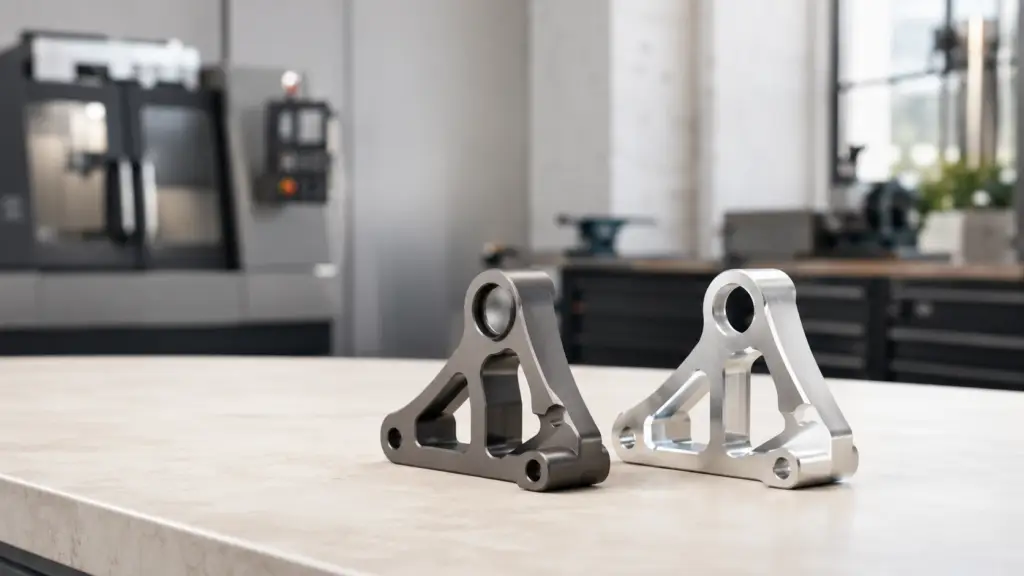
For most lightweight precision components, aluminum is the first material to consider when the project requires low weight, fast delivery, easy machining, and better cost efficiency. Titanium is the better choice when the part must withstand high stress, harsh environments, repeated loading, or strict reliability requirements.
A simple way to compare them is this: aluminum helps reduce weight and machining cost, while titanium improves strength, durability, and safety margin. In real CNC material selection, the best choice depends not only on material properties but also on part geometry, tolerance, surface finish, production volume, and final application.
Choose Aluminum When Weight and Cost Matter Most
Aluminum alloys such as 6061 and 7075 are common choices for aluminum CNC machining parts. They are lightweight, easy to machine, widely available, and suitable for both prototyping and small-to-medium batch production.
Aluminum is often used for drone housings, robotic arms, optical brackets, electronic enclosures, automotive prototypes, fixtures, and other custom components where weight, cost, and delivery speed are important.
Choose Titanium When Strength and Reliability Matter Most
Titanium, especially Grade 5 titanium alloy, is often used in titanium CNC machining projects that require high strength, corrosion resistance, fatigue resistance, or long-term stability. Although titanium is heavier than aluminum by density, it can sometimes allow engineers to design smaller or thinner parts while still meeting strength requirements.
This makes titanium suitable for medical components, aerospace brackets, high-load robotics, corrosion-resistant parts, and compact precision components that cannot rely on increased thickness for strength.
Weight, Strength, and Stiffness Comparison
| Factor | Aluminum CNC Parts | Titanium CNC Parts | Selection Tip |
| Density | Lower weight | Higher than aluminum | Aluminum is better for maximum weight reduction |
| Strength | Good for many structural parts | Higher strength and fatigue resistance | Titanium is better for critical loads |
| Machinability | Easier and faster to machine | More difficult and slower to machine | Aluminum is better for speed and cost |
| Corrosion Resistance | Good, especially with anodizing | Excellent natural corrosion resistance | Titanium is better for harsh environments |
| Cost | Lower material and machining cost | Higher material and process cost | Aluminum is better for cost-sensitive projects |
| Typical Applications | Housings, brackets, prototypes, UAV parts | Medical, aerospace, high-load, corrosion-critical parts | Match material to performance risk |
Aluminum: Lighter Density and Faster Production
Aluminum is often the preferred material for lightweight precision components because it offers an excellent balance of low weight, good strength, machinability, and surface finishing flexibility. 6061 aluminum is commonly selected for general-purpose precision parts, while 7075 aluminum is used when higher strength is needed.
For components with pockets, ribs, thin walls, or lightweight structures, aluminum is usually easier to machine and more economical to optimize during design iterations.
Titanium: Higher Strength for Critical Loads
Titanium does not win on density, but it wins when strength, fatigue resistance, and environmental durability matter more than pure weight. For example, a compact connector, medical device component, aircraft bracket, or high-stress robotic joint may require titanium because the part cannot simply be made larger or thicker.
In these cases, titanium machining provides a stronger performance margin for demanding applications.
Machinability and CNC Process Capability
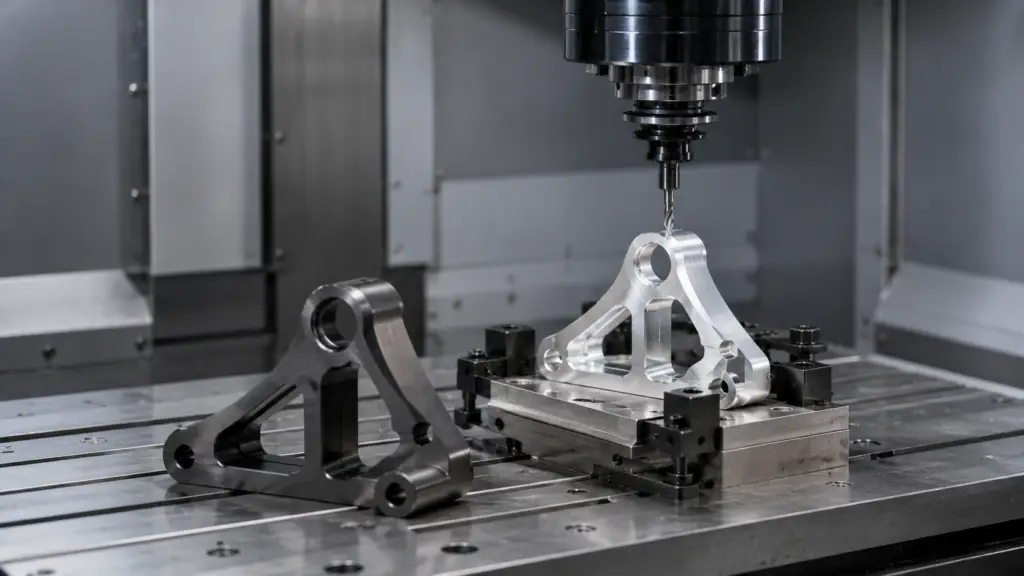
Machinability is one of the biggest differences between titanium and aluminum. Aluminum allows higher cutting speeds, smoother chip evacuation, and shorter cycle times. This makes aluminum CNC machining suitable for rapid prototypes, complex housings, small-batch production, and appearance-critical parts.
Titanium requires more careful process control. It has lower thermal conductivity, so heat tends to remain near the cutting area. This increases tool wear and makes coolant strategy, cutting parameters, workholding, and toolpath planning more important.
Why Is Aluminum Easier to Machine?
Aluminum is easier to cut, drill, mill, turn, and tap. It supports efficient material removal and can achieve good surface quality with proper tooling. For parts with complex cavities, lightweighting features, or cosmetic surfaces, aluminum usually offers better production efficiency.
However, aluminum is not risk-free. Thin walls may deform, burrs may appear around small features, and aggressive machining can affect tolerance stability. Good design-for-manufacturing review is still important.
Why Does Titanium Require Tighter Thermal Control?
For titanium CNC machining, cutting heat and tool pressure must be managed carefully. Titanium machining often requires lower cutting speeds, rigid workholding, sharp cutting tools, optimized coolant, and stable tool engagement.
Because titanium material and machining time are more expensive, reducing scrap risk is essential. Before production, engineers should review wall thickness, tolerance requirements, surface finish expectations, and inspection methods.
Cost: Material Price Is Only One Part of the Quote
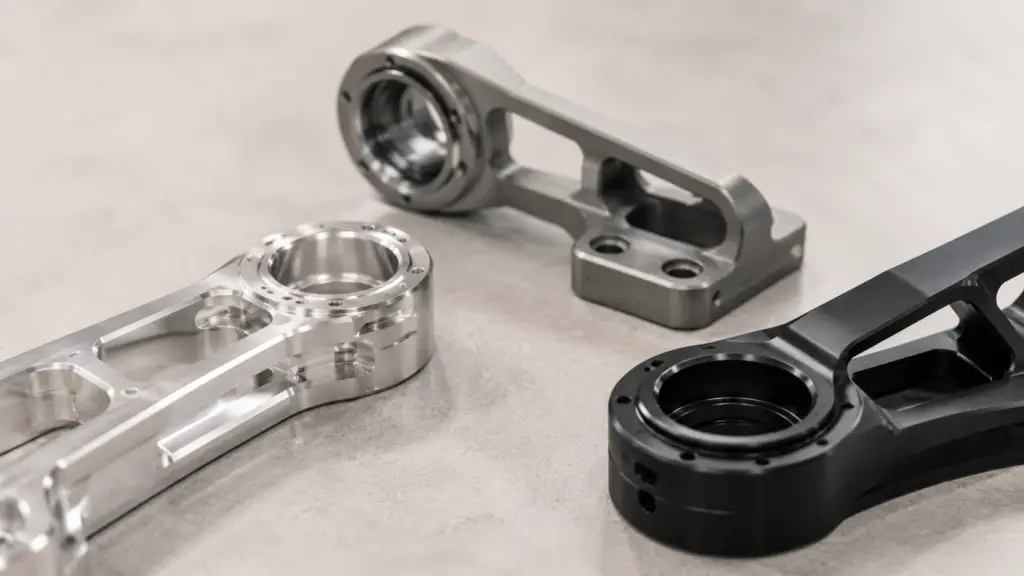
Many buyers compare titanium and aluminum only by material price, but the final CNC quote depends on much more. Tool wear, cutting time, setup complexity, scrap risk, surface treatment, inspection requirements, and delivery schedule all affect total cost.
In most cases, aluminum is more cost-effective. It has lower material cost, faster machining speed, and lower tool wear. Titanium costs more because it is harder to machine, requires more process control, and increases the risk of tool wear or part rejection.
Tool Wear, Cutting Speed, and Scrap Risk
For aluminum parts, cost risks usually come from thin-wall deformation, burr removal, cosmetic scratches, and tight tolerance control. For titanium parts, cost risks usually come from tool wear, heat buildup, vibration, and slower cycle time.
If a project is cost-sensitive and the load requirement is moderate, aluminum is usually the smarter first choice. If failure risk is high and the application requires stronger mechanical performance, titanium may justify the higher cost.
When 5-Axis CNC Machining Helps
For complex lightweight parts, 5-axis CNC machining services can reduce setups, improve positional accuracy, and lower the chance of accumulated tolerance errors. This is especially useful for aerospace brackets, medical components, robotic joints, and precision parts with multiple angled surfaces.
For both titanium and aluminum, fewer setups often mean better consistency, shorter lead time, and less rework.
Surface Finish, Corrosion Resistance, and Appearance
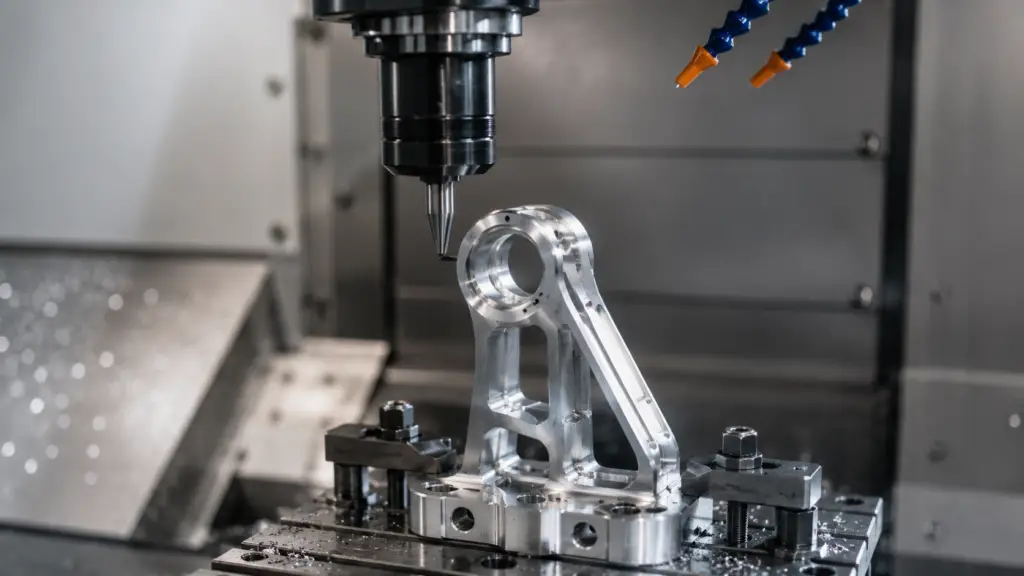
Aluminum offers strong surface finishing flexibility. Common finishes include anodizing, sandblasting, polishing, brushing, plating, painting, and powder coating. For visible components, anodized aluminum can provide both functional protection and a clean appearance.
Titanium naturally forms a stable oxide layer, giving it excellent corrosion resistance. It is often used in environments where moisture, chemicals, salt, or biological compatibility are important. Titanium can also be polished or treated, but finishing titanium usually requires more careful process control than aluminum.
Aluminum for Cosmetic and Functional Finishes
Aluminum is ideal for components that require both precision and appearance. Examples include instrument housings, optical brackets, consumer hardware parts, drone components, and electronic enclosures. When color, texture, and cost matter, aluminum is usually easier to finish consistently.
Titanium for Harsh and High-Reliability Environments
Titanium is better suited for parts exposed to corrosion, fatigue, high stress, or strict safety requirements. Medical devices, aerospace components, marine-related parts, and high-performance mechanical assemblies often benefit from titanium’s long-term reliability.
Application-Based Material Selection Guide
| Application | Recommended Material | Reason |
| Drone frame or UAV housing | Aluminum | Lightweight, cost-effective, fast to machine |
| Low-altitude aircraft bracket | 7075 aluminum or titanium | Depends on load, fatigue, and safety margin |
| Medical precision component | Titanium | High strength, corrosion resistance, medical suitability |
| Robotic arm or gripper | Aluminum | Low inertia and faster movement |
| High-load robotic connector | Titanium | Compact size with higher strength |
| Optical instrument bracket | Aluminum | Lightweight, stable, and easy to finish |
| Automotive prototype part | Aluminum | Fast iteration and lower production cost |
| Harsh environment precision part | Titanium | Better corrosion and fatigue resistance |
Drone, UAV, and Low-Altitude Aircraft Parts
For drones and low-altitude aircraft components, weight reduction is usually a top priority. Aluminum is often used for frames, housings, brackets, and structural supports. When the part is exposed to higher stress or fatigue, 7075 aluminum or titanium may be considered.
Medical, Robotics, Optical, and Automotive Parts
Medical components often require strict precision, material reliability, and surface quality. Titanium is a strong choice for high-performance medical parts. In robotics and optical instruments, aluminum is commonly used because it reduces moving mass and supports stable precision machining. For automotive and motorcycle parts, aluminum is often used for prototypes and lightweight components, while titanium is selected for higher-end or high-load applications.
How Does Sino-V-Rise Support Titanium and Aluminum CNC Parts?
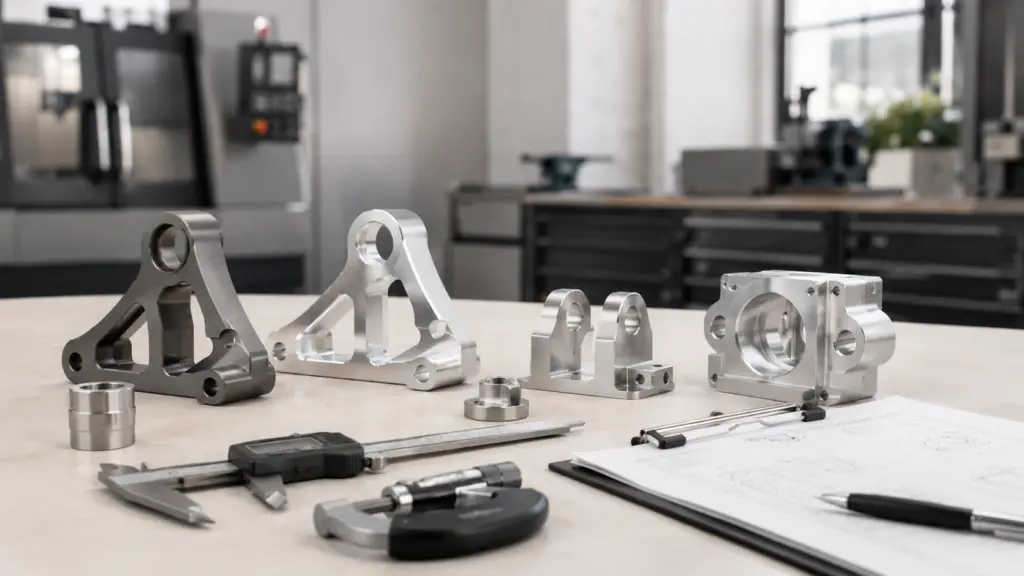
Sino-V-Rise provides precision CNC machining services for custom metal parts, including aluminum alloys and titanium alloys. The company supports prototype, small-batch, and medium-batch production for industries such as medical, drones, robotics, semiconductor, optical instruments, automotive, and motorcycle components.
For buyers comparing titanium and aluminum, Sino-V-Rise can help review drawings, evaluate material options, check tolerance feasibility, recommend suitable surface finishes, and reduce machining risks before production. This is especially important for parts with thin walls, tight tolerances, complex geometry, or high-value materials.
With CNC milling, CNC turning, turning-milling, wire cutting, 5-axis machining, surface finishing, and inspection capabilities, Sino-V-Rise helps global customers turn design requirements into reliable precision components.
FAQ: Titanium vs Aluminum for CNC Machined Components
Is titanium lighter than aluminum?
No. Aluminum is lighter than titanium by density. However, titanium is much stronger, so some designs may use less material while still meeting strength requirements.
Is titanium stronger than aluminum?
In most cases, yes. Titanium alloys generally provide higher strength and fatigue resistance than common aluminum alloys. However, high-strength aluminum such as 7075 can still be suitable for many structural lightweight parts.
Which material is easier to machine?
Aluminum is easier and faster to machine. Titanium requires lower cutting speeds, better cooling, stronger workholding, and more careful toolpath control.
Which material is cheaper for CNC machining?
Aluminum is usually cheaper because the material cost, machining time, and tool wear are lower. Titanium is more expensive but may be necessary for high-performance or high-reliability parts.
Which material is better for lightweight precision components?
Aluminum is better when weight, cost, delivery speed, and appearance are the main priorities. Titanium is better when the component must handle high load, fatigue, corrosion, heat, or strict reliability requirements.
Can aluminum replace titanium?
Sometimes, but not always. Aluminum can replace titanium in cost-sensitive or weight-sensitive applications with moderate load requirements. Titanium is still better for high-stress, corrosion-critical, or medical-grade applications.
Can titanium replace aluminum?
Yes, but it may increase cost and machining time. Titanium should replace aluminum only when the performance benefits justify the higher cost.
Conclusion
Titanium and aluminum are both excellent materials for lightweight precision components, but they are not interchangeable in every project. Aluminum is the best starting point for low weight, fast machining, cost control, and attractive surface finishes. Titanium is the better choice for high strength, fatigue resistance, corrosion resistance, and long-term reliability.
For the best result, material selection should be based on application risk, mechanical load, tolerance, surface finish, budget, and lead time. Working with an experienced titanium CNC machining and aluminum CNC machining supplier can help reduce design risk, improve production stability, and ensure the final part meets both performance and cost expectations.