
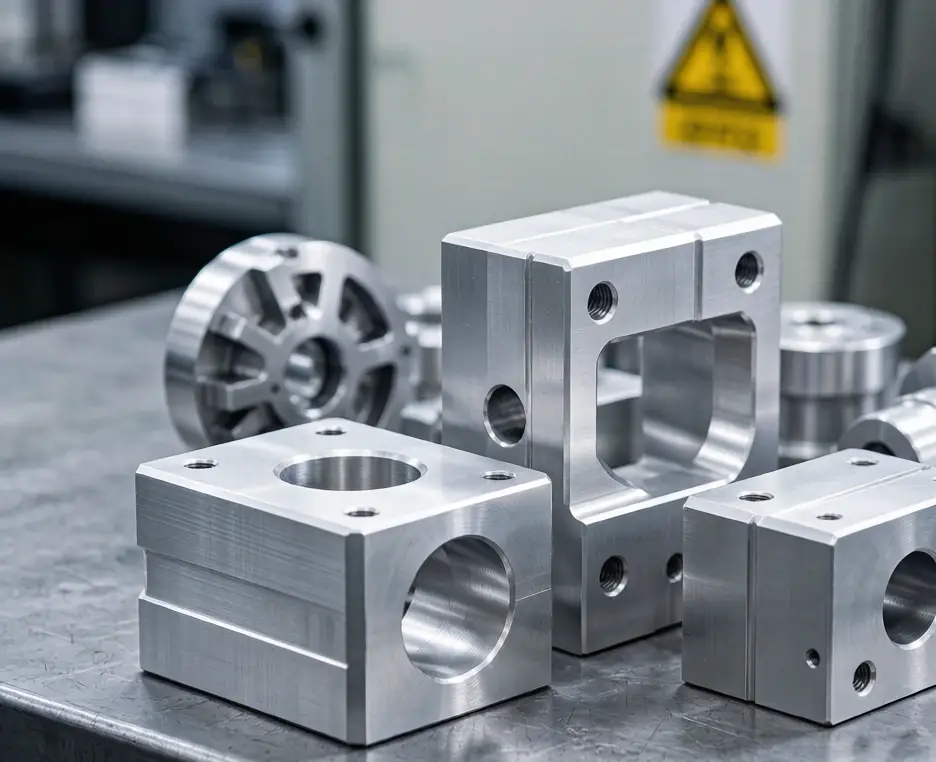
Aluminum CNC milling is widely used for lightweight housings, brackets, fixtures, UAV structures, robotic components and precision equipment parts. However, choosing an aluminum grade involves more than comparing strength values.
6061 is usually the practical choice for general-purpose parts because it combines machinability, corrosion resistance, finishing quality and moderate cost. 7075 is preferred when higher structural strength is essential, but it normally increases material cost and requires greater attention to corrosion protection and finishing appearance.
Material condition also matters. A large plate supplied as T651 may remain more stable during heavy material removal than a standard T6 product. Even with stable stock, thin walls, one-sided pockets and excessive clamping can cause a part to warp after it is removed from the fixture.
This guide explains how to select 6061 or 7075, reduce aluminum machining warpage, specify surface finishes and understand the factors that determine the final cost of aluminum CNC machining parts.
Aluminum CNC Milling at a Glance
| Factor | 6061-T6/T651 | 7075-T6/T651 |
| Machinability | Excellent | Very good |
| Strength | Moderate | High |
| Corrosion resistance | Good | Lower without protection |
| Welding | More practical | Generally not recommended |
| Anodizing | Consistent for many commercial finishes | Possible, but color may appear darker or less uniform |
| Warpage control | T651 plate is useful for high material removal | T651 is also preferred for stable plate machining |
| Typical applications | Housings, fixtures, plates and brackets | UAV, aerospace, robotic and high-load structural parts |
| Relative material cost | Lower | Higher |
Both alloys can produce accurate parts. The correct choice depends on load, geometry, material condition, finishing and total manufacturing cost.
Aluminum 6061 vs. 7075 for CNC Milling
When to choose 6061?
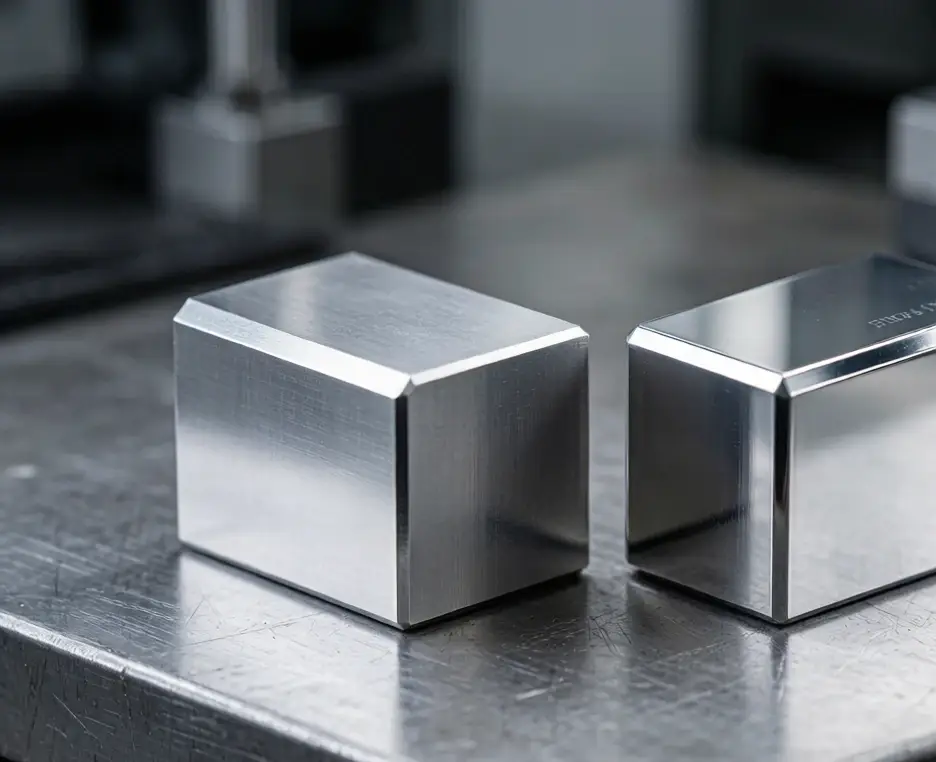
6061-T6 is the default material for many CNC machining aluminum projects.
It offers:
- Good cutting performance
- Moderate mechanical strength
- Good corrosion resistance
- Wide stock availability
- Reliable anodizing results
- Better weldability than 7075
- Competitive material and machining cost
Typical applications include electronic enclosures, mounting plates, optical supports, semiconductor fixtures, general robotic housings and automotive brackets.
For parts that mainly provide positioning, protection or moderate structural support, 6061 is often sufficient. Selecting 7075 for these components may add cost without providing a measurable functional benefit.
When to choose 7075?
7075-T6 provides considerably higher strength and is commonly used in weight-sensitive structural applications.
It is appropriate when:
- The part carries concentrated loads
- High strength is required without using a heavier material
- Fatigue performance is important
- The design contains thin structural sections
- 6061 cannot meet the mechanical requirement
Typical applications include UAV frames, aerospace brackets, robotic joints and high-load equipment components.
When machining 7075 aluminum, short chip formation can support clean cutting, but the higher material strength may increase tool load and wear compared with 6061. The alloy also has lower corrosion resistance and is generally unsuitable for welding.
Can 6061 replace 7075?
6061 can replace 7075 when the actual load, stiffness and fatigue requirements remain within the capability of 6061.
A substitution should be evaluated using:
- Static load
- Fatigue cycles
- Safety factor
- Wall thickness
- Part weight
- Operating environment
- Assembly method
The material label alone should not determine the decision. A well-designed 6061 part may perform better than an unnecessarily thin 7075 component.
T6, T651 and T6511: Why Temper Matters
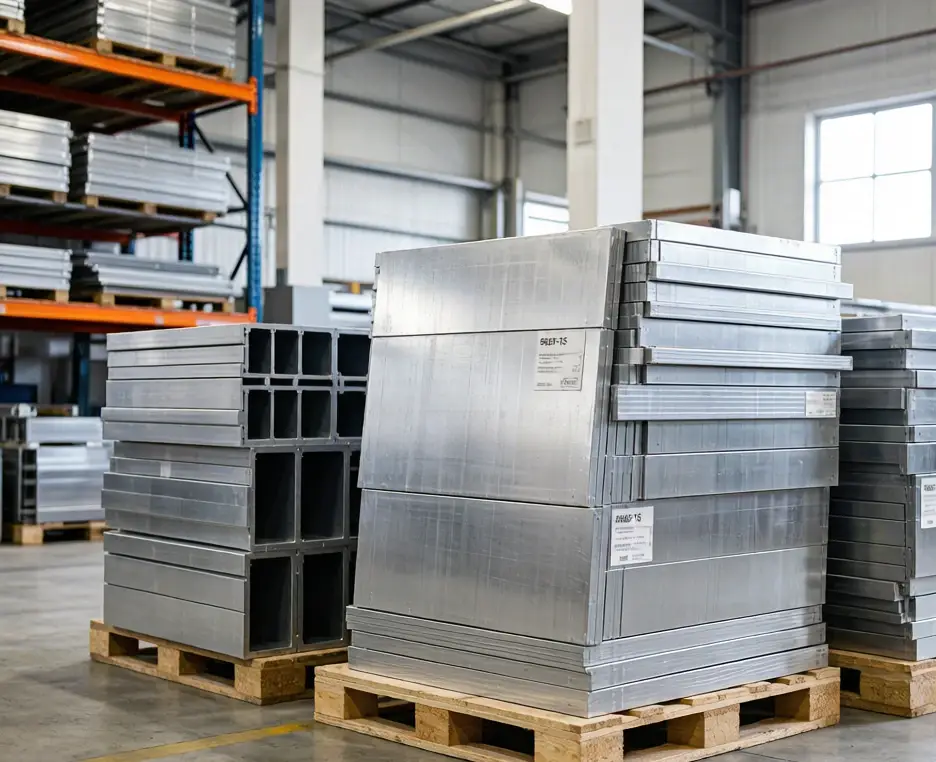
Specifying only “6061 aluminum” or “7075 aluminum” is incomplete. The temper affects strength, stock form and dimensional stability.
T6
T6 indicates that the material has been solution heat-treated and artificially aged.
It provides useful mechanical properties but does not necessarily include a separate mechanical stress-relief operation.
T651
T651 material receives T6 heat treatment followed by controlled stretching to reduce residual stress.
It is commonly associated with plate products and is particularly useful for:
- Large flat components
- Thin-wall frames
- Parts with deep pockets
- Components requiring extensive material removal
- Parts with demanding flatness requirements
Using T651 does not guarantee that a part will remain perfectly flat, but it can reduce one important source of warpage.
T6511
T6511 is commonly associated with extruded products. It includes stress relief by stretching and controlled straightening.
The final material specification should match the required stock form. A plate, bar and extrusion may not be supplied in the same temper.
For quotation, state the complete specification, such as:
- Aluminum 6061-T651 plate
- Aluminum 6061-T6511 extrusion
- Aluminum 7075-T651 plate
This helps the supplier evaluate stock availability and dimensional risk before production.
Why Aluminum Parts Warp After CNC Milling?
Residual stress in the raw material
Aluminum stock contains internal stresses created during casting, rolling, extrusion, heat treatment and straightening.
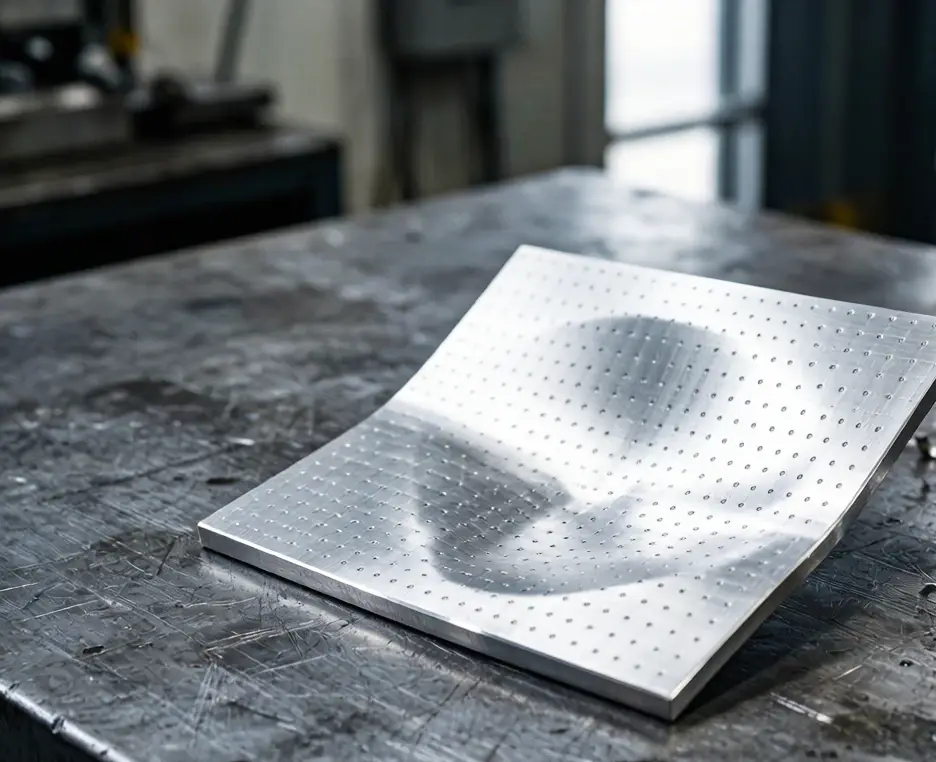
When material is removed, these stresses redistribute. A flat block may become curved after a large cavity is machined, even when the machine and cutting program are accurate.
Uneven material removal
Removing most material from one side creates an unbalanced structure.
This commonly occurs in:
- Large one-sided pockets
- Thin trays
- Open-frame housings
- Heat-sink bases
- Lightweight plates
The remaining material may move as internal stress is released.
Clamping deformation
A fixture can force a slightly curved blank into a flat position. If the top surface is machined while the material is held in this condition, the part may spring back after unclamping.
Excessive clamping can also deform thin walls or leave local pressure marks.
Machining heat
Aluminum conducts heat effectively, but localized temperature changes still affect dimensions during precision machining.
Heat may come from:
- High cutting engagement
- Inadequate coolant
- Worn tools
- Recutting chips
- Long uninterrupted cycles
A part measured while warm may show a different result after returning to a stable temperature.
Thin-wall geometry
Thin walls have limited rigidity and can move under cutting or clamping forces.
The risk increases with:
- Greater wall height
- Longer unsupported sections
- Small corner radii
- Deep adjacent pockets
- Tight flatness or position tolerances
Incorrect inspection timing
A part may measure correctly while it remains clamped but change after release.
Final flatness and free-state geometry should therefore be checked after the component has been unclamped and allowed to stabilize.
How to Reduce Aluminum CNC Milling Warpage?
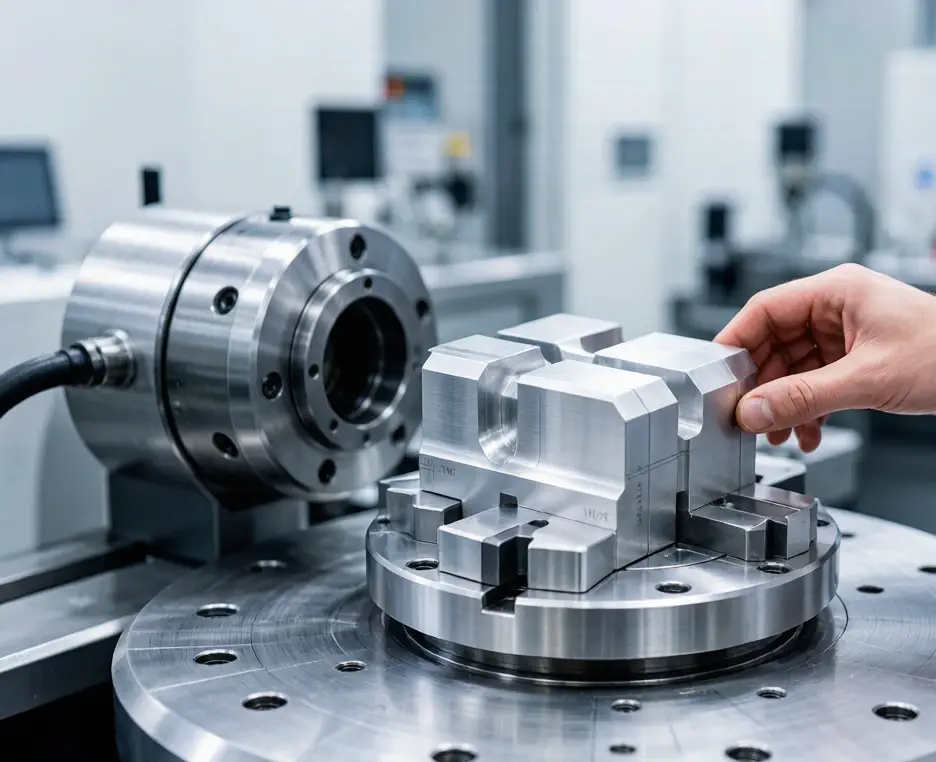
1. Select suitable stock
For large plates or high material-removal parts, consider stress-relieved T651 stock rather than specifying only T6.
The supplier should also review the blank thickness, cutting allowance and stock direction.
2. Balance material removal
Where geometry allows, remove material from both sides in stages instead of completing one side before touching the other.
Balanced roughing reduces the sudden release of stress from a single surface.
3. Separate roughing and finishing
A stable sequence may include:
- Rough machining most of the material
- Leaving uniform finishing allowance
- Releasing or relaxing the fixture
- Re-clamping from stable datums
- Completing final finishing passes
For high-risk parts, an intermediate stabilization period may be useful before final machining.
4. Control clamping force
The fixture should support the part without forcing it into an unnatural shape.
Possible approaches include:
- Soft jaws
- Distributed support points
- Vacuum fixtures
- Low-profile clamps
- Machining tabs
- Sacrificial support structures
Clamping pressure should be sufficient for safe machining but not greater than necessary.
5. Use a rigid cutting setup
Sharp tools, short tool overhang and appropriate cutting parameters reduce deflection and heat.
Chip evacuation is also important. Recut chips can damage the surface and increase localized cutting load.
6. Support thin features
Thin-wall parts may require temporary ribs, tabs or support material during roughing.
These features can be removed near the end of the process after the main geometry has stabilized.
7. Inspect after unclamping
Flatness, profile and critical free-state dimensions should be measured after the part is released.
For high-value or aluminum precision machining projects, the inspection plan should distinguish between in-fixture measurements and final released-part measurements.
Surface Finish Options for CNC-Milled Aluminum
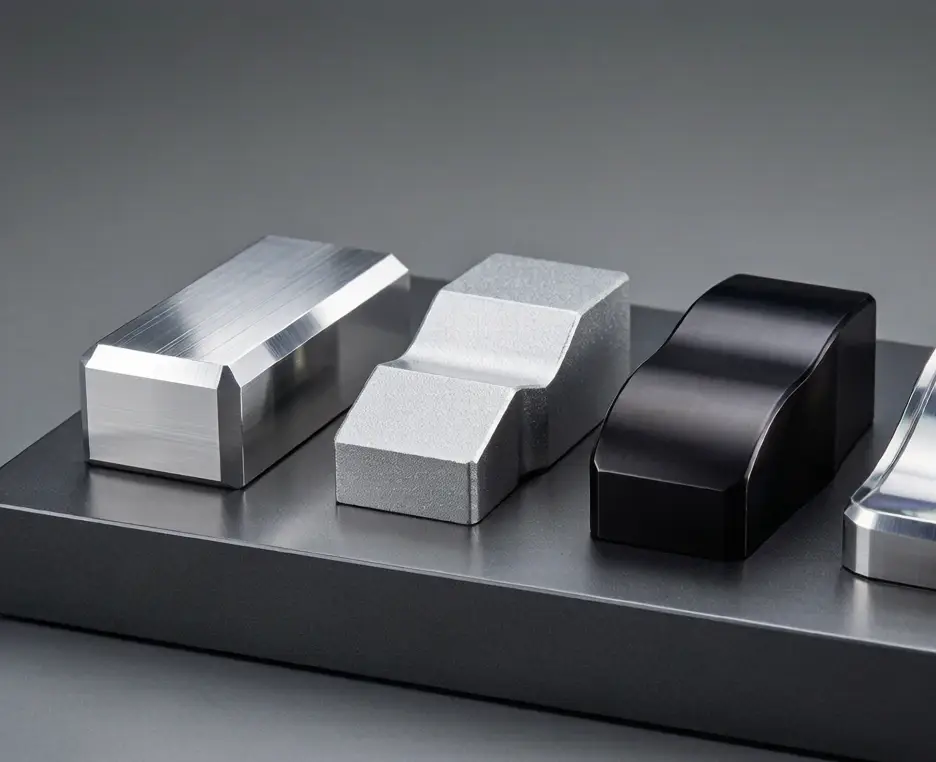
The selected finish affects appearance, wear resistance, corrosion protection, dimensions and cost.
As-machined finish
An as-machined surface retains visible tool marks.
It is suitable for:
- Internal components
- Fixtures
- Functional prototypes
- Non-cosmetic surfaces
- Parts requiring the shortest lead time
Surface quality depends on tool condition, stepover, feed rate and finishing strategy.
Fine-machined finish
A finer surface finish and roughness requirement may require additional finishing passes and reduced feed rates.
It should be specified only on functional surfaces such as sealing faces, precision contact areas or sliding interfaces.
Bead blasting
Bead blasting produces a uniform matte appearance and helps reduce visible machining marks.
It is often used before anodizing, but blasting can soften sharp edges and alter cosmetic texture. Critical mating surfaces may need masking.
Type II anodizing
Type II anodizing is commonly used for corrosion protection, color and commercial appearance.
It is suitable for housings, brackets, electronic parts and many general anodized aluminum CNC parts.
6061 generally produces predictable results. 7075 can also be anodized, but alloying elements may create darker or less uniform shades.
Type III hard anodizing
Hard anodizing creates a thicker, more wear-resistant surface than conventional Type II anodizing.
It is often used on:
- Sliding surfaces
- Tooling
- Industrial equipment
- High-wear mechanical parts
Because the layer is thicker, dimensional planning becomes more important.
Chemical conversion coating
Chemical conversion coating provides corrosion protection and can maintain electrical conductivity more effectively than anodizing in selected applications.
It is often used on electronics, grounding surfaces and components that will later be painted.
Powder coating
Powder coating creates a durable decorative layer but is much thicker than typical anodizing.
It is generally unsuitable for tight fits unless critical areas are masked.
How Anodizing Affects Dimensions and Appearance?
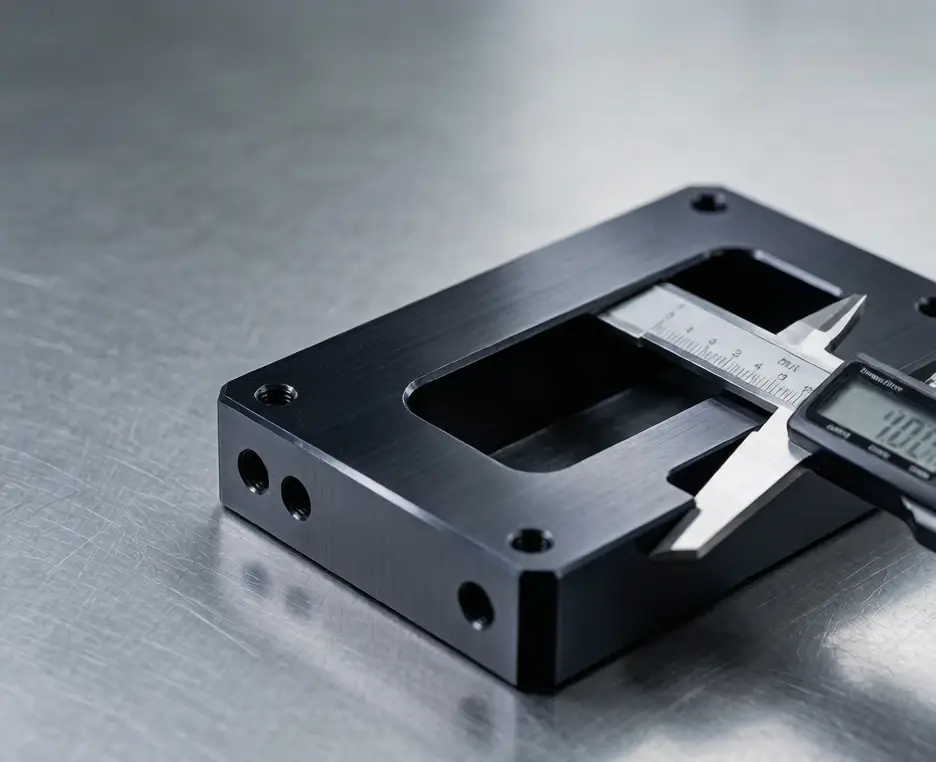
Anodizing creates an oxide layer that develops partly into the aluminum surface and partly outward.
As a result, it can influence:
- Hole diameters
- Shaft diameters
- Threads
- Bearing seats
- Sliding fits
- Flat contact surfaces
The drawing should state whether critical dimensions apply before or after anodizing.
Possible control methods include:
- Allowing for the expected coating thickness
- Masking precision holes or threads
- Using plugs during treatment
- Re-machining critical features after finishing
- Inspecting the completed treated part
The anodizing specification should include:
- Type
- Color or class
- Required thickness when relevant
- Cosmetic surfaces
- Masking areas
- Pre-treatment requirements
- Post-treatment dimensional requirements
A note such as “black anodized” may not be sufficient for a precision or cosmetic component.
What Determines Aluminum CNC Milling Cost?
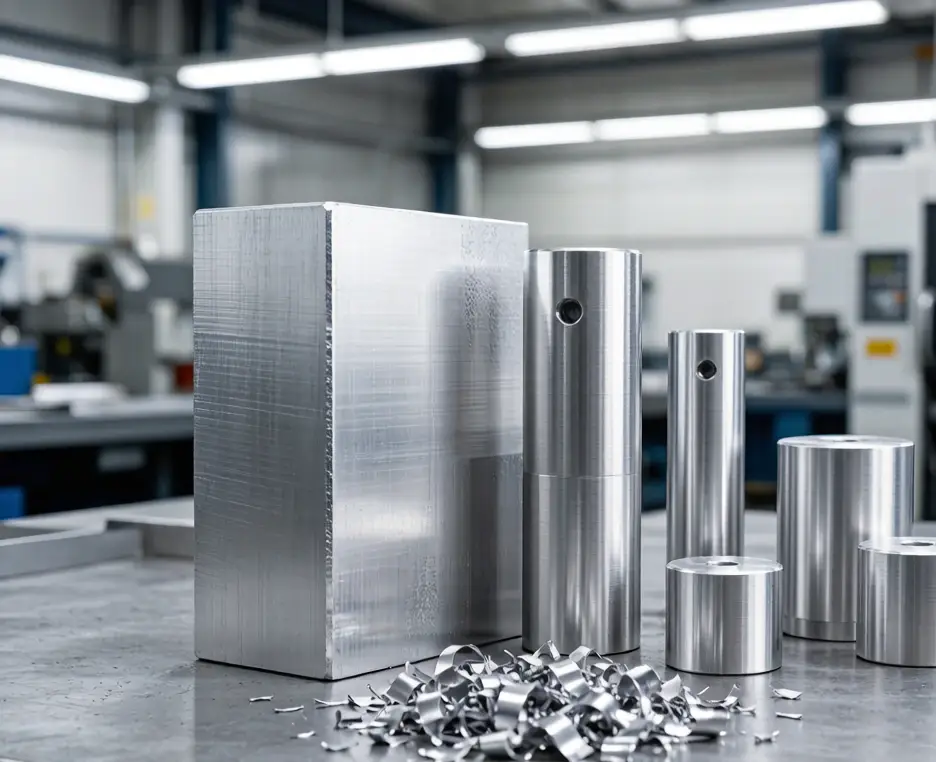
The aluminum CNC machining cost depends on the complete manufacturing route.
Alloy and temper
7075 generally has a higher stock cost than 6061. T651 plate may also differ in availability and price from standard T6 products.
Stock size and utilization
A finished lightweight part may still require a large block of material. Poor stock utilization increases both raw-material cost and machine time.
Material removal
Deep cavities and lightweight structures often require removing most of the starting block.
High material removal adds:
- Roughing time
- Chip volume
- Tool wear
- Warpage risk
- Additional finishing operations
Geometry and setups
Multi-face features, deep pockets, thin walls and small internal radii increase programming, fixture and cycle time.
Tolerances
Tight flatness, position or profile requirements may require staged machining, controlled temperature and CMM inspection.
Surface finishing
Anodizing, blasting, masking and color control add both direct finishing cost and project coordination.
Quantity
Prototype and small-batch orders carry a higher unit share of programming, fixture preparation and first-article inspection. Larger quantities distribute these fixed costs across more components.
Three Aluminum CNC Milling Examples
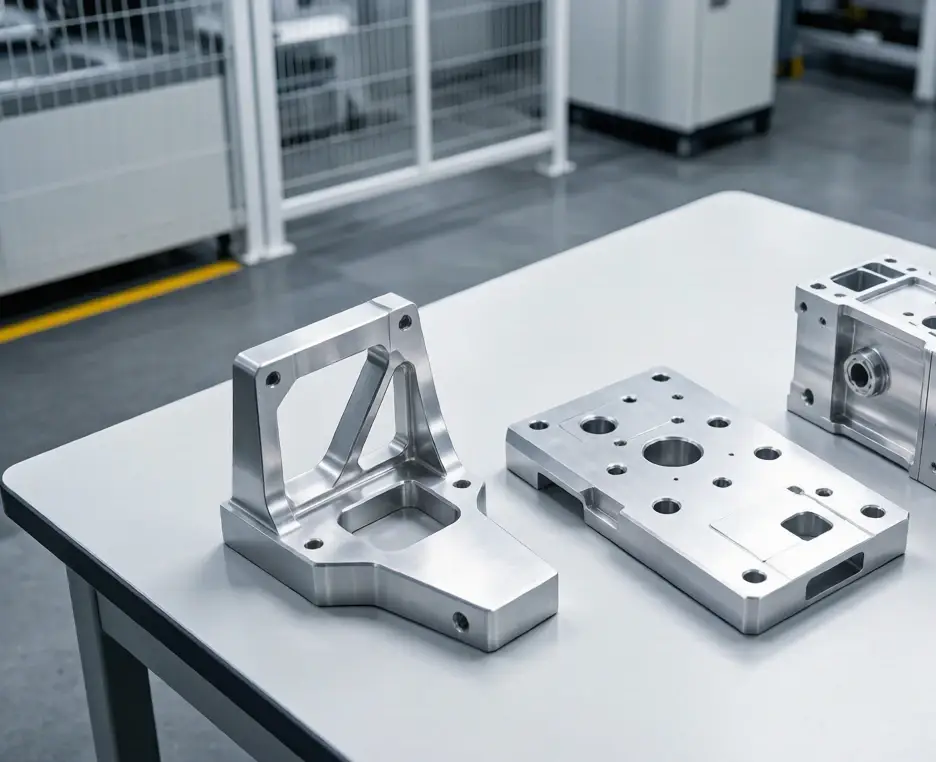
UAV structural bracket
A moderate-load bracket may be economical in 6061-T6. If structural analysis shows that greater strength is required without increasing weight, 7075-T6 or T651 may be justified.
The comparison should include strength, corrosion protection, anodizing appearance and final cost—not only material price.
Semiconductor fixture plate
A large plate with pockets and demanding flatness may benefit from 6061-T651 stock, balanced roughing and final inspection after unclamping.
For this type of component, material stability and process sequence may matter more than maximum alloy strength.
Thin-wall robotic housing
A lightweight housing may require temporary supports, low clamping force and staged finishing.
6061 often provides a useful balance of machinability, corrosion resistance and cosmetic anodizing. If high-load mounting features are present, local geometry should be reviewed before automatically switching the complete housing to 7075.
Information Required for an Accurate Quote
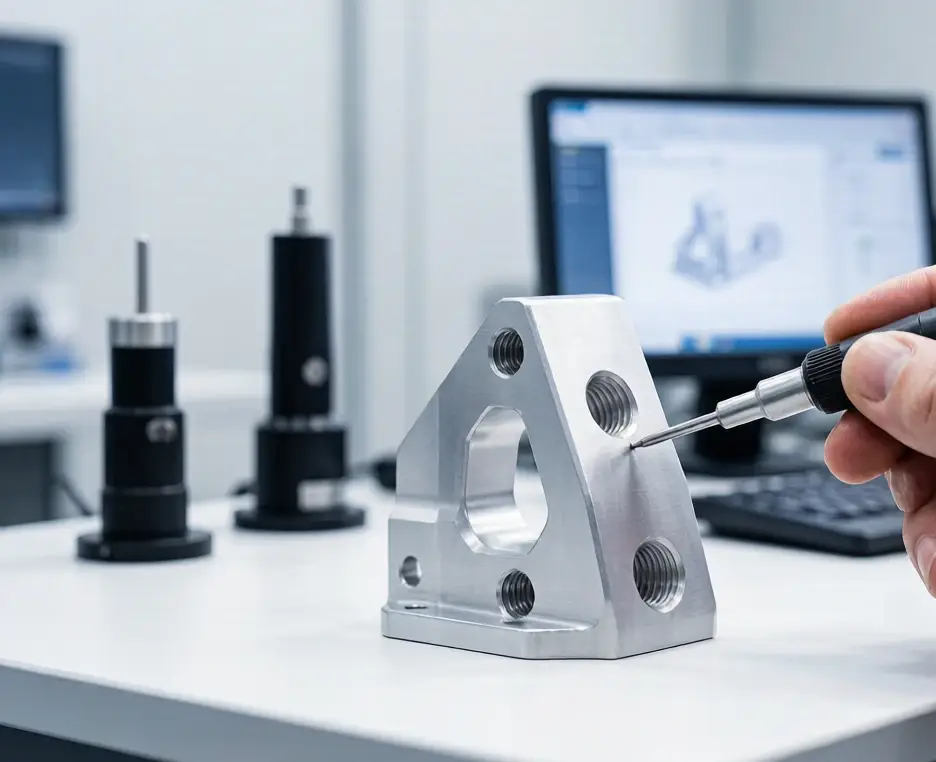
For an accurate aluminum CNC quotation, provide:
- STEP or STP model
- 2D drawing
- Exact alloy and temper
- Required quantity
- Critical tolerances
- Flatness requirements
- Surface finish and color
- Anodizing type
- Masking areas
- Cosmetic standards
- Inspection and reporting requirements
- Delivery destination
Clear information prevents suppliers from making different assumptions about material, finishing and inspection.
How SinoRise Supports Aluminum CNC Projects?
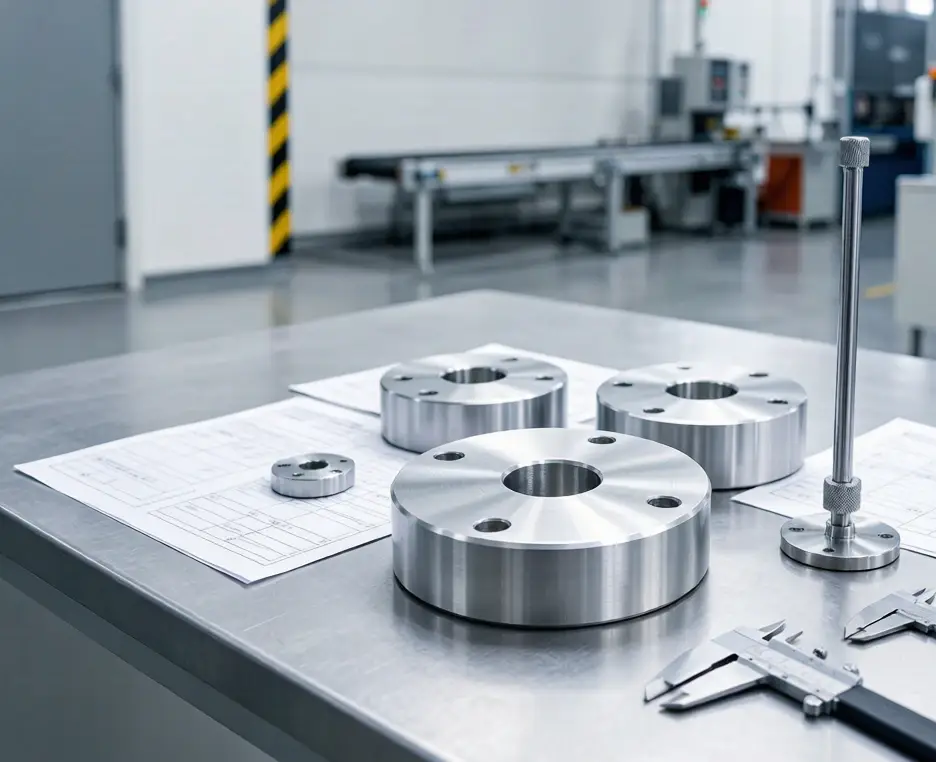
SinoRise reviews aluminum grade, material condition, geometry, machining sequence, finishing and inspection requirements before production.
The company operates more than 40 precision machining machines and uses inspection equipment including 2.5D measuring systems, digital height gauges and CMM equipment. Its ISO 9001 quality system supports projects for UAVs, semiconductor equipment, robotics, medical equipment, optical instruments and automotive or motorcycle components.
For prototype and small-batch projects, the review can identify warpage risks, inappropriate material specifications, unnecessary tolerances and finishing requirements that may affect fit or appearance.
Frequently Asked Questions
Is 6061 or 7075 better for CNC milling?
6061 is better for most general housings, brackets and fixtures because it balances cost, corrosion resistance and finishing. Choose 7075 when higher structural strength is necessary.
Is 7075 harder to machine than 6061?
7075 is stronger and may increase cutting load and tool wear, although its chip formation can be favorable. Actual machining difficulty depends on geometry, tools and tolerances.
Why do aluminum parts warp after milling?
Common causes include residual material stress, uneven material removal, excessive clamping, machining heat and thin-wall geometry.
Does T651 prevent warpage?
T651 reduces residual stress compared with material that has not received the same stress-relief treatment, but it cannot eliminate warpage caused by poor geometry, unbalanced machining or incorrect workholding.
Does anodizing change part dimensions?
Yes. The oxide layer can affect holes, shafts, threads and fits. Critical dimensions should be planned and inspected according to the completed finish.
Which aluminum alloy anodizes better?
6061 generally provides more predictable commercial anodizing appearance. 7075 can be anodized, but color may be darker or less uniform.
Why is 7075 more expensive?
Its stock cost is generally higher, and high-strength applications may also require tighter inspection, traceability and finishing control.
Request an Aluminum CNC Milling Review
Send SinoRise your model, drawing, alloy, temper, quantity, tolerance and finishing requirements.
Our engineering team will review material selection, warpage risk, machining strategy, anodizing and inspection before quotation.
Contact SinoRise for an aluminum CNC milling and DFM review.