
CNC milling cost can range from a relatively small amount for a simple aluminum part to several hundred dollars per component for a complex, tightly toleranced part. There is no universal price per part because every quotation is influenced by the material, geometry, machining time, number of setups, machine type, tolerance, surface treatment, inspection requirements and order quantity.
For early budgeting, standard 3-axis milling is generally less expensive per machine hour than 5 axis CNC machining. However, the lowest hourly rate does not always produce the lowest final part cost. A higher-capability machine may complete a complex component with fewer setups, shorter cycle time and lower positioning risk.
The most reliable way to estimate a project is to evaluate the complete manufacturing route:
Total CNC Milling Cost = Material + Programming + Setup + Machine Time + Tooling + Finishing + Inspection + Packaging and Logistics
This guide explains how each part of the quotation is calculated, provides practical cost examples, and shows how to reduce CNC milling costs without compromising the function or quality of the finished component.
How Much Does CNC Milling Cost?
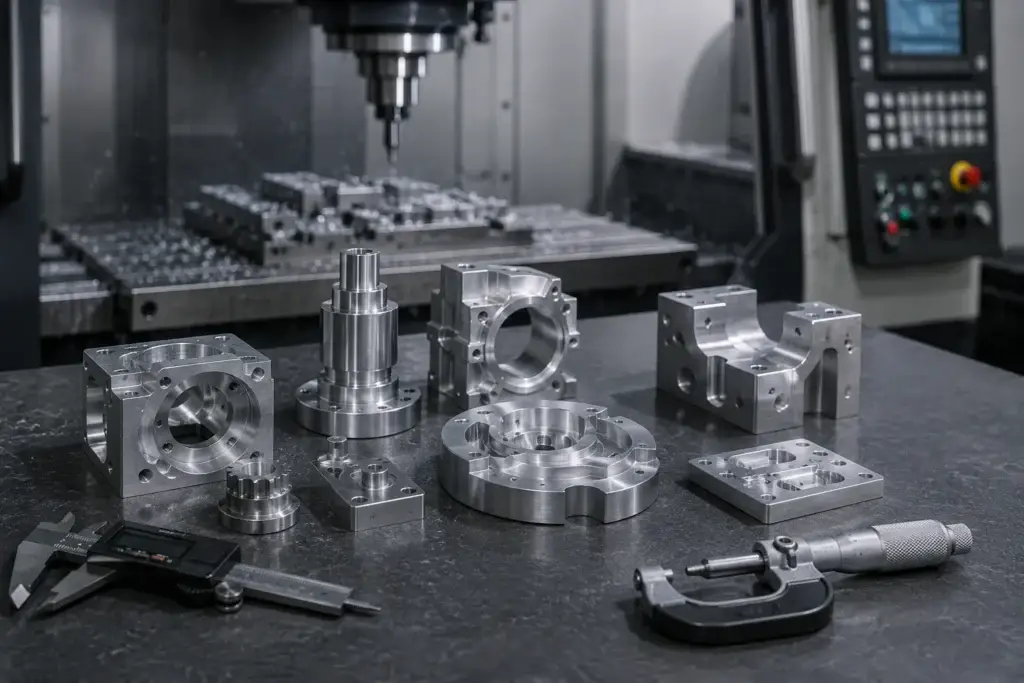
For budgeting purposes, CNC milling is usually priced either by machine hour or by finished part. Machine-hour rates are useful for comparison, but buyers normally pay for completed parts rather than spindle time alone.
The following figures are illustrative planning ranges in US dollars. They are not fixed market prices or formal quotations.
| CNC milling method | Illustrative machine-hour range | Typical applications |
| Standard 3-axis milling | US$40–100 per hour | Plates, brackets, housings and relatively simple prismatic parts |
| 4-axis milling | US$60–140 per hour | Multi-sided parts, rotary features and components requiring fewer manual setups |
| 5-axis milling | US$90–200+ per hour | Complex surfaces, angled holes, aerospace-style parts and multi-face machining |
| High-precision CNC milling | US$120–250+ per hour | Tight tolerances, difficult materials, extensive inspection or specialized equipment |
These ranges can change substantially according to:
- Supplier location and operating costs
- Machine size, age, capability and spindle power
- Part dimensions and material
- Required tolerance and surface roughness
- Programming and fixture complexity
- Production quantity
- Inspection and documentation requirements
- Lead time and delivery conditions
A simple aluminum bracket may cost tens of dollars per piece in a small batch. A complex stainless steel, titanium or high-precision component may cost several hundred dollars. The supplier must review the 3D model and technical drawing before providing an accurate quotation.
Some buyers search for “CNC milling machine services,” but the service they actually need normally includes much more than access to a machine. A complete quotation should include engineering review, programming, setup, cutting tools, inspection, finishing and delivery preparation.
How Is CNC Milling Cost Calculated?
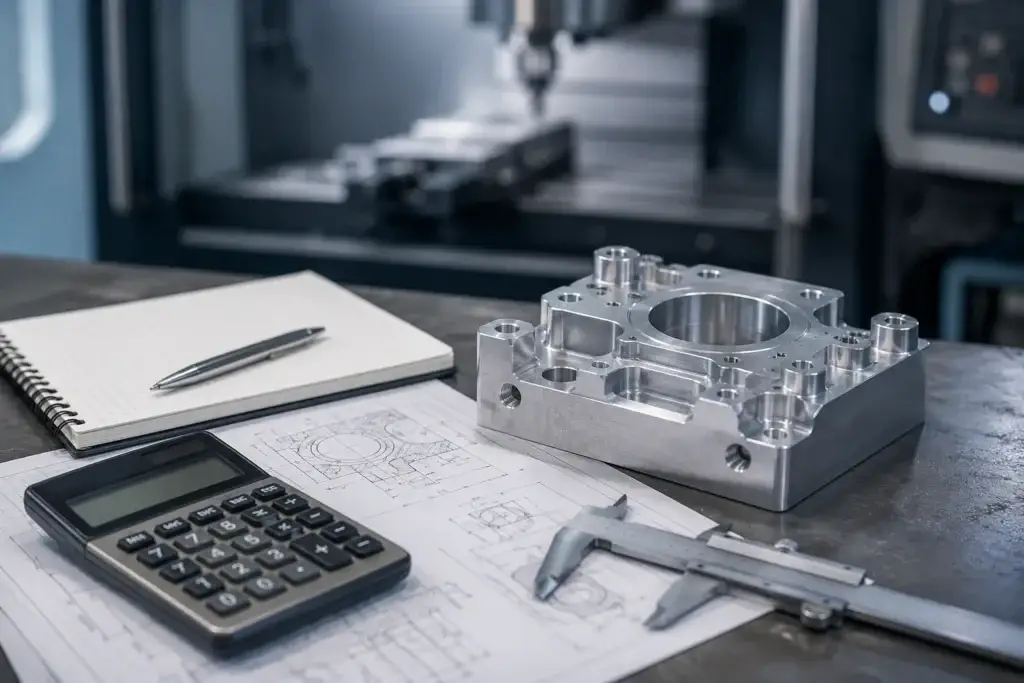
A useful quotation separates fixed project costs from variable production costs.
Fixed project costs
Fixed costs are incurred before or during the initial setup and do not increase directly with every additional part. They may include:
- Drawing and manufacturability review
- CAM programming
- Toolpath simulation
- Fixture design
- Machine setup
- First article preparation
- Inspection program creation
- Special cutting tool preparation
Producing one part and producing 100 parts may require a similar initial programming and setup process. This is why prototypes and very small orders often have a higher unit price.
Variable costs
Variable costs increase with the number of parts produced. They commonly include:
- Raw material
- Machine cycle time
- Cutting tool consumption
- Deburring
- Surface finishing
- Dimensional inspection
- Cleaning
- Packaging
A simplified cost-per-part formula is:
Cost Per Part = Material Cost + Machine Cost + Variable Processing Cost + Fixed Project Cost ÷ Quantity
For example, if programming, fixture preparation and setup cost US$300, the fixed cost adds US$30 per part to an order of 10 pieces. For an order of 100 pieces, the same fixed cost adds only US$3 per part.
This fixed-cost allocation is one of the most important principles in small batch CNC machining.
Main Factors That Affect CNC Milling Cost
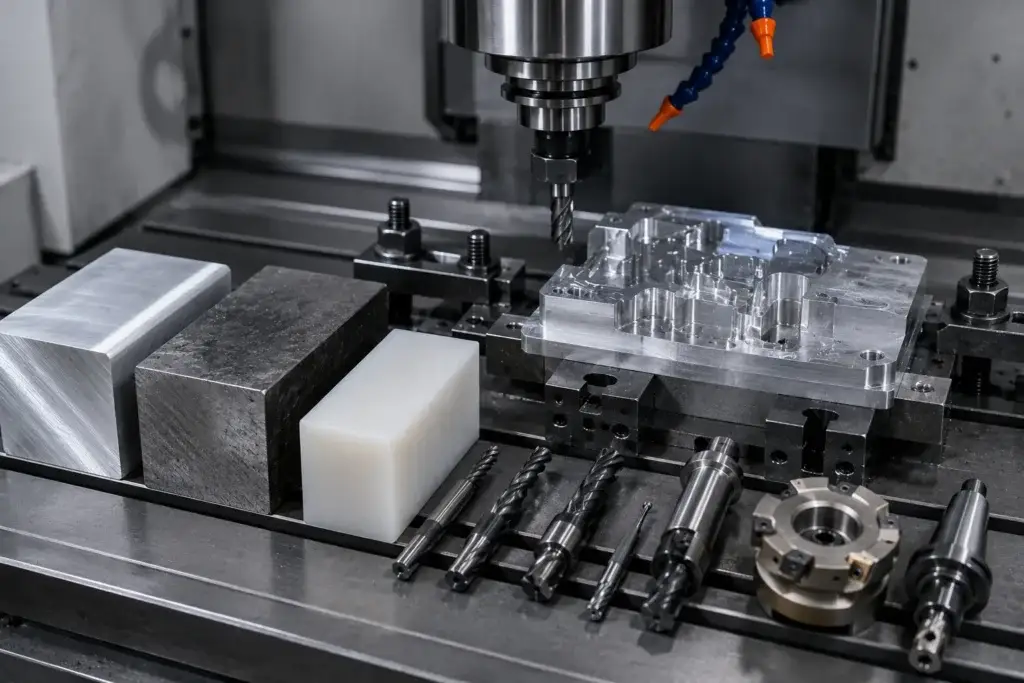
1. Material and blank size
The selected material affects more than the purchase price of the raw stock. It also influences cutting speed, tool wear, heat generation, cycle time and scrap risk.
Aluminum alloys such as 6061 are generally easier and faster to machine than stainless steel, titanium, hardened steel or nickel-based alloys. This often makes aluminum suitable for prototypes, housings, brackets, robotic components and lightweight structures.
However, two parts made from the same alloy may still have different material costs. The supplier must consider:
- Standard plate, bar or block dimensions
- Required material condition
- Oversize allowance for clamping
- Material certification
- Quantity available from standard stock
- Percentage of material removed
- Reusable or non-reusable offcuts
A thin finished part cut from a large solid block may have a low finished weight but a high raw-material and machining cost.
When comparing CNC machining materials, buyers should evaluate both material price and machinability rather than selecting an alloy based only on the cost per kilogram.
2. Part geometry and material removal
Geometry is one of the strongest drivers of CNC milling cost.
Features that commonly increase machining time include:
- Deep and narrow pockets
- Thin walls
- Small internal corner radii
- Long-reach cutting areas
- Undercuts
- Angled holes
- Complex 3D surfaces
- Numerous small holes
- Features located on multiple faces
- Large amounts of material removal
A small internal corner radius requires a small end mill. Smaller tools normally remove material more slowly and may require several finishing passes. Deep cavities may require long tools, reduced cutting speed and additional vibration control.
In practical CNC milling machining, a part that appears visually simple may still be expensive if its features are difficult to reach or require several repositioning operations.
3. Machine type and number of axes
A 3-axis machine is often the most economical choice for parts that can be completed from one or two main directions.
A 4-axis or 5-axis machine has a higher hourly operating cost, but it may reduce:
- Manual repositioning
- Number of fixtures
- Setup labor
- Total cycle time
- Accumulated positioning error
- Work-in-process inventory
The machine should be selected according to total manufacturing cost rather than hourly rate alone.
A capable supplier should determine whether the part is best suited to:
- 3-axis CNC milling
- 4-axis indexing
- Simultaneous 5-axis machining
- Turning and milling
- Wire cutting combined with milling
- Multiple manufacturing processes
4. Programming, setup and fixtures
Every CNC milling process begins before the cutting tool touches the material.
The engineering team must study the model, determine the datum system, select tools, create toolpaths, simulate the process and plan the sequence of operations.
Complex parts may also require:
- Soft jaws
- Vacuum fixtures
- Modular fixtures
- Custom clamping plates
- Sacrificial supports
- Inspection fixtures
Setup cost becomes especially important for prototypes and low-volume orders. A part requiring four different orientations normally costs more to prepare than a component completed in one setup.
Providing an accurate and stable 3D model can reduce unnecessary programming revisions. Conflicts between the 3D model and 2D drawing may delay quotation and production.
5. Tolerances and surface roughness
Tighter tolerances require more controlled machining and inspection.
A standard dimensional requirement may be achieved during normal production. A tolerance of ±0.01 mm or tighter may require:
- Additional finishing passes
- New or closely monitored cutting tools
- Temperature control
- Slower cutting parameters
- In-process measurement
- CMM inspection
- More detailed fixture planning
- Higher scrap and rework allowance
The same principle applies to surface roughness. A general machined finish is normally less expensive than a tightly controlled Ra value on several surfaces.
In high precision CNC milling, tolerances should be applied according to function. Not every dimension requires the same level of control.
A practical drawing may separate dimensions into:
- Critical fit or alignment dimensions
- Sealing surfaces
- Bearing or shaft locations
- General machining dimensions
- Clearance dimensions
- Cosmetic features
Over-tolerancing non-functional features increases cost without improving product performance.
6. Cutting tools and tool wear
Standard carbide tools are widely available and cost-effective. Special geometries may require custom cutters, form tools, very small end mills or extended-reach tools.
Tooling cost increases when machining:
- Titanium
- Hardened steel
- Abrasive materials
- Glass-filled engineering plastics
- Deep cavities
- Very small features
- Interrupted cutting surfaces
Tool wear also affects dimensional stability. For precision CNC milling, the manufacturer may need to replace a tool before it reaches complete physical failure in order to maintain tolerance and surface quality.
7. Surface finishing and secondary operations
A CNC milling quotation may include only the machined part, or it may include additional processes such as:
- Anodizing
- Hard anodizing
- Passivation
- Electroless nickel plating
- Powder coating
- Painting
- Sandblasting
- Polishing
- Laser marking
- Heat treatment
- Thread inserts
- Assembly
Finishing cost is affected by part size, surface area, color, masking requirements, cosmetic standards and batch quantity.
A surface treatment may also require additional machining allowance. For example, coating thickness can affect threaded holes, bearing positions and precision fits.
8. Inspection and quality documentation
Inspection is a manufacturing operation and must be included in the cost calculation.
General commercial components may require standard dimensional checks. Medical, semiconductor, optical, robotic or safety-related parts may require:
- First article inspection
- CMM dimensional reports
- Material certificates
- Surface treatment certificates
- Full-dimensional inspection
- Statistical sampling
- Lot traceability
- Special cleaning and packaging
Inspection requirements should be confirmed before quotation. Requesting a full CMM report after production may increase both cost and lead time.
9. Production quantity
Quantity affects cost through material purchasing, setup allocation, production efficiency and inspection planning.
Higher quantities may allow the manufacturer to:
- Purchase full material batches
- Optimize the toolpath
- Use dedicated fixtures
- Reduce tool changes
- Run parts continuously
- Automate inspection steps
- Spread fixed costs across more units
However, a larger order does not automatically produce the lowest total risk. For a new design, it may be more practical to start with prototype verification, followed by a controlled small batch and then a larger production run.
10. Lead time and supply chain requirements
A normal production schedule gives the supplier time to arrange materials, machines, tools, finishing and inspection efficiently.
An urgent order may require:
- Overtime
- Priority machine scheduling
- Expedited raw material
- Faster surface treatment
- Additional project coordination
- Express shipping
When comparing a local supplier with a China CNC milling service, buyers should evaluate total landed cost rather than part price alone. Freight, duties, communication, packaging, quality documentation and delivery reliability can all affect the final project cost.
Three CNC Milling Cost Examples
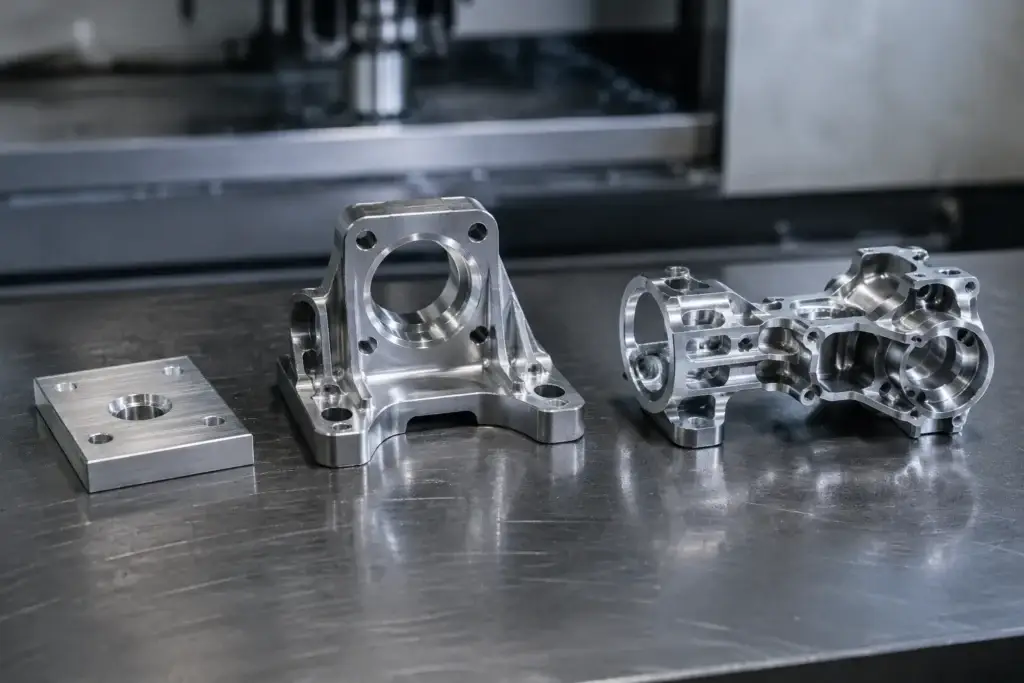
The following examples are simplified estimates created to explain quotation logic. They are not formal SinoRise quotations.
Example 1: Aluminum bracket in different quantities
Part conditions:
- Material: Aluminum 6061-T6
- Process: 3-axis CNC milling
- Two setups
- General tolerance with several controlled mounting holes
- Clear anodized finish
- Fixed programming and setup cost: US$220
| Cost item per part | 10 pieces | 50 pieces | 100 pieces |
| Material | US$6.50 | US$6.30 | US$6.10 |
| Machine time | US$18.00 | US$16.50 | US$15.80 |
| Programming and setup allocation | US$22.00 | US$4.40 | US$2.20 |
| Deburring and inspection | US$3.00 | US$3.00 | US$3.00 |
| Anodizing | US$4.00 | US$4.00 | US$3.80 |
| Packaging | US$0.80 | US$0.80 | US$0.80 |
| Estimated unit cost | US$54.30 | US$35.00 | US$31.70 |
The part design has not changed, but the unit price falls because the fixed engineering and setup cost is distributed across more pieces. Continuous production may also reduce average cycle time.
Example 2: 3-axis versus 5-axis machining
Consider a stainless steel robotic housing with features on five sides.
Order quantity: 20 pieces
Material: Stainless steel 304
Option A: 3-axis production
The part requires four orientations, several fixture changes and repeated datum alignment.
| Cost item | Estimated cost per part |
| Material | US$21.00 |
| Machine time: 1.8 hours × US$65 | US$117.00 |
| Programming, fixtures and setup allocation | US$24.00 |
| Tooling | US$7.00 |
| Inspection | US$7.00 |
| Finishing | US$5.00 |
| Estimated unit cost | US$181.00 |
Option B: 5-axis production
The part can be completed with fewer repositioning operations.
| Cost item | Estimated cost per part |
| Material | US$21.00 |
| Machine time: 1.05 hours × US$105 | US$110.25 |
| Programming, fixtures and setup allocation | US$13.00 |
| Tooling | US$6.00 |
| Inspection | US$7.00 |
| Finishing | US$5.00 |
| Estimated unit cost | US$162.25 |
The 5-axis machine has a higher hourly rate, but the estimated total cost is lower because cycle time and setup requirements are reduced.
This is why buyers should compare the complete process rather than assuming that 5 axis CNC machining services are always more expensive.
Example 3: High-precision stainless steel component
Part conditions:
- Material: Stainless steel 316L
- Quantity: 25 pieces
- Several dimensions controlled to ±0.01 mm
- CMM report and first article inspection required
- Passivation and protective packaging
| Cost item | Estimated cost per part |
| Material | US$28.00 |
| Machine time: 1.25 hours × US$80 | US$100.00 |
| Programming and setup allocation | US$20.00 |
| Tooling | US$8.00 |
| CMM and FAI allocation | US$14.00 |
| Passivation | US$7.00 |
| Protective packaging | US$3.00 |
| Estimated unit cost | US$180.00 |
After a design review, the customer may be able to relax several non-critical tolerances while keeping all functional interfaces unchanged. If this reduces machine time and inspection workload, the estimated unit cost may fall to approximately US$163–168.
The correct approach is not to remove quality control. It is to apply high precision only where the product function requires it.
How to Reduce CNC Milling Cost Without Sacrificing Quality?
1. Identify critical and non-critical tolerances
Review every tolerance before sending the drawing for quotation.
Strict tolerances should be reserved for features that control:
- Fit
- Alignment
- Sealing
- Motion
- Optical position
- Load transfer
- Safety
General dimensions can normally use the supplier’s standard machining tolerance. This reduces finishing passes and inspection time.
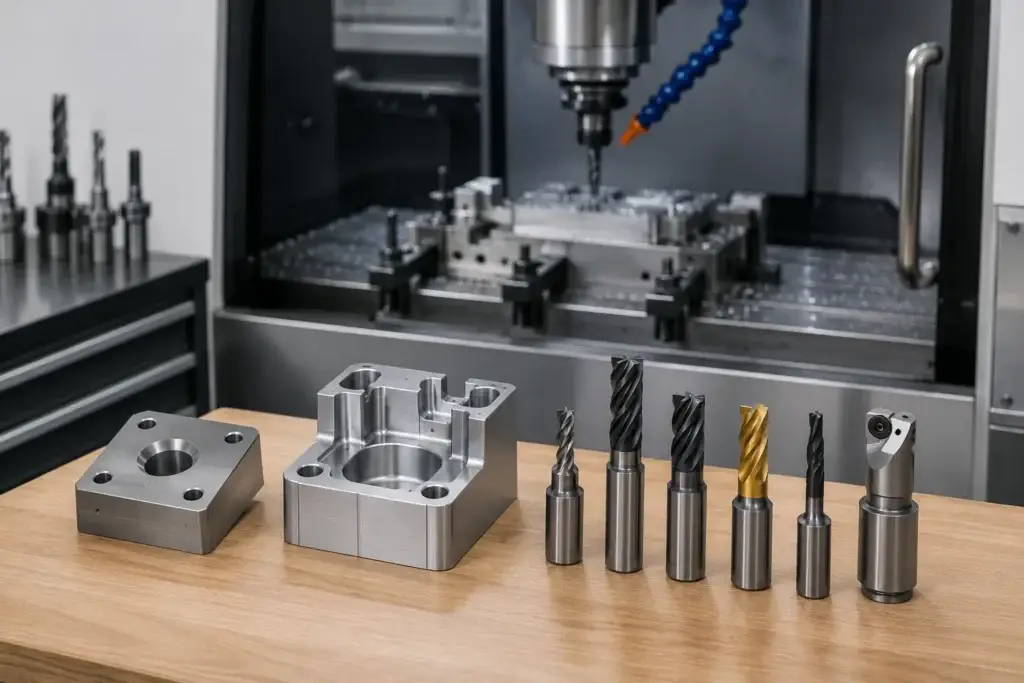
2. Increase internal corner radii
Sharp internal corners cannot be produced directly with a rotating end mill.
A small internal radius requires a smaller tool, slower feed and additional passes. Whenever the design allows, use a larger radius that can be machined with a standard cutter.
The inside corner radius should also be larger than the cutting tool radius. This gives the tool room to move and reduces vibration.
3. Avoid unnecessarily deep pockets
Deep pockets require long tools, lower cutting speeds and multiple depth passes. They also create greater risks of tool deflection, chatter and poor chip evacuation.
As a general design principle, keep cavities as shallow and open as the function allows. Consider through-features, access from the opposite side or a two-piece assembly when a deep enclosed pocket is not essential.
4. Use practical wall thicknesses
Very thin walls can deform under clamping and cutting forces. They may require several light finishing passes and additional inspection.
Increasing the wall thickness by even a small amount may improve rigidity, shorten cycle time and reduce scrap risk.
The appropriate thickness depends on the material, wall height, unsupported length and required tolerance.
5. Standardize holes, threads and features
Use standard drill sizes, standard thread specifications and commonly available cutting tools.
Avoid:
- Unusual thread pitches
- Very deep threaded holes
- Threads extending farther than required
- Multiple similar but different hole sizes
- Custom form features that do not provide functional value
Standardization reduces tool changes, programming complexity and purchasing time.
6. Reduce the number of setups
Each setup adds labor, fixture preparation, measurement and positioning risk.
Where possible:
- Place related features in accessible directions
- Use a common datum system
- Avoid features that require a separate orientation
- Consider 4-axis or 5-axis machining
- Combine parts only when the combined design remains manufacturable
A DFM review can identify whether the geometry is creating unnecessary fixture changes.
7. Select materials based on function and machinability
Do not specify a difficult material unless its mechanical, thermal, chemical or regulatory properties are required.
For example, a structural prototype may not need the same alloy as the final production part. An aluminum alloy may sometimes be appropriate for an early design verification before moving to stainless steel or titanium.
Material substitution should always be approved by the responsible engineer.
8. Start with standard raw material sizes
Designing around standard plate, bar and block dimensions can reduce waste and sourcing time.
A small change in the outside dimensions may allow the part to fit a more common material size. This can lower raw-material cost without changing its function.
9. Simplify surface finishing requirements
Apply surface treatment only where it is required for corrosion resistance, wear, appearance, conductivity or product performance.
Consider whether every surface needs:
- Cosmetic polishing
- Tight color matching
- Masking
- Controlled coating thickness
- Decorative treatment
Internal or hidden surfaces may not need the same cosmetic requirements as visible surfaces.
10. Order economical production quantities
For a new design, request several quantity levels in the quotation, such as:
- 5 pieces
- 20 pieces
- 50 pieces
- 100 pieces
This shows how setup allocation and production efficiency affect the unit price.
It also helps the buyer select a quantity that balances inventory risk and manufacturing cost.
11. Provide complete quotation information
Incomplete RFQ information forces the supplier to make assumptions. Those assumptions may increase the quotation or result in later price adjustments.
The 3D model, drawing, material, quantity, finish, inspection standard and delivery requirements should be submitted together.
12. Request DFM feedback before production
A qualified precision machining service should not only quote the existing design. It should identify features that increase machining time, inspection difficulty or quality risk.
A small design change made before production is usually less expensive than solving a manufacturability problem after the first article has been produced.
When Can 5-Axis Milling Reduce Total Cost?
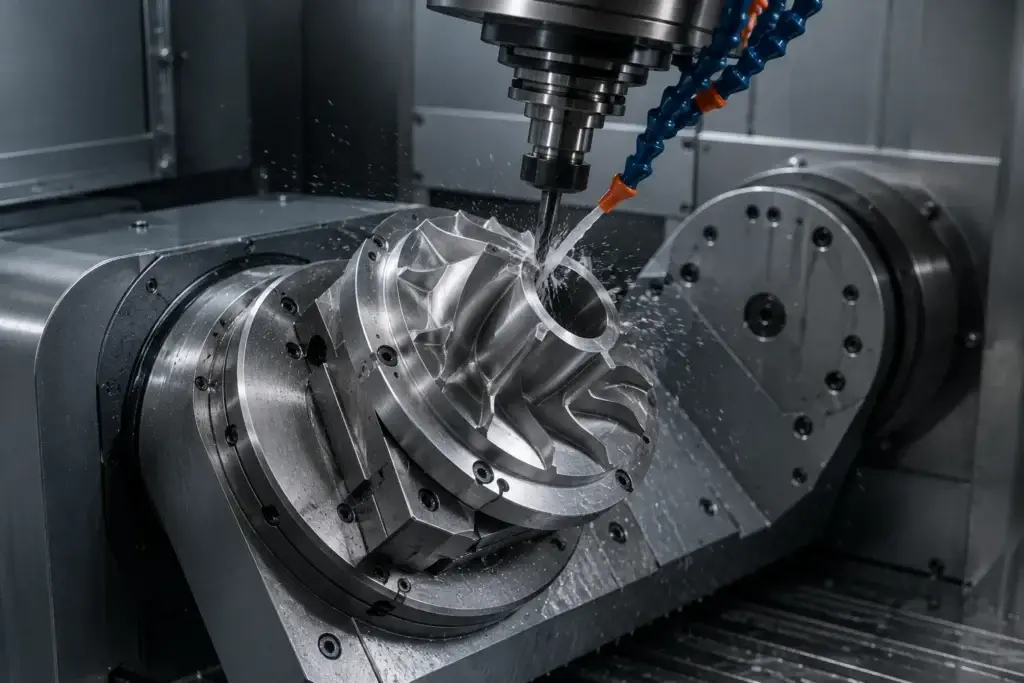
The hourly rate for 5-axis machining is normally higher than the rate for conventional 3-axis milling. Nevertheless, 5-axis manufacturing may be more economical when a part has:
- Features on four or five sides
- Compound angles
- Angled holes
- Complex contoured surfaces
- Tight positional relationships between different faces
- Several operations that would otherwise need separate fixtures
The correct comparison is:
Total 3-Axis Cost = Lower Hourly Rate + More Setups + More Fixtures + More Handling + More Alignment Risk
versus:
Total 5-Axis Cost = Higher Hourly Rate + Fewer Setups + Shorter Process Route + Lower Repositioning Risk
A simple plate should not be placed on a 5-axis machine without a reason. A complex housing should not automatically be divided into several 3-axis operations simply because the machine rate appears lower.
The best result comes from matching the machine to the part.
How to Compare CNC Milling Quotations?
Two quotations with different prices may not cover the same scope.
Before selecting a supplier, compare the following items line by line.
| Quotation item | Questions to confirm |
| Material | Is the exact alloy and material condition included? |
| Material certification | Is a certificate included or charged separately? |
| Tolerances | Does the quotation include every tolerance shown on the drawing? |
| Surface finish | Is the required roughness included? |
| Surface treatment | Are masking, color control and coating thickness included? |
| Inspection | Is standard inspection, CMM or full-dimensional reporting included? |
| First article | Is FAI included in the price? |
| Quantity | Is the price based on one release or several releases? |
| Packaging | Are parts individually protected? |
| Shipping | Is freight included or excluded? |
| Lead time | Does it include material sourcing and finishing? |
| Rework responsibility | How are non-conforming parts handled? |
When comparing precision CNC milling suppliers, ask each supplier to quote against the same technical package and delivery terms.
A low quotation may exclude inspection, finishing, packaging or documentation. A higher quotation may already include those costs. Comparing only the final number can therefore produce the wrong sourcing decision.
What Information Is Needed for an Accurate CNC Milling Quote?
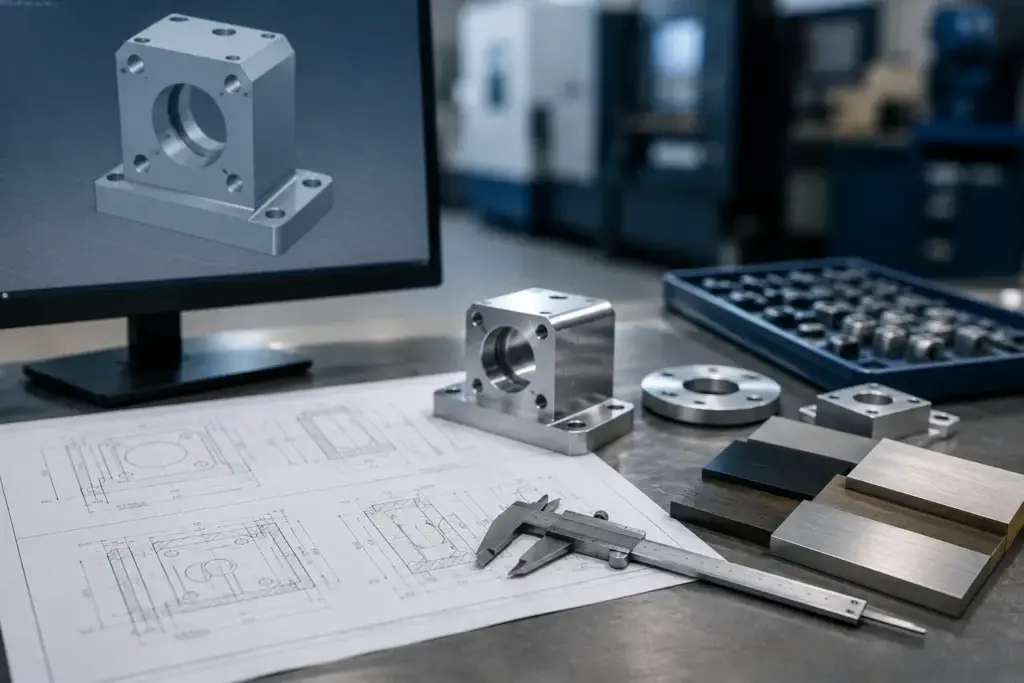
A complete request for quotation should include:
3D CAD file
Preferred formats commonly include:
- STEP
- STP
- IGES
- Parasolid
The model defines the complete geometry and supports CAM programming.
2D technical drawing
The drawing should identify:
- Critical dimensions
- Tolerances
- GD&T
- Thread specifications
- Surface roughness
- Inspection requirements
- Special notes
Material specification
State the exact material and condition, such as:
- Aluminum 6061-T6
- Aluminum 7075-T6
- Stainless steel 304
- Stainless steel 316L
- Tool steel
- Titanium grade
- Brass or copper alloy
- Engineering plastic grade
Quantity
Provide the current order quantity and, where useful, expected future quantities.
Surface treatment
Specify the process, color, texture, gloss, coating thickness and masking areas.
Quality documentation
Confirm whether the project requires:
- Material certificate
- First article inspection
- CMM report
- Full-dimensional report
- Surface treatment certificate
- Traceability records
Lead time and delivery destination
State the required delivery date and country or region. This allows the supplier to evaluate production and shipping accurately.
When You Should Not Reduce CNC Milling Cost?
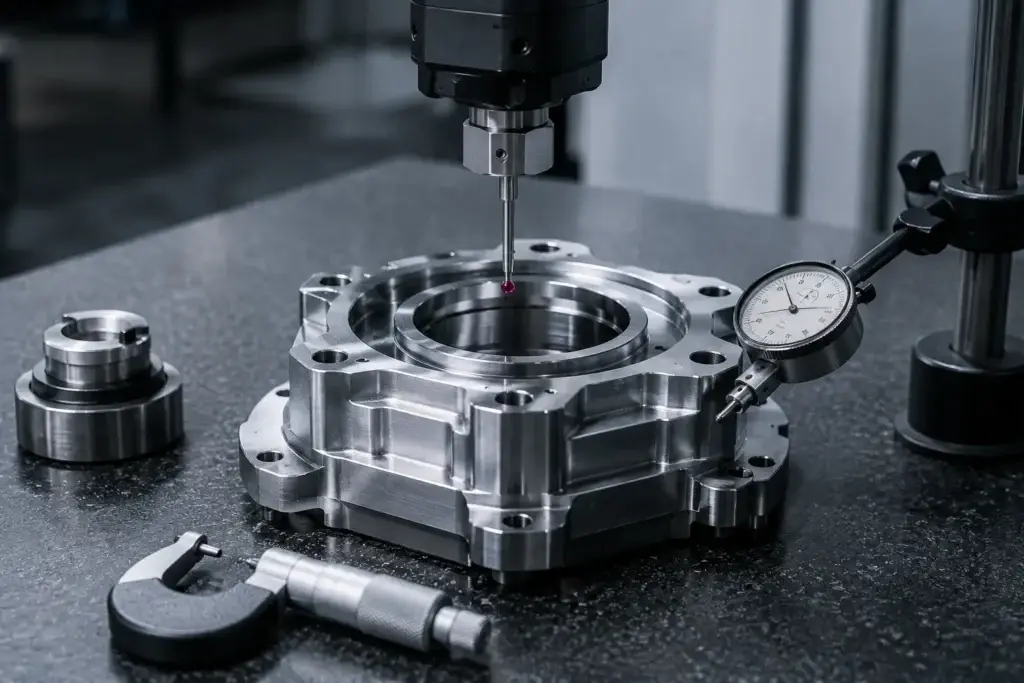
Cost reduction should never compromise a feature that controls product performance, safety or compliance.
Avoid removing or weakening requirements related to:
- Medical device interfaces
- Semiconductor equipment positioning
- Optical alignment surfaces
- Robotic motion accuracy
- UAV structural integrity
- Sealing and pressure retention
- Bearing fits
- Safety-critical automotive components
- Material traceability
- Required inspection records
It may be possible to reduce machining cost around these features, but not by ignoring them.
For example, a medical component may contain two critical interfaces and twenty non-critical dimensions. The correct strategy is to maintain full control over the two interfaces while simplifying the remaining dimensions where engineering allows.
The objective is functional cost optimization, not indiscriminate cost cutting.
How SinoRise Helps Control Total CNC Milling Cost?
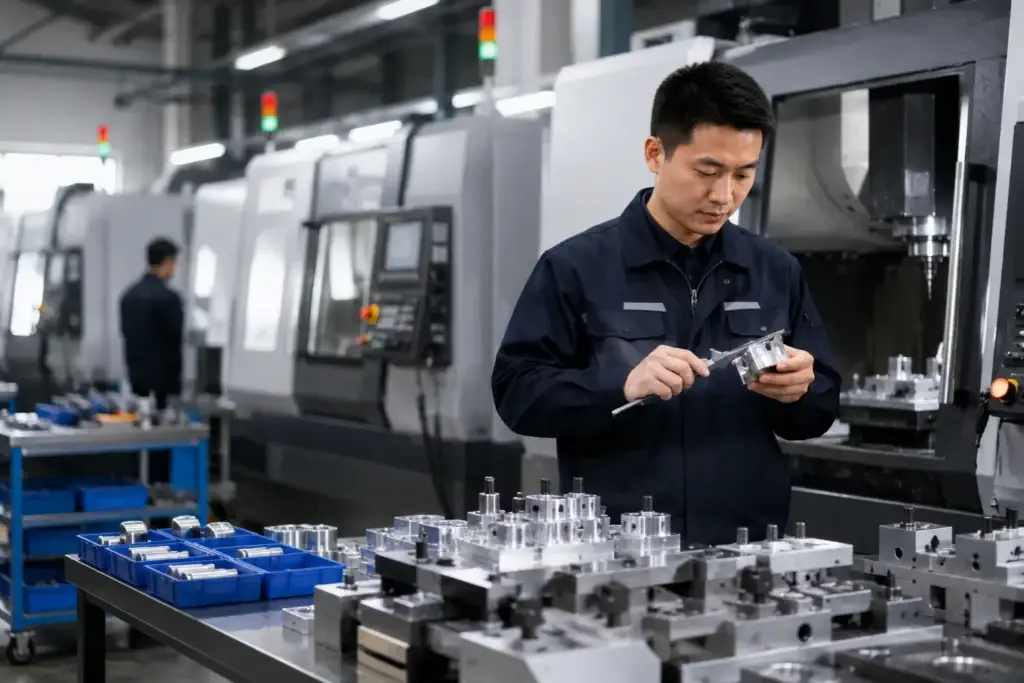
At SinoRise, cost control begins with reviewing the complete manufacturing route rather than simply applying an hourly machine rate.
The engineering team evaluates the material, geometry, datum structure, tolerance, quantity, surface treatment and inspection requirements before selecting the production method.
Depending on the component, the process may involve:
- 3-axis CNC milling
- 4-axis machining
- 5-axis CNC machining
- CNC turning and milling
- Wire cutting
- Sheet metal fabrication
- Secondary finishing and inspection
This multi-process capability helps reduce unnecessary supplier transfers and allows the production route to be selected according to the part rather than forcing every component onto the same type of machine.
SinoRise operates more than 40 precision machining machines and uses inspection equipment including 2.5D measuring systems, digital height gauges and CMM equipment. Production is managed under an ISO 9001 quality system.
For prototype and small batch CNC machining projects, the focus is placed on:
- Manufacturability review before production
- Appropriate machine selection
- Clear control of critical dimensions
- First article verification
- Stable transition from prototype to repeat production
- Coordination of machining, finishing and inspection
This approach helps OEM customers control total project cost while maintaining the quality and delivery requirements of precision components.
Frequently Asked Questions
How much does CNC milling cost per hour?
Illustrative rates may range from approximately US$40–100 per hour for standard 3-axis milling and US$90–200 or more per hour for 5-axis or specialized machining. The actual rate depends on the supplier, machine, material, precision and project requirements.
Hourly rate alone should not be used to compare quotations because setup time, cycle time, inspection and finishing may be calculated differently.
How much does one CNC milled part cost?
A simple aluminum part may cost tens of dollars, while a complex or high-precision component may cost several hundred dollars or more.
The supplier must review the CAD file, drawing, material, quantity and finish before determining the cost.
Why are one-off CNC parts expensive?
One-off parts carry the full cost of programming, fixture preparation, machine setup and first article inspection. In a larger order, these fixed costs are divided across more pieces.
Is 5-axis CNC milling always more expensive?
No. A 5-axis machine has a higher hourly rate, but it may reduce the number of setups and shorten the total cycle time. For complex multi-sided parts, the final unit cost may be lower than producing the same component through several 3-axis operations.
How do tolerances affect CNC milling cost?
Tighter tolerances may require slower cutting, additional finishing, temperature control, new tools and more detailed inspection. Apply strict tolerances only to dimensions that affect function, fit, alignment or safety.
Is aluminum cheaper to machine than stainless steel?
Aluminum is generally easier and faster to machine than stainless steel, which often results in lower machine time and tool wear. However, the final cost also depends on geometry, quantity, tolerance, material grade and finishing.
How does quantity affect the unit price?
Higher quantities spread programming, fixture and setup costs across more parts. Continuous production can also improve machine utilization and reduce average cycle time.
What is the best way to reduce CNC milling costs?
The most effective methods are to simplify difficult features, use practical tolerances, increase internal radii, reduce setups, use standard tools and materials, and request a DFM review before production.
How should I compare a China CNC milling service with a local supplier?
Compare total landed cost, not only the unit price. Review material, machining scope, inspection, finishing, packaging, freight, import costs, lead time, communication and quality responsibility.
What files should I send for a quotation?
Send a STEP or STP file, a 2D PDF drawing, material specification, quantity, surface treatment, tolerance, inspection requirements and delivery destination.
Get an Accurate CNC Milling Quote
A reliable quotation starts with complete technical information.
Send SinoRise your:
- 3D CAD model
- 2D technical drawing
- Material specification
- Required quantity
- Critical tolerances
- Surface treatment
- Inspection requirements
- Delivery destination
Our engineering team will review the CNC milling process, identify potential cost drivers and recommend an appropriate manufacturing route for your custom CNC milled parts.
Contact SinoRise for a DFM review and CNC milling quotation.