
Quick Answer
Robotics components machining requires a balance of weight, precision, stiffness, wear resistance, repeatability, and cost—not simply the tightest tolerance or the lightest material.
Key Takeaways
- Precision CNC machined components for robotics must support repeatable motion, stable assembly, and long-term mechanical reliability.
- Common robotic parts include joints, arms, housings, mounting plates, shafts, spacers, end-effector parts, sensor brackets, and gearbox-related components.
- Aluminum is useful for lightweight moving structures, while steel, stainless steel, titanium, and engineering plastics fit higher-load or functional areas.
- CNC milling, turning, turning-milling, wire cutting, and 5-axis machining should be selected by geometry and tolerance risk.
- Surface treatment should match the part’s function: wear resistance, corrosion protection, low reflection, conductivity, or assembly stability.
- Inspection should focus on hole position, concentricity, flatness, perpendicularity, surface roughness, thread quality, and real assembly fit.
Abstract
Robotics components are different from ordinary machined parts. A bracket may affect payload stability. A shaft may affect repeatable motion. A housing may influence heat, alignment, and sensor accuracy. A small burr or tolerance mismatch can create friction, vibration, or assembly problems later.
This guide explains how to approach robotics components machining from a buyer and quality engineer perspective. It covers common robot part types, key performance indicators, recommended materials, CNC processes, surface treatments, inspection methods, common risks, and how SinoRise supports custom precision CNC machined components for robotics projects.
What Buyers Care About in Robotics Components Machining?
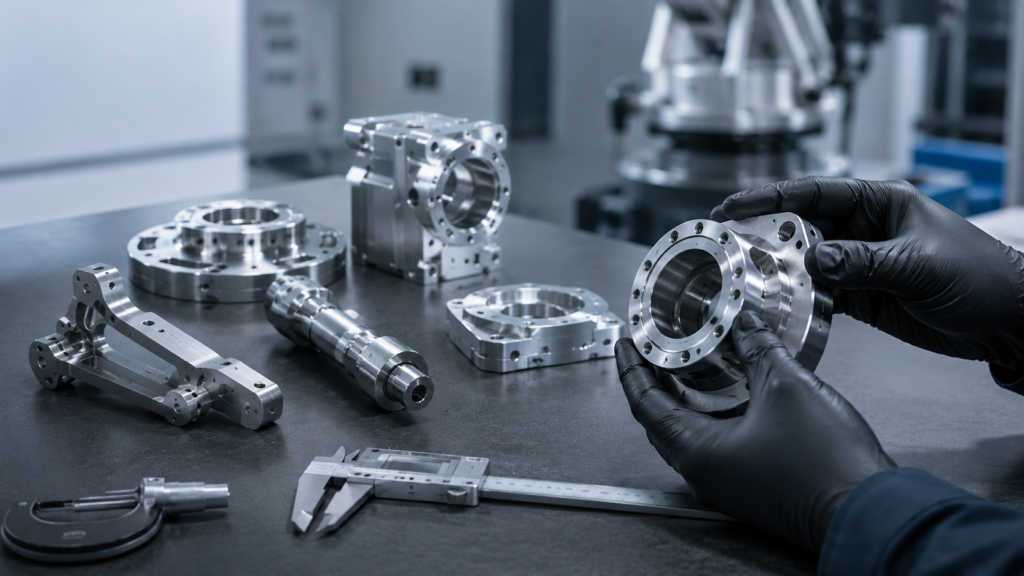
In robotics components machining, buyers usually care about three things at the same time: motion accuracy, mechanical stability, and cost control. A robot part must not only meet the drawing. It must also support repeatable movement after assembly.
The robotics market is expanding quickly. The International Federation of Robotics reported that 542,000 industrial robots were installed worldwide in 2024, more than double the number from 10 years earlier. This growth makes precision, repeatability, and scalable part sourcing increasingly important for robotics manufacturers. [1]
The Real Balance: Weight, Precision, Stiffness, and Cost
Robotics part design often involves trade-offs. A lighter arm may reduce motor load, but if it loses stiffness, it can increase vibration. A tighter tolerance may improve assembly, but if it is applied to every surface, the cost rises without real performance gain.
The best design question is not “How tight can we make it?” It is “Which features directly affect motion, load, alignment, and service life?”
Key Performance Indicators for Robotic CNC Parts
| Requirement | Why It Matters |
| Low weight | Reduces inertia and motor load |
| High stiffness | Improves motion stability and reduces vibration |
| Dimensional accuracy | Keeps assemblies aligned |
| Repeatability | Supports consistent movement and batch replacement |
| Wear resistance | Extends service life in moving or clamping areas |
| Concentricity | Important for shafts, bearings, sleeves, and rotating parts |
| Flatness and perpendicularity | Critical for mounting faces and joint assemblies |
| Surface quality | Affects friction, coating, sealing, and appearance |
| Cost control | Prevents over-engineering non-critical features |
Common CNC Machined Robotics Components
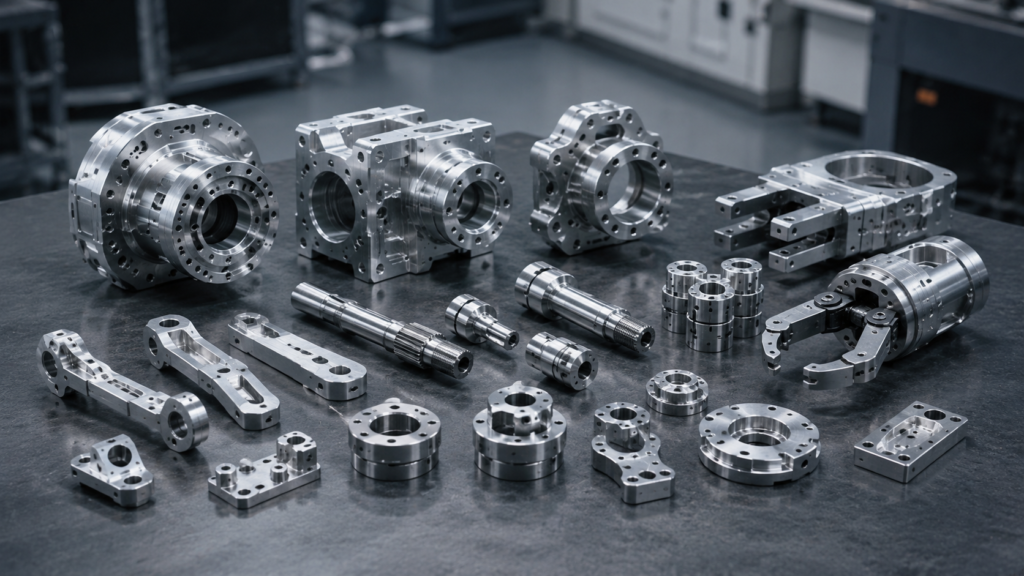
CNC machined robotics components are used in robotic arms, collaborative robots, mobile robots, inspection robots, automation equipment, end-effectors, and custom robotic systems. These parts often combine structural, motion, and sensor-support functions.
Structural, Motion, Housing, and End-Effector Parts
Common robotics parts include:
- Robot arm plates
- Joint housings
- End-effector brackets
- Gripper fingers
- Motor mounts
- Gearbox housings
- Bearing seats
- Shaft couplings
- Spacers and bushings
- Sensor brackets
- Camera or vision mounts
- Linear guide blocks
- Mounting plates
- Protective covers
- Custom automation fixtures
For robotics manufacturers, these parts are not isolated components. They work together as a motion system.
Robotics Part Category Table
| Part Category | Typical Examples | Main Machining Concern |
| Structural parts | Arm links, plates, frames | Weight, stiffness, flatness |
| Motion parts | Shafts, bushings, couplings | Concentricity, wear, fit |
| Joint parts | Bearing seats, joint housings | Bore accuracy, alignment |
| End-effector parts | Gripper fingers, tool mounts | Lightweight design, repeatable positioning |
| Sensor parts | Camera brackets, sensor mounts | Stability, vibration control |
| Housing parts | Motor covers, gearbox housings | Heat, assembly fit, surface finish |
| Fixture parts | Test jigs, assembly fixtures | Repeatability, datum control |
Recommended Materials for Precision CNC Machined Components
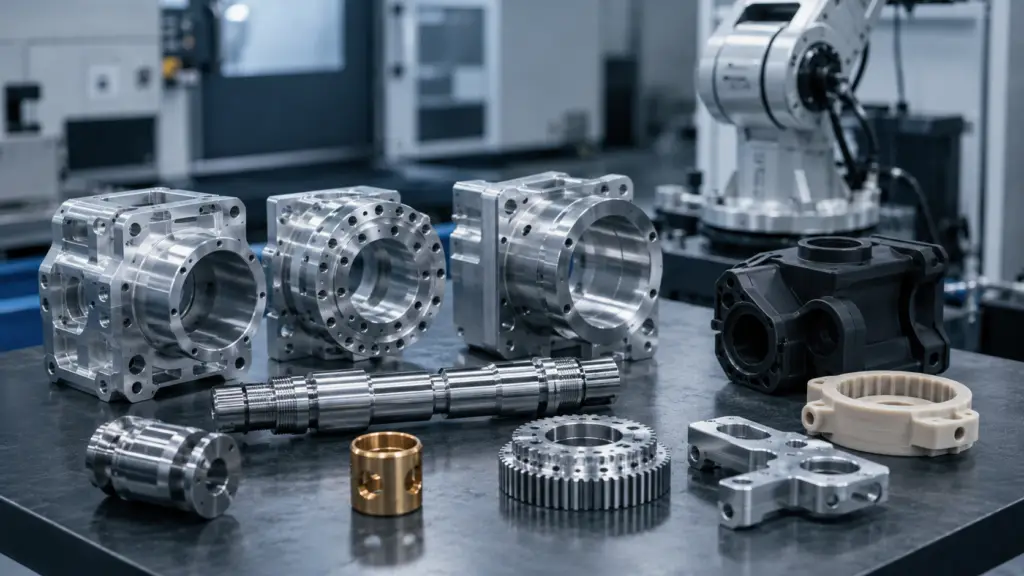
Material selection for precision CNC machined components should start from function. The best material is not always the strongest or the lightest. It is the material that gives the right balance of strength, weight, machinability, wear resistance, surface treatment, and cost.
Aluminum, Steel, Titanium, and Engineering Plastics
Aluminum 6061 is often suitable for robot brackets, housings, covers, and lightweight structural parts. Aluminum 7075 is better for higher-load lightweight structures where stiffness and strength-to-weight ratio matter more.
Steel and alloy steel are useful for shafts, pins, wear parts, and load-bearing components. Stainless steel is preferred when corrosion resistance or clean surfaces are important. Titanium may be used for compact high-strength parts, but cost and machining difficulty should be considered.
Engineering plastics such as PEEK, POM, PTFE, and nylon can reduce weight, provide insulation, or lower friction in non-metallic contact areas.
Material Selection Table by Function
| Material | Best For | Advantage | Watch Point |
| Aluminum 6061 | Brackets, covers, housings | Balanced cost and machinability | Lower strength than 7075 |
| Aluminum 7075 | Lightweight arm links, loaded plates | High strength-to-weight ratio | Higher cost, finish control needed |
| Stainless steel 304/316 | Clean or corrosion-resistant parts | Stable and durable | Heavier than aluminum |
| Alloy steel | Shafts, pins, load-bearing parts | High strength and wear resistance | May need heat treatment |
| Titanium | Compact high-strength parts | Strong and corrosion resistant | Higher machining cost |
| POM / Delrin | Bushings, spacers, guides | Low friction, easy machining | Check temperature limits |
| PEEK | High-performance functional parts | Heat and chemical resistance | Higher material cost |
| PTFE | Low-friction parts | Excellent sliding behavior | Softer and easier to deform |
SinoRise’s material guidance notes that robotics components often use aluminum for lightweight moving parts, while steel or titanium may be selected for higher-load structures. [4]
Recommended Processes for Robotic CNC Machining
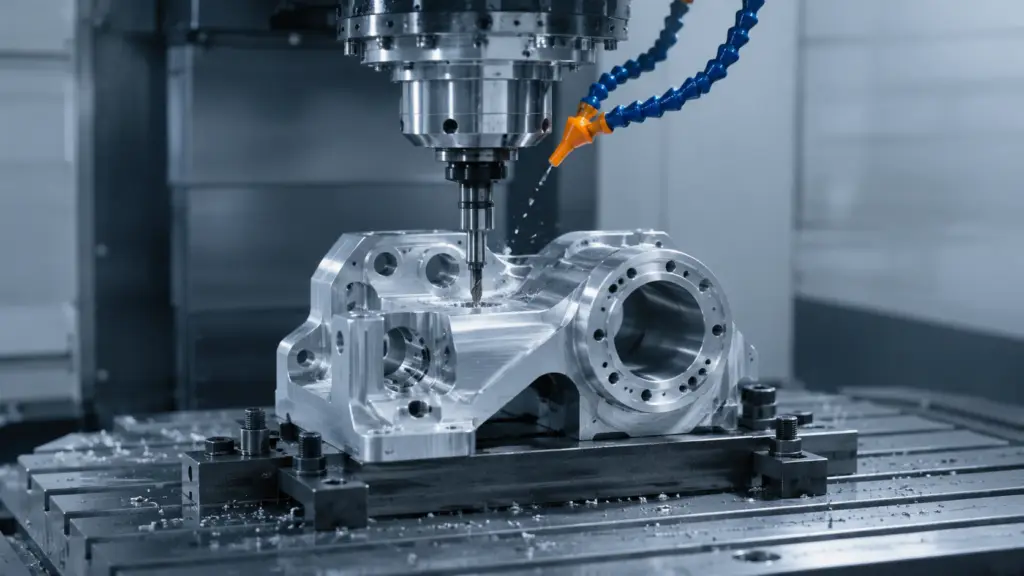
Robotic CNC machining projects often include mixed geometries: flat plates, round shafts, pockets, threaded holes, bearing seats, angled faces, and multi-side mounting features. The machining process should be selected around geometry and risk.
CNC Milling, Turning, Turning-Milling, Wire Cutting, and 5-Axis Machining
| Process | Suitable Robotics Parts | Why It Fits |
| CNC milling | Brackets, plates, housings, frames | Good for pockets, holes, slots, and flat faces |
| CNC turning | Shafts, spacers, pins, bushings | Good for round and concentric parts |
| Turning-milling | Couplings, connectors, special shafts | Reduces setup changes for mixed features |
| 5-axis machining | Complex joints and angled brackets | Reduces setups and improves feature alignment |
| Wire cutting | Thin plates, profiles, precision slots | Useful for accurate flat shapes |
| Grinding | High-accuracy shafts or mating surfaces | Improves size and surface control |
Process Selection by Part Geometry
| Part Geometry | Recommended Process |
| Flat arm plate with pockets | CNC milling |
| Shaft with grooves and threads | CNC turning |
| Coupling with side holes and flats | Turning-milling |
| Complex joint housing | 5-axis CNC machining |
| Thin profile plate | Wire cutting |
| Bearing seat or precision bore | CNC milling, boring, or grinding |
| Gripper finger with contour | CNC milling or 5-axis machining |
The process should be confirmed before quoting because setup strategy affects tolerance, cost, and delivery.
Surface Finishes for Robot Parts Machining
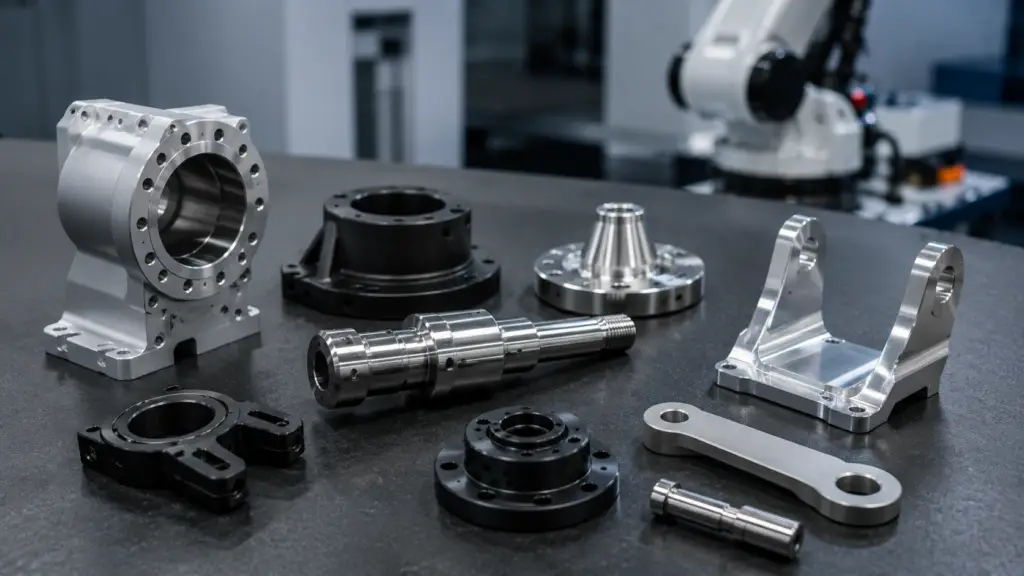
Surface finish in robot parts machining affects more than appearance. It can influence friction, corrosion resistance, wear resistance, assembly clearance, light reflection, cleaning, and touch safety.
Surface Treatment Options for Robotic Components
| Surface Treatment | Suitable Material | Main Purpose |
| Anodizing | Aluminum | Corrosion resistance, color, surface protection |
| Hard anodizing | Aluminum | Wear resistance for repeated contact |
| Sandblasting | Aluminum, stainless steel | Uniform matte appearance |
| Polishing | Aluminum, stainless steel | Smooth visible or contact surfaces |
| Passivation | Stainless steel | Corrosion resistance and cleaner surface |
| Nickel plating | Steel, brass, copper | Wear, conductivity, corrosion resistance |
| Black oxide | Steel | Dark appearance and mild protection |
| Heat treatment | Steel, alloy steel | Hardness and strength improvement |
| Powder coating | Aluminum, steel | Durable external protection |
Finish Selection by Working Condition
| Working Condition | Recommended Finish Direction |
| Lightweight visible aluminum part | Sandblast + anodizing |
| Repeated sliding or contact | Hard anodizing, plating, or material upgrade |
| Stainless clean hardware | Passivation |
| Optical or vision bracket | Matte black anodizing |
| High-wear shaft or pin | Heat treatment, grinding, or coating |
| Outdoor mobile robot part | Anodizing, powder coating, stainless steel |
| Prototype fit testing | As-machined or simple anodizing |
Surface treatment should be reviewed early because coating thickness can change hole fit, bearing seats, threaded areas, and mating surfaces.
Inspection Methods for High Precision CNC Machining in Robotics
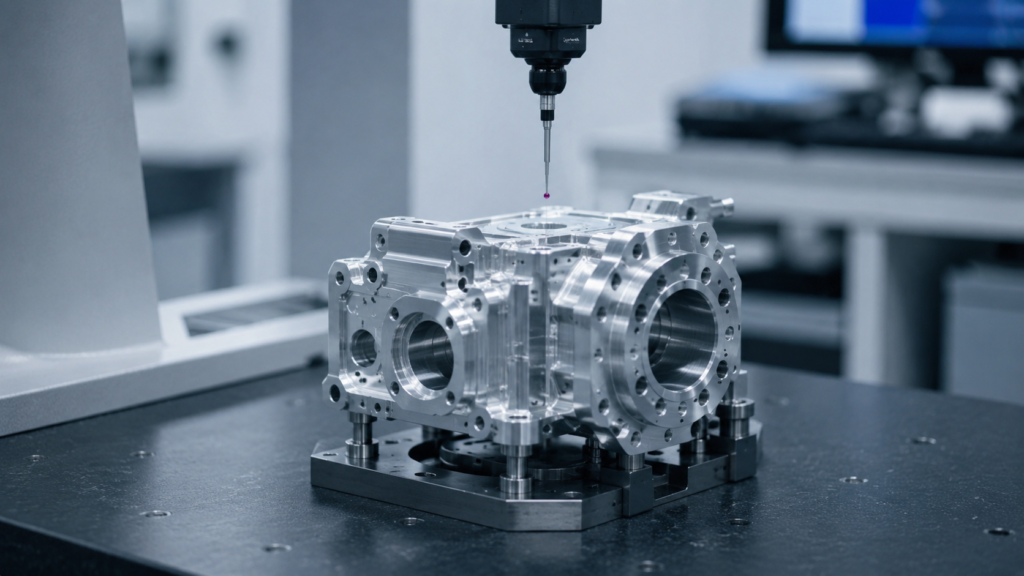
For high precision CNC machining in robotics, inspection should focus on features that affect motion, fit, and repeatability. A part can look good but still fail if a bore is off-center, a mounting surface is not flat, or a hole pattern does not match the mating assembly.
What Should Be Inspected Before Assembly?
Important inspection points include:
- Hole position
- Bore diameter
- Concentricity
- Shaft diameter
- Flatness
- Perpendicularity
- Parallelism
- Thread quality
- Surface roughness
- Coating thickness
- Burrs and sharp edges
- Weight for moving parts
- Trial fit with mating components
ISO 9283 defines methods for specifying and testing performance characteristics of manipulating industrial robots, including pose accuracy, pose repeatability, path accuracy, and path repeatability. This is why repeatability and geometric consistency matter in robotic component sourcing. [2]
Robotics Machining Inspection Checklist
| Inspection Method | What It Checks |
| CMM inspection | Hole position, datums, flatness, complex geometry |
| Calipers and micrometers | General size, diameter, thickness |
| Pin gauge | Hole size and fit |
| Thread gauge | Thread quality |
| Height gauge | Step height and flatness-related checks |
| Surface roughness tester | Contact surfaces and visible finish |
| Coating thickness gauge | Anodizing, plating, or coating buildup |
| Visual inspection | Burrs, dents, scratches, edge quality |
| Assembly fit check | Real compatibility with mating parts |
NIST’s robotics performance work also emphasizes measurement science for assessing and assuring the performance and safety of mobile robots and manipulators. [3]
Common Risks in CNC Machining for Robotics Parts
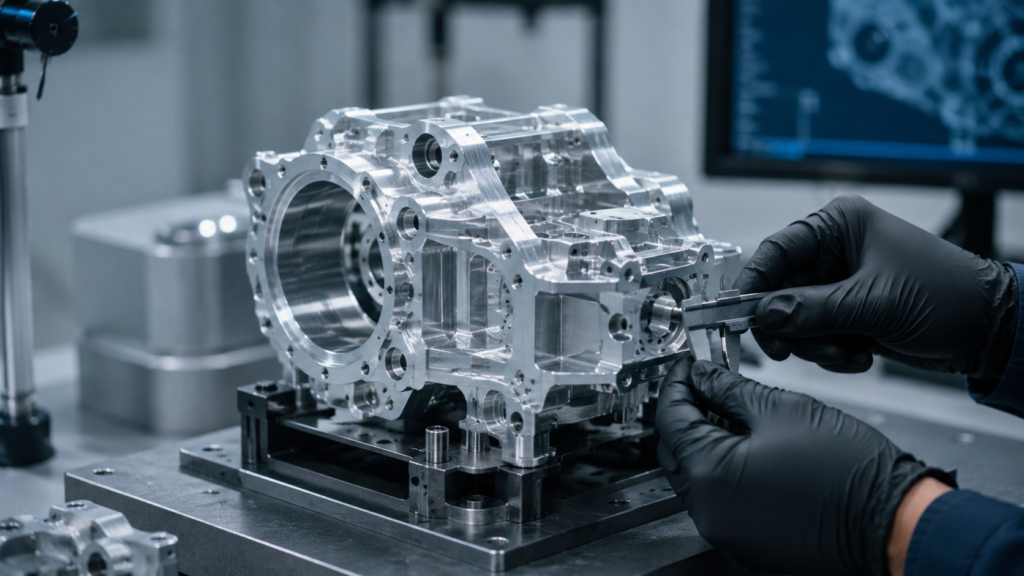
CNC machining for robotics parts often fails when the drawing is manufacturable but the function is not fully understood. The supplier should know which surfaces support motion, which holes define alignment, and which features are only cosmetic.
Over-Lightweighting, Tolerance Stack-Up, and Vibration
| Risk | Possible Result | Prevention |
| Too much pocketing | Lower stiffness and vibration | Keep material around load paths |
| Thin walls near joints | Deformation during machining or assembly | Add ribs or thicker support zones |
| Weak threads | Loose fasteners | Use proper engagement or inserts |
| Poor datum design | Assembly mismatch | Define functional datums clearly |
| Tolerance stack-up | Robot joint misalignment | Control critical features, not every dimension |
| Ignored vibration | Sensor instability or noisy motion | Review stiffness and mounting strategy |
Burr, Coating, and Material Risks
Common production risks include:
- Burrs near sliding or mating surfaces
- Coating buildup in holes
- Distorted thin-wall parts
- Tool marks on bearing seats
- Inconsistent anodizing color
- Thread damage after surface treatment
- Material substitution without approval
- Batch variation after prototype approval
The best way to reduce risk is to align drawing requirements with real part function before machining begins.
How SinoRise Supports Robotics Components Machining?
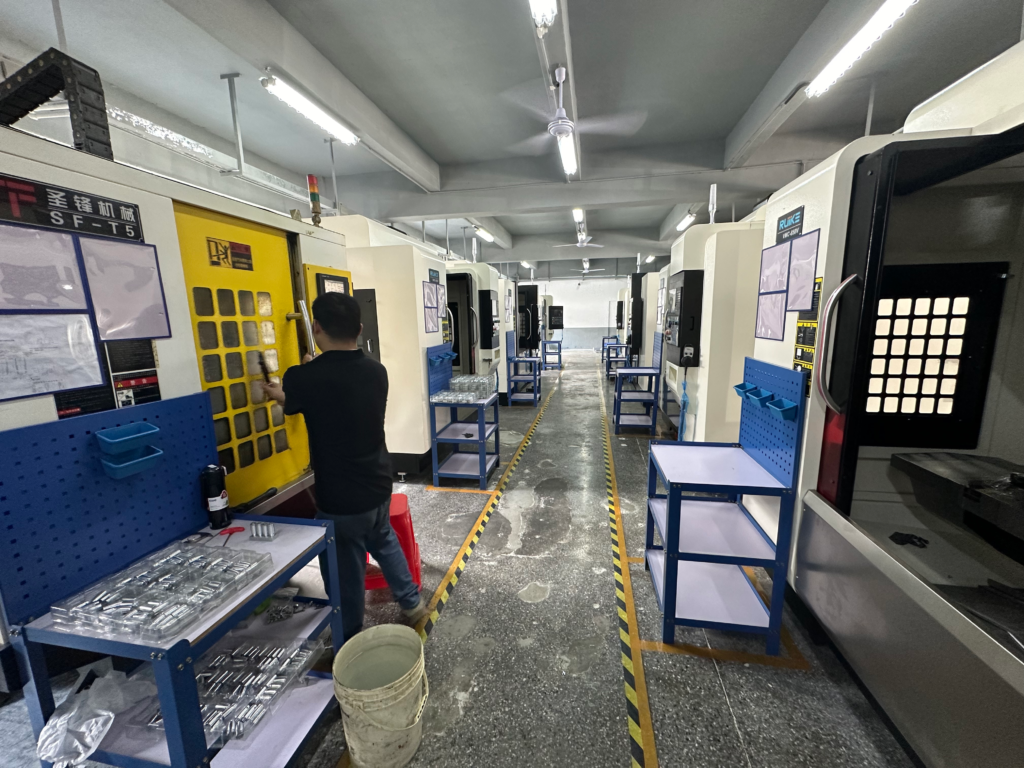
SinoRise supports robotics components machining from prototype to small and medium-batch production. For robotics buyers, the value is not only producing parts, but helping review function, process, material, tolerance, surface finish, and inspection needs before production.
SinoRise can support:
- Drawing and DFM review
- CNC milling, turning, turning-milling, wire cutting, and 5-axis machining
- Aluminum, stainless steel, alloy steel, titanium, copper, brass, and engineering plastics
- Surface treatment coordination
- Critical dimension inspection
- Prototype iteration
- Small and medium-batch production
- Precision parts for robot arms, joints, housings, brackets, shafts, spacers, and end-effectors
For robotic systems, the most important sourcing question is not only “Can this supplier machine the part?” It is “Can this supplier understand which features affect motion, assembly, and repeatability?”
FAQ About Robotics Components Machining
What Is Robotics Components Machining?
Robotics components machining is the CNC manufacturing of custom parts used in robotic systems, including arms, joints, shafts, housings, brackets, gripper parts, spacers, sensor mounts, and end-effector components.
What Materials Are Best for Robotic CNC Parts?
Aluminum 6061 is suitable for balanced lightweight parts. Aluminum 7075 is better for high-strength lightweight structures. Steel and stainless steel are used for shafts, pins, wear parts, and corrosion-resistant components. PEEK, POM, PTFE, and nylon are used for lightweight, insulating, or low-friction parts.
Why Is Precision Important in Robot Parts?
Precision affects alignment, motion repeatability, vibration, friction, and assembly stability. Small errors in holes, bores, shafts, or mounting faces can cause larger performance issues in the full robot system.
Is 5-Axis CNC Machining Useful for Robotics Components?
Yes. 5-axis CNC machining is useful for complex joint housings, angled brackets, multi-face components, and parts that need fewer setups to maintain feature alignment.
What Surface Finish Is Best for Robotics Parts?
It depends on function. Anodizing is common for aluminum parts, hard anodizing supports wear resistance, passivation works for stainless steel, and black anodizing is useful for optical or vision-related brackets.
What Should Be Included in a Robotics Parts RFQ?
A good RFQ should include 3D files, 2D drawings, material requirements, tolerances, surface finish, critical dimensions, batch quantity, mating part information, application environment, and inspection requirements.
Can SinoRise Support Prototype Robotics Components?
Yes. SinoRise supports prototype and small-batch robotics components, including CNC milling, turning, turning-milling, 5-axis machining, material selection, surface treatment coordination, and inspection support.
Conclusion
Robotics components machining is a balance of weight, precision, stiffness, wear resistance, repeatability, and cost. The best part is not always the lightest or the most tightly toleranced. It is the part that supports stable motion and reliable assembly at a practical manufacturing cost.
For buyers, the most effective sourcing strategy is to define the component’s role first: structural, motion, joint, sensor, housing, end-effector, or fixture function. Then choose material, machining process, surface treatment, and inspection method based on that role.
SinoRise supports precision CNC machined components for robotics projects through engineering review, CNC machining, surface finishing, and inspection planning. For robot arms, joints, housings, shafts, brackets, spacers, and end-effectors, the right machining strategy helps reduce rework, control cost, and improve mechanical reliability.
References
[1] International Federation of Robotics — World Robotics 2025 statistics reported 542,000 industrial robots installed worldwide in 2024, more than double the number 10 years earlier.
[2] ISO 9283 — Manipulating industrial robots: performance criteria and related test methods for characteristics including pose accuracy, pose repeatability, path accuracy, and path repeatability.
[3] NIST — Performance Assessment Framework for Robotic Systems, focused on measurement methods for assessing and assuring mobile robot and manipulator performance and safety.
[4] SinoRise — CNC material guidance notes that robotics components often use aluminum for lightweight moving parts and steel or titanium for higher-load structures.