
Quick Answer
First Article Inspection verifies whether the first production-ready CNC part meets drawing, material, process, tolerance, and quality requirements before full batch production begins.
Key Takeaways
- First Article Inspection is not just checking the first part; it validates whether the production process can make conforming parts.
- Buyers often request FAI when using a new supplier, new drawing, new material, new process, or revised part design.
- A strong FAI report helps reduce uncertainty before batch production.
- FAI is especially useful for precision machining service projects involving tight tolerances, critical assemblies, or regulated industries.
- FAI does not replace in-process inspection or final inspection; it works as an early quality gate.
- SinoRise can support FAI through drawing review, CNC machining, dimensional inspection, and quality documentation.
Abstract
For CNC machining buyers, the first real production part often carries more risk than it seems. A prototype may look correct, but batch production introduces real material, tooling, fixtures, surface treatments, inspection plans, and delivery expectations. If a dimension is wrong, a thread is too shallow, a coating changes the fit, or a hole pattern does not match the mating part, the problem can spread across the entire order.
First Article Inspection, or FAI, is designed to catch these issues early. This guide explains what FAI means, when it is needed, what an FAI report usually includes, how it differs from normal inspection, and how buyers can use it to reduce risk when sourcing custom CNC machined parts from a precision machining service supplier.
What Is First Article Inspection in CNC Machining?
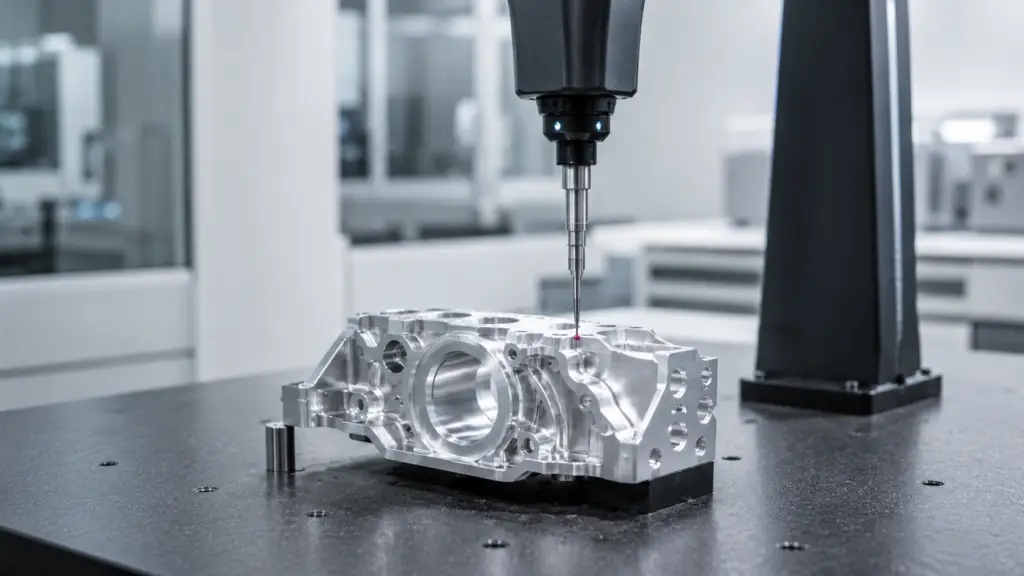
First Article Inspection is a formal verification process used to confirm that a production-ready part meets the customer’s drawing, specification, material, process, and inspection requirements before full production continues.
In CNC machining, FAI is usually performed on the first production sample or a representative part from the first production batch. It is not simply a visual check. It is a structured inspection process that compares the actual part against the engineering drawing and purchase requirements.
SAE AS9102, widely used in aerospace quality systems, establishes documentation requirements for First Article Inspection. Although not every CNC project requires AS9102, its logic is useful for understanding FAI: verify that the planned production process can produce parts that meet requirements. [1]
What the “First Article” Really Means?
The “first article” does not always mean the very first physical piece that comes off the machine. In practical CNC sourcing, it usually means the first qualified production-intent sample made with the planned material, machine, tooling, fixture, process route, and surface treatment.
This matters because a handmade prototype or trial part may not represent the real production process.
FAI vs Normal Final Inspection
Final inspection checks parts before shipment. FAI checks whether production is ready to continue.
| Inspection Type | Main Purpose | When It Happens |
| In-process inspection | Control machining during production | During machining |
| First Article Inspection | Validate the first production-ready part | Before batch release |
| Final inspection | Confirm finished parts before shipment | After production |
| Random sampling | Monitor batch consistency | During or after batch production |
For buyers, FAI is an early warning system.
Why FAI Matters in a Precision Machining Service?
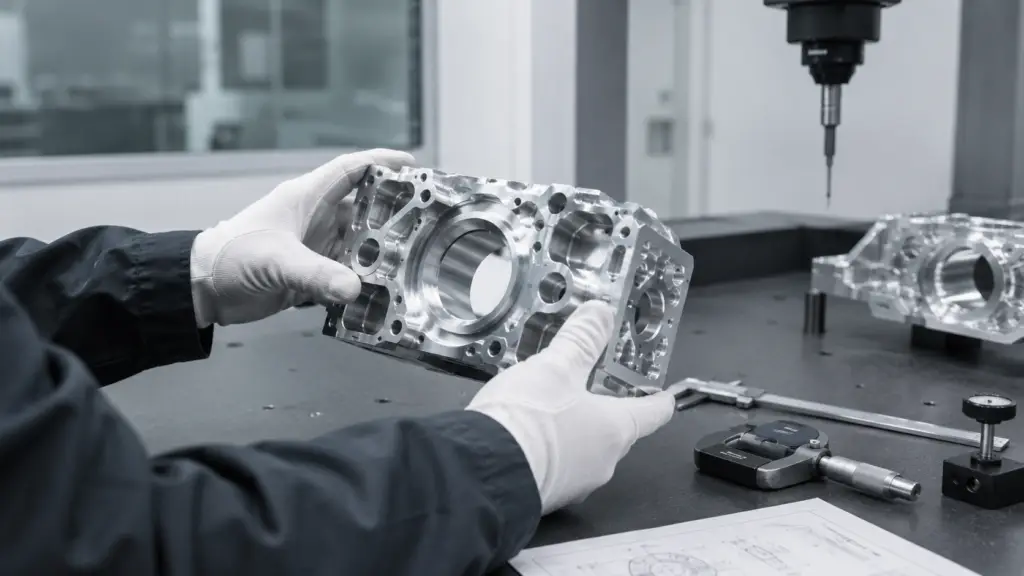
In a precision machining service, FAI matters because small errors can become expensive once production starts. If a supplier machines 200 parts before discovering that the bore location is wrong, the cost is not only scrap. It may also affect delivery, assembly, and customer trust.
The Real Purpose: Process Validation
The real purpose of FAI is to answer one question:
Can this production process make the part correctly?
That means FAI is not only about one part. It verifies the combination of drawing interpretation, material choice, machining sequence, tooling, fixturing, surface treatment, inspection method, and documentation.
ISO 9001 describes quality management as a framework for organizations to deliver consistent products and services and meet customer and regulatory expectations. FAI supports this same idea in a practical production setting by creating documented evidence before batch manufacturing continues. [2]
What Buyers Usually Worry About Before Batch Production?
Common buyer concerns include:
- Will the supplier understand the drawing correctly?
- Are the datums and critical dimensions interpreted properly?
- Will surface treatment affect the tolerance?
- Are threaded holes, bores, and mating surfaces correct?
- Can the supplier repeat the same quality in batch production?
- Will inspection reports be clear enough for internal approval?
FAI reduces these concerns by turning the first production sample into a documented quality checkpoint.
When Do You Need a First Article Inspection Report?
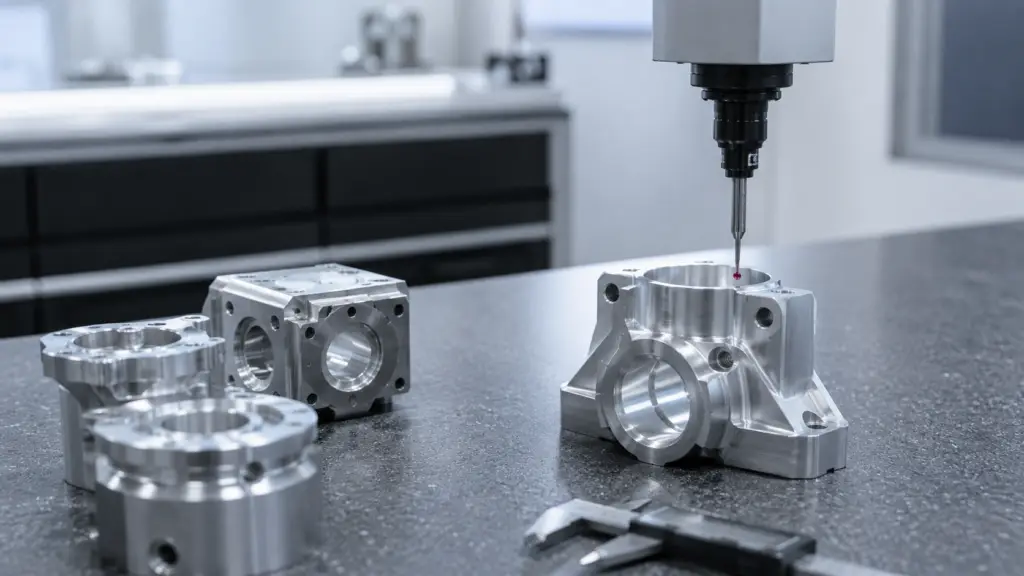
A First Article Inspection Report is most useful when the part has real technical or business risk. Not every simple CNC part needs a detailed FAI, but many custom precision parts benefit from it.
Common FAI Trigger Scenarios
You should request FAI when:
- The part is produced by a new supplier
- The drawing is new or revised
- The material has changed
- The machining process has changed
- Tooling, fixture, or machine setup has changed
- A part is moving from prototype to production
- The component has tight tolerance or GD&T requirements
- The part is used in a critical assembly
- The order involves medical, semiconductor, robotics, UAV, optical, or automotive applications
- The buyer needs internal approval before batch production
IAQG states that the 9102 standard aims to standardize FAI process requirements and documentation for aviation, space, and defense products across the supply chain. This shows why FAI is especially important when traceability and consistency matter. [3]
Buyer Decision Table
| Project Situation | Need FAI? | Reason |
| Simple spacer with loose tolerance | Usually no | Basic inspection may be enough |
| New prototype moving to small batch | Yes | Confirms production setup |
| Revised drawing | Yes | Confirms the change was understood |
| New supplier | Yes | Reduces supplier qualification risk |
| Tight tolerance fixture | Yes | Validates critical features |
| Surface-treated aluminum housing | Often yes | Coating may affect fit |
| High-value material part | Often yes | Reduces scrap risk |
| Repeat order with no change | Maybe no | Batch inspection may be enough |
What Should Be Included in an FAI Inspection?
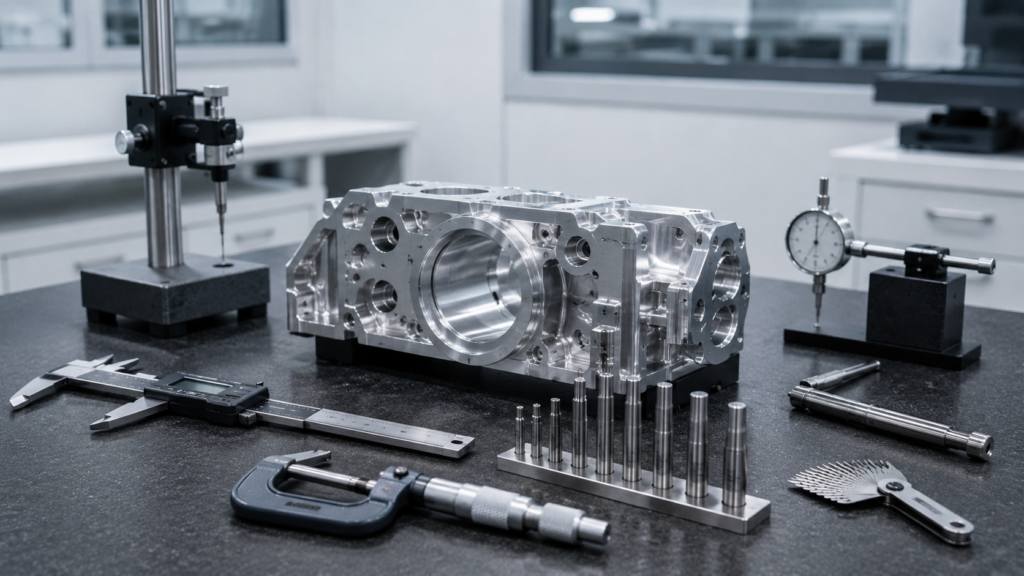
An FAI inspection should be structured enough for both engineering and purchasing teams to review. The report should make it clear what was inspected, what passed, what failed, and what still needs clarification.
Typical FAI Report Contents
| FAI Item | What It Confirms |
| Part number and revision | Correct drawing version was used |
| Material certificate | Correct material grade was used |
| Process route | Planned manufacturing process was followed |
| Dimensional results | Key drawing dimensions were measured |
| GD&T results | Critical geometric requirements were checked |
| Surface treatment details | Finish and coating requirements were confirmed |
| Special process records | Heat treatment, plating, anodizing, or coating evidence |
| Inspection tools | Measurement method is traceable |
| Nonconformance notes | Any deviation is clearly recorded |
| Approval status | Buyer can decide whether to release production |
FAI Inspection Checklist for CNC Parts
For CNC machined parts, a practical FAI checklist should include:
- Critical dimensions
- Hole position
- Bore diameter
- Thread depth and thread quality
- Flatness and perpendicularity
- Concentricity or coaxiality
- Surface roughness where required
- Burr-free edges
- Material grade
- Surface finish and coating thickness
- Fit with mating parts if available
- Drawing revision and purchase order requirements
The goal is not to measure everything blindly. The goal is to measure what affects function.
First Article Inspection for CNC Quality Inspection
FAI is part of CNC quality inspection, but it is more structured than routine inspection. It connects drawing requirements to production reality.
Measurement Methods Used During FAI
FAI may use different inspection tools depending on part geometry:
| Inspection Method | Best For |
| Caliper | General dimensions |
| Micrometer | Diameters and thickness |
| Pin gauge | Hole size and fit |
| Thread gauge | Thread verification |
| Height gauge | Heights and step features |
| CMM inspection | GD&T, hole position, complex geometry |
| Surface roughness tester | Ra and surface texture |
| Coating thickness gauge | Anodizing, plating, and coating buildup |
| Visual inspection | Burrs, scratches, finish defects |
Complex parts often require a mix of manual gauges and CMM inspection.
Which Dimensions Deserve the Most Attention?
Not every dimension has the same risk. During FAI, the most important features usually include:
- Datum surfaces
- Mating faces
- Bearing seats
- Sealing surfaces
- Threaded holes
- Positioning holes
- Critical bores
- Thin-wall features
- Coated or masked areas
- Features that affect assembly alignment
For a precision machining service project, the supplier should help the buyer identify which features are function-critical before inspection begins.
Common Risks FAI Helps Prevent in CNC Machining Projects
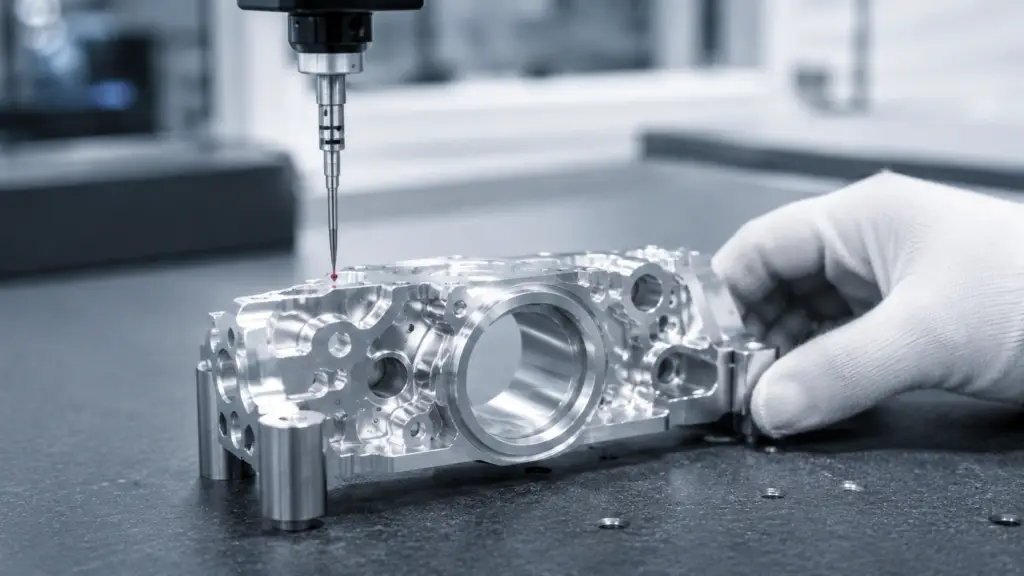
FAI helps prevent small misunderstandings from becoming batch-level problems. This is especially important for custom CNC parts where every project may have different materials, tolerances, finishes, and inspection expectations.
Tolerance, Coating, Material, and Assembly Risks
| Risk | What Can Go Wrong | How FAI Helps |
| Wrong drawing revision | Parts made to old design | Confirms revision before batch release |
| Misread tolerance | Feature looks correct but fails assembly | Verifies actual measured result |
| Coating buildup | Holes or threads become too tight | Checks treated sample before batch |
| Wrong material | Strength or corrosion resistance changes | Confirms material record |
| Burrs on critical edges | Assembly interference or scratches | Forces edge quality review |
| Poor datum interpretation | CMM results or assembly fit fail | Confirms measurement basis |
| Thread issue | Fastener cannot assemble correctly | Verifies thread before production |
Why a Passed Sample Still Needs Batch Control?
A passed FAI does not mean the whole batch can be ignored. It means the first production setup is approved. Batch production still needs in-process checks, tool wear monitoring, final inspection, and packaging control.
For example, a first aluminum housing may pass FAI, but tool wear may affect later bore size. A first anodized part may pass, but later parts may show color variation or coating buildup. FAI starts quality control; it does not replace it.
How SinoRise Supports FAI for Custom CNC Machined Parts?
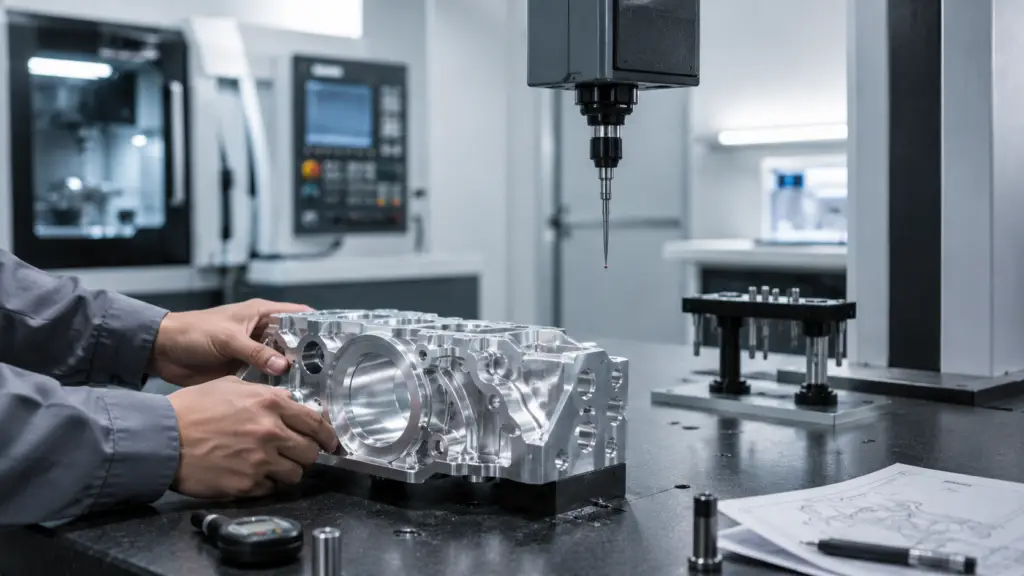
SinoRise supports custom CNC machining projects from prototype to small and medium-batch production. For buyers who need FAI, the value is not only producing one sample but helping confirm whether the process is ready for production.
SinoRise can support FAI-related work through:
- Drawing and DFM review
- Material selection and material confirmation
- CNC milling, turning, turning-milling, wire cutting, and 5-axis machining
- Surface treatment coordination
- Critical dimension inspection
- CMM inspection when needed
- Prototype-to-batch transition support
- Small and medium-batch production
- Documentation support for buyer review
SinoRise’s website highlights prototype-to-production CNC machining, precision capability, 35+ surface finishing options, and 80+ metals and plastics available, which supports projects where material, tolerance, finish, and inspection need to be reviewed together. [4]
For procurement and quality teams, a supplier’s role should not stop at quoting a drawing. A good supplier should help clarify risk before parts are released for batch production.
FAQ About First Article Inspection
What Is First Article Inspection?
First Article Inspection is a formal inspection of a production-ready sample to confirm that the part meets drawing, material, process, tolerance, and quality requirements before batch production continues.
Is FAI the Same as Final Inspection?
No. Final inspection checks completed parts before shipment. FAI validates the first production sample and confirms whether the manufacturing process is ready for batch production.
When Should I Request an FAI Report?
Request an FAI report when using a new supplier, new drawing, revised design, new material, new process, tight tolerance part, or critical assembly component.
Does Every CNC Part Need First Article Inspection?
No. Simple parts with loose tolerances may not need FAI. It is most useful for precision, complex, expensive, or assembly-critical parts.
What Is the Difference Between FAI and PPAP?
FAI is commonly used to validate the first production article against drawing requirements. PPAP is a broader production part approval process often used in automotive supply chains and includes more process capability and production documentation.
Can FAI Include CMM Inspection?
Yes. CMM inspection is often used during FAI when the part has GD&T, complex geometry, tight hole positions, or critical datum relationships.
What Should I Send to a Supplier If I Need FAI?
Send 3D files, 2D drawings, drawing revision, material requirements, tolerance notes, surface finish requirements, inspection points, purchase order quality clauses, and any preferred FAI report format.
Conclusion
First Article Inspection is one of the most practical ways to reduce risk before CNC batch production. It gives buyers confidence that the supplier understands the drawing, uses the correct material, follows the planned process, and can produce a conforming part before the full order moves forward.
For simple parts, routine inspection may be enough. For precision parts, new suppliers, revised drawings, critical assemblies, surface-treated components, or regulated applications, FAI can prevent expensive mistakes early.
SinoRise supports FAI as part of a practical precision machining service workflow: review the drawing, produce the first production-ready part, inspect the critical features, document the results, and help buyers move into batch production with more confidence.
References
[1] SAE International — AS9102 Aerospace First Article Inspection Requirement. This standard establishes documentation requirements for First Article Inspection.
[2] ISO — ISO 9001 explained. ISO describes ISO 9001 as the international standard for quality management systems, helping organizations deliver consistent products and services.
[3] IAQG — 9102 First Article Inspection Requirement. IAQG explains that 9102 standardizes FAI process and documentation requirements across the aviation, space, and defense supply chain.
[4] SinoRise official website — CNC machining services from prototype to production, including precision capability, surface finishing options, and available metals and plastics.