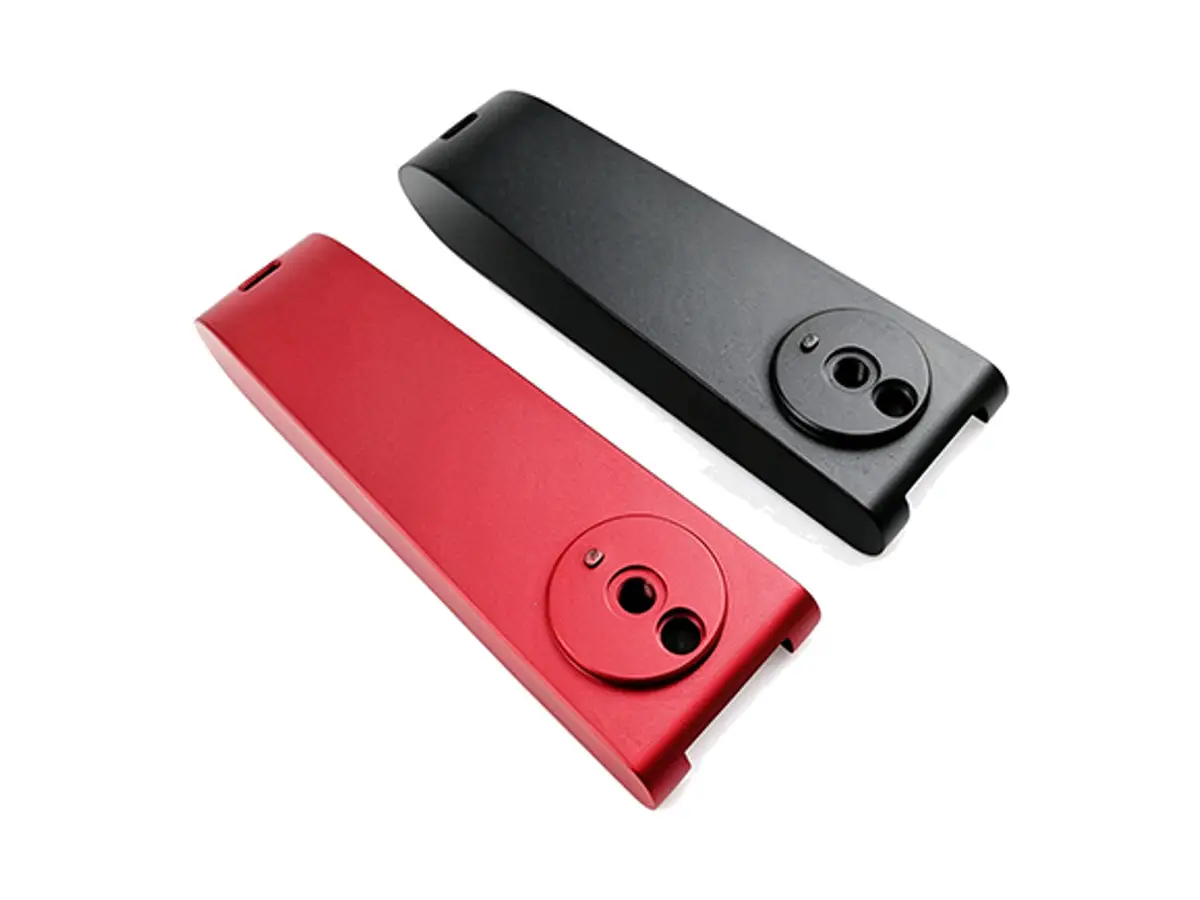
CNC Turned Anodized Hex Adapter
Hex adapters turned and milled from 6061-T6: a 19 mm across-flats body, an M12 × 1.75 thread at 6g over 18 mm, a Ø10 H7 spigot, 42 mm overall and 0.02 mm concentricity between thread and spigot. The hex is milled in a second operation that is indexed from the turned datum, and each adapter is rated for 35 N·m assembly torque.
- Hex 19 mm ±0.05
- M12 × 1.75, 6g
- Spigot Ø10 H7
- Concentric 0.02 mm
*Send the mating port drawing and the torque value. Thread length and spigot diameter set how far the adapter seats, and 0.5 mm too long will leave the hex standing off the port face.
Anodized Hex Adapter Overview
A hex adapter is a small part with three functional surfaces: the thread that holds it in the port, the spigot that centres it, and the hex that takes the wrench. If the thread and the spigot are not concentric, the adapter tightens off-centre and the joint leaks or runs out.
The adapter is turned from bar with the thread and spigot in one clamping, then the hex is milled in a collet block indexed from the turned face. The thread is checked with a ring gauge, the hex with a micrometer, and the part is anodized with the thread and spigot masked so both stay to size.
6061-T6 Aluminium
6061-T6 gives a 34 g adapter that takes 35 N·m without stripping an M12 thread and anodizes to a colour that identifies the port size.
7075-T6 or 303 Stainless
7075-T6 is used where the adapter is highly stressed, and 303 stainless is chosen for corrosive or marine ports where aluminium would seize in the thread.
A spigot 0.02 mm under size will let the adapter move under torque and the thread will take the load on one flank; the spigot is held at H7.
Hex Adapter Specifications
Thread, hex and spigot data for a part that is tightened with a wrench.
| Specification | Machining Data | Specification | Machining Data |
|---|---|---|---|
| Product | Threaded Hex Adapter | Process | CNC Turning, Threading, Milling |
| Material | 6061-T6 Aluminium | Hex Across Flats | 19 mm ±0.05 |
| Thread | M12 × 1.75, 6g, Length 18 mm | Spigot | Ø10 H7, Length 12 mm |
| Overall Length | 42 mm ±0.10 | Concentricity | 0.02 mm Thread to Spigot |
| Hex Corner Radius | 0.5 mm | Thread Runout | 2 mm Undercut |
| Weight | Approx. 34 g | Anodizing | Red, 18 to 22 µm |
| Edge Break | 0.3 mm on Hex Ends | Torque Rating | 35 N·m Assembly |
| Inspection | Thread Gauge, Hex Micrometer | Batch Size | 100 to 5,000 Pieces |
| Finish | Anodizing With Masked Thread | Drawing Format | STEP, PDF |
Thread and Spigot on One Axis
Turned in one clamping, hex milled from the same datum.
Thread and Spigot Turned Together
Both features are cut without re-chucking, so the 0.02 mm concentricity is generated by the machine and the adapter seats square in the port instead of tightening off-centre.
Hex Milled From the Turned Face
The hex is cut in a collet block indexed from the turned face, keeping the flats parallel to the axis within 0.03 mm so a wrench does not twist the body.
Thread Undercut for Full Engagement
A 2 mm undercut at the thread runout lets the adapter screw in until the hex meets the port face, instead of stopping on a partial thread.
Masked Thread and Spigot
Both are masked through anodizing, so the thread stays 6g and the spigot stays H7 without being chased or reamed after coating.
Adapter that has to seat square?
Surface Finishes for Hex Adapters
Colour for identification, bare metal where it fits and seals.
| Finish | Main Purpose | Finish | Main Purpose |
|---|---|---|---|
| Red Anodizing | Colour coding and corrosion | Black Anodizing | Neutral machine finish |
| Clear Anodizing | Bare-look protection | Hard Anodizing | Wear face under a wrench |
| Masked Thread | Full thread engagement | Masked Spigot | Bare spigot for a bearing fit |
| Bead Blasting | Matte before colour | Laser Marking | Size and thread on the flat |
| Chromate Conversion | Conductive adapter for grounding | Ultrasonic Clean | Thread cleaning before packing |
| Deburr Only | Adapters assembled with threadlock | Bag Packing | Bulk supply in bags of 100 |
*Coating on an M12 thread adds 20 µm to the pitch diameter and the adapter will not enter the port; threads are always masked.
Put your CNC milling parts into production today
All information and uploads are secure and confidential.
Trusted for Precision CNC Machined Components
Supporting OEM projects with accurate machining, flexible production, and reliable component quality.
Trusted for Precision CNC Milling.
How We Turn a Hex Adapter
The hex is milled after turning and the thread is cut on the same axis, so a wrench on the flats does not cock the adapter in the port.
01. Port and Torque Review
Check the mating port thread, the spigot bore and the assembly torque, then set the thread length and the undercut position.
02. Turn Body and Thread
Turn the OD, the spigot and the M12 thread in one clamping, single-pointing the thread and checking it with a ring gauge.
03. Mill the Hex
Hold the part in a collet block indexed from the turned face and mill the 19 mm hex with a 0.5 mm corner radius.
04. Deburr and Gauging
Break the hex edges, deburr the thread start, and check the hex across flats and the thread class before anodizing.
05. Mask, Anodize, Pack
Mask the thread and spigot, red anodize, then re-gauge the thread and pack in bags of 100.
Send the port drawing and the torque value, and we will quote an adapter with the thread and spigot turned on one axis and both masked through anodizing.
Hex Adapter FAQs
Yes, from 8 mm to 32 mm across flats, with the thread and spigot sized to the mating part.
6g as standard, and 6h for a tighter assembly. Threads are checked with a ring gauge on every batch.
It centres the adapter in the port so the thread carries the load evenly. Without it, the adapter can shift under torque and the joint runs out.
Yes, with a pre-applied patch or a dab of medium-strength threadlock, applied after anodizing.
The 35 N·m rating comes from a sample test to failure on each thread size, and the batch is checked by torquing a sample to the rated value.
Yes, in 303 or 316 for corrosive ports. The hex and thread geometry stay the same, and the part is passivated instead of anodized.
Other CNC Machined Mechanical Components
Explore additional precision CNC machined components manufactured for OEM applications and customized production needs.
Five-axis machined 6061-T6 aluminium rotary actuator bodies with a through bore, end flanges and ports on compound faces, bored.
304L stainless bearing support blocks with a bored bearing seat to H7, seat and base parallel to 0.02 mm, and clamp-screw flats.
Five-axis milled aluminium curved sensor brackets with swept mounting pads, blended fillets and 0.03 mm pad flatness for robot.
CNC turned brass flanged bushings in C36000 free-cutting brass, bore held to H7 and flange square to 0.02 mm, for steering, swingarm and linkage pivots.
Custom five-axis CNC milled 316L stainless steel mixing impellers for agitators and reactors.
Get high‑quality machined parts in as fast as 4 days with our expanded automated CNC milling!