
This guide explores the manufacturing requirements of complex EV components, from material selection and critical tolerances to machining strategies, before examining where 5-axis CNC machining offers enough practical value to justify its cost.
Why Do Complex EV Components Require Precision CNC Machining?
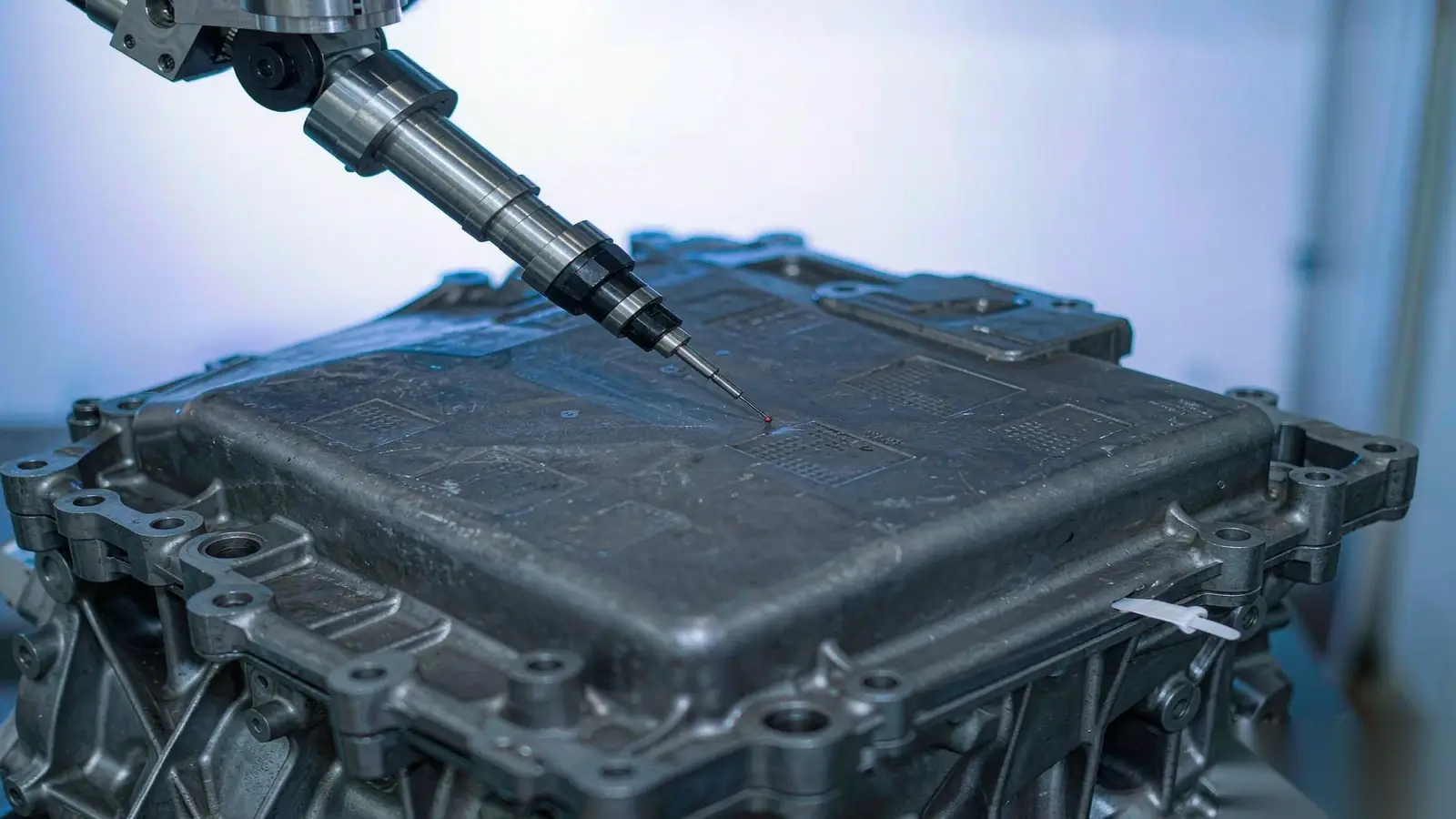
EV motor housings, inverter enclosures, and lightweight brackets often combine features that are difficult to machine in a single setup. The challenge is not simply achieving tight tolerances, but maintaining accurate relationships between surfaces, bores, and mounting points while working with lightweight structures.
Motor Housing Alignment and Bearing Accuracy
Bearing seats, stator locating bores, and mounting surfaces must align correctly to support smooth motor operation. Errors between these features can contribute to vibration, uneven bearing loads, or assembly problems. Keeping critical features referenced to consistent machining datums helps control these risks.
Lightweight Structures and Thin-Wall Features
Deep pockets and thin walls reduce the weight of aluminum EV components but leave less material to resist cutting forces and clamping pressure. This makes workholding and machining sequence especially important for motor housings and irregular mounting brackets, where distortion can affect the finished dimensions.
Thermal Management and Complex Functional Surfaces
Motor and inverter housings may combine cooling channels, sealing grooves, and mounting interfaces facing different directions. These features introduce additional challenges in tool access and workpiece positioning, making multi-axis machining worth considering when conventional setups become complicated.
What Materials Are Commonly Used for CNC Machined EV Parts?
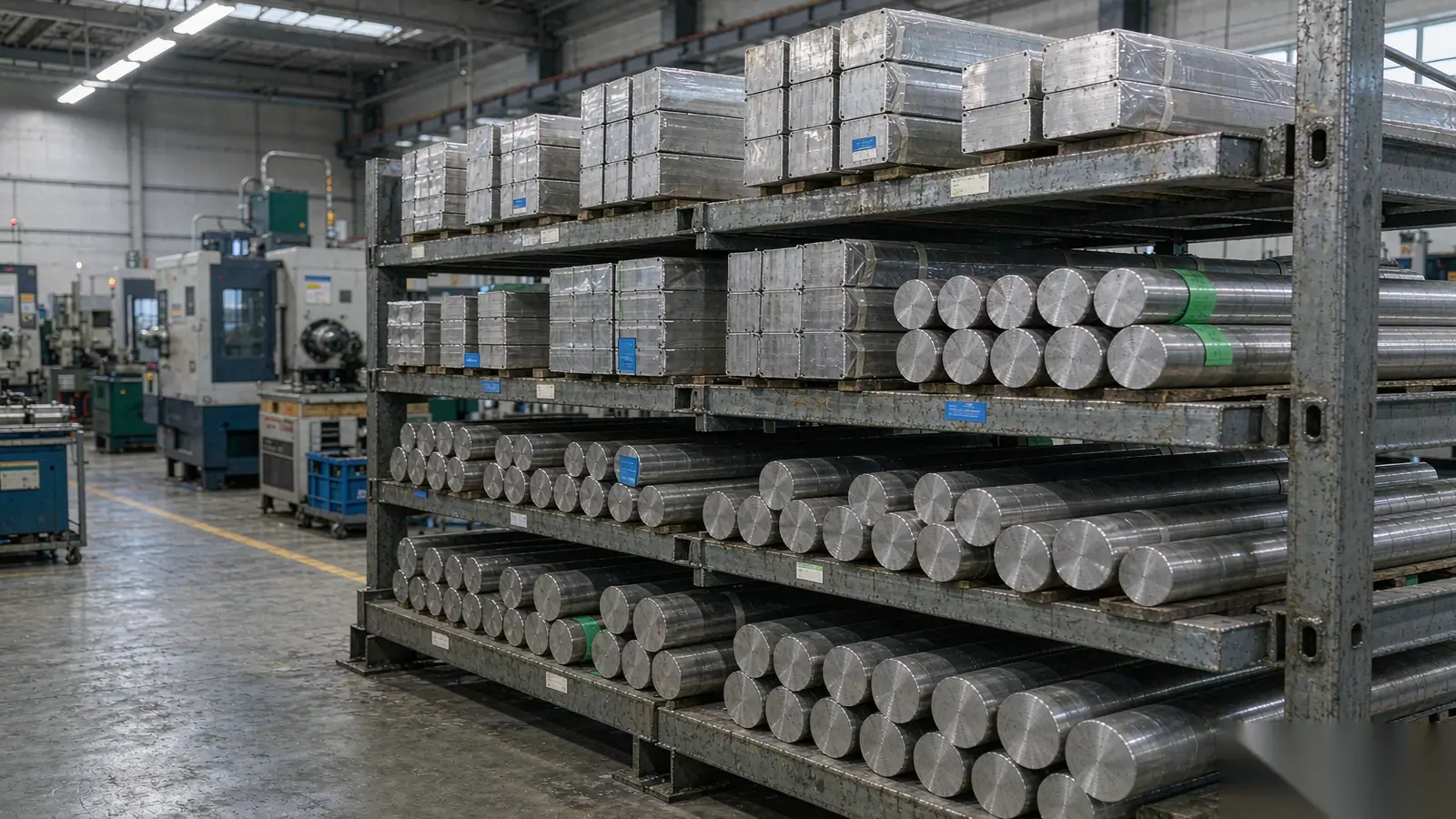
Aluminum alloys are common choices for EV housings and brackets because of their low weight and machinability. Material selection also affects the machining approach: a high-strength bracket may require different cutting and workholding strategies from a thin-walled motor enclosure.
| Material | Key Characteristics | Common EV Applications | Machining Considerations |
| Aluminum 6061 | Good machinability, corrosion resistance, and balanced strength | Motor housings, brackets, enclosures | Versatile for milling and turning |
| Aluminum 6082 | Good strength and structural performance | Load-bearing brackets, mounting parts | Suitable for machined structural components |
| Aluminum 7075 | Higher strength than common 6xxx alloys | High-load brackets, selected structural parts | Higher material cost; corrosion protection may be needed |
| Magnesium Alloys | Very low density | Specialized lightweight housings | Requires appropriate machining and chip-handling precautions |
| Cast Aluminum Alloys | Allows complex near-net shapes | Motor housings, inverter enclosures | Critical interfaces often require finish machining |
Choosing Between Aluminum 6061 and 7075
Aluminum 6061 is often suitable for EV housings and general mounting components, offering a balance of machinability, corrosion resistance, and mechanical performance. For heavily loaded brackets, 7075 may be considered when higher strength is required.
The stronger alloy is not necessarily the better choice for every component. Motor housings may place greater importance on thermal performance and dimensional stability, while 7075's higher material cost and corrosion characteristics can affect the overall manufacturing decision.
How Are Complex EV Components CNC Machined?
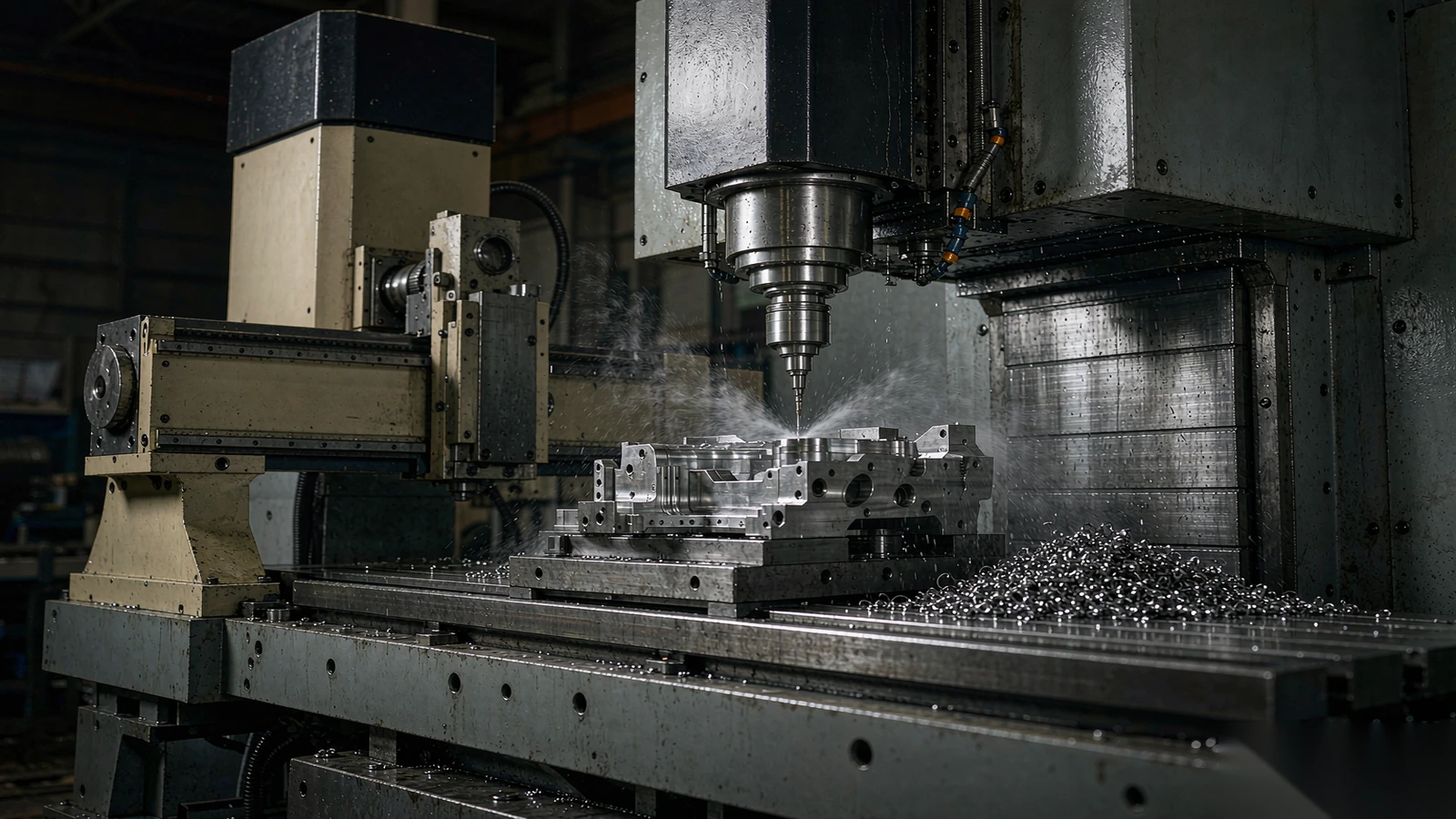
Machining an EV motor housing or structural component typically involves several stages, but not every operation requires five-axis equipment. The process is planned around the part's geometry, critical features, and the most practical way to access them.
1. Material Preparation and Rough Machining
Production starts with a billet, extrusion, or casting. Rough milling or turning removes excess material and establishes the main shape. For thin-walled housings, staged material removal helps limit distortion before finishing.
2. Semi-Finishing and Datum Preparation
Locating surfaces and reference features are prepared for subsequent operations. In motor housings, these datums help maintain the specified relationships between bearing seats, stator bores, and mounting interfaces.
3. Precision Machining of Critical Features
Bearing bores, sealing faces, and mounting holes are finished to the drawing requirements. Conventional milling or boring can handle many accessible features, while 5-axis CNC machining becomes useful for angled surfaces and multi-face geometries that would otherwise require additional setups.
4. Surface Finishing
Deburring, cleaning, anodizing, or other treatments may follow machining. Bearing fits, sealing interfaces, and electrical contact areas may need masking or coating allowances to preserve their intended function.
5. Quality Inspection
CMMs, bore gauges, and other measuring instruments are used to verify critical dimensions and geometric tolerances. Inspection focuses on functional relationships, such as bore alignment in motor housings and hole positioning in mounting brackets.
What Tolerances Matter Most in EV Component Machining?
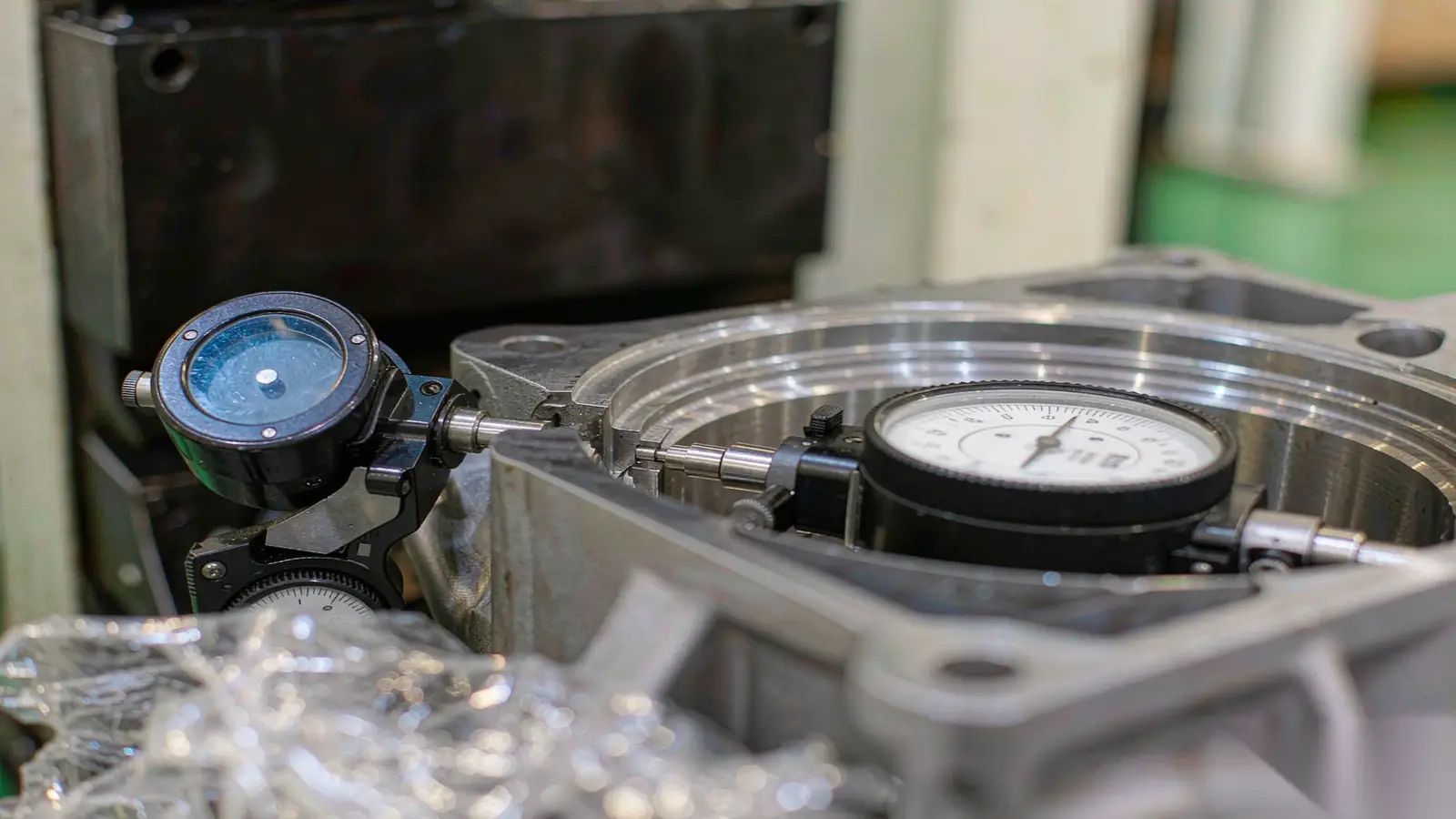
The most demanding tolerances in EV parts are often associated with assembly and functional interfaces. A motor housing, for instance, needs more than correctly sized bores—their alignment relative to the specified datums also matters. The table below highlights common features that require particular attention during machining and inspection.
| Critical Feature | Key Tolerance Requirements | Why It Matters |
| Bearing seats | Diameter, roundness, coaxial alignment | Supports bearing fit and rotor alignment |
| Stator locating bores | Diameter, cylindricity, position | Maintains stator location within the assembly |
| Mounting surfaces | Flatness, orientation | Supports accurate assembly |
| Cooling channels | Channel dimensions, wall thickness | Maintains the designed coolant path |
| Sealing grooves | Width, depth, surface finish | Supports gasket or O-ring sealing |
| Bracket mounting holes | Position, diameter, angle | Ensures fit with mating components |
When several critical features are machined from different orientations, each setup introduces another opportunity for positioning error. Where part geometry permits, machining related features with fewer workpiece resets can simplify datum control. This is one reason five-axis machining may be attractive for complex EV components, although the required accuracy can also be achieved through well-planned conventional processes.
What EV Machining Challenges Can 5-Axis CNC Help Address?
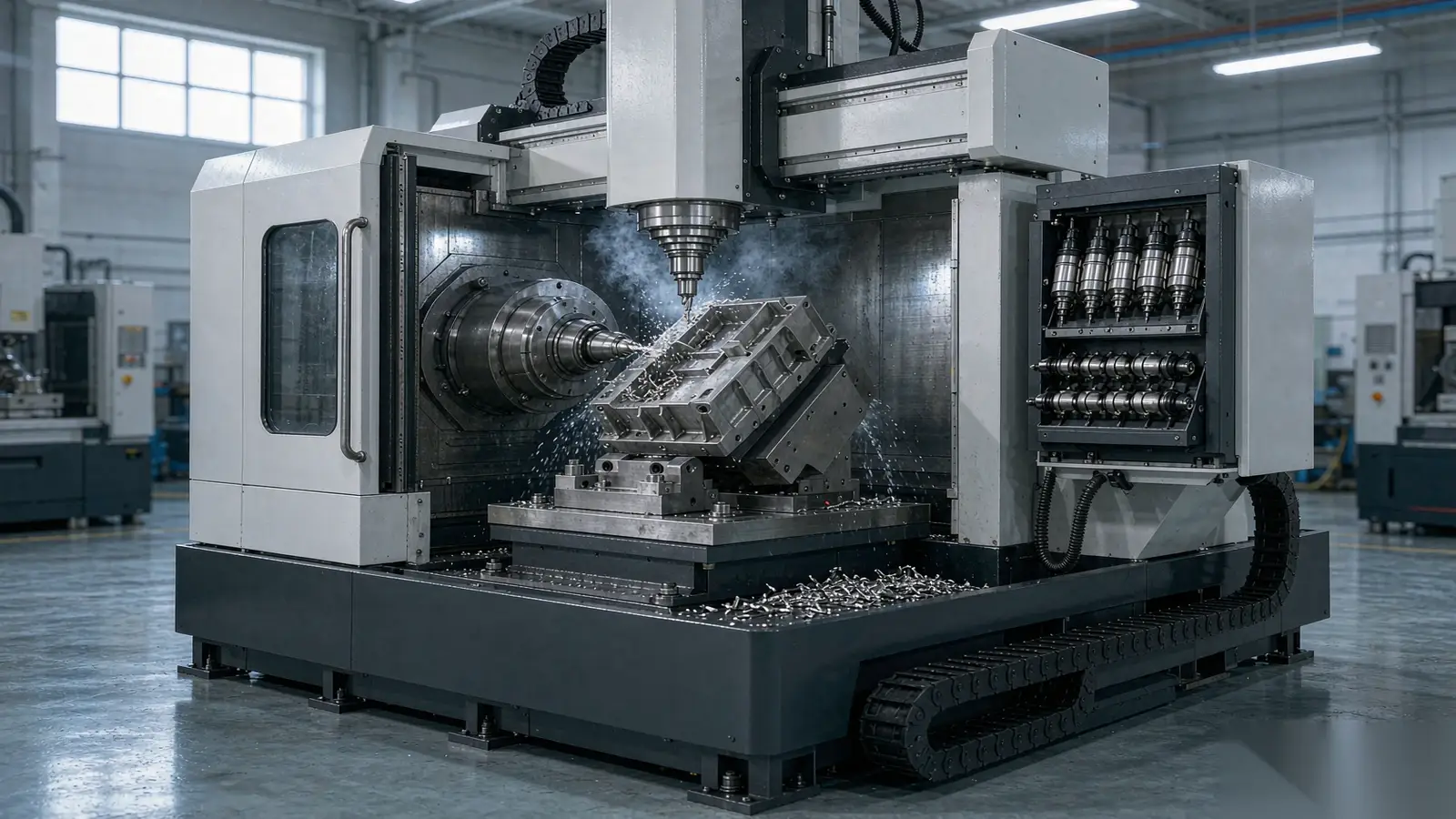
Complex EV components often bring several machining difficulties together, from multi-face features to restricted tool access and thin-wall structures. Five-axis machining can address some of these challenges, although its value depends on the part's geometry and manufacturing requirements.
1.Reducing Setups for Complex Motor Housings
Motor housings often combine bearing interfaces, mounting flanges, and angled features that require machining from different directions. Each additional setup takes time and introduces another opportunity for positioning errors. A well-planned five-axis setup can keep more of these operations on the same workpiece fixture, helping maintain critical feature relationships.
2.Accessing Angled Features and Complex Cavities
Inclined mounting faces, deep pockets, and irregular contours can make conventional milling difficult, particularly in lightweight EV brackets and inverter housings. By adjusting the tool orientation, five-axis equipment can reach surfaces that might otherwise require special fixtures or multiple operations. Fully enclosed passages, however, may still need other manufacturing methods.
3.Machining Thin-Wall Components
Thin-walled EV housings are sensitive to cutting forces and clamping pressure, which can cause distortion as material is removed. Flexible tool positioning may improve access and allow more suitable cutting approaches, but it cannot eliminate these risks. Fixture support, cutting parameters, and machining sequence remain the main factors in controlling deformation.
3-Axis vs. 5-Axis CNC Machining: Which EV Parts Actually Need Five Axes?
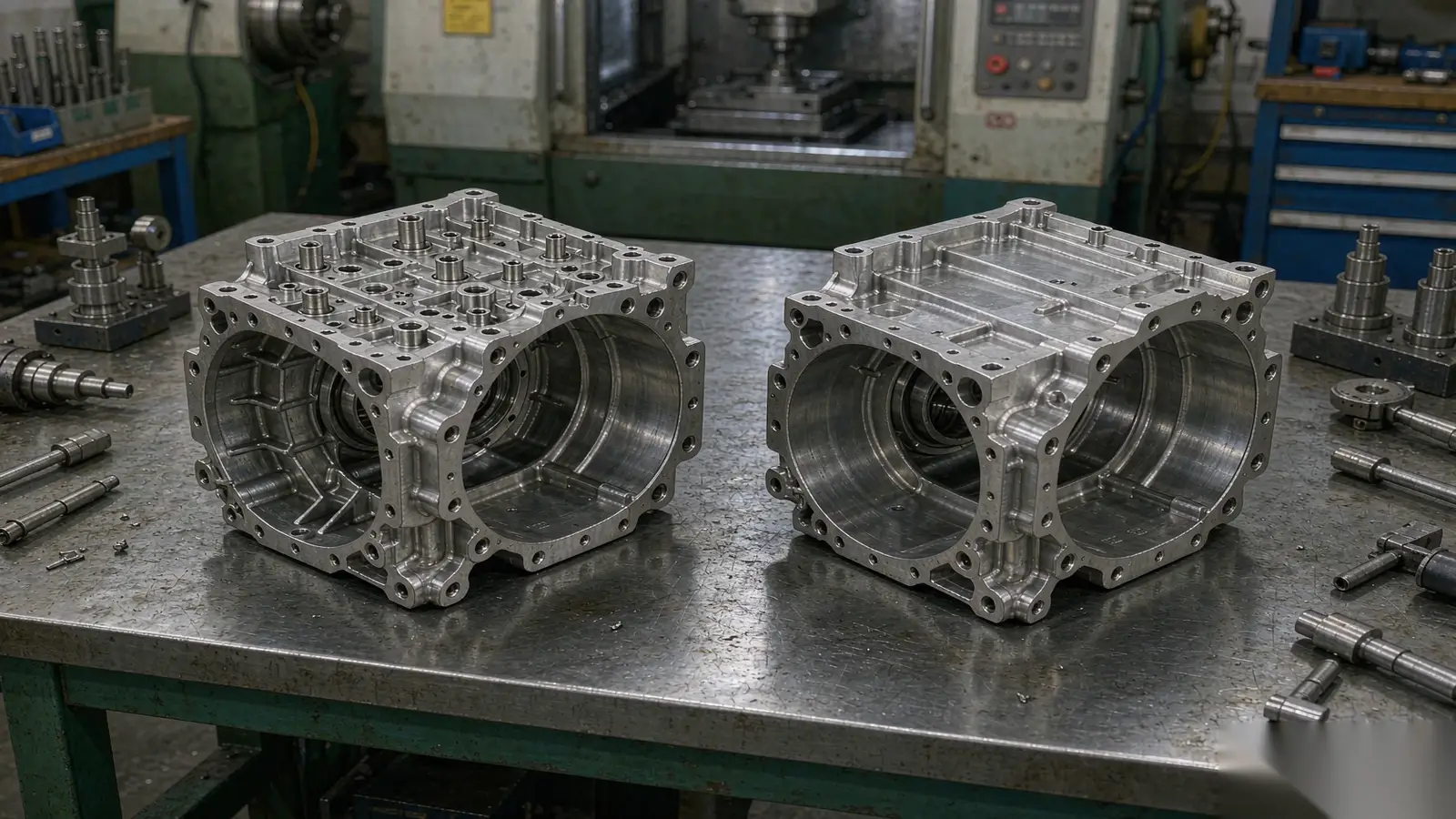
More machining axes do not necessarily mean a better process. For EV components, the deciding factors are feature orientation, tool accessibility, and whether the required geometry can be produced efficiently with conventional setups.
| Factor | 3-Axis CNC Machining | 3+2 Machining | Simultaneous 5-Axis Machining |
| Tool access | Accessible faces and straight features | Multiple fixed orientations | Complex surfaces requiring continuous tool reorientation |
| Setup requirements | Additional setups may be needed | Multiple faces within one fixture | Multiple faces within one fixture |
| Workholding | Conventional or dedicated fixtures | Often fewer angled fixtures | Depends on geometry and machine clearance |
| Programming | Relatively simple | Indexed positioning and toolpaths | More advanced toolpath programming |
| Typical EV applications | Basic brackets and covers | Multi-face housings and angled mounting features | Complex contours and restricted-access geometries |
1.EV Motor Housings: Choosing the Right Machining Strategy
Bearing bores and other rotational features are often well suited to turning or precision boring. The machining plan becomes more demanding when a motor housing also includes angled ports, mounting flanges, and features distributed around its exterior. Rather than relying on repeated manual setups, 3+2 machining may provide the necessary access while preserving a consistent workholding arrangement. Simultaneous five-axis cutting is generally reserved for geometry that requires coordinated tool movement.
2.Complex EV Mounting Brackets: When Geometry Makes the Difference
Standard mounting brackets rarely justify five-axis machining, even when tight tolerances are specified. Lightweight designs with inclined faces, deep pockets, and curved profiles present a different challenge. Indexed machining can handle features at fixed angles, whereas simultaneous five-axis motion becomes more relevant for contoured surfaces where the tool orientation must change during cutting. The additional capability is useful only when the geometry demands it.
When Does 5-Axis CNC Machining Become Cost-Effective for EV Parts?
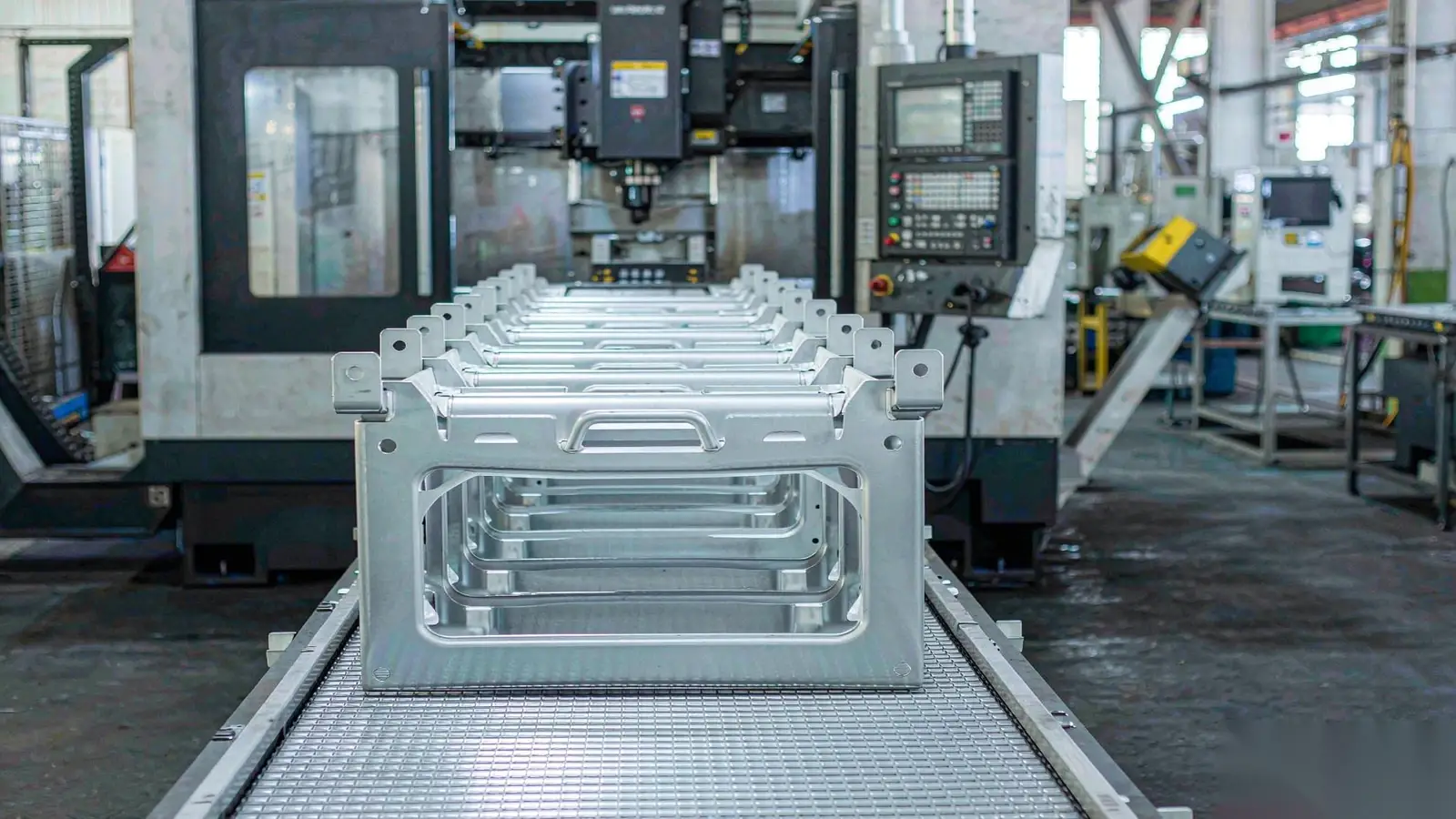
The higher hourly rate of five-axis machining can be misleading when comparing manufacturing costs. An EV component that requires several setups on a three-axis machine may also involve extra fixtures, handling, and inspection. In these cases, completing more operations in a single setup can offset the additional machine and programming costs.
Take an aluminum EV motor mount with angled mounting faces, precision holes, and lightweight pockets. Producing these features on a three-axis machine may involve several workholding arrangements. With 3+2 machining, more of the work could be completed without removing the part from its fixture. This is especially useful for prototypes and small batches, where the cost of custom tooling has a greater impact on each component.
The calculation changes for simpler parts or larger production runs. A dedicated three-axis fixture may deliver shorter cycle times and consistent results at a lower cost. What matters is not how advanced the machine is, but whether the chosen process can produce the required quality at the lowest practical total cost.
Conclusion
Five-axis CNC machining is worth considering for EV components with complex geometries, angled features, or multiple machining orientations that make conventional setups less efficient. However, simpler housings and brackets can often be produced more economically using three-axis or 3+2 machining. The right approach depends on the part's design, tolerance requirements, and overall manufacturing cost.
SinoRise provides custom precision CNC machining services for complex components, supporting machining process selection based on specific project requirements. Whether you're developing an EV prototype or preparing for production, our team can help evaluate a practical manufacturing approach.
Have a complex EV component to manufacture? Share your drawings, material specifications, and estimated quantities with SinoRise to discuss your machining requirements.
Frequently Asked Questions
1. Is 5-axis CNC machining always more expensive than 3-axis machining?
Five-axis equipment generally has higher operating and programming costs. However, fewer setups and reduced fixture requirements can make the total manufacturing cost competitive for complex components.
2. Which EV components benefit most from 5-axis CNC machining?
Complex motor housings, irregular mounting brackets, and structural components with angled features or restricted tool access are potential candidates. The actual benefit depends on the part's geometry and tolerance requirements.
3. What is the difference between 3+2 and simultaneous 5-axis machining?
In 3+2 machining, the rotary axes position the part or tool before cutting begins along the linear axes. Simultaneous five-axis machining moves the linear and rotary axes together, making it suitable for complex surfaces requiring continuously changing tool orientations.
4. Is 5-axis machining suitable for EV prototype production?
Yes. For prototypes with complex features, five-axis machining may reduce the need for dedicated fixtures and simplify design changes. However, straightforward prototype parts can often be manufactured more economically using three-axis equipment.
5. How can I determine whether my EV part needs five-axis machining?
Start with the part drawing, material, critical tolerances, and expected production quantity. A manufacturing review can identify machining orientations, fixture requirements, and suitable processes before comparing overall costs.