


Home / CNC-Machining / CNC-Turning / CNC Machined Stainless Steel Split Clamp Ring
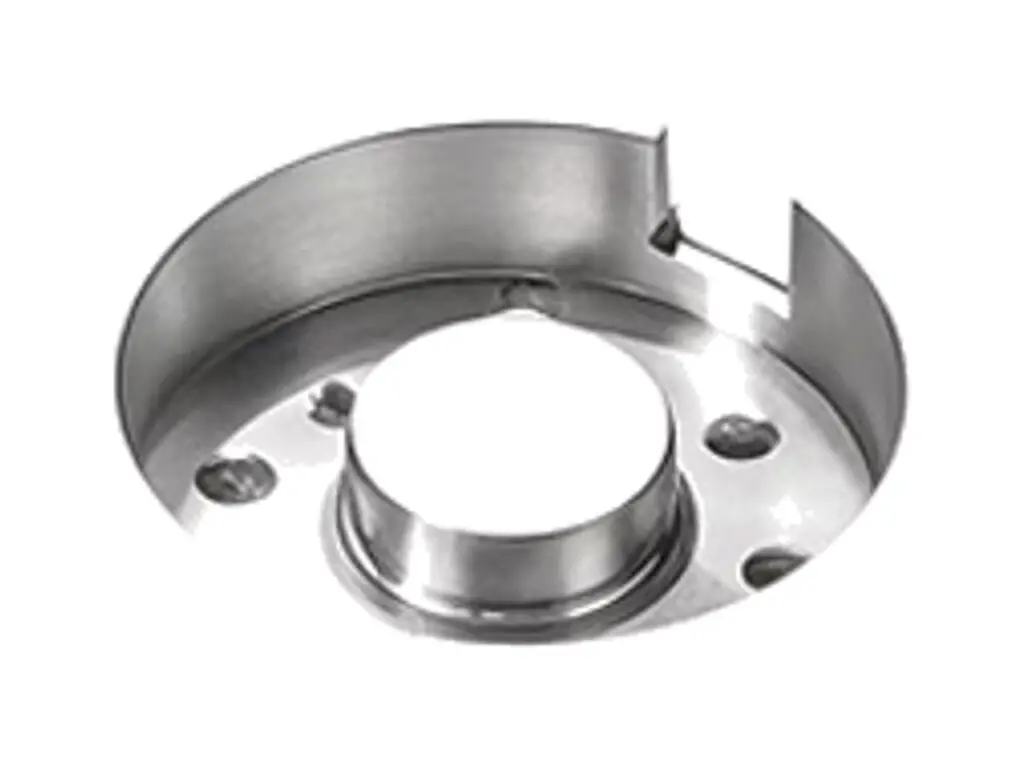
CNC machined stainless steel split clamp ring with a bored H7 inner diameter

CNC Machined Stainless Steel Split Clamp Ring

Split clamp rings machined from 304 stainless, with a H7 bore round to 0.01 mm, a 1 mm sawn split, clamp lugs matched within 0.02 mm and a closure of 0.2 mm at the rated screw torque. Every ring is closed on a mandrel before packing.

*Send the shaft diameter measured, not nominal. A clamp ring bored to nominal for a shaft that is 0.03 mm under will not grip, and a ring bored 0.02 mm tight will not close at the split.

Split Clamp Ring Overview

A split ring grips by elastic closure, so the bore has to be round, the split has to be clean and the two lugs have to be the same height, or the ring closes on one side and marks the shaft.

The ring is turned and bored as a solid collar, the lugs are milled, the screw holes drilled and tapped, then the split is cut by wire EDM so the bore does not distort from a saw cut.

Assembly and inspection of a rod end clevis, a slotted drive hub and a split clamp ring
304L stainless steel round bar stock for CNC machining

304 Stainless Steel

304 is used for clamp rings because it springs back predictably when the screw is released, so the ring can be moved and re-clamped many times without losing grip.

304L stainless steel plate and block stock for CNC machining

316L or 303 Stainless

316L is chosen for washdown and marine shafts, and 303 where the ring is small and the free-machining grade keeps the bore finish without a separate reaming pass.

For a plastic or coated shaft the ring is supplied with a bonded liner, because a stainless bore at H7 will mark a painted or anodized shaft on the first clamp.

Split Clamp Ring Specifications

Turning and EDM data for split collars, with the bore, split and lug values that decide whether the ring grips without marking.

SpecificationMachining DataSpecificationMachining Data
ProductSplit Clamp Ring / Split Shaft CollarMachining ProcessCNC Turning, Boring, Milling, Wire EDM Split
Material304 Stainless Steel Bar or TubeEnvelopeBore Ø 10 – 120 mm
Inner DiameterH7, Roundness 0.01 mmOutside DiameterBore + 12 to 30 mm
Ring Width8 – 40 mmSplit Gap0.8 – 1.5 mm as Supplied
Clamp LugsMatched Within 0.02 mmClamp ScrewM3 – M10, Class 6H
ConcentricityOD to Bore 0.02 mmFace Parallelism0.02 mm
Surface FinishRa 1.6 µm Bore, Ra 3.2 µm OutsideClamp ForceCloses 0.2 mm at Rated Torque
CustomizationTwo-Piece Version, Keyway, Threaded Bore, Plastic LinerLead Time5 – 7 Days Sample, 12 – 16 Days Batch
InspectionBore Air Gauge, Lug Match on Pins, Closure Test on a MandrelPackingScrew Fitted Loose, Oil Paper, Boxed

Key Features of Our Clamp Rings

Split after boring, lugs matched, every ring closed on a mandrel.

Bored Before the Split

The ring is bored as a solid collar and split afterwards, so the bore stays round to 0.01 mm instead of closing in at the saw cut.

Split Cut by Wire EDM

The split is wire cut to 1 mm, which leaves a clean gap with no saw marks and no burr inside the bore to score the shaft.

Lugs Matched to 0.02 mm

Both lugs are milled to the same height, so the screw closes the ring evenly and the gap at the split stays parallel instead of tapering.

Closed on a Mandrel Before Packing

Every ring is fitted to a mandrel at the rated torque and checked for closure and marking, so a ring that will not grip is found here and not at the machine.

Collar that has to grip without marking?

Surface Finishes for Clamp Rings

The bore is the grip surface, the outside is visible and the split edges must stay clean.

FinishMain PurposeFinishMain Purpose
PassivationRestores the oxide layer after machiningGlass Bead BlastingEven matte on the outside
Masked BoreBore stays at H7ElectropolishingBright finish on visible collars
Light OilPrevents fretting marks in storagePTFE CoatingLow friction on a rotating shaft
Bore ProtectionPlugged for ShippingLaser MarkingBore size on the outside
Split Edge DeburrHand Finished After Wire EDMUltrasonic CleanBefore Passivation
Screw TreatmentAnti-Seize on RequestClosure CheckEvery Ring on a Mandrel

*The bore is always left bare and passivated. A coating on the bore reduces friction and the ring slips at half the rated torque, which is the most common field failure on a coated collar.

logo

Put your CNC milling parts into production today

All information and uploads are secure and confidential.

Trusted for Precision CNC Machined Components

Supporting OEM projects with accurate machining, flexible production, and reliable component quality.

Mechanical Equipment Customer
The ring closed evenly and gripped the shaft without marking it.

Industrial Components Buyer
The split gap stayed parallel, so the screw did not have to be over-torqued.

Equipment Manufacturer
It holds position on a rotating shaft with no slip at all.

OEM Customer
OEM Customer
We moved it three times and it still grips the same way.

Automation Industry Customer
The customized machining solution provided the dimensional accuracy required for our rotating equipment components.

Trusted for Precision CNC Milling.

Machining Process for Clamp Rings

The ring is split after boring, so the bore stays round and the two halves close on the shaft without a step at the split line.

01. Shaft and Torque Review

Check the measured shaft diameter and the clamp torque, then set the bore tolerance and the screw size.

02. Turn and Bore the Collar

Turn the outside, face both sides and bore to H7 as a solid collar, checking roundness with an air gauge.

03. Mill the Lugs

Mill both lugs to the same height within 0.02 mm and drill and tap the clamp screw hole through both.

04. Wire Cut the Split

Wire EDM the split to 1 mm, then deburr both cut edges by hand so nothing stands proud inside the bore.

05. Close, Inspect, Passivate

Close the ring on a mandrel at rated torque, check closure and marking, then passivate, oil and pack with the screw loose.

Send the measured shaft diameter and the clamp torque, and we will quote a split ring bored to your shaft and closed on a mandrel before packing.

Split Clamp Ring FAQs

A saw cut leaves a burr inside the bore and a rough gap that closes unevenly. Wire EDM gives a 1 mm gap with clean edges, so the ring closes parallel and does not score the shaft.

H7 with 0.01 mm roundness, bored before the split. A ring bored after splitting closes oval and grips on two points instead of around the circumference.

0.2 mm at the rated screw torque, which is enough to grip a shaft with a 0.02 mm clearance. More closure than that and the ring yields and stops springing back.

Yes, split on both sides with two screws, which suits a shaft that cannot be reached from the end. The two halves are matched as a pair and packed together.

Not at the rated torque on a ground or turned shaft. On a painted or anodized shaft a bonded plastic liner is fitted, because stainless on coating marks on the first clamp.

Every ring is closed on a mandrel at the rated torque and checked for closure and marking. Rings that will not grip are rejected before passivation.

Other CNC Machined Mechanical Components

Explore additional precision CNC machined components manufactured for OEM applications and customized production needs.

Custom CNC machined aluminium robot joint actuator components with concentric threads, sealing faces and hex flats.

Custom CNC machined robot end effector flanges for tool mounting and automation.

Custom Brake Lever CNC Milled components manufactured with precision CNC machining, supporting OEM customization, lightweight.

CNC turned 6061-T6 aluminium bearing cover discs with a recessed spigot, a lapped sealing face and a bolt pattern, held to 0.02.

Five-axis CNC machined 6082-T6 aluminium manifold plates with cross-drilled galleries, spotfaced port faces and ports on five.

Get high‑quality machined parts in as fast as 4 days with our expanded automated CNC milling!

Scroll to Top