

Vacuum Chamber CNC Milled
Designed around the sealing, interface, and cavity requirements of vacuum and semiconductor equipment, a cnc machined aluminum vacuum chamber combines precision-machined sealing faces, ports, internal cavities, and mounting features within a controlled structure for reliable integration and stable operation.
- Precision Sealing Surfaces
- Accurate Port & Interface Machining
- Controlled Internal Cavity Geometry
- Prototype to Production
*Our engineering team helps review machining requirements and provide suitable production solutions.
CNC Milled Vacuum Chamber Overview
Precision-machined chamber structures developed for controlled sealing, accurate port positioning, and reliable integration with vacuum and semiconductor systems.
A vacuum chamber is more than an enclosed cavity. Its sealing faces, ports, mounting interfaces, internal walls, and reference surfaces must work together as one coordinated structure so connected valves, sensors, covers, and process components can be assembled in the intended positions.
With a cnc milled vacuum chamber, machining control is concentrated on the features that directly affect sealing and system connection, including flange faces, internal cavities, port locations, mating surfaces, and multi-side interfaces. The machining sequence is arranged to preserve the relationship between these areas rather than treating each feature as an isolated dimension.
For semiconductor equipment, a precision machined vacuum chamber can be produced around the actual equipment layout, process interfaces, chamber geometry, and inspection requirements. SinoRise adjusts the machining approach according to the drawing and application instead of relying on a fixed chamber configuration.


6061 Aluminum
6061 aluminum works well for a precision machined vacuum chamber where low weight, good thermal conductivity, and efficient CNC processing are important. It is especially practical for chamber bodies that include multiple ports, internal cavities, sealing faces, and integrated mounting features.
Its relatively low density also makes larger chamber structures easier to handle while still providing the rigidity needed for many vacuum and semiconductor equipment applications.

304L Stainless Steel
304L stainless steel is preferred when a chamber needs higher durability, strong corrosion resistance, and stable performance under demanding vacuum conditions. It is widely used for systems that involve welded ports, repeated thermal cycles, or long-term exposure to controlled process environments.
For a semiconductor chamber, 304L can provide a robust structural base where vacuum compatibility, sealing stability, and long service life are more important than minimizing component weight.
Need Help Selecting the Right Chamber Material? Send us your drawing, vacuum requirements, and operating conditions for a material and machining review.
Precision CNC Machined Vacuum Chamber Specifications
Key machining data for semiconductor chamber components, covering chamber materials, sealing interfaces, internal geometry, port features, surface requirements, inspection, and project-specific configurations.
| Specification | Machining Data | Specification | Machining Data |
|---|---|---|---|
| Product Type | CNC Machined Vacuum Chamber | Chamber Materials | 6061 Aluminum, 304L Stainless Steel |
| Machining Process | CNC Milling, Multi-Axis Machining, Precision Finishing | Sealing Features | Flange Faces, Gasket Seats, O-Ring Grooves, Mating Surfaces |
| Internal Geometry | Cavities, Pockets, Internal Steps, Recessed Areas | Port Machining | Vacuum Ports, Sensor Ports, Threaded Interfaces, Flange Connections |
| Dimensional Tolerance | According to drawing and functional requirements | Critical Control | Port Position, Sealing Face Flatness, Interface Alignment, Chamber Geometry |
| Surface Roughness | Controlled according to sealing, mating, and internal surface requirements | Surface Finish | Anodizing, Chemical Conversion Coating, Passivation, As Machined |
| Hole Processing | Drilling, Boring, Reaming, Tapping, Counterboring | Thread Options | Metric / Imperial Threads |
| Machined Features | Flanges, Grooves, Mounting Interfaces, Multi-Side Ports, Internal Cavities | Inspection | Dimensions, Flatness, Hole Position, Mating Surfaces, Port Alignment |
| Inspection Equipment | 2.5D Measuring System, Digital Height Gauge, CMM | Drawing Format | STEP, STP, IGES, DWG, DXF, PDF |
| Production Type | Prototype, Low-Volume, Small & Medium Batch Production | Customization | Chamber Size, Port Layout, Flange Geometry, Material, Finish, Inspection Requirements |
Key Features of Precision Vacuum Chamber Machining
Focused on structural stability, controlled geometry, equipment integration, and practical chamber design for demanding vacuum systems.
Rigid Chamber Structure
A vacuum chamber must maintain its geometry as part of a complete equipment assembly.Wall sections, flange areas, support zones, and connection points can be machined with appropriate structural allowance to limit unnecessary deformation and provide a stable base for connected components.
Dimensional Stability
For equipment where multiple components share the same chamber body, positional relationships matter as much as individual dimensions.High precision cnc machining helps maintain consistent reference surfaces and interface locations so valves, sensors, covers, and process modules can align with the intended system layout.
Organized Internal Layout
Internal steps, recessed areas, mounting zones, and clearance spaces can be arranged around the actual equipment configuration.A more integrated chamber layout reduces unnecessary secondary parts and leaves clearer space for internal components, assembly, and subsequent maintenance.
Multi-Side System Integration
Complex chamber designs often connect equipment from several directions.5 axis cnc machining can support angled interfaces, side connections, compound features, and difficult-to-access areas, allowing more functional structures to be integrated into a single semiconductor chamber body.
Need a Vacuum Chamber Built Around Your System Layout?
Surface Treatment Options for Vacuum System Chambers
Finishing methods are selected according to chamber material, corrosion exposure, surface cleanliness, wear conditions, and the requirements of precision machining interfaces.
| Finish | Main Purpose | Finish | Main Purpose |
|---|---|---|---|
| Anodizing | Improve corrosion resistance and surface protection for 6061 aluminum chamber bodies | Chemical Conversion Coating | Provide lightweight corrosion protection with minimal effect on precision interfaces |
| Hard Anodizing | Increase surface hardness and wear resistance in selected aluminum areas | Passivation | Improve corrosion resistance and surface stability for 304L stainless steel components |
| Bead Blasting | Create a uniform matte surface and reduce visible machining marks | Electropolishing | Improve stainless steel surface smoothness and cleanliness for demanding vacuum environments |
| As Machined | Retain original CNC-machined surfaces where coating or additional treatment is not required | Custom Surface Treatment | Apply project-specific finishing according to material, sealing, cleanliness, or drawing requirements |
*Surface finish selection should be based on material grade, operating environment, wear exposure, appearance requirements, and drawing specifications.

Put your CNC milling parts into production today
All information and uploads are secure and confidential.
Trusted for Precision CNC Machined Components
Supporting OEM projects with accurate machining, flexible production, and reliable component quality.





Trusted for Precision CNC Milling.
CNC Machining Process for Vacuum Chamber Components
From chamber layout and sealing requirements to final dimensional verification, the machining sequence is arranged around cavity stability, interface accuracy, and reliable vacuum-system assembly.
01. Chamber Structure Review
The process starts with the drawing or CAD model, focusing on chamber size, wall sections, port layout, flange geometry, sealing areas, and internal clearances.These relationships are reviewed first so the machining strategy reflects the actual vacuum-system configuration.
02. Datum & Sealing Surface Setup
Stable reference surfaces are established before deeper cavity machining begins.Critical sealing faces, flange areas, and major mounting references are planned around the same datum system to keep their positional relationship consistent throughout precision cnc machining.
03. Cavity & Multi-Side Machining
Internal cavities, recessed sections, wall transitions, side ports, and external mounting features are machined in a controlled sequence.For a 5 axis cnc machined vacuum chamber, complex interfaces located on different faces can be reached with fewer repositioning steps.
04. Interface Finishing & Surface Preparation
Port bores, threaded connections, O-ring grooves, flange faces, and mating areas are finished according to the drawing.Burrs and machining residues are removed before anodizing, passivation, electropolishing, or other specified surface treatments.
05. Geometry & Interface Verification
Final inspection focuses on sealing-face flatness, port position, flange alignment, chamber dimensions, and the relationship between connected interfaces.The completed part is checked against the approved drawing before moving to final cleaning, assembly, or shipment.
Ready to Move Your Vacuum Chamber Into Production? Send us your drawing, chamber layout, and sealing requirements for a machining review.
Vacuum Chamber Design & Machining FAQs
For sealing areas, high precision cnc machining is used to control the relationship between groove geometry, sealing-face flatness, surface condition, and mating surfaces. Burrs or local defects around the groove can interfere with sealing even when the main dimensions meet the drawing.
Side ports, sensor connections, flange interfaces, and internal openings are referenced from a common datum system. This keeps multiple connections coordinated with the internal cavity and surrounding equipment rather than treating each port as an independent feature.
Yes, but tool access must be evaluated first. A 5 axis cnc machined vacuum chamber can simplify access to side ports, angled interfaces, deep cavities, and features distributed across several faces while reducing unnecessary repositioning.
Material removal can change stress distribution across wide walls and deep cavities. During precision cnc machining, machining allowance, clamping position, roughing sequence, and finishing order are planned to limit movement before critical surfaces receive their final cut.
That depends on the material, coating, and function of the interface. Some sealing or mating areas may need to remain untreated, while others require controlled finishing after processing. These zones should be clearly defined on the drawing to prevent coating buildup from affecting final fit.
No. Dimensional inspection verifies flatness, port position, flange alignment, and other geometry of a cnc machined vacuum chamber, but it does not confirm a specified leak rate or vacuum level. If leak testing or cleanliness acceptance is required, the test method and criteria should be defined separately.
Other CNC Machined Mechanical Components
Explore additional precision CNC machined components manufactured for OEM applications and customized production needs.

Precision-machined clutch levers shaped around smooth pivot action, comfortable reach, and consistent motorcycle control.

Precision-machined bearing housing components designed for accurate assembly, stable operation, and customized mechanical applications.

Structural aluminum engine brackets CNC machined for accurate mounting and long-term stability.
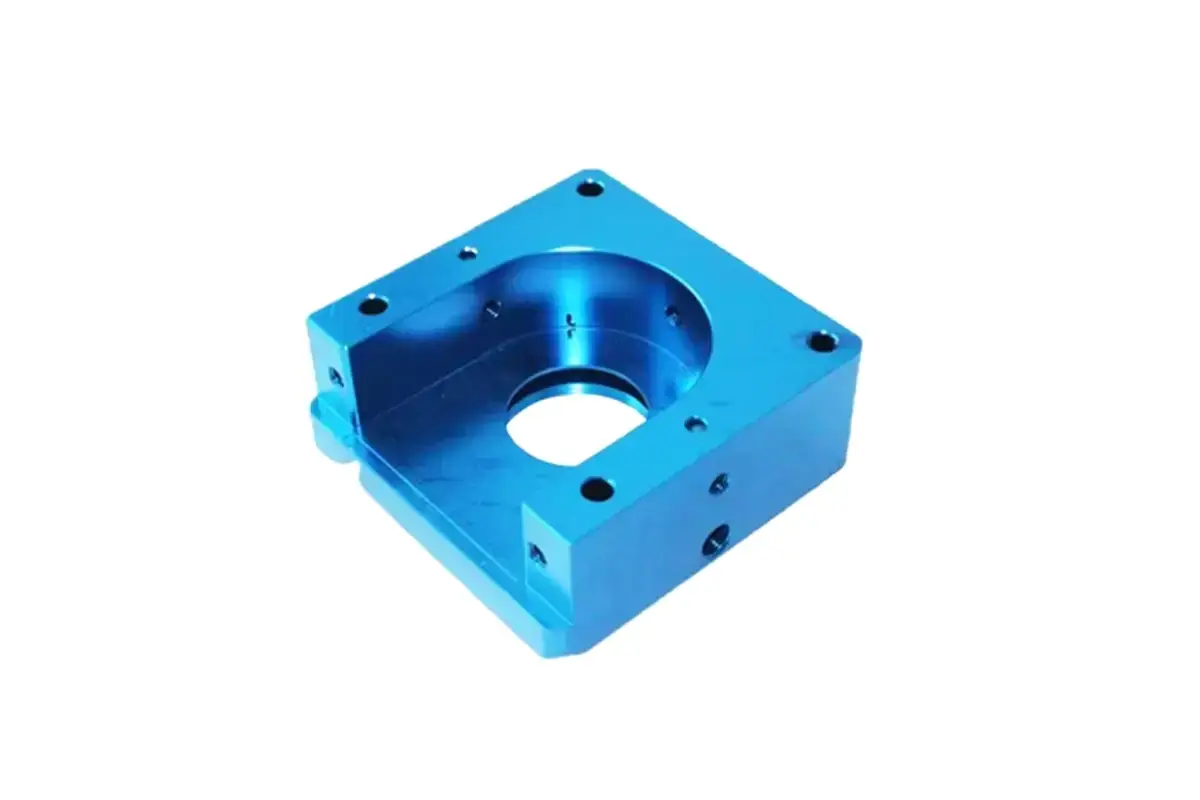
Custom-engineered mounting components manufactured for accurate fit, reliable performance, and OEM applications.

Precision-machined brake lever components designed for accurate control, lightweight performance, and customized applications.
Get high‑quality machined parts in as fast as 4 days with our expanded automated CNC milling!