
OEMs are under growing pressure to shorten product development cycles, control manufacturing costs and maintain consistent quality across increasingly complex supply chains.
For many companies, the traditional approach of sourcing CNC machining, surface treatment, inspection and assembly from separate suppliers is becoming difficult to manage. Every additional supplier creates another communication channel, production schedule, quality system and potential point of failure.
This is why more OEMs are choosing one-stop CNC manufacturing partners in 2026.
The value is not simply having fewer purchase orders. A capable manufacturing partner connects engineering review, precision CNC machining, secondary processing, inspection and delivery through one controlled workflow. This can reduce supplier handoffs, identify manufacturing risks earlier and provide clearer accountability from prototype development to repeat production.
However, “one-stop” should not be treated as a guarantee of quality. OEM buyers still need to understand which processes are performed in-house, how external suppliers are controlled and whether the manufacturer has the equipment, inspection capability and project experience required for the application.
What Is a One-Stop CNC Manufacturing Partner?
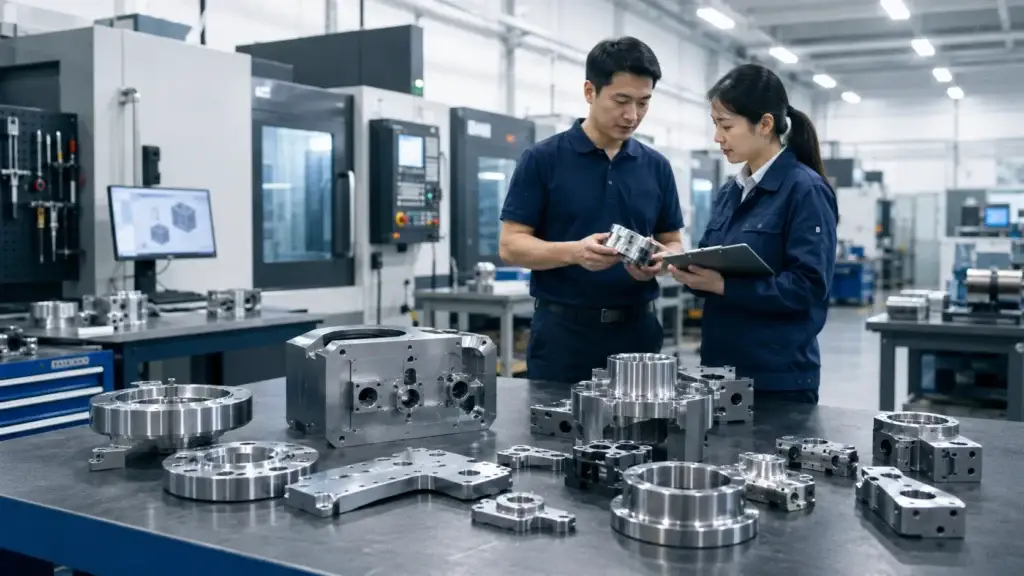
A one-stop CNC manufacturing partner coordinates several connected stages of a custom parts project under one project-management and quality-control system.
Depending on the project, the scope may include:
- Drawing and manufacturability review
- Material sourcing
- CNC prototype services
- CNC milling
- CNC turning
- CNC milling and turning
- Turning-milling
- 5-axis CNC machining
- Wire cutting
- Surface finishing services
- Dimensional inspection
- First article inspection
- Basic assembly
- Packaging and international delivery
Not every process must physically take place in the same factory. Some manufacturers keep core machining and inspection in-house while using qualified partners for anodizing, plating, heat treatment, passivation or other specialist processes.
The important difference is responsibility.
A reliable CNC manufacturing partner should control technical requirements throughout the complete workflow, including:
- Drawing revisions
- Material specifications
- Critical tolerances
- Surface treatment requirements
- Inspection standards
- Batch traceability
- Production schedules
- Packaging instructions
A conventional machine shop may be able to produce a part. A manufacturing partner should also understand how the part fits into the customer’s assembly, product-development schedule and quality system.
Why OEM Sourcing Priorities Are Changing in 2026?
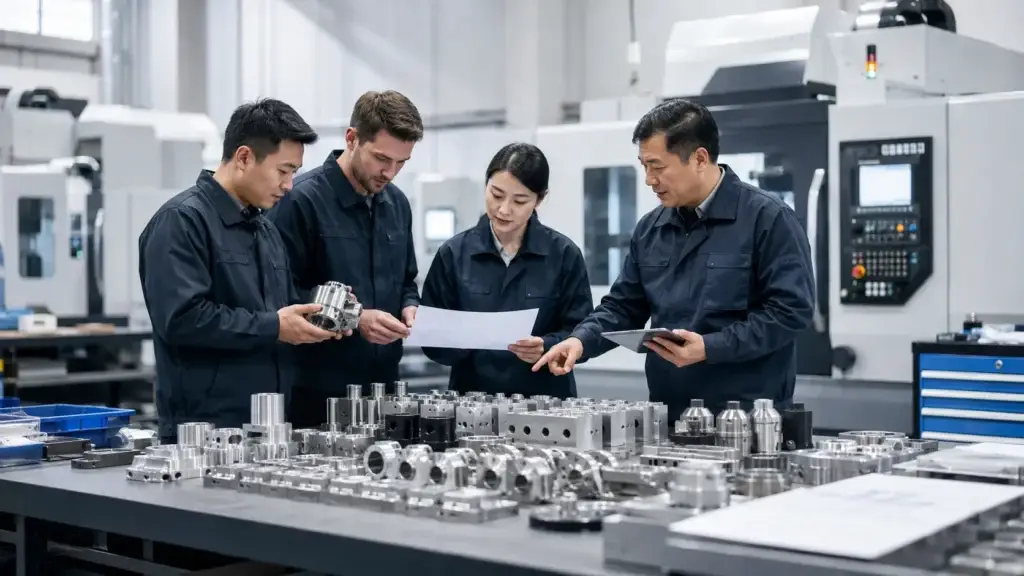
OEM purchasing decisions were once driven mainly by unit price, machine capacity and quoted lead time. Those factors still matter, but they no longer show the full cost or risk of a manufacturing project.
Several changes are making integrated CNC machining services more valuable.
Products Require More Connected Processes
Medical equipment, robotics, UAVs, semiconductor equipment and optical instruments often contain several custom parts with different geometries and manufacturing requirements.
One project may include:
- A CNC-milled aluminum housing
- Precision CNC-turned shafts
- Turn-milled connectors
- 5-axis machined structural parts
- Wire-cut precision profiles
- Anodized or plated surfaces
- CMM inspection of critical features
When these processes are divided among unrelated suppliers, the OEM must manage every handoff. A misunderstanding about datums, coating thickness or final inspection conditions can create parts that pass one supplier’s inspection but fail during assembly.
Product Development Cycles Are Shorter
Engineering teams are expected to move quickly from design to prototype, functional testing and production validation.
A small design revision may affect the CNC program, fixture, inspection routine, surface treatment allowance and packaging label. In a fragmented supply chain, the same change must be communicated and confirmed several times.
A coordinated manufacturing partner can review how the revision affects the complete process before production continues.
Production Volumes Are Less Predictable
Many OEM projects no longer move directly from one prototype to high-volume manufacturing.
A typical program may require:
- One or two engineering prototypes
- Ten functional test parts
- A 50-piece pilot batch
- Several hundred parts for market introduction
- Repeat orders based on actual demand
This has increased demand for small batch CNC machining and CNC machining services for low-volume production.
OEMs need suppliers that can support changing quantities without losing the process knowledge developed during prototyping and validation.
Total Project Cost Matters More Than Unit Price
A low machining quotation does not always result in a low final project cost.
OEMs increasingly evaluate:
- Engineering communication time
- Supplier-management workload
- Transportation between factories
- Repeat inspection
- Rework and scrap
- Emergency freight
- Inventory buffers
- Production delays
The lowest individual process price may create a higher total cost when the complete supply chain is considered.
Multi-Supplier Sourcing vs One-Stop CNC Manufacturing
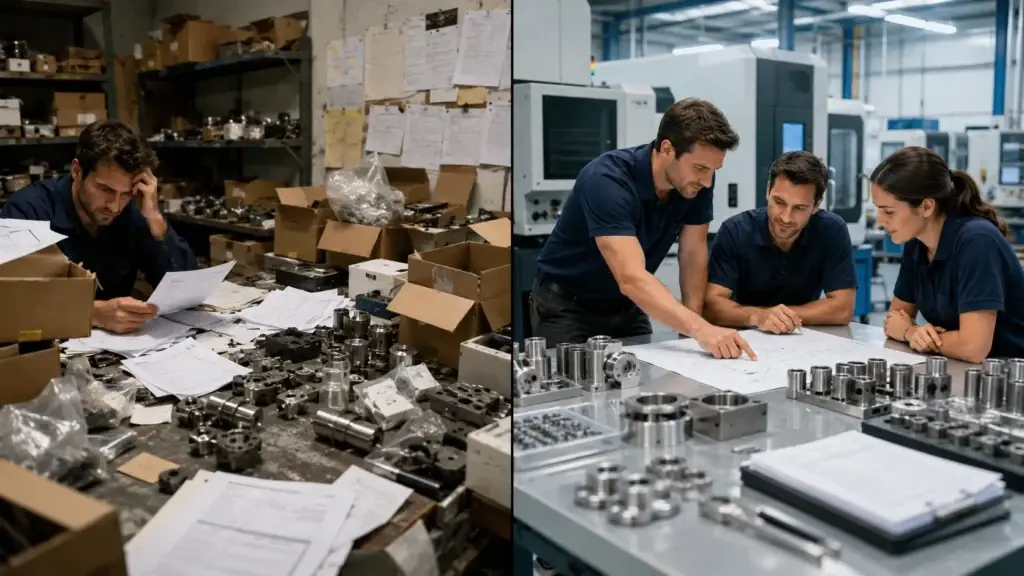
| Evaluation Area | Multiple Suppliers | One-Stop CNC Manufacturing Partner |
| Communication | Several contacts | One primary project contact |
| Drawing control | Revisions sent repeatedly | Centralized revision management |
| Scheduling | Separate production plans | Coordinated project schedule |
| Quality responsibility | May be divided or disputed | One partner leads resolution |
| Inspection | Different methods and standards | Unified inspection planning |
| Secondary processes | Managed by the OEM | Coordinated by the manufacturer |
| Engineering changes | Repeated communication | Reviewed across connected processes |
| Cost visibility | Individual prices are visible | Total project cost is easier to assess |
| Best use | Isolated specialist operations | Complex, multi-process projects |
Neither model is always correct.
A specialist supplier may be the better choice for a single highly technical operation. The one-stop model creates the greatest value when several processes, parts and delivery requirements need to work together.
Why OEMs Are Consolidating CNC Suppliers?
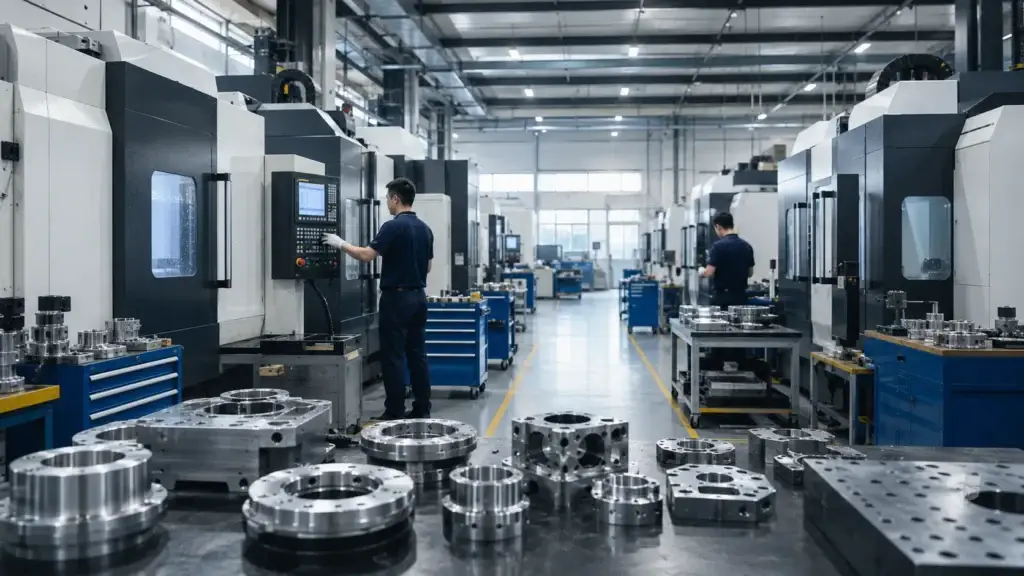
1. Faster Development Through Better Coordination
Shorter lead time does not depend only on machine speed. It also depends on how well engineering review, material preparation, machining, finishing and inspection are coordinated.
An integrated partner can begin fixture planning while material is being prepared, define inspection methods before machining is complete and arrange secondary processing around the production schedule.
This reduces waiting time between operations.
The benefit is particularly important for CNC machining prototypes. When testing identifies a design issue, the same manufacturing team already understands the material, setup, tooling and inspection history. The next revision can move forward without rebuilding that knowledge with a new supplier.
2. Earlier Identification of Manufacturing Risks
A capable precision CNC machining manufacturer should do more than calculate a price from a drawing.
Before production, the team should review potential risks such as:
- Unnecessarily tight tolerances
- Deep pockets requiring long tools
- Thin walls that may deform
- Internal corners with impractical radii
- Features with limited tool access
- Excessive setup requirements
- Surface treatment affecting final dimensions
- Material choices that add cost without improving function
This review helps align design intent with practical manufacturing conditions.
A small change to a radius, thread depth, datum or tolerance may reduce machining and inspection complexity without affecting performance.
This is especially valuable for OEM parts CNC machining, where one feature may control sealing, alignment, movement or assembly fit.
3. Lower Total Manufacturing Cost
The real cost of a CNC project can be viewed as:
Total project cost = machining + tooling + supplier management + transportation + inspection + inventory + rework + delay-related costs
A multi-supplier strategy may produce a low quotation for each individual process while increasing the cost of the complete project.
For example, an OEM may purchase machining from one factory, anodizing from another and final inspection from a third. The project then requires additional purchase orders, transport, packaging, schedule coordination and responsibility management.
A one-stop CNC manufacturing partner can reduce these indirect costs by consolidating technical communication, secondary processing, quality control and delivery.
This does not mean every integrated quotation will have the lowest unit price. It means the comparison should be based on the complete manufacturing outcome.
4. Better Control of Final-Part Quality
Many quality problems occur between processes rather than during the main machining operation.
Consider an aluminum housing that requires precision CNC milling followed by anodizing. The machined dimensions may pass inspection before finishing, but coating thickness can reduce a hole diameter or affect a mating surface.
Similar problems can arise from:
- Heat-treatment distortion
- Plating thickness
- Powder-coating buildup
- Welding deformation
- Press-fit assembly
- Thread masking
- Cosmetic finishing
- Flatness changes after material removal
A one-stop partner can plan inspection according to the final condition of the part instead of treating machining and finishing as unrelated orders.
This creates a more useful quality-control loop:
- Identify the functional and critical dimensions.
- Decide which dimensions should be checked during machining.
- Consider the effect of secondary processing.
- Inspect final dimensions after finishing where necessary.
- Maintain the same drawing revision and acceptance criteria throughout the project.
5. Clearer Accountability When Problems Occur
When several suppliers are involved, a nonconforming part can lead to conflicting explanations.
The machining supplier may blame surface treatment. The finishing supplier may say the incoming part was already incorrect. The inspection provider may use a different datum or measuring method.
The OEM then has to investigate the full process.
With one accountable manufacturing partner, the customer has a clear project owner responsible for tracing the batch, reviewing production records, coordinating the affected processes and reporting corrective action.
This does not eliminate manufacturing problems. It makes them easier to contain, investigate and resolve.
6. Easier Engineering Change Management
OEM designs often change during development.
A revised hole position may require:
- A new CNC program
- A fixture adjustment
- A different inspection routine
- Updated assembly instructions
- Revised part identification
Under a fragmented sourcing model, each supplier must receive and confirm the new revision independently.
An integrated partner can update production, inspection and external processing requirements through one controlled workflow. This reduces the risk that different stages use different drawing versions.
7. Smoother Transition From Prototype to Production
Moving a project from one prototype supplier to a different production manufacturer can introduce new variables.
The second supplier may use different machines, tools, fixtures, programs and inspection methods. A part that passed prototype testing may perform differently when transferred into production.
A partner that supports both prototypes and small-batch production retains important project knowledge, including:
- Difficult-to-machine features
- Areas sensitive to deformation
- Approved design changes
- Critical measurement points
- Surface treatment allowances
- Packaging requirements
This continuity is especially useful for OEM programs that scale gradually through pilot runs and repeat orders.
The Sino-V-Rise Difference: Multi-Process Manufacturing for High-Mix, Low-Volume OEM Projects
Many one-stop manufacturing articles focus on offering the longest possible list of services. That is not necessarily what creates the most value for an OEM.
The stronger model is to combine the right processes around a clearly defined type of project.
Sino-V-Rise focuses on multi-process, small- and medium-batch precision parts. This creates a more specific position than either a basic prototype shop or a high-volume factory optimized for one repetitive product.
A Multi-Process Equipment Mix
Sino-V-Rise operates more than 40 pieces of in-house precision machining equipment and provides:
- CNC milling
- CNC turning
- CNC milling and turning
- Turning-milling
- 5-axis CNC machining services
- CNC wire cutting
This equipment mix is useful when one OEM project contains several types of components.
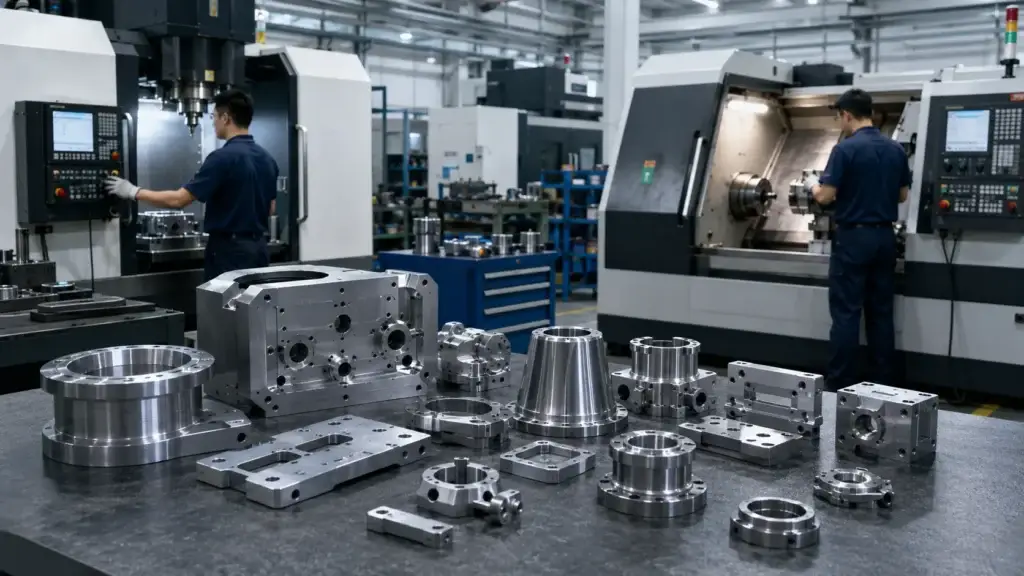
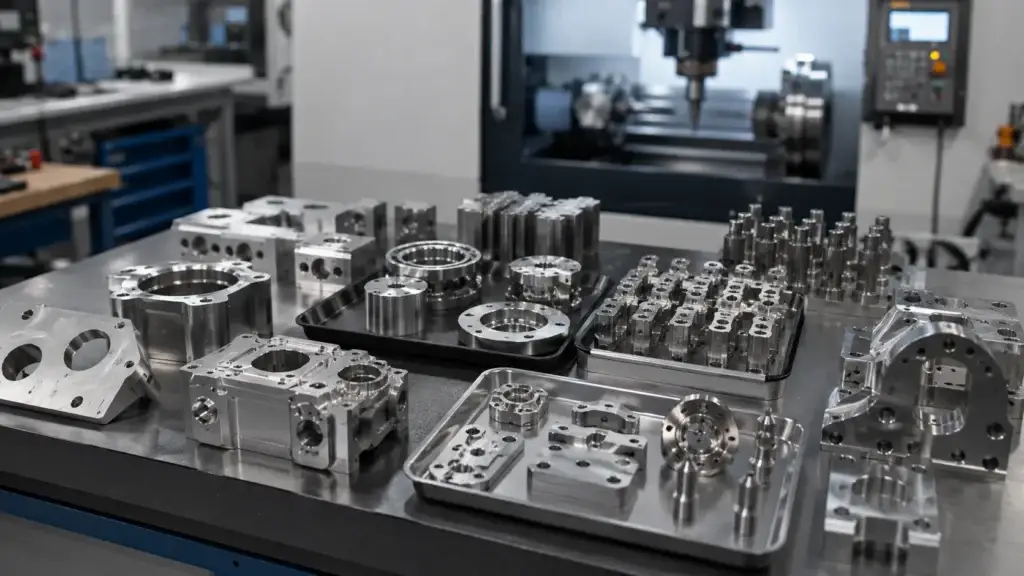
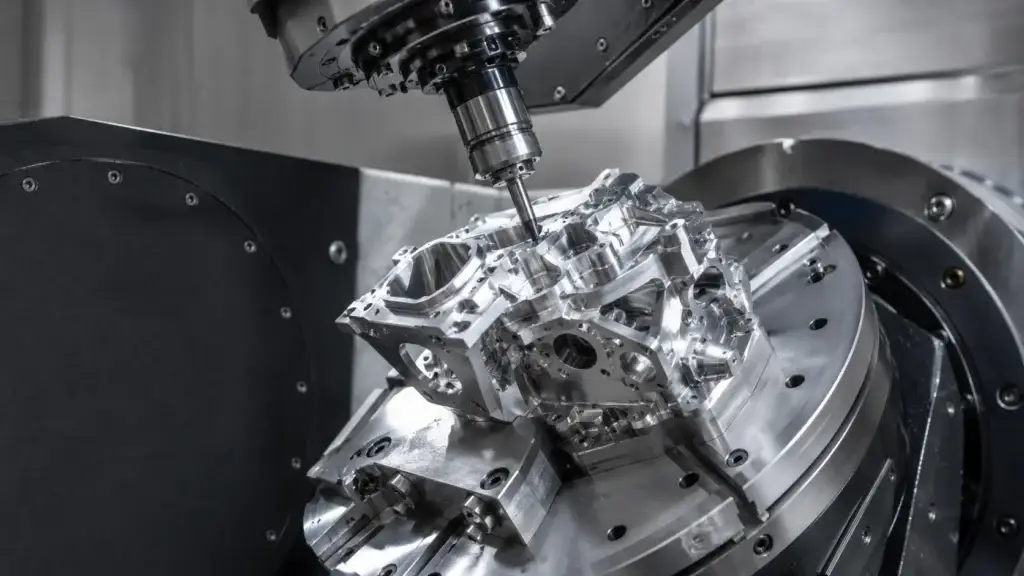
A housing may require precision CNC milling, a shaft may require precision CNC turning and a complex structural component may be better suited to 5-axis machining. Coordinating these parts within one project reduces the need to force every component into the same process or divide the assembly among unrelated workshops.
The breakthrough is not simply owning more machines. It is using different machining processes around one delivery and quality plan.
A Machining-and-Inspection Quality Loop
Another important difference is the connection between production and inspection.
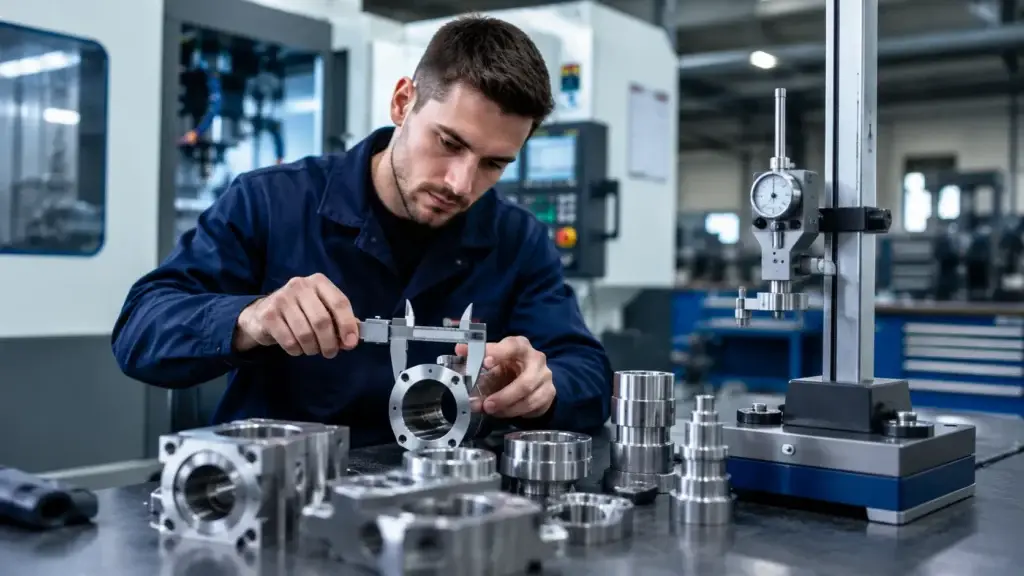
Sino-V-Rise uses inspection equipment including 2.5D optical measuring systems, digital height gauges and coordinate measuring machines. The company also operates under an ISO 9001 quality management system.
This supports a more complete process than machining a part and sending it out without verifying critical features.
For suitable projects, inspection planning can consider:
- Functional dimensions
- Geometric relationships
- Datums
- Hole positions
- Flatness and perpendicularity
- Dimensions affected by finishing
- First article requirements
- Batch inspection records
Not every dimension requires a CMM, and not every tolerance needs full inspection. The advantage is having several measurement methods available and selecting them according to the part rather than relying only on basic handheld tools.
Flexible Support for Prototype and Small-Batch Production
Sino-V-Rise is positioned around multi-process, small- and medium-batch CNC machining.
This is well suited to OEMs that require:
- CNC prototypes
- Functional test parts
- Pilot production
- Bridge production
- Multiple part numbers
- Repeat small-batch orders
- Ongoing engineering changes
The same project can move from early samples to repeat production without immediately transferring the work to a different supplier.
This helps preserve the machining, inspection and finishing decisions developed during product validation.
Focus on Precision-Driven Industries
Sino-V-Rise is concentrating its manufacturing development on six application areas:
- Medical equipment
- Drones and UAV systems
- Semiconductor equipment
- Robotics
- Optical instruments
- Automotive and motorcycle parts
These sectors do not all require the same machining process, but they share several common demands:
- Dimensional consistency
- Complex component geometry
- Controlled surface quality
- Reliable assembly relationships
- Small- or medium-batch flexibility
- Clear technical communication
For example, medical CNC machining may place greater emphasis on material identification, surface condition and documentation. Semiconductor CNC machining may require close control of flatness, hole position and batch repeatability. Robotic and UAV parts often need a balance between low weight, structural strength and precise interfaces.
A focused industry strategy allows machining experience to accumulate around these practical requirements rather than treating every part as an isolated drawing.
One Project Window for International OEMs
Sino-V-Rise began developing international markets in 2017 and has built experience serving overseas customers.
For an OEM sourcing from China, project communication is often as important as machine capability.
The supplier must be able to manage:
- English drawings and technical files
- Different tolerancing practices
- Engineering revisions
- Inspection requirements
- Export packaging
- International delivery
- Time-zone differences
A single project window helps overseas purchasing and engineering teams reduce the number of factories and processing suppliers they need to contact.
Transparent Management of Secondary Processes
“One-stop” should not hide the supply chain.
Core CNC machining and dimensional inspection capabilities are maintained internally at Sino-V-Rise. Specialist secondary processes can be coordinated through qualified processing partners according to project requirements.
This is a more credible model than claiming every possible surface treatment, heat treatment and specialist operation is completed internally.
OEM buyers should know:
- Which processes are in-house
- Which processes use external specialists
- How specifications are transferred
- How finished parts are inspected
- Who is responsible for nonconforming results
Transparency is part of supply chain control.
When a One-Stop Partner May Not Be the Best Choice?
An integrated CNC manufacturing partner is not automatically the best option for every order.
A specialist supplier may be more suitable when:
- The project requires only one unusual process
- A secondary operation requires a specific industry approval
- The manufacturer lacks experience with the material
- The volume requires a dedicated mass-production line
- The OEM needs a strategic second source
- Supplier concentration creates unacceptable business risk
The correct sourcing decision should balance coordination, specialization, cost and continuity.
How to Evaluate a One-Stop CNC Manufacturing Partner?
Before consolidating a project, OEM buyers should ask:
- Which machining processes are performed in-house?
- Which operations are outsourced?
- Can the supplier support both prototypes and repeat production?
- Has it manufactured parts with similar geometry and materials?
- Does it review drawings before quoting?
- What inspection equipment is available?
- Can it provide first article or dimensional reports?
- How are drawing revisions controlled?
- How are external processing suppliers qualified?
- What happens when a part is nonconforming?
- Is backup machine capacity available?
- Who is responsible for project communication?
Machine lists and certification logos are useful, but they should be supported by process explanations, sample documentation and relevant project experience.
What to Include in a CNC Machining RFQ?
A complete RFQ allows the manufacturer to evaluate the full project rather than estimate from incomplete information.
Provide:
- 2D drawings
- 3D CAD files
- Material grade
- Quantity
- Prototype and future volume estimates
- Critical tolerances
- Surface roughness
- Surface treatment
- Cosmetic requirements
- Inspection requirements
- Material certificates
- Packaging instructions
- Delivery destination
- Required delivery date
Where confidentiality rules allow, explain the function of critical features. Knowing whether a dimension controls alignment, movement, sealing or optical positioning helps the manufacturer select a more appropriate process and inspection method.
Frequently Asked Questions
What does one-stop CNC manufacturing include?
It may include drawing review, material sourcing, CNC prototyping, CNC milling, CNC turning, 5-axis machining, wire cutting, secondary processing, surface finishing, inspection, packaging and delivery.
Is one-stop CNC manufacturing always cheaper?
Not necessarily at the individual process level. Its value often comes from reducing supplier-management time, transportation, repeated inspection, rework and delay-related costs.
Does every process need to be performed in-house?
No. A manufacturer may keep core machining and inspection in-house while using qualified specialists for certain secondary processes. Control, transparency and accountability are more important than claiming every operation is internal.
Is one-stop manufacturing suitable for small batches?
Yes. It is especially useful for prototypes, pilot runs and small batch CNC machining because engineering changes and process knowledge can remain with one project team.
How can OEMs reduce the risk of relying on one supplier?
Begin with a representative pilot project, audit the supplier’s processes, define measurable quality and delivery requirements, review backup capacity and retain a second source where business continuity requires it.
What CNC machining services does Sino-V-Rise provide?
Sino-V-Rise provides CNC milling, CNC turning, turning-milling, 5-axis CNC machining and wire cutting, supported by precision inspection and coordinated secondary processing.
Build a More Connected CNC Manufacturing Workflow
Choosing a one-stop CNC manufacturing partner is not simply a decision to buy more services from one supplier. It is a decision about how engineering information, production processes, quality requirements and delivery responsibilities will be connected.
The strongest partner is not necessarily the company with the longest service list. It is the company whose equipment, inspection system and project model match the OEM’s actual manufacturing needs.
Sino-V-Rise supports multi-process, small- and medium-batch precision parts through more than 40 in-house machining machines, ISO 9001 quality management and dimensional inspection capabilities including optical measurement and CMM inspection.
Its focus on medical equipment, drones, semiconductor equipment, robotics, optical instruments and automotive or motorcycle parts provides a clear direction for developing deeper precision manufacturing expertise.
Send your 2D drawings, 3D files, material, quantity, tolerance, surface treatment and inspection requirements. The Sino-V-Rise team will review the complete manufacturing workflow and prepare a CNC machining quotation for your project.