
Abstract
The difference between precision machining and standard machining is not only about tighter tolerances. It changes how a part is quoted, programmed, fixtured, machined, inspected, and delivered. Standard machining focuses on making functional parts efficiently, while precision CNC machining focuses on controlling variation, improving repeatability, and reducing the risk of assembly failure. This article explains why high precision costs more, where the cost comes from, and when it creates real value for demanding industries.
Quick Answer
Precision machining costs more because it requires tighter process control, advanced equipment, skilled setup, stable tooling, slower finishing, detailed inspection, and stronger quality assurance.
Key Takeaways
- Precision machining is a complete manufacturing control system, not just a tighter tolerance request.
- Higher cost usually comes from setup time, tooling, fixtures, machine stability, inspection, and scrap-risk control.
- Standard machining is suitable for simple parts with general fit requirements.
- High precision CNC machining is more valuable for aerospace, medical, semiconductor, robotics, optical, and automotive components.
- The best way to control cost is to apply tight tolerances only to critical features.
What Is Precision Machining?
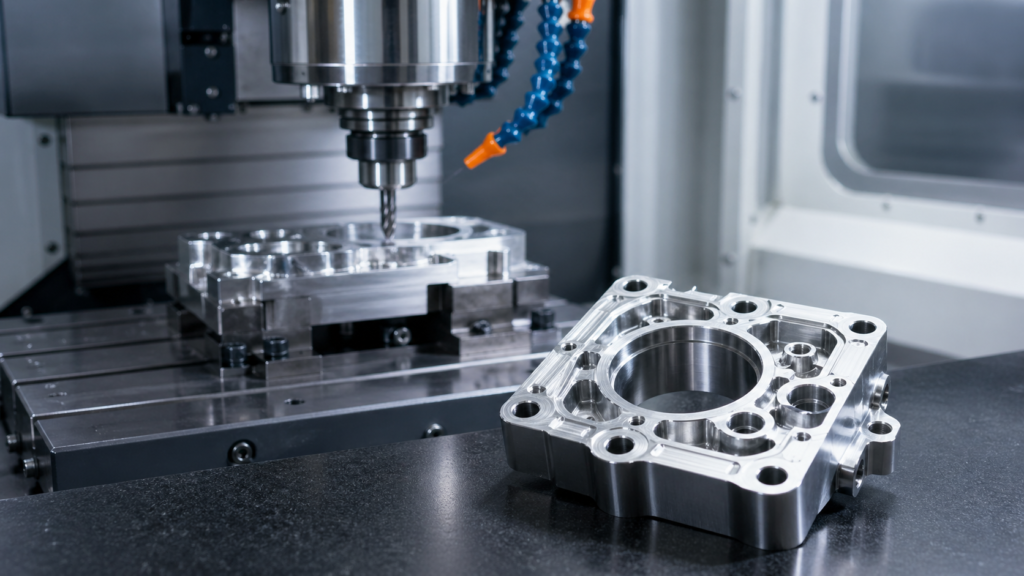
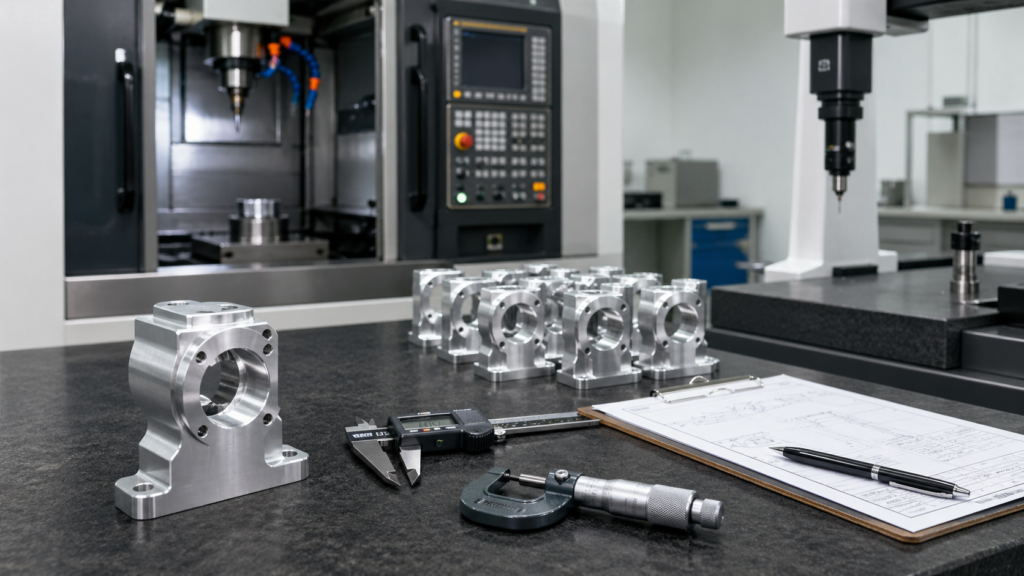
Precision machining is a CNC manufacturing process used to produce parts with controlled dimensions, repeatable accuracy, stable surface quality, and reliable fit in final assembly. Compared with standard machining, it requires more attention to tolerance planning, toolpath strategy, fixture stability, material behavior, and inspection methods.
For Sino Rise, precision CNC machining is closely connected with its wider CNC manufacturing capabilities. The company supports projects from prototypes to production runs and provides CNC machining, CNC milling, CNC turning, CNC turning-milling, 5-axis CNC machining, precision machining, and surface treatment services. Its website also highlights machining for metals and plastics, complex geometries, single-setup machining, and high-repeatability production.
In practical terms, precision machining is used when a part cannot simply be “close enough.” It must fit, seal, rotate, align, slide, hold pressure, support load, or perform consistently over many production batches.
Precision Machining vs Standard Machining: Main Differences
Standard machining and CNC precision machining may use similar equipment, but the working logic is different. Standard machining focuses on producing acceptable parts at a reasonable cost. Precision machining focuses on reducing dimensional variation and controlling every factor that can affect final quality.
| Factor | Standard Machining | Precision Machining |
| Main goal | Functional part | Repeatable, controlled, high-accuracy part |
| Tolerance level | General drawing tolerance | Tight tolerance on critical features |
| Setup method | Basic workholding | More stable fixtures, datum control, process planning |
| Cutting strategy | Efficient material removal | Roughing, semi-finishing, finishing, tool wear control |
| Inspection | Basic dimensional check | First article, in-process, final inspection, possible CMM report |
| Cost structure | Lower setup and inspection cost | Higher process-control and QA cost |
| Best fit | Simple brackets, covers, non-critical parts | Medical parts, aerospace parts, semiconductor parts, optical mounts, robotic components |
The real change is that precision machining treats accuracy as a system. Machine, material, tool, fixture, temperature, operator skill, inspection, and documentation all become part of the final result.
Why Does Precision Machining Cost More?
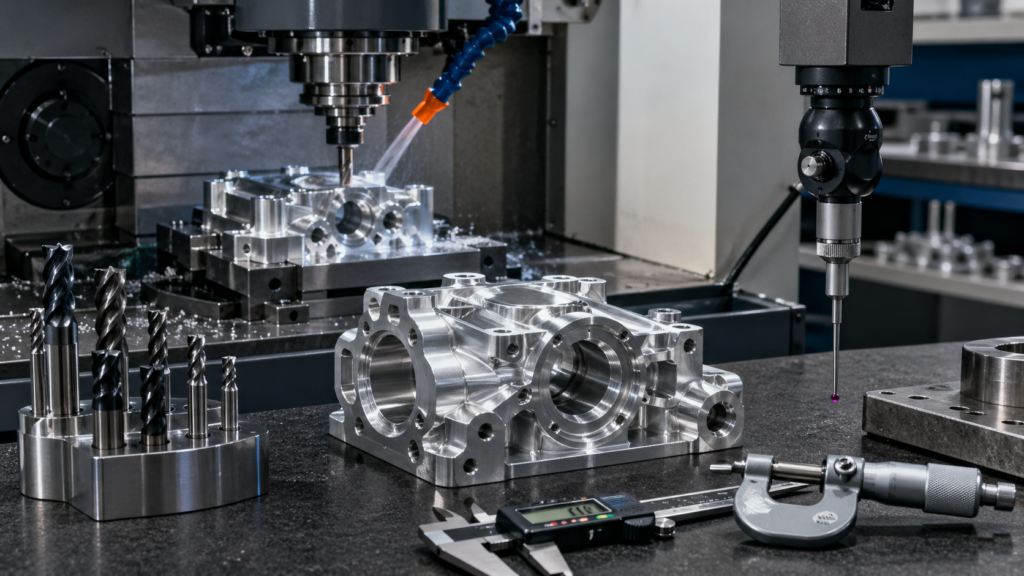
Tighter Tolerances Reduce the Error Window
A loose tolerance gives the machinist more room to work. A tight tolerance gives very little room for tool wear, vibration, heat expansion, fixture movement, or measurement error. That means the machining process must be more stable from the beginning.
In high precision CNC machining, the supplier may need additional setup checks, slower finishing passes, more careful tool selection, and more frequent measurement. The part may look simple, but the required control level makes it more expensive.
Fixtures and Datums Become More Important
For standard parts, simple clamping may be enough. For precision CNC machined components, the workpiece must be held in a way that protects critical dimensions and prevents movement during cutting.
This may require soft jaws, custom fixtures, vacuum holding, multi-axis fixtures, or one-setup strategies. Sino Rise’s turning-milling service, for example, emphasizes completing multiple operations in one setup, including turning, milling, drilling, threading, and tapping, which can reduce transfer error between machines.
Material Behavior Affects Final Accuracy
Different precision machining materials behave differently during cutting. Aluminum is easy to machine but can be affected by clamping pressure on thin walls. Stainless steel may work-harden. Titanium can generate heat and increase tool wear. Engineering plastics may deform under heat or stress.
This is why material choice affects cost. A part made from an easy-machining aluminum alloy may be faster to produce than the same part made from stainless steel, titanium, or high-performance plastic.
Inspection Time Increases
Inspection is one of the biggest hidden cost drivers. Standard parts may only need simple checks. CNC precision machining may require inspection of multiple critical dimensions, surface finish, concentricity, flatness, parallelism, perpendicularity, or hole position.
For precision parts, inspection is not just about finding mistakes. It is about proving that the part is stable enough for its final application.
What Changes in the Machining Process?
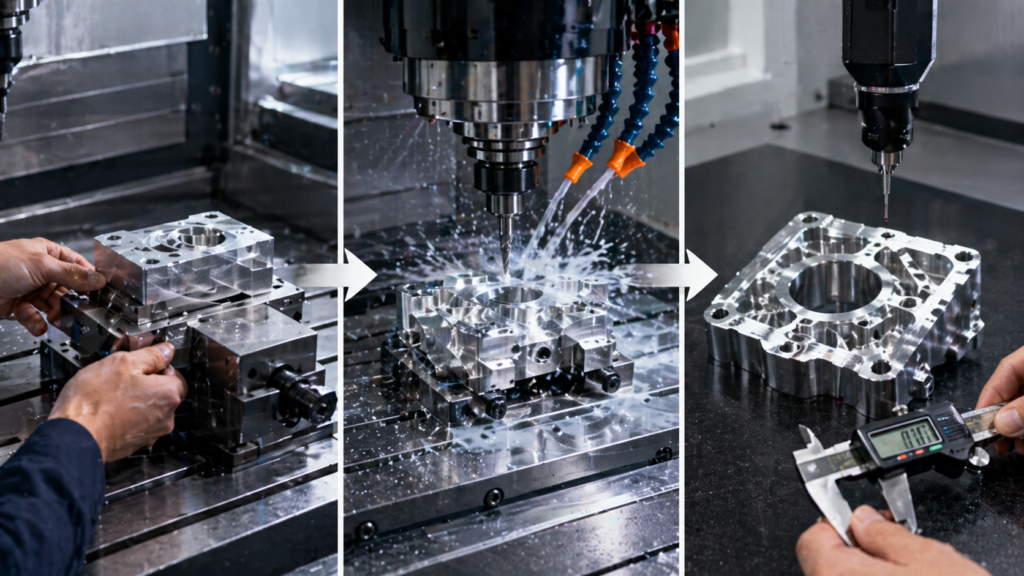
From Fast Cutting to Controlled Cutting
In standard machining, speed is often the priority. In precision machining, the priority is stable and predictable cutting. The process may include rough machining, stress release, semi-finishing, finishing, deburring, and final inspection.
A typical precision workflow may look like this:
| Step | Purpose |
| Drawing review | Identify critical features, tolerances, materials, and surface finish |
| DFM check | Find unnecessary tight tolerances or difficult-to-machine geometry |
| Process planning | Select milling, turning, turn-mill, or 5-axis machining |
| Fixture design | Control datums and reduce deformation |
| Rough machining | Remove bulk material while leaving finishing allowance |
| Finishing pass | Achieve final dimensions and surface quality |
| Inspection | Verify dimensions, tolerances, and cosmetic requirements |
| Surface treatment | Apply anodizing, polishing, plating, blasting, or coating if needed |
Process Selection Becomes More Strategic
Sino Rise’s own process guidance explains that CNC turning is suitable for cylindrical and concentric parts, CNC milling is suitable for blocks, plates, slots, pockets, and multi-face geometries, and turn-mill is useful when one part needs both turned and milled features.
That process choice directly affects precision. If a part can be completed in fewer setups, the risk of alignment error is lower. For complex multi-surface parts, 5-axis CNC machining can also reduce re-clamping and help maintain accuracy on curved or multi-face features. Sino Rise’s 5-axis content highlights single-setup machining, complex geometry, deep cavities, contoured surfaces, and tight tolerance capability for demanding applications.
Quality Assurance: The Hidden Value Behind Precision
Precision Is Measured, Not Assumed
A precision machining service should not rely only on machine capability. Even a good machine can produce bad parts if the setup, tool, program, or inspection plan is weak.
For high-value parts, quality assurance may include:
| QA Item | Why It Matters |
| First article inspection | Confirms the first part before batch production |
| In-process inspection | Detects dimensional drift early |
| Final inspection | Confirms the finished batch meets drawing requirements |
| Surface finish check | Supports sealing, sliding, cosmetic, or optical requirements |
| Material verification | Helps confirm part performance and traceability |
| Packaging control | Prevents damage to precision surfaces during shipping |
This is where precision machining provides value beyond the machined shape. It reduces downstream risk for buyers, especially when parts are used in assemblies where rework is expensive.
Quality Control Reduces Total Cost)
A lower machining quote may not be cheaper if the part fails during assembly. Poor tolerance control can cause misalignment, leakage, vibration, noise, premature wear, or rejected batches.
For buyers, the question should not only be: “What is the unit price?”
A better question is: “What process control is included in this price?”
Where Precision Machining Creates the Most Value
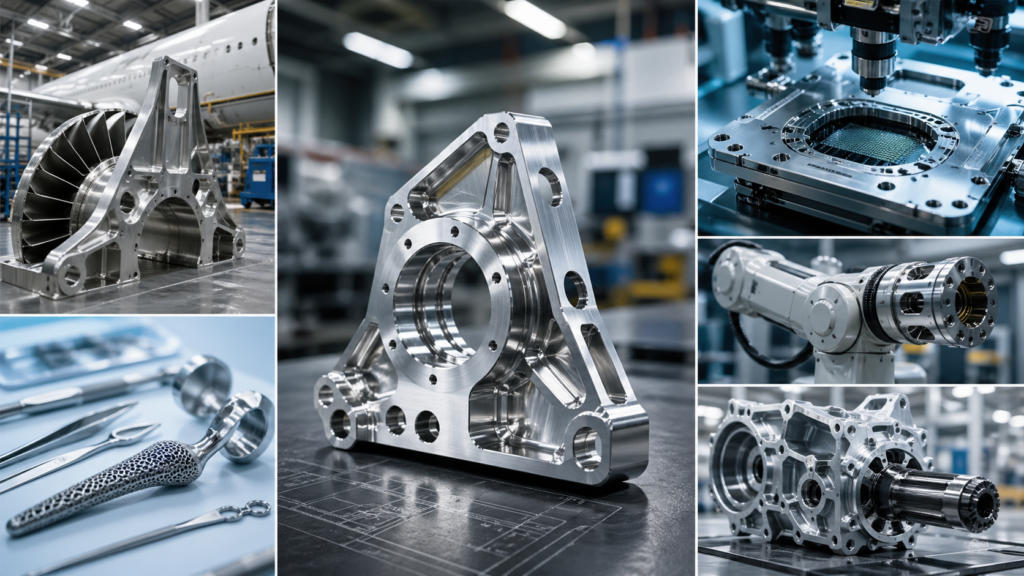
Aerospace and Low-Altitude Aircraft Components
Aerospace precision machining is valuable when parts must remain lightweight, accurate, and stable under load. Brackets, housings, frames, shafts, sleeves, and mounting parts often require controlled tolerances because they interact with other mechanical systems. Sino Rise lists low-altitude aircraft components among its supported industry applications.
Medical Industry Components
Precision medical machining is used for surgical instruments, device housings, connectors, sleeves, pins, and other small components where fit, cleanliness, finish, and repeatability matter. For medical-related parts, small dimensional errors can affect assembly and usability.
Semiconductor and Optical Parts)
Semiconductor CNC precision machining often involves equipment parts, fixtures, plates, blocks, chambers, and precision mechanical components. These parts may require stable geometry, clean surfaces, and accurate hole or slot positions.
Optical instrument parts also depend heavily on precision. A small error in an optical mount or alignment component can affect the final system performance.
Robotics and Automotive Parts)
Robotic CNC machining supports parts such as frames, joints, housings, shafts, mounting plates, and end-effector components. Precision affects repeatable motion and mechanical stability.
For precision automotive machining, tighter control is useful for EV components, sensor housings, motor-related parts, motorcycle parts, and high-performance assemblies.
How to Reduce Precision Machining Costs Without Sacrificing Quality
Do Not Over-Tolerance Every Feature)
The easiest way to make precision machining unnecessarily expensive is to apply tight tolerances everywhere. Not every face, hole, slot, or edge needs the same accuracy.
A better approach is to divide features into three groups:
| Feature Type | Tolerance Strategy |
| Critical assembly features | Apply tight tolerance |
| Functional but non-critical features | Use moderate tolerance |
| Cosmetic or clearance features | Use standard tolerance where possible |
This helps the supplier focus precision where it actually affects performance.
Share the Real Application)
The more the supplier understands the part’s function, the better the process plan can be. For example, a sealing surface, bearing bore, optical alignment face, or robotic joint interface should be treated differently from a clearance pocket.
When sending an RFQ to Sino Rise or any precision machine shop, buyers should provide drawings, 3D files, material requirements, target volume, surface finish needs, and any special inspection requirements.
Choose the Right Manufacturing Route Early)
Use CNC turning for round parts. Use CNC milling for prismatic parts. Use turning-milling when a part combines cylindrical and milled features. Use 5-axis machining when complex geometry, multi-face tolerance, or setup reduction is important.
This early decision can reduce cost, improve accuracy, and shorten the path from prototype to production.
FAQ About Precision Machining vs Standard Machining
Is precision machining always necessary?)
No. Precision machining is necessary when tolerance, repeatability, surface finish, or assembly risk matters. For simple parts with loose requirements, standard machining may be more cost-effective.
Why is precision machining more expensive than standard machining?)
It requires more controlled setup, better fixtures, advanced programming, stable tooling, skilled operators, slower finishing, more inspection, and stronger quality control.
What parts are best suited for precision CNC machining?)
Precision CNC machining is suitable for aerospace brackets, medical components, semiconductor fixtures, optical mounts, robotic parts, automotive components, shafts, sleeves, housings, and complex custom pHow can I lower the cost of high precision CNC machining?)
Use tight tolerances only on critical features, simplify part geometry, choose machinable materials, avoid unnecessary cosmetic requirements, and ask for DFM feedback before production.
Conclusion
Precision machining changes more than the final tolerance on a drawing. It changes the full manufacturing approach: process planning, fixture design, machine selection, cutting strategy, inspection, surface treatment, and quality assurance. Standard machining is a good choice for simple, general-purpose parts. CNC precision machining is the better choice when performance, assembly fit, repeatability, and long-term reliability matter.
For buyers, the value of precision is not only in achieving a smaller tolerance. It is in reducing risk before the part reaches the final product.