


Home / CNC-Machining / CNC Milling / CNC Machining Milling Aluminum Engine Bracket
cnc engine bracket main

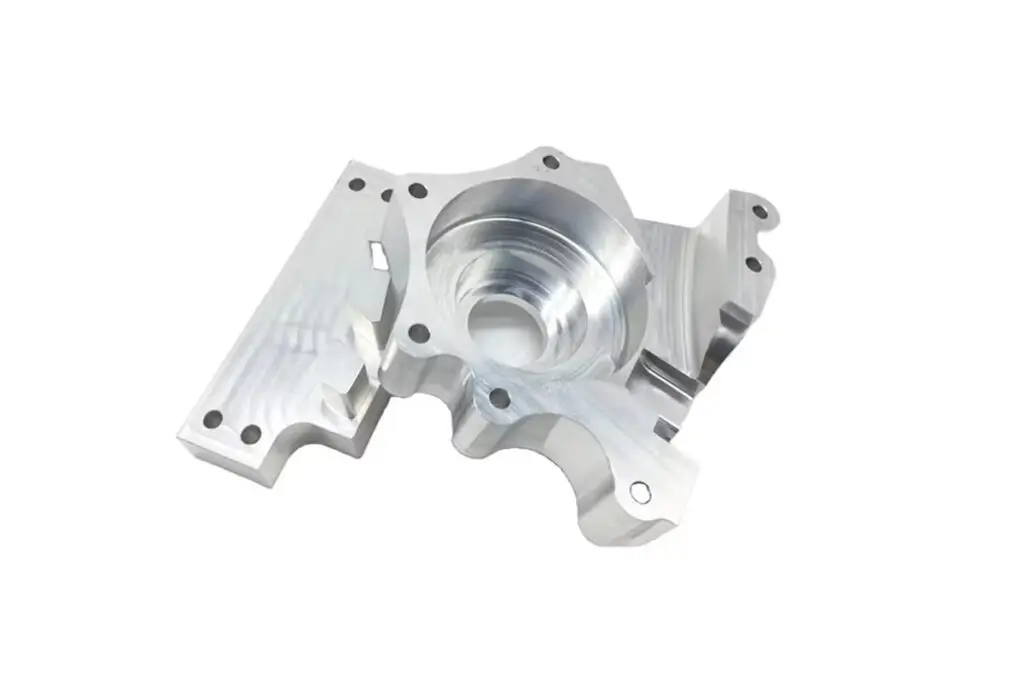
CNC Machining Milling Aluminum Engine Bracket

Custom CNC machining milling aluminum engine brackets for automotive and mechanical assemblies, supporting complex structures, multiple aluminum grades, different surface finishes, and drawing-based production.

*Send your drawings with material, quantity and surface finish requirements to get started.

Aluminum Engine Bracket Overview

Aluminum is suitable for engine brackets because it balances weight, machinability, corrosion resistance, and structural performance.

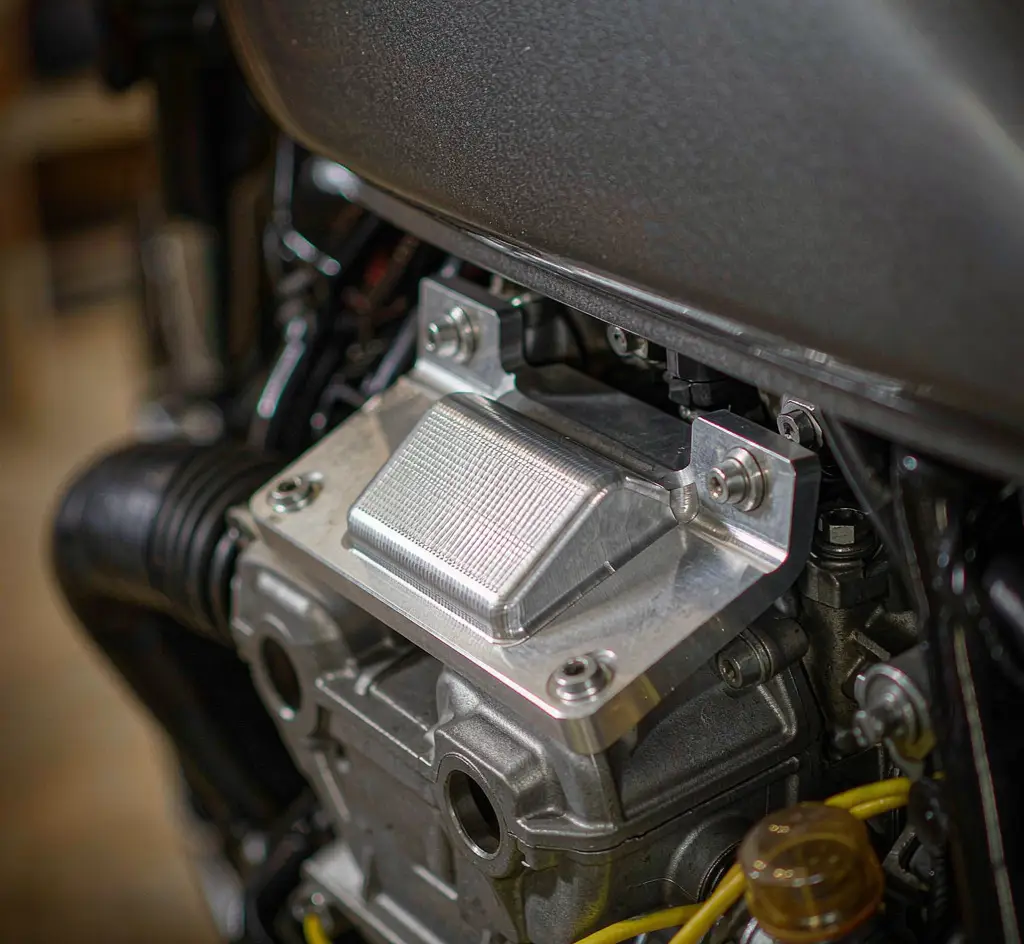
An aluminum engine bracket is a structural mounting component used to connect, position, or support the engine and related assemblies within a vehicle or mechanical system.Unlike simple flat mounting plates, engine brackets often contain multiple machined surfaces, mounting holes, reinforced ribs, recessed areas, and locating features. These geometries require consistent machining accuracy to maintain correct assembly positions and reliable connections between components.SINORISE manufactures customized aluminum CNC machining parts for automotive and mechanical applications, including engine brackets produced according to customer drawings, CAD files, samples, and technical requirements.

engine bracket installed
6061-T6 aluminium round bar stock for CNC turning

6061 Aluminum

6061 is widely used for CNC-machined structural parts because it provides a practical combination of machinability, strength, corrosion resistance, and surface finishing performance.

It is suitable for many engine brackets, mounting brackets, equipment supports, housings, and general automotive components.

7075-T6 aluminium billet block stock for CNC milling

7075 Aluminum

7075 aluminum provides higher strength and may be considered for brackets where greater mechanical performance is required while maintaining relatively low component weight.

Material selection should ultimately be based on load conditions, part geometry, assembly requirements, environment, and the engineering specification.

Different aluminum grades can be selected depending on the structural design and operating requirements of the part.

Why Aluminum Is Used for Engine Brackets?

Aluminum alloys are commonly selected for engine bracket manufacturing where part weight, machinability, corrosion resistance, and structural performance must be balanced. Different aluminum grades can be selected depending on the structural design and operating requirements of the part.

Lightweight Design
Excellent Machinability
Corrosion Resistance

Need a Custom Aluminum Engine Bracket?

CNC Machining Aluminum Engine Bracket Specifications

Our CNC machining aluminum engine brackets support 6061, 6063, and 7075 aluminum, with 3-axis, 4-axis, and 5-axis CNC milling for complex mounting features. Tolerances, surface finishes, and inspection requirements can be customized according to drawings.

SpecificationMachining DataSpecificationMachining Data
ProductAluminum Engine BracketHole MachiningDrilling, Reaming, Tapping, Counterboring
Material6061 / 6063 / 7075 AluminumThread OptionsMetric / Imperial Threads
Machining ProcessCNC Milling, 3/4/5-Axis MachiningSurface FinishAnodizing, Bead Blasting, Polishing, Powder Coating, As Machined
Typical Tolerance±0.01–±0.05 mmInspection2.5D Measuring System, Digital Height Gauge, CMM
Surface RoughnessRa 0.8–3.2 μmProductionPrototype, Small Batch, Medium Batch
Machined FeaturesMounting Holes, Locating Holes, Pockets, Ribs, Bosses, Mating SurfacesDrawing FormatSTEP, STP, IGES, DWG, DXF, PDF
CustomizationMaterial, Dimensions, Tolerance, Finish, Hole Layout//

Key Features of Our Aluminum Engine Brackets

Our aluminum engine brackets are designed for reliable mounting, precise positioning, and stable structural support in automotive assemblies.

Complex Bracket Geometry Machining

Engine brackets may include irregular profiles, multiple mounting directions, recessed pockets, ribs, bosses, and angled features.CNC milling allows these structures to be produced directly from 3D models while maintaining consistency between related functional features.

Accurate Mounting Features

Mounting holes, locating holes, mating surfaces, and reference faces directly affect how the bracket fits into the final assembly.Critical features are machined and inspected according to the approved drawing to support stable positioning during installation.

Weight-Optimized Structures

Many aluminum brackets use pockets, hollowed areas, or rib structures to reduce unnecessary material while retaining functional support areas.CNC machining makes it possible to manufacture these more complex lightweight structures without simplifying important design features.

Custom Surface Finishing

Engine brackets can be supplied with different surface treatments depending on appearance, corrosion protection, identification, or assembly requirements.Common options include anodizing, bead blasting, polishing, and powder coating.

Looking for a Reliable Engine Bracket?

Surface Finishes for Aluminum Engine Brackets

Different surface treatments can be selected depending on how the finished bracket will be used

FinishMain PurposeFinishMain Purpose
AnodizingCorrosion protection and improved surface appearancePowder CoatingProtective colored surface coating
Bead BlastingUniform matte surface textureAs MachinedMaintains the natural CNC-machined surface
PolishingSmoother decorative surfaceCustom FinishProduced according to drawing requirements

*Surface finish selection should consider assembly fit, operating environment, appearance, corrosion exposure, and whether specific surfaces must remain untreated.

logo

Put your CNC milling parts into production today

All information and uploads are secure and confidential.

Trusted by Customers for Precision CNC Milling

we supports customers with precision CNC milling, responsive communication and practical engineering support. From initial prototypes to repeat production, we focus on meeting drawing requirements and maintaining consistent part quality to build lasting manufacturing partnerships.

James Wilson
James WilsonUnited States
Textured PBT parts came out well. Fit and finish are good, color matching is also very good. Communication was easy and helpful, and price was not too bad. My only (minor) complaint is that one of the components took a few rounds of samples and mold tweaks to get the critical dimensions in spec, but that's not a big deal, and I'm very happy with the final parts.

Koji Tanaka
Koji TanakaJapan
I have ordered from them many times and have always been satisfied with the quality of the products delivered. I'm glad that I was able to get a good product so smoothly with this custom-made item!

Ratchanon S.
Ratchanon S.Thailand
Custom: backplate. The backplate quality is great and precise. The lead time is also on schedule. recommended.

Jeff Miller
Jeff MillerAustralia
Absolute pleasure to deal with. All neatly packed, every thread perfect. Made from special 2205 magnetic stainless steel for our mining product, well done. Packed neatly and shipped with care, quality product and service. Thank you, I am already a repeat customer and will continue to be. Jeff, Perth Western Australia.

Steven Brown
Steven BrownCanada
Excellent communication and very well priced. My parts turned out extremely well and dimensions were at nominal.
Trusted for Precision CNC Milling.

CNC Machining Process for Aluminum Engine Brackets

Producing an engine bracket usually requires more than machining its external shape. Functional surfaces must be processed in the correct sequence so that mounting relationships are maintained throughout production.

1、Material Preparation

The process begins with selecting the required aluminum alloy and preparing suitable raw material according to the finished component dimensions and machining allowance.

2、CNC Milling

Primary surfaces, profiles, pockets, ribs, and other structural features are machined using CNC milling.Depending on part geometry, multiple setups or multi-axis machining may be used to reach features positioned on different faces.

3、Hole and Mounting Feature Machining

Mounting holes, threaded holes, locating holes, counterbores, and related connection features are machined according to the technical drawing.Particular attention is given to the relationship between these features and their reference surfaces.

4、Inspection

Key dimensions, hole positions, mating surfaces, and other specified features are inspected before shipment.SINO-V-RISE is equipped with precision inspection equipment including 2.5D measuring systems, digital height gauges, and coordinate measuring equipment for dimensional quality control.

5、Deburring and Surface Finishing

Machined edges and burrs are removed before the selected surface treatment is applied.Finishing requirements are determined according to the drawing, assembly environment, and appearance requirements.

Have a similar part to manufacture? Send your drawings, material requirements and quantity to discuss machining feasibility and receive a custom quote.

CNC Machining Milling Aluminum Engine Bracket FAQs

6061 aluminum is a common option because it combines good machinability, corrosion resistance, mechanical performance, and finishing capability. Higher-strength grades such as 7075 can also be considered depending on the structural requirements of the bracket.The final material should be selected according to the engineering drawing, load conditions, operating environment, and assembly requirements.

Yes. CNC machining milling aluminum engine brackets can be manufactured according to 2D drawings, 3D CAD files, samples, or other technical documentation.The drawing should ideally define material, dimensions, tolerances, hole specifications, threads, surface treatment, and any critical inspection requirements.

Yes. CNC milling is suitable for machining engine brackets with pockets, ribs, bosses, multiple mounting holes, irregular contours, and features located on different sides of the component.For more complex geometries, multi-axis machining can reduce unnecessary repositioning and improve access to difficult features.

Available options can include anodizing, bead blasting, polishing, powder coating, and as-machined finishes.The appropriate finish depends on corrosion requirements, appearance, installation conditions, dimensional requirements, and the intended operating environment.

Yes. Prototype, low-volume, and medium-batch production can be evaluated according to the bracket design and project requirements.Prototype manufacturing can also be used to verify fit, mounting relationships, machining feasibility, and design details before larger-volume production.

A 2D drawing or 3D CAD model is the most important starting point. Material grade, quantity, surface finish, tolerance requirements, and critical dimensions should also be provided when available.The more complete the technical information is, the more accurately the machining process and quotation can be evaluated.

Other Automotive CNC Components We Manufacture

In addition to aluminum engine brackets, CNC machining can be used to manufacture a wide range of automotive metal components

Custom-engineered mounting components manufactured for accurate fit, reliable performance, and OEM applications.

Precision CNC milled shock mount components engineered for accurate alignment and stable support at the shock absorber mount.

Precision-machined clutch levers shaped around smooth pivot action, comfortable reach, and consistent motorcycle control.

Precision-machined brake lever components designed for accurate control, lightweight performance, and customized applications.

Lightweight CNC-machined frames designed for stable component integration, accurate arm positioning, and reliable UAV assembly.

Get high‑quality machined parts in as fast as 4 days with our expanded automated CNC milling!

Scroll to Top