
Summary
Choosing the right material is one of the most important decisions in CNC milling. The material not only determines the strength, weight, durability, and performance of a finished part, but also directly affects machining difficulty, production efficiency, surface quality, and overall manufacturing cost.
CNC milling supports a wide range of materials, including metals, engineering plastics, and specialty materials. However, not every material is suitable for CNC machining. The ideal choice depends on the application requirements, mechanical properties, environmental conditions, and machining considerations.
This guide explains the most commonly used CNC milling materials, their characteristics, typical applications, and how engineers can select the right material for precision CNC milling projects.
How to Choose the Right Material for CNC Milling?
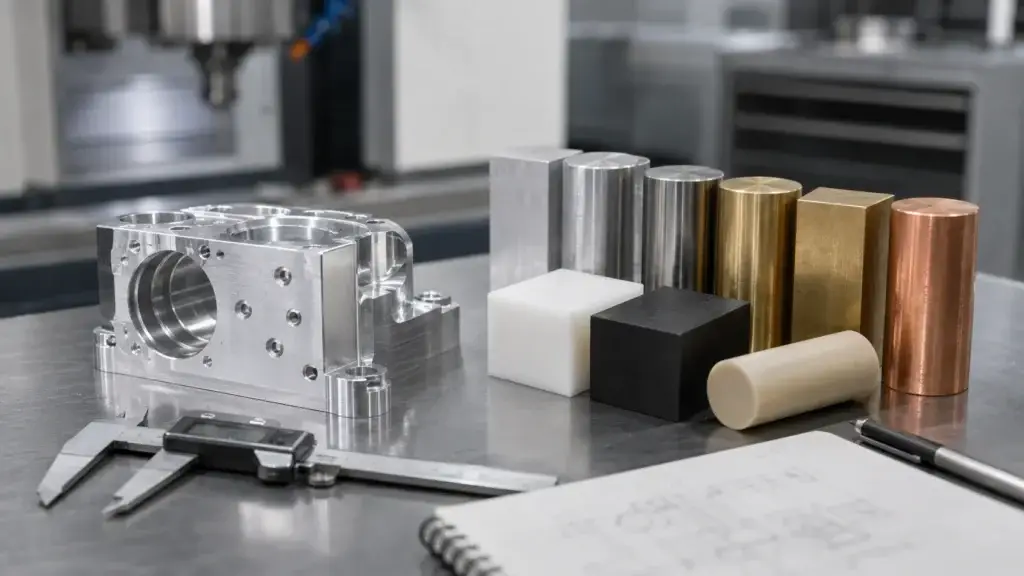
CNC milling machining can process a wide range of materials, but selecting the right option requires more than simply choosing a material with sufficient strength.
Engineers typically consider several factors before starting a CNC machining project:
Mechanical Requirements
The material must meet the functional requirements of the final component, including:
- Strength
- Hardness
- Wear resistance
- Impact resistance
- Dimensional stability
For example, a lightweight robotic component may benefit from aluminum, while a medical component exposed to repeated sterilization may require stainless steel or titanium.
Machinability
Different materials behave differently during the CNC milling process.
Machinability affects:
- Cutting speed
- Tool wear
- Surface finish
- Production time
Materials with excellent machinability can be processed faster and require less tool replacement, while harder materials may require specialized tooling and optimized machining parameters.
Operating Environment
The working environment also influences material selection.
Factors such as:
- Temperature exposure
- Chemical contact
- Moisture
- Mechanical loads
can determine whether a material is suitable for a specific application.
For example, semiconductor equipment components often require materials with excellent dimensional stability, while outdoor equipment may require corrosion-resistant materials.
What Materials Can be CNC Milled?
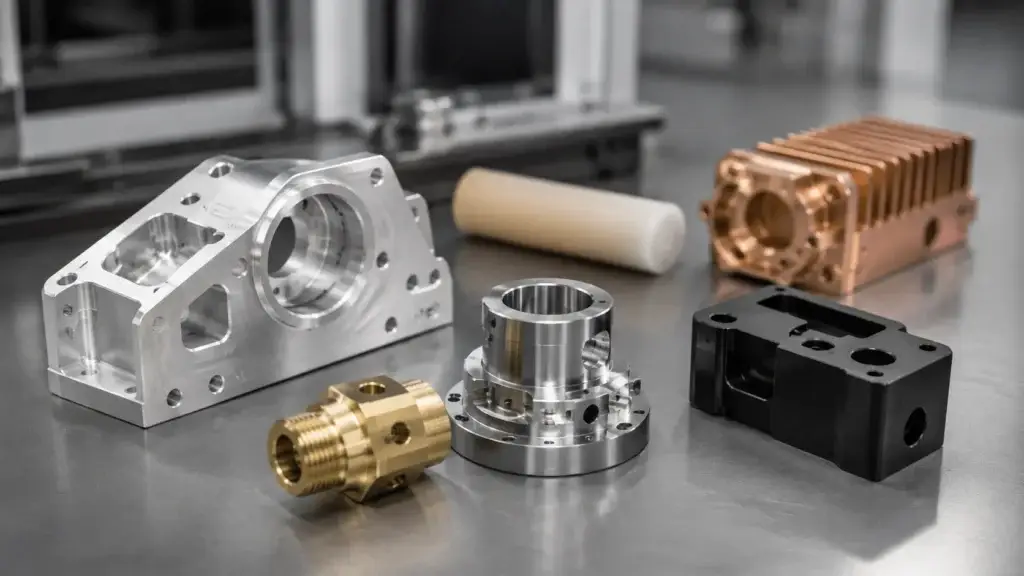
1.Common Metal Materials Used in CNC Milling
Metal materials remain the most widely used option for CNC milling because they provide excellent mechanical performance and reliable dimensional accuracy.
Common CNC milling metals include:
- Aluminum
- Stainless steel
- Brass
- Copper
- Titanium
- Carbon steel
Each material offers different advantages depending on the requirements of the project.
(1)Aluminum CNC Milling
Aluminum is one of the most commonly used materials in CNC milling machining because it provides an excellent balance between strength, weight, machinability, and cost.
Popular aluminum grades include:
- Aluminum 6061-T6
- Aluminum 7075-T6
·Advantages of Aluminum CNC Milling
Aluminum offers several important benefits:
Excellent Machinability
Compared with many other metals, aluminum can be machined at higher speeds with lower tool wear. This makes it suitable for projects requiring efficient production and consistent quality.
Lightweight Properties
The high strength-to-weight ratio of aluminum makes it ideal for applications where reducing weight is important.
Corrosion Resistance
Aluminum naturally forms a protective oxide layer, providing good resistance against corrosion.
·Common Applications
Aluminum CNC milling is widely used for:
- Robotics components
- Medical equipment parts
- Optical instrument structures
- Aerospace components
- Precision housings
For manufacturers producing complex CNC milling parts, aluminum is often the first material considered because it provides reliable machining performance.
(2)Stainless Steel CNC Machining
Stainless steel is widely used when strength, durability, and corrosion resistance are more important than lightweight characteristics.
Common grades include:
- Stainless steel 304
- Stainless steel 316
·Advantages of Stainless Steel CNC Machining
High Strength and Durability
Stainless steel provides excellent mechanical strength, making it suitable for demanding industrial applications.
Corrosion Resistance
Grades such as 316 stainless steel offer strong resistance against corrosion, making them suitable for environments involving moisture, chemicals, or repeated cleaning.
Stable Performance
Stainless steel maintains reliable performance under demanding operating conditions.
·Machining Considerations
Compared with aluminum, stainless steel is more challenging to machine because of:
- Higher hardness
- Greater cutting resistance
- Increased tool wear
Therefore, stainless steel CNC machining requires proper tooling selection, optimized cutting parameters, and experienced manufacturing processes.
·Common Applications
Stainless steel CNC machining is commonly used for:
- Medical device components
- Semiconductor equipment parts
- Industrial machinery components
- Precision fixtures
- Food processing equipment
(3)Brass CNC Machining
Brass is a popular CNC machining material because of its excellent machinability and unique physical properties.
·Advantages of Brass
Brass provides:
- Excellent cutting performance
- Good dimensional stability
- Electrical conductivity
- Corrosion resistance
Compared with harder metals, brass can often be machined efficiently with good surface finishes.
·Common Applications
Brass CNC machining is often used for:
- Electrical components
- Connectors
- Precision fittings
- Mechanical parts requiring good wear resistance
(5)Copper CNC Machining
Copper is selected mainly for applications requiring excellent electrical and thermal conductivity.
·Advantages of Copper
Copper provides:
- Outstanding electrical conductivity
- Excellent thermal performance
- Good corrosion resistance
However, copper can be more challenging to machine than brass because of its softness and tendency to produce material deformation if machining parameters are not properly controlled.
·Common Applications
Copper CNC machining is used for:
- Electrical components
- Heat transfer parts
- Conductive connectors
- Precision electronic components
(6)Titanium CNC Machining
Titanium is selected for CNC milling projects that require exceptional strength, lightweight performance, corrosion resistance, and high temperature stability.
Compared with aluminum and stainless steel, titanium provides superior mechanical properties, but it is also more difficult and expensive to machine.
·Advantages of Titanium CNC Machining
High Strength-to-Weight Ratio
Titanium provides excellent strength while maintaining relatively low weight, making it valuable for applications where performance and weight reduction are critical.
Excellent Corrosion Resistance
Titanium performs well in harsh environments and provides long-term durability against corrosion.
Biocompatibility
Titanium is widely recognized for its compatibility with the human body, making it suitable for certain medical applications.
·Machining Considerations
Titanium CNC machining requires careful process control because titanium has:
- Low thermal conductivity
- High cutting resistance
- Strong chemical reactivity at high temperatures
These characteristics can increase tool wear and require optimized cutting parameters.
Experienced CNC manufacturers use appropriate tooling, machining strategies, and inspection methods to maintain accuracy when processing titanium components.
·Common Applications
Titanium CNC machining is commonly used for:
- Medical implants and components
- Aerospace parts
- High-performance industrial components
- Specialized mechanical structures
2.Engineering Plastics Used for CNC Milling
Although metals are widely used in CNC milling, engineering plastics are also important materials for precision components.
Compared with metals, plastics offer advantages such as:
- Lightweight properties
- Chemical resistance
- Electrical insulation
- Low friction characteristics
The right plastic material depends on the application requirements and operating environment.
(2)PEEK CNC Machining
PEEK (Polyether Ether Ketone) is a high-performance engineering plastic used in demanding applications where traditional plastics may not provide sufficient performance.
·Advantages of PEEK
PEEK offers:
- Excellent chemical resistance
- High temperature stability
- Good dimensional stability
- Strong mechanical performance
In certain applications, PEEK can replace metal components while reducing weight and improving chemical resistance.
·Common Applications
PEEK CNC machining is commonly used for:
- Medical components
- Semiconductor equipment parts
- Aerospace components
- High-performance industrial applications
Because of its material cost and processing requirements, PEEK is usually selected when its unique properties are necessary.
(2)POM (Delrin) CNC Machining
POM, also known as Delrin or Acetal, is one of the most widely used engineering plastics for CNC machining.
·Advantages of POM
POM provides:
- Excellent dimensional stability
- Low friction
- Good wear resistance
- Easy machining characteristics
It is especially suitable for components requiring precise dimensions and smooth movement.
·Common Applications
POM CNC machining is often used for:
- Gears
- Bushings
- Mechanical guides
- Precision components
(3)ABS CNC Machining
ABS is a cost-effective engineering plastic commonly used for functional prototypes and low-volume components.
·Advantages of ABS
ABS provides:
- Good impact resistance
- Easy machining
- Affordable material cost
It is often selected during product development when engineers need functional prototypes before moving into mass production.
·Common Applications
ABS CNC machining is commonly used for:
- Prototype housings
- Consumer product components
- Functional testing parts
(4)Polycarbonate CNC Machining
Polycarbonate (PC) is known for its excellent impact resistance and transparency.
·Advantages of Polycarbonate
Polycarbonate offers:
- High impact strength
- Good dimensional stability
- Optical transparency
·Common Applications
It is often used for:
- Protective covers
- Transparent components
- Equipment housings
How Material Selection Affects CNC Milling Performance and Cost?
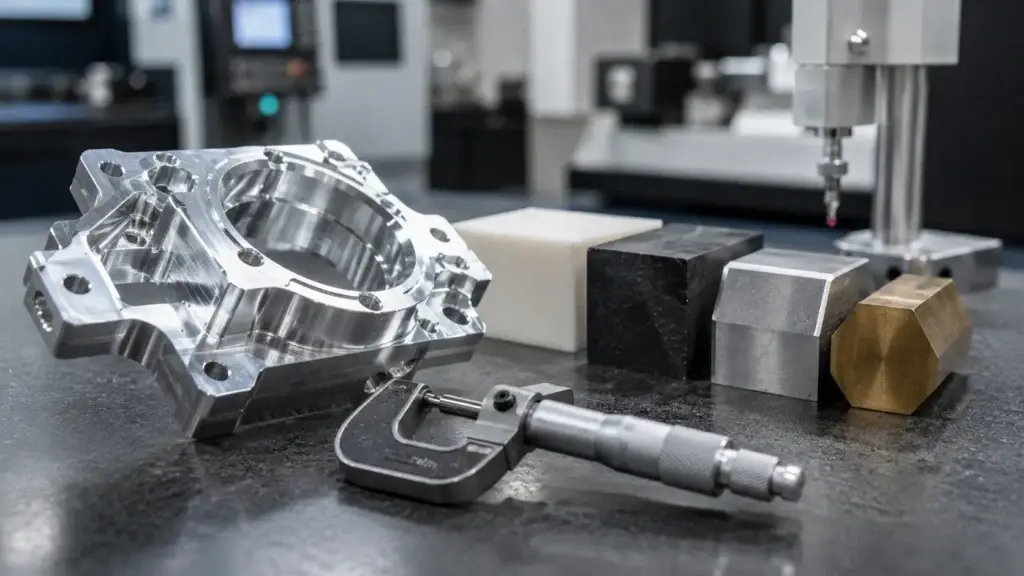
Material selection directly influences not only the performance of the final part but also the efficiency of the CNC milling process.
A suitable material choice can improve machining stability, reduce production risks, and control manufacturing costs.
1.Machining Time
Materials with better machinability generally require shorter machining cycles.
For example:
- Aluminum can often be machined quickly with high cutting speeds.
- Titanium requires slower cutting parameters and more careful process control.
Therefore, material selection affects production efficiency.
2.Tool Wear
Material hardness and cutting characteristics influence tool life.
Harder materials may require:
- Specialized cutting tools
- More frequent tool replacement
- Additional process monitoring
This can increase overall machining costs.
3.Surface Finish Requirements
Different materials respond differently to cutting operations.
Material properties influence:
- Surface roughness
- Edge quality
- Dimensional consistency
For precision CNC milling parts, selecting the right material helps achieve the required surface performance.
Recommended CNC Milling Materials by Application
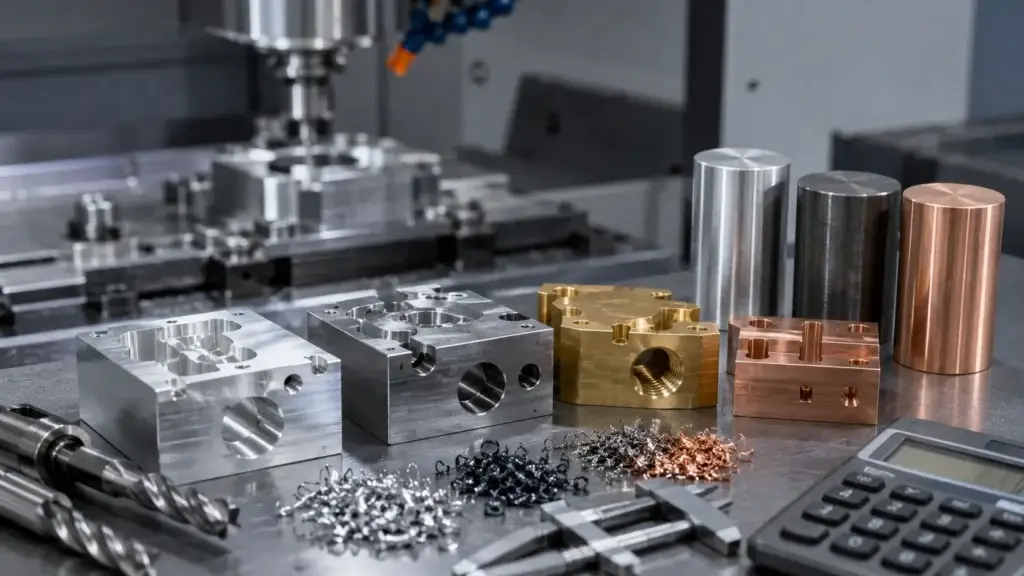
The best CNC milling material depends on the function of the final component rather than simply choosing the strongest available option.
| Application | Recommended Materials | Reasons |
| Medical Components | Stainless Steel, Titanium, PEEK | Biocompatibility, corrosion resistance, reliability |
| Robotics Parts | Aluminum, Stainless Steel | Lightweight structure and mechanical strength |
| Semiconductor Equipment | Aluminum, Stainless Steel, PEEK | Dimensional stability and precision requirements |
| Optical Instruments | Aluminum, Brass | Good machinability and precision performance |
| Electrical Components | Copper, Brass, Aluminum | Conductivity and machining efficiency |
| Prototype Development | Aluminum, ABS, POM | Fast machining and cost efficiency |
Why Material Selection Matters for Precision CNC Milling?
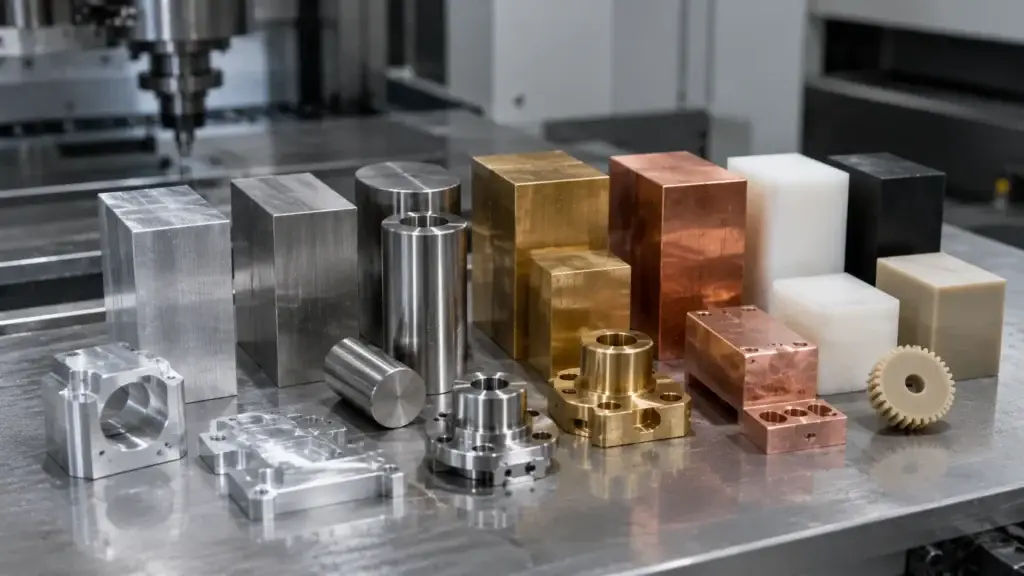
For precision CNC milling projects, material selection is not an isolated decision. It affects the entire manufacturing process, from machining strategy to final product performance.
An experienced CNC machining supplier can help evaluate:
- Part requirements
- Material characteristics
- Manufacturing feasibility
- Production efficiency
before machining begins.
At SINO-V-RISE, material selection is considered together with part design, machining requirements, tolerance expectations, and application conditions. With experience in precision CNC machining for industries including medical, robotics, semiconductor equipment, optical instruments, and automotive components, the company supports customers in developing reliable CNC milling parts.
Frequently Asked Questions About CNC Milling Materials
What materials are commonly used in CNC milling?
Common CNC milling materials include aluminum, stainless steel, brass, copper, titanium, and engineering plastics such as POM, ABS, and PEEK.
The best material depends on required strength, weight, durability, environmental conditions, and machining requirements.
What is the best material for CNC milling?
There is no single “best” CNC milling material. The ideal choice depends on the application.
For lightweight precision parts, aluminum is often preferred. For high-strength and corrosion-resistant components, stainless steel or titanium may be more suitable. For chemical resistance or electrical insulation, engineering plastics may provide better performance.
Can CNC milling process stainless steel?
Yes. CNC milling can process stainless steel, but it requires appropriate tooling, cutting parameters, and machining experience because stainless steel creates higher cutting forces and tool wear compared with softer materials such as aluminum.
Can plastics be CNC milled?
Yes. Many engineering plastics can be CNC milled, including PEEK, POM, ABS, nylon, and polycarbonate.
Plastic materials are commonly used when lightweight properties, chemical resistance, electrical insulation, or low friction are required.
How do I choose the right CNC milling material?
The right material should be selected based on:
- Functional requirements
- Mechanical properties
- Operating environment
- Machining difficulty
- Production cost
Working with an experienced CNC milling manufacturer can help ensure the selected material meets both performance and manufacturing requirements.
Conclusion
CNC milling supports a wide range of materials, from commonly used metals such as aluminum and stainless steel to advanced engineering plastics like PEEK.
However, choosing the right material is not simply about selecting the strongest option. The best material balances performance requirements, machining characteristics, production efficiency, and final application needs.
For engineers and product developers, understanding CNC milling materials helps reduce design risks, improve manufacturing results, and create more reliable precision components.
By combining material knowledge with advanced machining capabilities, quality control, and engineering support, an experienced CNC machining partner can help transform designs into high-quality finished parts.