
Summary
CNC milling operations define how material is removed from a workpiece and determine the shapes, features, and surface finishes that can be achieved during machining. By using rotating multi-point cutting tools controlled by CNC systems, manufacturers can produce precise components with complex geometries, tight tolerances, and consistent quality.
Different CNC milling operations are selected based on the required part features, material characteristics, dimensional requirements, and production goals. From creating flat surfaces and pockets to machining complex contours and precision threads, each operation serves a specific manufacturing purpose.
This guide explains the most common types of CNC milling operations, how they work, and when each machining method is suitable for precision CNC machining projects.
What Are CNC Milling Operations?
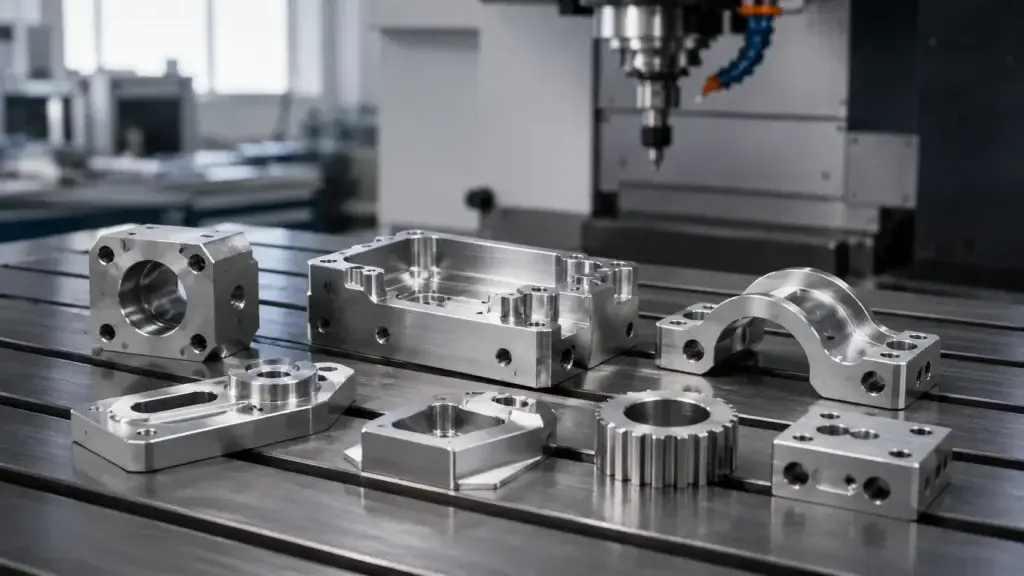
CNC milling operations are specific machining methods used to remove material from a workpiece using rotating cutting tools. During the process, the CNC machine controls the movement of the cutting tool along programmed paths to create accurate features and geometries.
Unlike a single cutting method, CNC milling includes different operations designed for different machining requirements. A precision CNC machining project may involve several operations in sequence, such as surface preparation, pocket machining, drilling, and contour cutting.
The selected milling operation depends on several factors:
- Part geometry
- Material type
- Required tolerance
- Surface finish requirements
- Production efficiency
Understanding different CNC milling operations helps engineers select a suitable machining strategy and achieve better results for CNC milling parts.
Face Milling
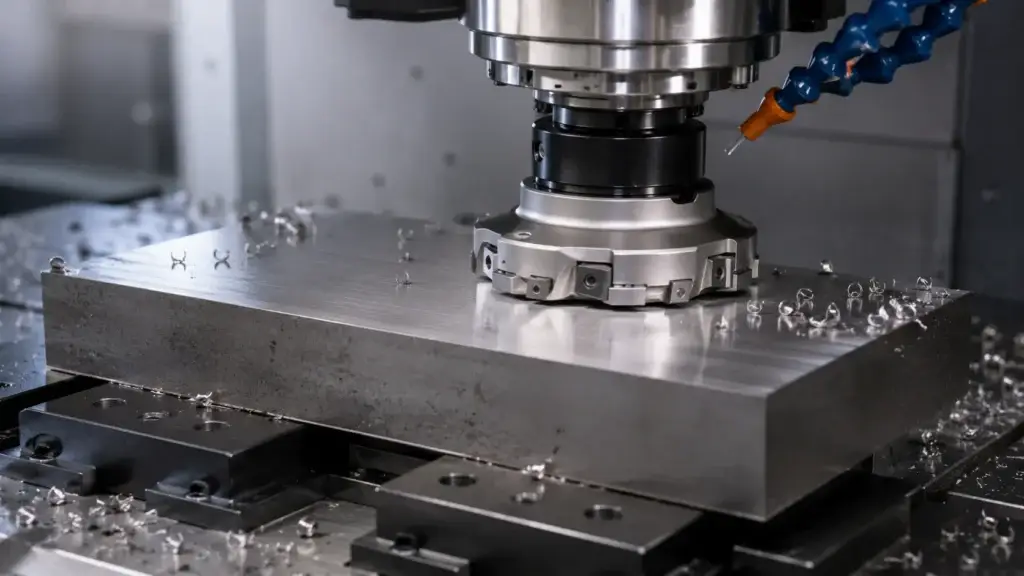
Face milling is one of the most common CNC milling operations used for creating flat and smooth surfaces on a workpiece.
During face milling, the cutting tool axis is perpendicular to the machined surface. The face of the cutter removes material from the top of the workpiece, producing a flat reference surface.
How Face Milling Works?
A face mill typically uses multiple cutting edges to remove material efficiently. The CNC machine controls the tool movement across the workpiece while maintaining accurate cutting depth and feed rate.
This operation is commonly performed at the beginning of a machining process to prepare a reference surface for additional operations.
Typical Applications
Face milling is widely used for:
- Machine plates
- Mechanical fixtures
- Equipment housings
- Structural components
It is especially important when a part requires accurate flatness and consistent surface quality.
End Milling
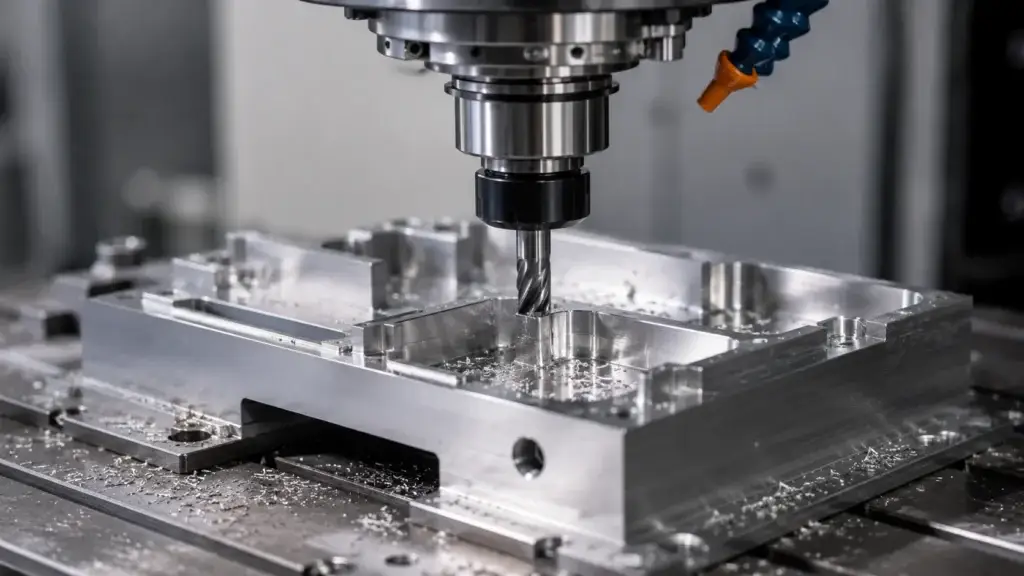
End milling is one of the most versatile CNC milling operations because the cutting tool can remove material using both its end and side edges.
Unlike face milling, which mainly creates flat surfaces, end milling can produce complex features such as slots, pockets, and profiles.
How End Milling Works?
An end mill rotates at high speed while moving along programmed paths. Depending on the tool design and machining strategy, it can perform:
- Vertical cutting
- Side cutting
- Plunging operations
- Profile machining
Because of its flexibility, end milling is commonly used in precision CNC machining projects that require multiple types of features.
Typical Applications
End milling is suitable for:
- Complex mechanical parts
- Brackets
- Housings
- Precision CNC milling components
Shoulder Milling
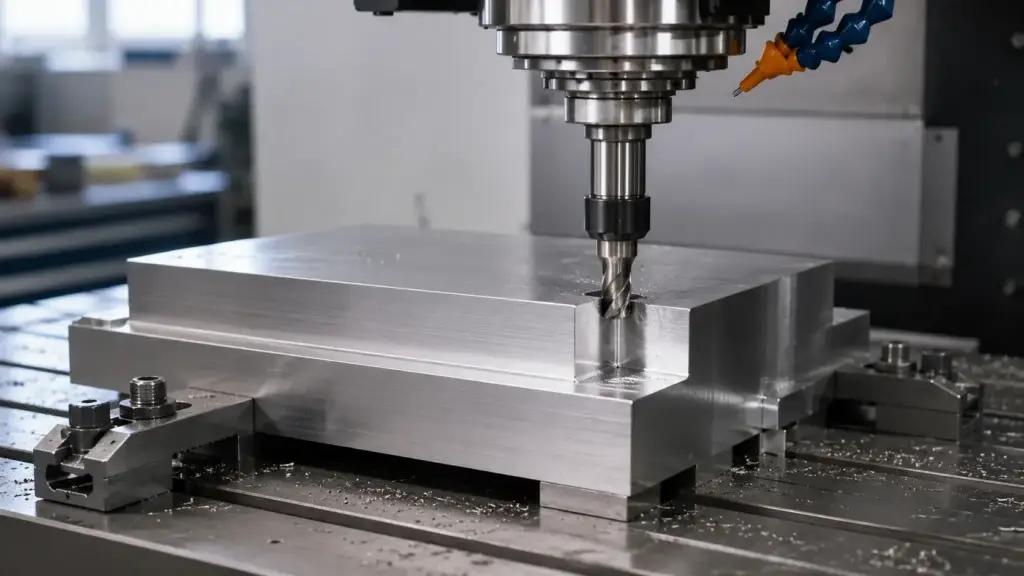
Shoulder milling is a specialized form of milling used to create vertical walls and precise 90-degree steps on a workpiece.
This operation is commonly performed when a component requires a defined shoulder feature with accurate dimensional control.
Applications of Shoulder Milling
Common applications include:
- Assembly features
- Structural components
- Precision mechanical parts
Shoulder milling is often used together with face milling or end milling to achieve complex part geometries efficiently.
Slot Milling and Grooving Operations
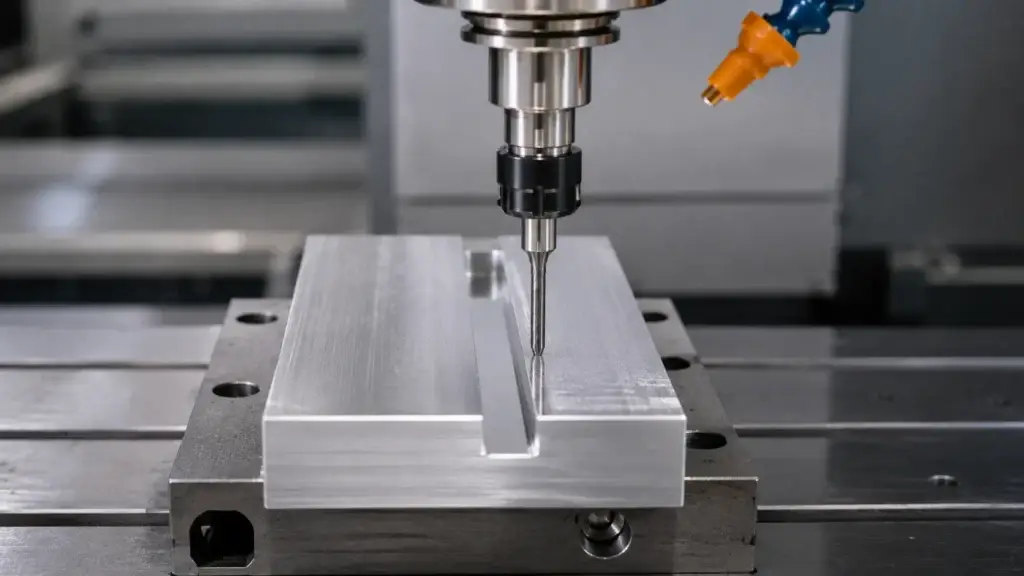
Slot milling is used to create narrow channels, grooves, or recessed features in a workpiece.
These features are commonly required for mechanical assembly, positioning, and functional movement.
Slot Milling
Slot milling uses a slot cutter or end mill to remove material along a specific path.
Typical applications include:
- Keyways
- Internal tracks
- Alignment grooves
- Assembly channels
The accuracy of slot milling depends on tool selection, machine stability, and proper cutting parameters.
Saw Milling
Saw milling uses a thin circular cutting tool to create narrow cuts or separate sections of material.
It is commonly used for:
- Thin slots
- Cutting operations
- Part separation
This method is useful when a narrow and accurate cut is required.
Thread Milling
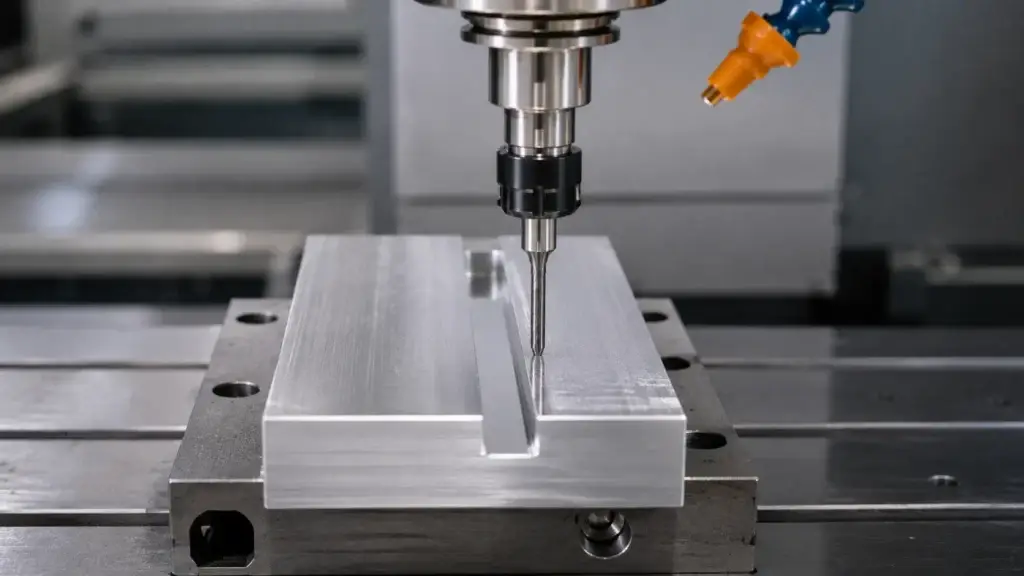
Thread milling is a CNC machining operation used to create precise internal or external threads.
Instead of using traditional tapping methods, thread milling uses a rotating cutting tool that follows a helical path to form the thread profile.
Advantages of Thread Milling
Thread milling provides several benefits:
- High thread accuracy
- Better control of thread size
- Suitable for different materials
- Reduced risk of tool breakage
It is commonly used for precision components where thread quality and dimensional accuracy are important.
Typical applications include:
- Medical components
- Industrial equipment parts
- Precision mechanical assemblies
Profile and Contour Milling
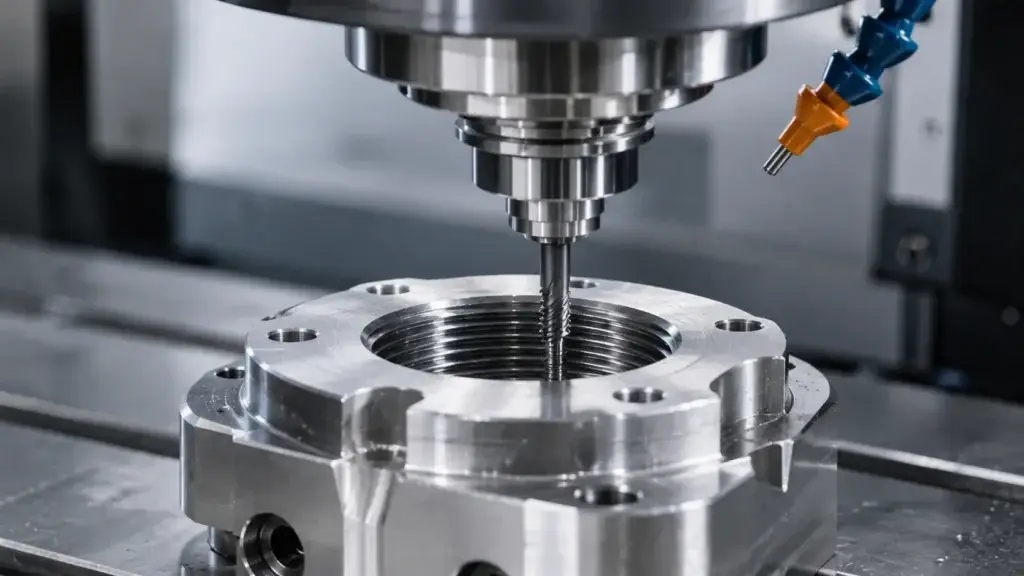
Profile and contour milling are used to create complex shapes, curves, and three-dimensional surfaces.
These operations are especially important for components that cannot be produced with simple linear cuts.
Profile Milling
Profile milling follows the external boundary of a component to create specific shapes and contours.
It is commonly used for:
- Complex mechanical parts
- Mold components
- Precision housings
Multi-axis CNC machines often use ball nose end mills for producing smooth curved surfaces.
Contour Milling
Contour milling is used for machining irregular surfaces, angled features, and complex geometries.
This operation is frequently applied in industries requiring high precision, such as:
- Medical equipment
- Optical instruments
- Semiconductor equipment
- Robotics components
Form Milling
Form milling uses specially shaped cutting tools to create unique profiles that are difficult to produce with standard cutters.
Applications include:
- Gear profiles
- Concave surfaces
- Convex surfaces
- Custom geometries
How to Choose the Right CNC Milling Operation?
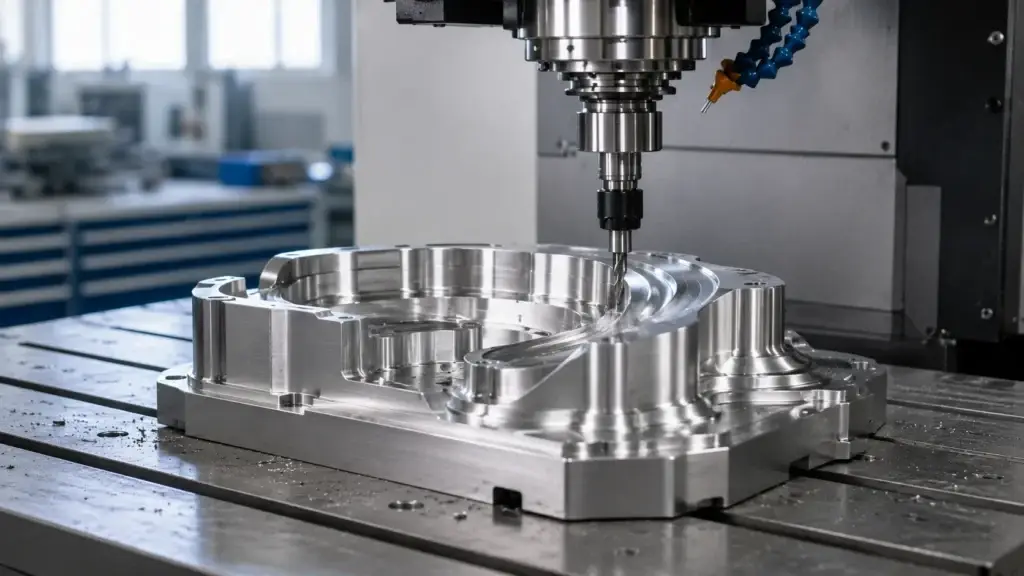
Selecting the correct CNC milling operation depends on the design requirements of the part.
Engineers usually consider:
| Part Requirement | Suitable Operation |
| Flat reference surface | Face milling |
| Complex external shape | Profile milling |
| Internal cavity | Pocket milling |
| Narrow groove | Slot milling |
| Precision thread | Thread milling |
| Curved surface | Contour milling |
A well-planned machining strategy improves efficiency, reduces unnecessary operations, and helps achieve consistent part quality.
How CNC Milling Operations Affect Part Quality and Cost?
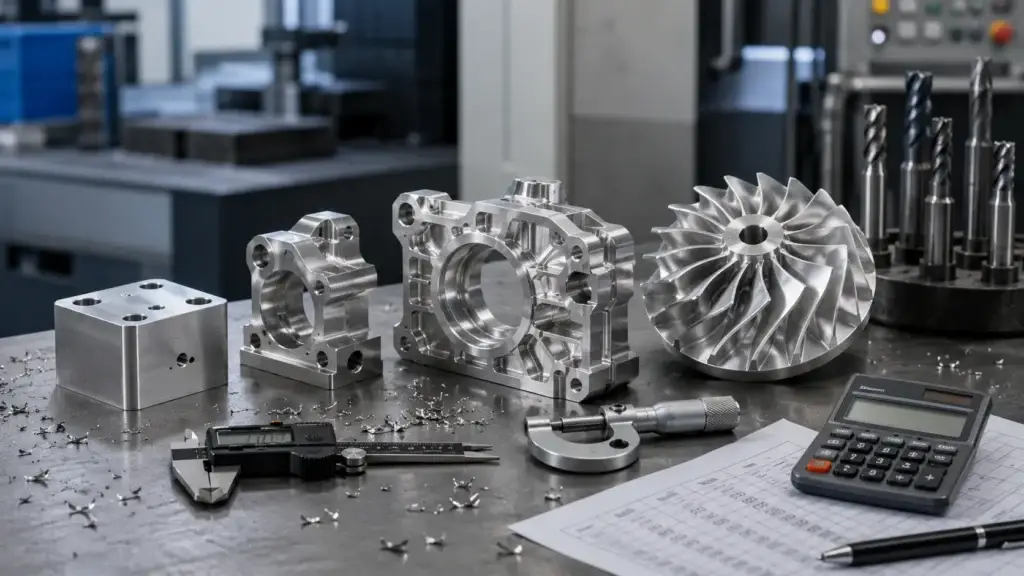
Different CNC milling operations directly influence machining performance, production time, and final cost.
Several factors should be considered:
Tool Selection
The correct cutting tool improves surface finish, machining speed, and tool life.
Material Characteristics
Harder materials may require specialized tooling and slower cutting parameters compared with materials such as aluminum.
Machining Complexity
Complex operations, especially multi-axis contour machining, may require more programming time and advanced equipment.
Production Requirements
For prototypes and small batch CNC machining, selecting efficient operations helps control manufacturing costs while maintaining precision.
Frequently Asked Questions About CNC Milling Operations
What are the main types of CNC milling operations?
The main CNC milling operations include face milling, end milling, shoulder milling, slot milling, thread milling, profile milling, and contour milling.
What is the difference between face milling and end milling?
Face milling is mainly used to create flat surfaces, while end milling uses both the end and sides of the cutter to produce slots, pockets, profiles, and complex features.
Can one CNC milling part require multiple operations?
Yes. Many precision CNC milling parts require several operations to achieve the final geometry, including surface machining, pocketing, drilling, and contour cutting.
Conclusion
CNC milling operations determine how a raw material block is transformed into a finished precision component. Each operation has a specific purpose, from creating flat surfaces and internal pockets to machining complex contours and accurate threads.
For engineers and manufacturers, understanding different milling operations helps improve part design, select suitable machining strategies, and achieve better balance between quality, efficiency, and cost.
By combining advanced CNC equipment, experienced programming, and proper process planning, professional CNC machining suppliers can deliver reliable components for industries such as medical, robotics, semiconductor, optical, and industrial applications.