
Quick Answer
Choose a precision CNC machining manufacturer in China by checking equipment capability, quality control, engineering communication, lead time, surface finishing, inspection reports, case experience, and NDA protection.
Key Takeaways
- A good CNC machining manufacturer in China should be evaluated by capability, not only price.
- Equipment matters, but inspection systems, engineering review, and process control matter more for precision parts.
- Ask about CNC milling, turning, turning-milling, 5-axis machining, surface finishing, material range, and inspection reports.
- Check whether the supplier understands your industry: medical, robotics, semiconductor, optical, UAV, automotive, or industrial equipment.
- NDA protection is important when sharing drawings, prototypes, new product designs, or assembly files.
- A reliable supplier should communicate risks before machining, not after parts fail inspection.
Abstract
Choosing a CNC machining manufacturer in China can reduce cost and improve sourcing flexibility, but only if the supplier is selected carefully. Many buyers compare quotes first, but the real decision should start with equipment capability, quality system, material experience, engineering communication, lead time control, inspection methods, case experience, and confidentiality management.
This guide explains how to evaluate a precision CNC machining manufacturer in China from a buyer’s perspective. It includes practical supplier assessment tables, red flags, RFQ questions, and a step-by-step checklist for custom machined parts. It also explains how SinoRise supports global buyers with CNC machining, surface finishing, inspection, small-to-medium batch production, and engineering review.
Why Buyers Search for a CNC Machining Manufacturer in China?
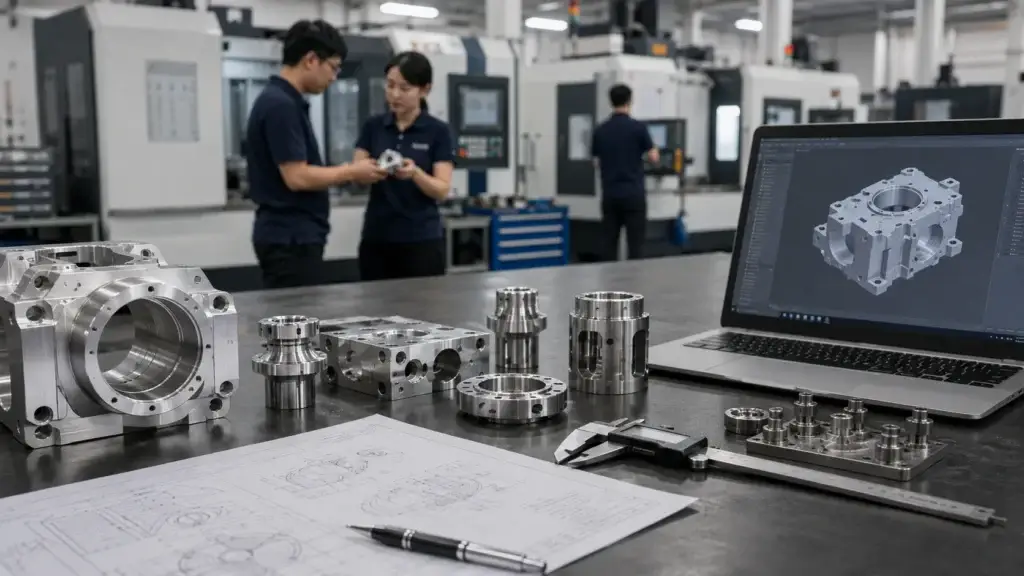
Many global buyers search for a CNC machining manufacturer in China because China has a large manufacturing base, mature machining supply chains, material availability, surface finishing resources, and flexible production capacity.
According to the World Bank, China’s manufacturing value-added data is tracked as a major national economic indicator, reflecting the scale of its manufacturing sector. For buyers, this means China offers broad sourcing options, but it also means supplier quality can vary widely. [1]
China’s Manufacturing Base and Sourcing Flexibility
China can be attractive for custom CNC machining because buyers may find:
- Flexible prototype and small-batch production
- Multiple machining processes in one supply chain
- Metals and plastics sourcing support
- Surface treatment coordination
- Competitive manufacturing cost
- Faster supplier comparison
- Experience with global export projects
However, a large supplier base also creates a problem: not every factory is suitable for precision work.
Cost Should Not Be the Only Reason
A low quote may hide real risks: weak inspection, poor communication, unstable tolerance control, unclear material sourcing, delayed delivery, or no formal process for design changes.
For precision parts, the right question is not “Who is cheapest?” It is “Which supplier can understand the drawing, control the process, document quality, and deliver repeatable parts?”
Check Equipment Before Choosing a China CNC Machining Factory
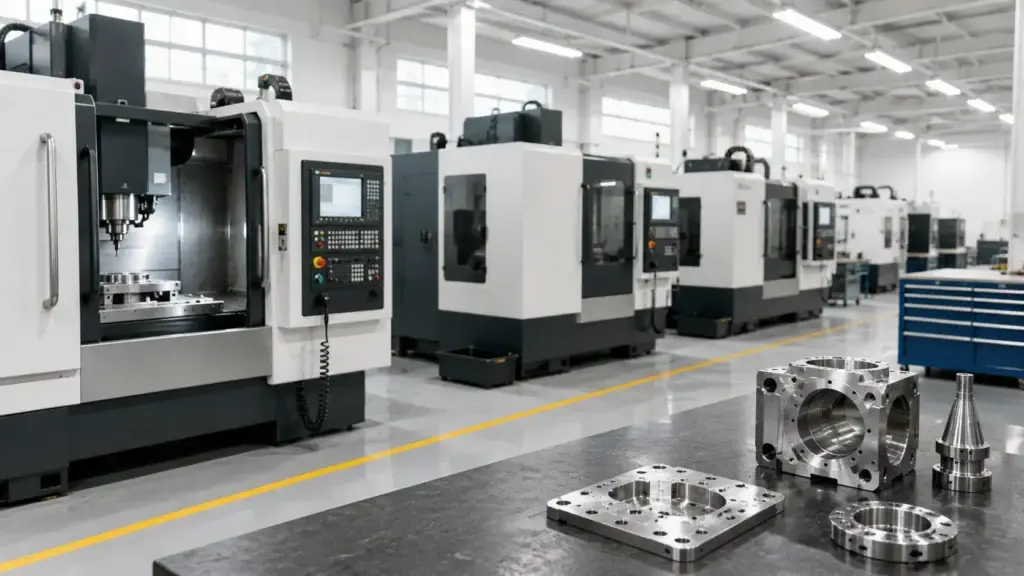
A China CNC machining factory should have equipment that matches your part geometry. A supplier that is strong in simple milling may not be suitable for complex 5-axis parts, thin-wall housings, precision shafts, or mixed turning-milling components.
Core Machining Capabilities to Verify
Ask whether the supplier can support:
- CNC milling
- CNC turning
- CNC turning-milling
- 5-axis CNC machining
- Wire cutting
- Surface grinding
- Thread machining
- Small hole machining
- Thin-wall machining
- Surface finishing coordination
- Prototype and batch production
For example, a robotic joint housing may need CNC milling and CMM inspection. A precision shaft may need CNC turning and grinding. A complex aerospace-style bracket may need 5-axis machining.
Equipment Checklist for CNC Buyers
| Capability | Why It Matters | What to Ask |
| CNC milling | Plates, brackets, housings, pockets | How many milling machines do you have? |
| CNC turning | Shafts, bushings, sleeves, round parts | What diameter and length range can you machine? |
| Turning-milling | Mixed round and milled features | Can you reduce secondary setups? |
| 5-axis machining | Complex angles and multi-face parts | What tolerance can you hold after multiple operations? |
| Inspection equipment | Confirms critical dimensions | Do you have CMM, 2.5D, height gauges, and gauges? |
| Surface finishing | Protects and completes parts | Which finishes can you coordinate? |
Evaluate Quality Control in a Precision CNC Machining Manufacturer
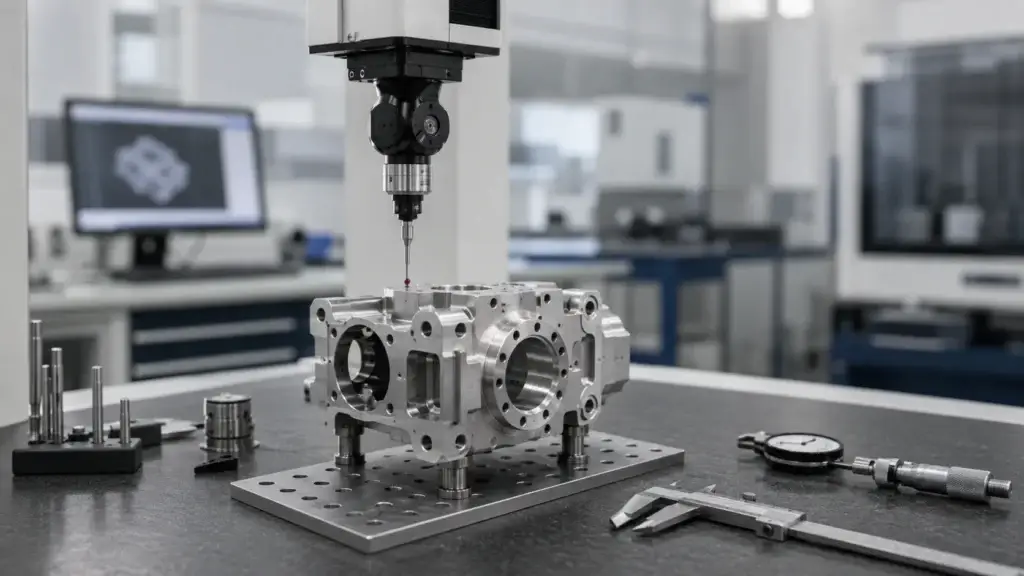
A precision CNC machining manufacturer should have a quality system that goes beyond final visual inspection. ISO explains that ISO 9001 is a globally recognized quality management standard that helps organizations improve performance, meet customer expectations, and demonstrate commitment to quality. [2]
Certifications, Inspection Tools, and Reports
Quality evaluation should include:
- ISO 9001 certification
- Material traceability
- Incoming material inspection
- In-process inspection
- First article inspection when needed
- Final inspection report
- CMM inspection for critical geometry
- Surface roughness measurement
- Coating thickness inspection
- Thread and pin gauge checks
- Nonconformance handling
A supplier does not need to use every tool for every part. But they should know which features require which inspection method.
Quality Evaluation Table
| Quality Item | Good Sign | Red Flag |
| Certification | ISO 9001 or industry-specific system | No documented process |
| Inspection report | Clear measured values and tolerances | Only “passed” without data |
| CMM capability | Available for GD&T and complex parts | No 3D inspection option |
| Material control | Material certificate available | Unclear material source |
| Process control | In-process checks during machining | Only final inspection |
| Surface finish control | Coating thickness and masking reviewed | Finish treated as cosmetic only |
Review Communication with a Custom CNC Machining Factory
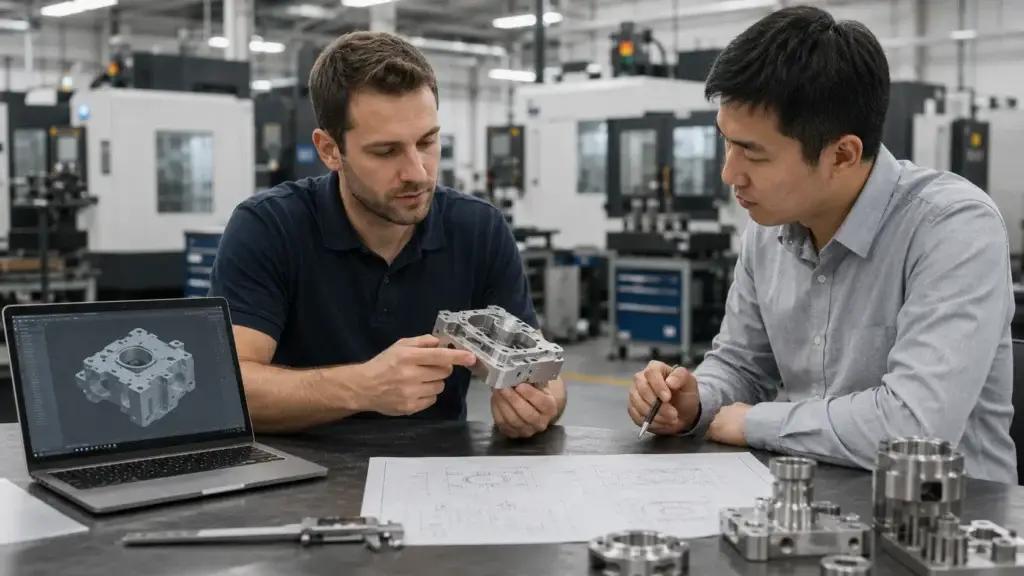
A good custom CNC machining factory should communicate like an engineering partner, not only a quotation desk. The best suppliers ask questions before quoting because they are trying to reduce risk.
Engineering Feedback Before Quoting
Useful supplier questions include:
- Which surfaces are function-critical?
- Is this tolerance necessary for all surfaces?
- Will coating thickness affect assembly?
- Are threads masked after anodizing?
- Is this sharp internal corner required?
- Can this thin wall deform during machining?
- Are there mating parts for trial assembly?
- Do you need FAI or CMM reports?
If a supplier never asks technical questions, it may mean they are quoting without fully understanding the part.
RFQ Questions That Reveal Supplier Capability
| Buyer Question | What It Reveals |
| Can you review the drawing before quoting? | Engineering support |
| Which process would you choose and why? | Manufacturing judgment |
| Which dimensions are high-risk? | Tolerance understanding |
| Can you suggest cost-saving changes? | DFM capability |
| Can you provide inspection reports? | Quality documentation |
| Can you protect confidential files? | NDA and security awareness |
Compare Lead Time and Delivery for a CNC Machining Parts Factory
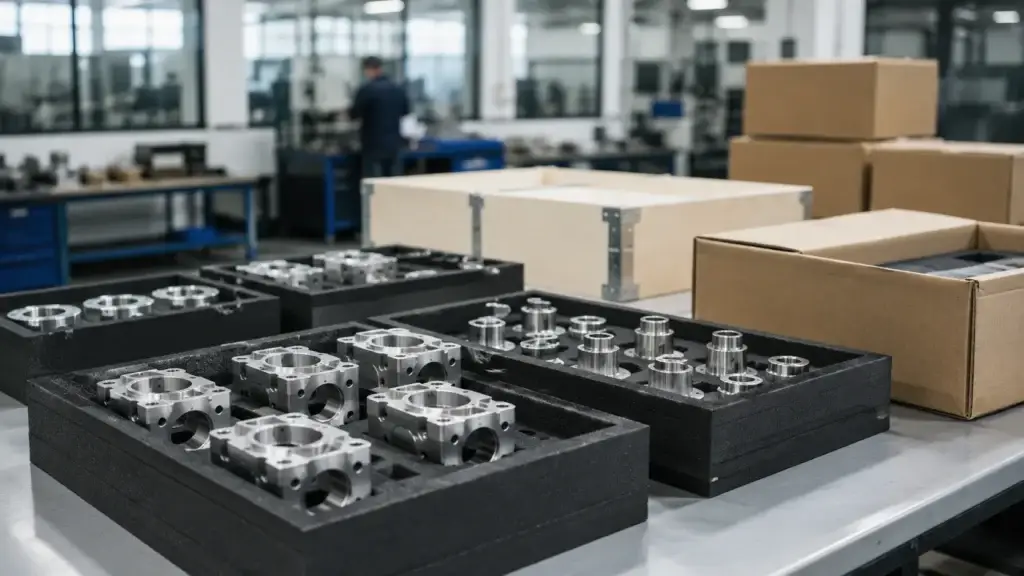
A CNC machining parts factory should be judged by delivery reliability, not only promised lead time. Fast production is valuable only when quality remains stable.
Prototype, Small-Batch, and Repeat Production
Different projects need different delivery logic:
| Project Type | Buyer Priority | Supplier Requirement |
| Prototype | Speed and design feedback | Fast review, flexible machining |
| First article | Risk reduction | Inspection and documentation |
| Small batch | Consistency and cost control | Stable setup and process control |
| Repeat order | Repeatability | Revision control and records |
| Urgent repair part | Speed and communication | Clear lead time and shipment plan |
Delivery Risk Checklist
Before ordering, confirm:
- Quotation lead time
- Production lead time
- Surface treatment lead time
- Inspection time
- Packaging method
- Export shipping option
- Revision control
- Delay communication process
- Whether partial shipment is possible
A supplier that explains lead time clearly is usually more reliable than one that promises everything immediately.
Check Industry Cases and Materials from a Precision Machine Shop
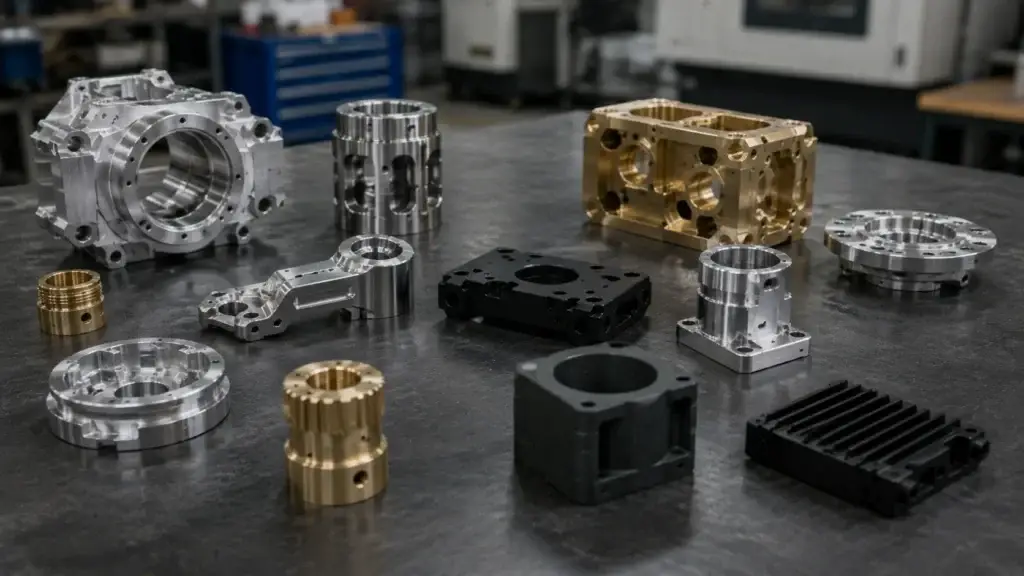
A precision machine shop should understand the standards and risks of your industry. Medical parts, semiconductor fixtures, UAV brackets, optical mounts, robotics components, and automotive parts do not fail in the same way.
Why Industry Experience Matters?
Industry experience helps suppliers understand:
- Common materials
- Typical tolerances
- Surface treatment risks
- Inspection requirements
- Packaging expectations
- Burr and edge requirements
- Cleanliness expectations
- Assembly risk points
For example, optical parts may need matte black finishing and controlled datums. Robotics parts may need stiffness and repeatability. Semiconductor fixtures may need clean surfaces and burr control.
Material and Application Matching Table
| Industry | Common Materials | Key Supplier Capability |
| Medical devices | Stainless steel, titanium, PEEK | Clean edges, corrosion resistance, inspection |
| Robotics | Aluminum, steel, POM, titanium | Repeatability, stiffness, fit |
| Semiconductor | Aluminum, stainless steel, PEEK | Clean surface, burr control, flatness |
| Optical instruments | Aluminum, brass, black plastics | Low reflection, precise bores, masking |
| UAV and drones | Aluminum 6061/7075, titanium | Lightweight design and strength |
| Auto and moto | Aluminum, steel, stainless steel | Durability and batch consistency |
Confirm NDA and Drawing Protection with a CNC Parts Manufacturer
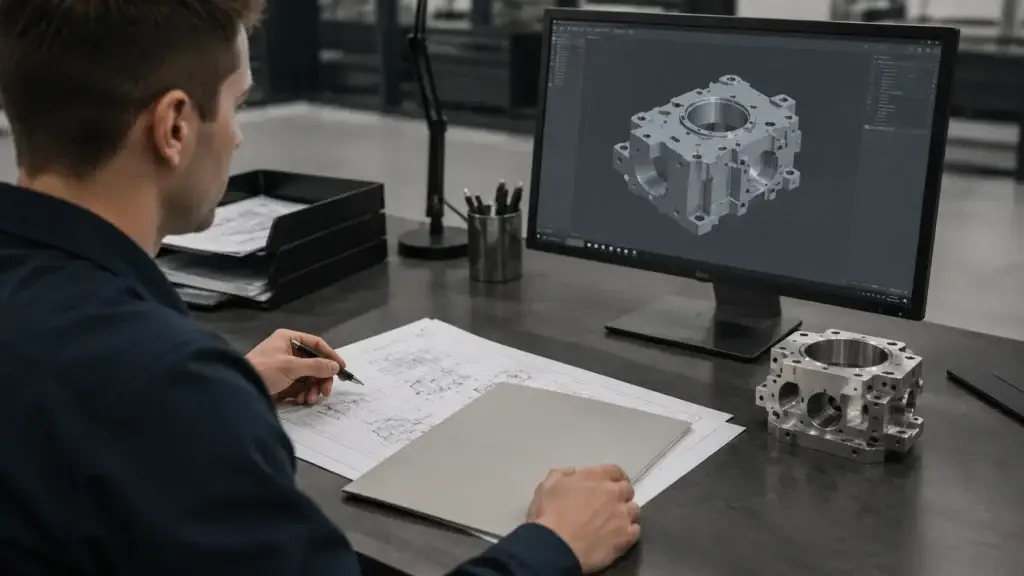
When choosing a CNC parts manufacturer, confidentiality should be part of supplier evaluation. CNC buyers often share 3D models, 2D drawings, assemblies, prototypes, new product concepts, and customer-specific files.
WIPO notes that non-disclosure agreements and confidentiality clauses are commonly used measures to help maintain trade secret information in secrecy. [3]
What Information Should Be Protected?
Protective measures should cover:
- CAD files
- 2D drawings
- Assembly drawings
- Product photos
- Prototype designs
- Material specifications
- Process requirements
- Customer names
- Project communication
- Quotation and pricing data
NDA and File Security Checklist
| Protection Item | What to Confirm |
| NDA availability | Can the supplier sign buyer NDA? |
| File access control | Who can access drawings internally? |
| Project confidentiality | Are files shared with subcontractors? |
| Data storage | How are CAD files stored? |
| Surface treatment outsourcing | Are drawings shared externally? |
| Communication records | Are revisions documented? |
| Deletion request | Can files be removed after project completion? |
How SinoRise Supports Global CNC Machining Buyers?
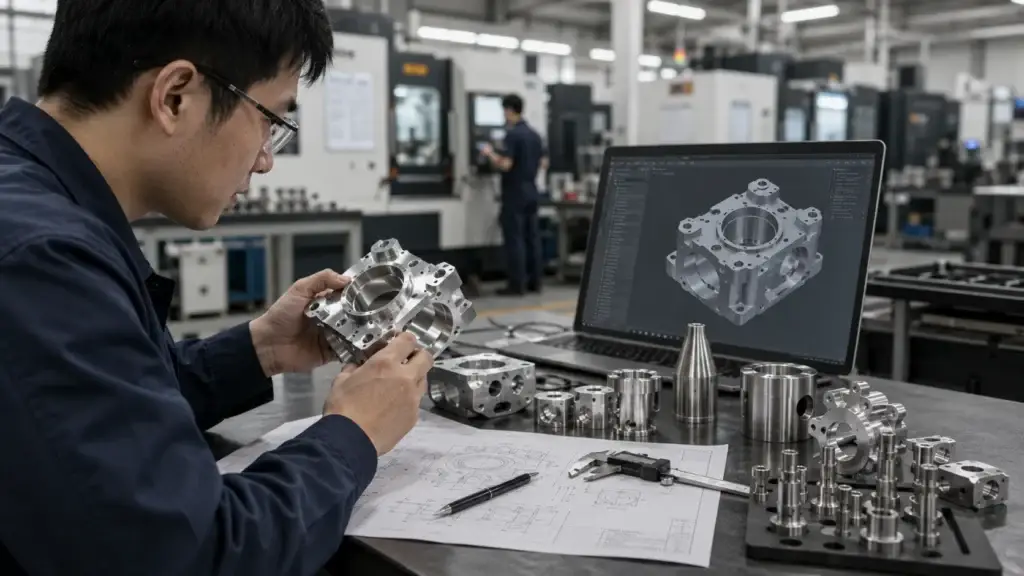
SinoRise supports global buyers looking for a precision CNC machining manufacturer in China with prototype-to-production CNC machining, engineering review, flexible small-to-medium batch production, quality inspection, surface finishing, and global delivery.
SinoRise’s official website states that the company provides CNC machining services from prototype to production, with precision up to ±0.005mm, 35+ surface finishing options, and 80+ metals and plastics available. It also highlights 17+ years of OEM/ODM experience, flexible small and medium-batch production, and end-to-end quality assurance. [4]
SinoRise can support:
- Drawing and DFM review
- CNC milling
- CNC turning
- CNC turning-milling
- 5-axis machining
- Wire cutting
- Surface treatment coordination
- Aluminum, stainless steel, titanium, copper, brass, steel, and engineering plastics
- CMM, 2.5D vision measuring, height gauge, and dimensional inspection
- Prototype, first article, small-batch, and repeat production
- Anti-damage packaging and global delivery support
For buyers, the practical value is not only “finding a factory.” It is finding a supplier that can review risk, protect files, machine the part, inspect the result, and support repeat orders.
FAQ About Choosing a CNC Machining Manufacturer in China
How Do I Choose a CNC Machining Manufacturer in China?
Choose a CNC machining manufacturer by checking equipment, materials, tolerances, inspection capability, certifications, communication quality, delivery record, industry cases, and NDA protection.
Is China Good for CNC Machining?
China has a large manufacturing supply chain and many CNC machining suppliers. The key is to select a supplier based on capability, quality control, communication, and experience rather than price alone.
What Should I Ask Before Sending Drawings?
Ask whether the supplier can sign an NDA, review the drawing, confirm material options, suggest the right process, provide inspection reports, and support surface finishing and batch delivery.
What Is a Red Flag When Choosing a CNC Supplier?
Red flags include vague quotations, no drawing review, no inspection report, unclear material source, poor communication, unrealistic lead time, and unwillingness to discuss confidentiality.
Should I Choose a Factory or Trading Company?
A factory may offer stronger process control and technical feedback. A trading company may provide sourcing flexibility. For precision custom parts, direct engineering communication is usually more important than the label.
What Should Be Included in a CNC Machining RFQ?
A good RFQ should include 3D files, 2D drawings, material grade, tolerance requirements, surface finish, quantity, application background, inspection requirements, delivery deadline, and confidentiality needs.
Conclusion
Choosing a CNC machining manufacturer in China is not only about finding the lowest quote. For precision parts, the right supplier should have suitable equipment, a stable quality system, strong engineering communication, realistic lead time, relevant industry experience, inspection capability, and clear NDA protection.
The best sourcing decision starts with risk: What can go wrong if this part is late, out of tolerance, poorly finished, or not repeatable? Once those risks are clear, supplier evaluation becomes easier.
SinoRise supports global buyers with CNC machining, surface finishing, engineering review, inspection, and small-to-medium batch production. For buyers seeking a reliable precision CNC machining manufacturer, the goal is not just to produce one part correctly, but to build a repeatable, transparent, and protected manufacturing workflow.
References
[1] World Bank — Manufacturing, value added (current US$), China. The World Bank tracks China’s manufacturing value-added data as part of World Development Indicators.
[2] ISO — ISO 9001:2015 Quality Management Systems. ISO describes ISO 9001 as a globally recognized quality management standard that helps organizations improve performance, meet customer expectations, and demonstrate commitment to quality.
[3] WIPO — Trade Secrets. WIPO notes that NDAs and confidentiality clauses are common tools for maintaining trade secret information in secrecy.
[4] SinoRise — Official CNC machining and company information. SinoRise states its CNC machining capabilities, precision level, materials, surface finishes, OEM/ODM experience, delivery support, and inspection capability.