
Quick Answer
Small batch CNC machining makes sense when you need functional parts in limited quantities, stable quality, flexible design updates, and lower risk before moving into repeat or mass production.
Key Takeaways
- Small batch CNC machining is suitable for bridge production, pilot runs, replacement parts, market testing, and high-mix low-volume projects.
- Small batch production sits between one-off prototypes and mass production.
- Unit price is usually higher than mass production, but total project risk is often lower.
- Setup time, material, tolerance, surface finish, inspection, and quantity all affect quotation.
- MOQ should be discussed by process, material, finishing, and inspection requirements.
- A good supplier should help buyers control cost without weakening the part’s function.
Abstract
Not every CNC machining project should move directly from one prototype to mass production. Many buyers need 10, 30, 100, or several hundred parts before committing to a larger order. This is where small batch CNC machining becomes valuable.
Small batch production helps buyers test real assemblies, validate materials, supply early customers, support spare parts, and reduce manufacturing risk before scaling. However, small batches also create questions: What is the MOQ? Why is the unit price higher? How can cost be controlled? What level of inspection is enough? This guide explains when small batch CNC machining makes sense, how it differs from prototypes and mass production, what affects cost, and how SinoRise supports small and medium-batch CNC projects.
What Is Small Batch CNC Machining?
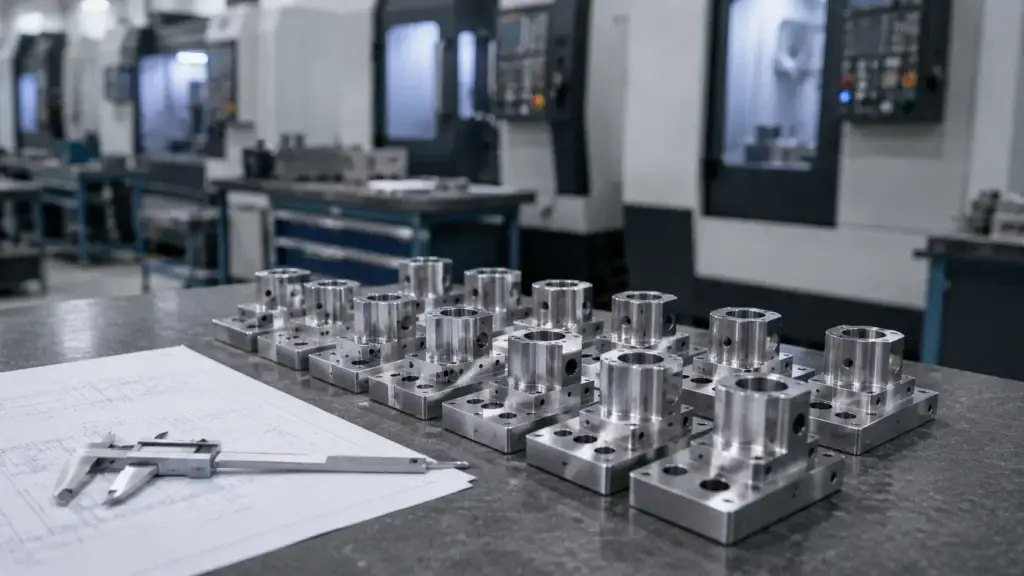
Small batch CNC machining refers to producing a limited quantity of custom machined parts using CNC milling, CNC turning, turning-milling, 5-axis machining, or related processes. It is usually used when the buyer needs more than a prototype but does not yet need full-scale production.
In practice, small batch machining is about balance. It gives buyers real production-quality parts without forcing them into large MOQ commitments too early.
Prototype vs Small Batch vs Mass Production
| Stage | Typical Purpose | Common Quantity | Main Buyer Concern |
| Prototype | Test design, fit, and function | 1–10 pcs | Speed and design validation |
| Small batch | Validate assembly, supply early demand, reduce risk | 10–500 pcs | Cost, consistency, and quality |
| Mass production | Stable repeat manufacturing | 500+ pcs | Unit cost and long-term capacity |
Exact quantities vary by material, part complexity, and industry. A “small batch” for a semiconductor fixture may be 20 pieces, while a small batch for an automotive bracket may be several hundred pieces.
Typical Quantity Ranges
Small batch production is common when parts are customized, high-value, or application-specific. Examples include robotic brackets, optical housings, medical device components, UAV parts, semiconductor fixtures, and machine replacement parts.
When Small-Batch CNC Machining Makes Sense?
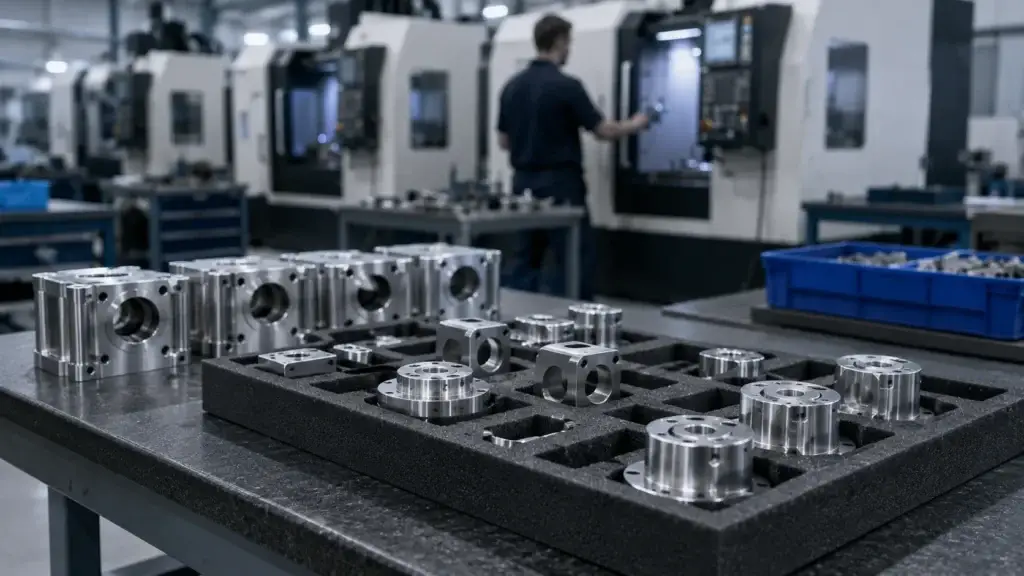
Small-batch CNC machining makes sense when the buyer needs production-grade parts but still wants flexibility. This is common in new product development, engineering validation, and low-volume industrial applications.
Real Purchasing Scenarios
Small batches are often used for:
- Pilot production before mass production
- Functional testing after prototype approval
- Bridge production while tooling is not ready
- Custom parts for industrial equipment
- Spare parts and replacement components
- Medical, optical, robotics, UAV, and semiconductor projects
- Low-volume end-use parts
- Design versions for field testing
- Early customer delivery
NIST has noted in manufacturing cost research that complexity tends to affect traditional manufacturing cost more directly than additive manufacturing, which is one reason buyers must review geometry and setup time carefully when selecting CNC machining for small batches. [1]
Small Batch Decision Table
| Situation | Is Small Batch CNC a Good Fit? | Why |
| Need 1 visual sample | Maybe no | Prototype method may be enough |
| Need functional metal parts | Yes | CNC provides real material and accuracy |
| Need design changes later | Yes | No hard tooling needed |
| Need thousands of identical plastic parts | Maybe no | Mold tooling may be better |
| Need tight tolerance metal parts | Yes | CNC supports precision control |
| Need urgent replacement parts | Yes | Flexible production is useful |
| Need early market testing | Yes | Reduces inventory risk |
How MOQ Works in CNC Machining Services for Low Volume Production?
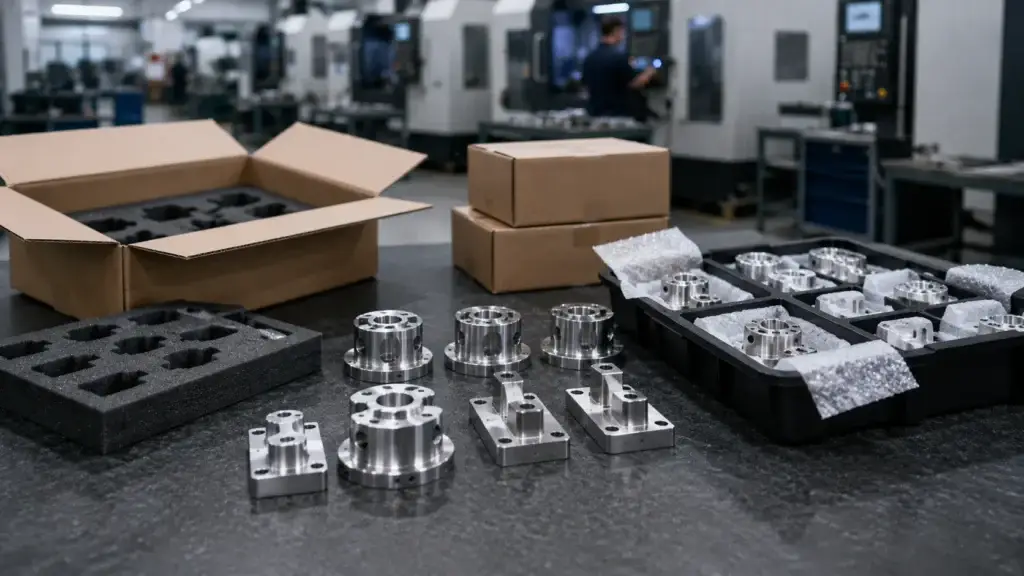
In CNC machining services for low volume production, MOQ is not only a sales rule. It is influenced by setup time, programming, material purchase, surface finishing, inspection, and packaging.
Why MOQ Is Not Only About Quantity?
A CNC supplier may accept one piece, but the cost per part can be high because the same work is still required: drawing review, CAM programming, machine setup, tool preparation, first piece inspection, finishing coordination, and packing.
For this reason, 20 pieces may be much more cost-effective per unit than 2 pieces, even if the part design is the same.
MOQ Factors Buyers Should Confirm
| MOQ Factor | Why It Matters |
| Material availability | Special materials may require minimum purchase |
| Machine setup | Setup cost is spread across part quantity |
| Surface treatment | Anodizing, plating, or coating may have batch minimums |
| Inspection report | Full reports add time and cost |
| Packaging | Precision parts may need individual protection |
| Revision risk | Small batches help avoid large wrong orders |
What Affects the Cost of CNC Machined Prototypes and Small Batches?
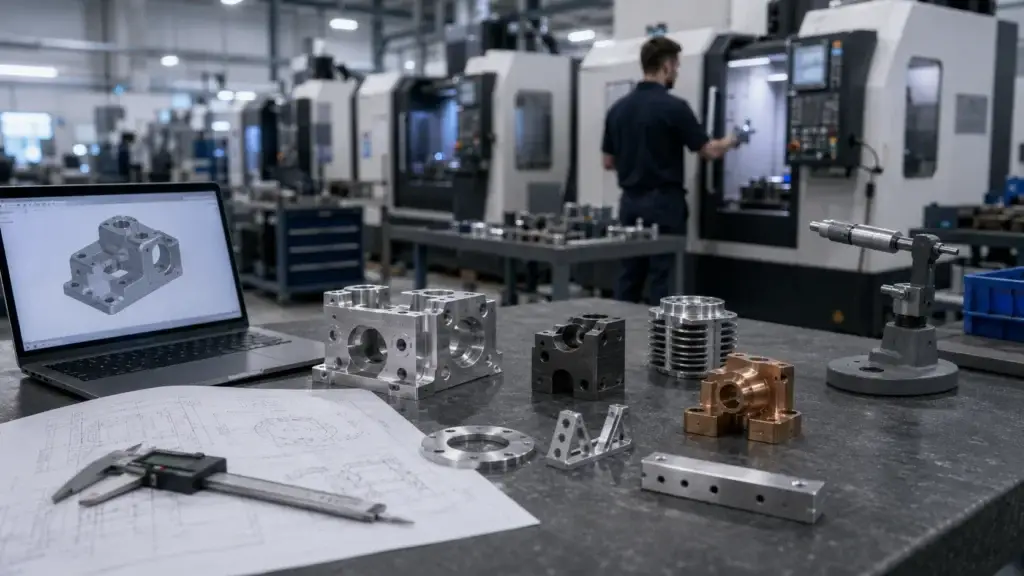
The cost of CNC machined prototypes and small batches is not based only on material weight. A simple aluminum spacer and a complex 5-axis titanium bracket may have very different prices even at the same quantity.
Main CNC Quotation Factors
Major quotation factors include:
- Material type and size
- Part geometry
- Machining time
- Programming time
- Number of setups
- Tolerance requirements
- Surface finish
- Heat treatment or special process
- Inspection level
- Quantity
- Delivery urgency
- Packaging requirement
ASME Y14.5 is widely used as the design language for geometric dimensioning and tolerancing. When drawings include GD&T requirements, suppliers must spend more time interpreting datums and verifying functional features, which can affect inspection and machining cost. [2]
Cost Control Table
| Cost Driver | Why It Raises Cost | How to Control It |
| Tight tolerance everywhere | More machining and inspection time | Apply tight tolerance only to functional features |
| Deep pockets | Longer tools and slower cutting | Reduce depth or add radius where possible |
| Thin walls | Higher deformation risk | Add ribs or adjust wall thickness |
| Premium finish | Extra finishing and handling | Use premium finish only where needed |
| Small quantity | Setup cost spread over fewer parts | Order a practical pilot quantity |
| Hard material | Slower cutting and tool wear | Confirm whether material is necessary |
| Full inspection report | More measurement time | Define report scope clearly |
How to Move from CNC Machining Prototype to Small Batch Production?
A CNC machining prototype proves whether the design can work. A small batch proves whether the design can be produced repeatedly.
What Should Be Locked Before Batch Release?
Before moving to small batch production, confirm:
- Drawing revision
- Material grade
- Critical dimensions
- Surface finish
- Thread requirements
- Tolerance notes
- Assembly fit
- Packaging method
- Inspection requirements
- Whether first article inspection is needed
If these details are not locked, the small batch may become an expensive second prototype.
Prototype-to-Batch Checklist
| Checkpoint | Buyer Question |
| Design | Is the latest drawing revision approved? |
| Function | Did the prototype pass assembly testing? |
| Material | Is the selected material final? |
| Finish | Has surface treatment been approved? |
| Tolerance | Which features are truly critical? |
| Inspection | Do we need FAI, CMM, or standard report? |
| Quantity | Is the batch size based on real demand? |
| Delivery | Is the lead time realistic with finishing included? |
Quality Control for Precision CNC Machining in Small Batches
For precision CNC machining, quality control should be planned before production starts. ISO 9001 provides a framework for organizations to deliver consistent products and services, improve efficiency, and meet customer and regulatory expectations. This quality mindset is especially useful for small batches because each part may have high value and limited replacement time. [3]
Inspection Methods That Matter
Small batch inspection may include:
- First article inspection
- In-process inspection
- Final dimensional inspection
- CMM inspection for complex geometry
- Thread gauge inspection
- Pin gauge inspection
- Surface roughness inspection
- Coating thickness check
- Visual inspection
- Assembly fit check
Not every part needs every inspection method. The inspection plan should follow part risk.
Small Batch Quality Checklist
| Inspection Item | When It Matters |
| Material certificate | Regulated or high-value parts |
| First article inspection | New design or new supplier |
| CMM report | GD&T or complex geometry |
| Thread check | Fastener assembly |
| Surface finish check | Visible or functional surfaces |
| Coating thickness | Tight fits after anodizing or plating |
| Burr control | Medical, optical, robotics, and semiconductor parts |
| Packaging check | Delicate or cosmetic components |
Common Risks in Small Batch CNC Projects
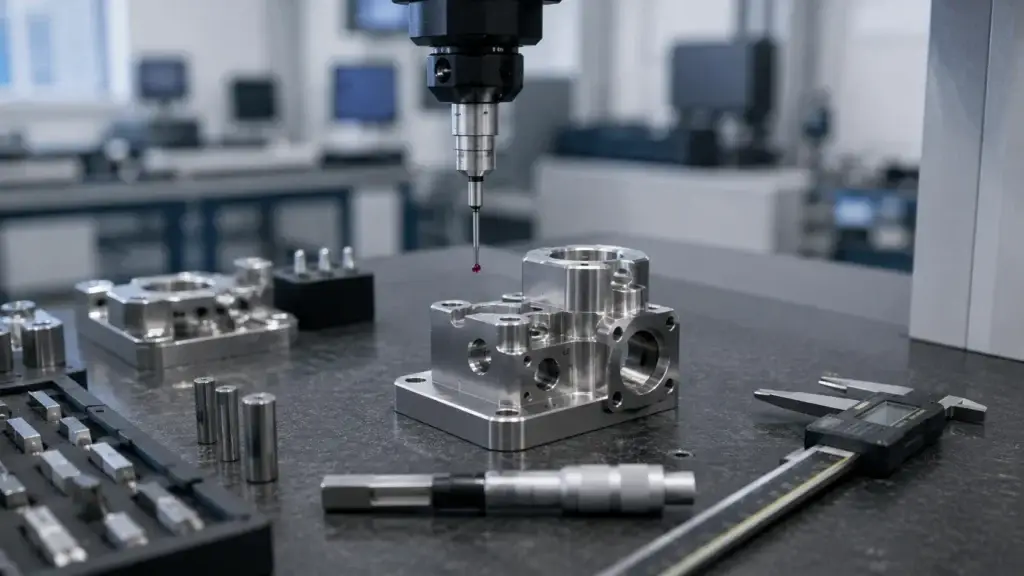
Small batch projects often fail because the buyer treats them like prototypes, while the supplier treats them like production. The two sides must align before machining begins.
Over-Specification, Finishing, and Design Changes
Common risks include:
| Risk | Result | Prevention |
| Over-tight tolerances | Unnecessary cost | Mark critical features only |
| Late design changes | Rework and delay | Freeze revision before batch |
| Unclear finish notes | Wrong color, texture, or coating | Provide finish sample or standard |
| No masking plan | Threads or bores affected | Define masking areas |
| No first piece approval | Batch-level error | Use FAI for new or critical parts |
| Weak packaging | Scratches or dents | Define packaging requirements |
How to Reduce Cost Without Increasing Risk?
Buyers can reduce cost by:
- Combining similar parts in one order
- Increasing quantity from very small to practical pilot batch
- Using standard materials when possible
- Avoiding unnecessary tight tolerance
- Simplifying deep pockets and thin walls
- Selecting finish by function
- Confirming inspection scope early
- Approving the first article before batch release
Cost control should not mean removing quality control. It means spending money only where it protects function.
How SinoRise Supports Small Batch CNC Machining Projects?
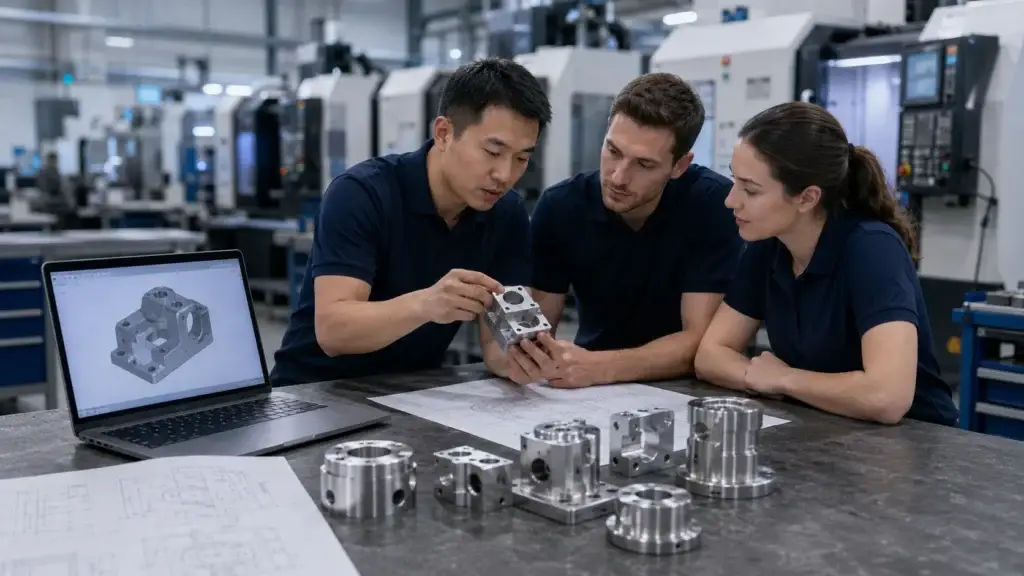
SinoRise supports small batch CNC machining from prototype development to small and medium-batch production. For buyers, the value is not only machining parts, but helping review drawing risk, material choice, surface finish, tolerance, inspection, and delivery before production starts.
SinoRise’s official website highlights CNC machining from prototype to production, precision capability up to ±0.005mm, 35+ surface finishing options, 80+ metals and plastics, and support for industries such as medical devices, robotics, semiconductor, optical instruments, UAVs, and auto parts. [4]
SinoRise can support:
- Drawing and DFM review
- CNC milling, turning, turning-milling, wire cutting, and 5-axis machining
- Prototype, first article, small batch, and repeat production
- Aluminum, stainless steel, titanium, brass, copper, steel, and engineering plastics
- Surface finishing coordination
- CMM, 2.5D, height gauge, thread gauge, and dimensional inspection
- Packaging and global delivery support
For buyers, a strong small batch supplier should help answer three questions: Can the design be made? Can the batch be repeated? Can the cost be controlled without creating quality risk?
FAQ About Small Batch CNC Machining
What Is Small Batch CNC Machining?
Small batch CNC machining is the production of a limited quantity of custom machined parts, usually after prototype validation and before larger-scale production.
What Quantity Counts as Small Batch CNC Machining?
There is no universal number. It may mean 10 pieces, 50 pieces, 100 pieces, or several hundred pieces depending on the part, material, industry, and supplier process.
Is Small Batch CNC Machining More Expensive per Part?
Yes, the unit price is usually higher than mass production because setup, programming, and inspection costs are spread over fewer parts. However, it can reduce total risk and avoid over-ordering.
What Is the Difference Between Prototype and Small Batch Production?
A prototype tests the design. A small batch tests repeatability, assembly, finish, quality control, and early production readiness.
How Can I Reduce the Cost of Small Batch CNC Parts?
Use standard materials, avoid unnecessary tight tolerances, simplify geometry, choose practical surface finishes, confirm inspection scope, and order a realistic pilot quantity instead of only one or two pieces.
Do Small Batch CNC Parts Need First Article Inspection?
Often yes, especially for new designs, tight tolerances, surface-treated parts, or critical assemblies. FAI helps confirm the first production-ready part before continuing the batch.
Can SinoRise Support Small Batch CNC Machining?
Yes. SinoRise supports prototypes, first articles, small batches, and repeat CNC production with machining, surface finishing, inspection, and engineering review support.
Conclusion
Small batch CNC machining is useful when buyers need real production-quality parts without the risk of full mass production. It supports design validation, pilot production, bridge supply, replacement parts, and low-volume end-use applications.
The key is to manage cost and quality together. Unit price may be higher than mass production, but the total project risk can be lower when the buyer controls tolerance, material, finish, inspection, and quantity carefully.
SinoRise supports small batch CNC projects by connecting engineering review, machining, finishing, inspection, and delivery into one practical workflow. For buyers moving from prototype to production, the right small batch strategy can reduce risk, improve confidence, and prepare the project for repeat manufacturing.
References
[1] NIST — Costs and Cost Effectiveness of Additive Manufacturing. NIST discusses cost differences between additive and traditional manufacturing, including the impact of complexity in traditional processes.
[2] ASME — Y14.5 Dimensioning and Tolerancing. ASME identifies Y14.5 as the authoritative guideline for the design language of geometric dimensioning and tolerancing.
[3] ISO — ISO 9001 explained. ISO describes ISO 9001 as a quality management framework for delivering consistent products and services and meeting customer and regulatory expectations.
[4] SinoRise — Official CNC machining and company information. SinoRise states its prototype-to-production CNC machining capabilities, precision level, surface finishing options, available materials, industry coverage, and inspection capability.