
Abstract
Medical CNC machining is not only about producing accurate metal or plastic parts. For medical device projects, buyers and engineers care about tolerance stability, material reliability, surface quality, documentation, traceability, and repeatable production. A component may look simple, but if the material certificate is missing, the burr level is uncontrolled, or the inspection report does not match the drawing, the part may create risk in assembly, validation, or quality review.
This article explains what matters most in medical device CNC machining, including common part types, key quality indicators, recommended materials, machining processes, surface treatments, inspection methods, documentation requirements, and common risk points.
What Medical Device Buyers Care About Most?

Medical device buyers usually evaluate a machining supplier from three angles: can the part meet tolerance, can the process stay repeatable, and can the supplier provide the right documentation?
For medical parts, the cost of failure is often higher than the cost of machining. A small dimensional error, burr, surface defect, or missing document may delay validation, assembly, or supplier approval. That is why precision medical machining requires both technical capability and process discipline.
Tolerance, Repeatability, and Clean Surfaces
For precision medical machining, tight tolerance is only the starting point. Medical parts may require controlled flatness, concentricity, thread quality, burr level, surface roughness, and assembly fit. Small dimensional variation can affect sealing, movement, fluid flow, alignment, or instrument function.
Procurement teams should not only ask, “Can you hold ±0.01 mm?” They should also ask how the supplier controls fixtures, tool wear, in-process inspection, batch consistency, and final measurement.
Traceability and Documentation Control
For medical applications, documentation is often as important as the part itself. Buyers may request material certificates, dimensional inspection reports, CMM reports, first article inspection records, surface treatment records, and batch traceability.
These documents help medical device manufacturers manage supplier qualification, design validation, quality review, and change control. A reliable machining partner should understand that medical device CNC machining is not complete until both the parts and the supporting records are delivered correctly.
Common Medical CNC Machined Parts
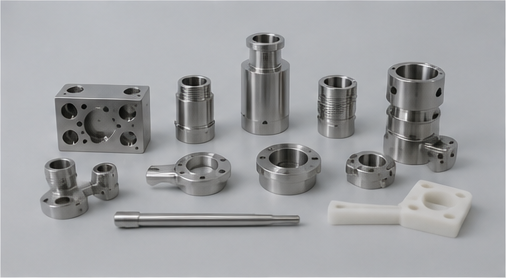
CNC medical parts vary widely depending on the device category. Some parts are used in surgical tools, some in diagnostic equipment, and others in robotic or orthopedic-related systems.
| Part Type | Typical Requirements | Common Materials |
| Surgical instrument components | Smooth edges, corrosion resistance, precise fit | Stainless steel, titanium |
| Diagnostic device housings | Dimensional stability, cosmetic finish, assembly accuracy | Aluminum, stainless steel, plastics |
| Fluidic blocks and manifolds | Leak-tight channels, clean surfaces, controlled holes | Stainless steel, PEEK, aluminum |
| Robotic surgery parts | Lightweight structure, high stiffness, repeatability | Aluminum, titanium, stainless steel |
| Orthopedic-related trial components | Strength, surface finish, traceability | Titanium, stainless steel |
| Medical equipment connectors | Small features, threads, burr control | Stainless steel, brass, PEEK |
Surgical Instruments and Device Housings
In medical device CNC machining, surgical instruments often require precise profiles, clean transitions, smooth edges, and corrosion-resistant materials. Device housings may require lightweight structures, smooth surfaces, and stable assembly interfaces.
For these parts, machining quality is closely linked to handling safety, assembly accuracy, and long-term usability.
Diagnostic, Robotic, and Orthopedic-Related Components
Precision machining for medical devices is also common in diagnostic equipment, medical robotics, optical modules, testing devices, and orthopedic-related systems. These parts often need stable dimensions, repeatable movement, accurate alignment, and controlled surface quality.
For robotic and diagnostic systems, even a small tolerance shift may affect motion accuracy, sensor positioning, or assembly consistency.
Recommended Materials for Medical Device Machining
Material choice affects machinability, tolerance stability, corrosion resistance, cleaning compatibility, surface finish, and documentation requirements. The best material depends on whether the part has direct body contact, indirect contact, fluid contact, or no patient contact.
| Material | Best Use | Key Concern |
| Stainless Steel 304 | General medical equipment parts | Good corrosion resistance and balanced cost |
| Stainless Steel 316 / 316L | Medical and corrosion-sensitive parts | Better corrosion resistance |
| Titanium Grade 5 | High-strength, lightweight, corrosion-resistant parts | Higher machining cost |
| Aluminum 6061 / 7075 | Housings, brackets, robotic components | Not ideal for all contact or sterilization conditions |
| PEEK | Lightweight, insulating, high-performance plastic parts | Requires careful deformation control |
| Brass / Copper | Connectors, conductive parts | Contact risk and surface control must be reviewed |
Stainless Steel, Titanium, Aluminum, and PEEK
Stainless steel is commonly used for medical tools and equipment because it provides strength, corrosion resistance, and stable machining performance. Titanium is suitable when high strength, low weight, and corrosion resistance are important. Aluminum is useful for housings, fixtures, brackets, and equipment parts where direct body contact is not the main concern.
PEEK is valuable for lightweight, insulating, or chemical-resistant components, but it requires careful control of clamping, cutting heat, and inspection conditions.
How to Choose Materials by Contact Risk
For medical CNC machining, the first question should be how the part will be used. A non-contact equipment housing has very different material requirements from a fluid-contact manifold or surgical instrument component.
Buyers and engineers should confirm the application environment, cleaning method, sterilization exposure, contact risk, mechanical load, and required documentation before finalizing the material.
Recommended CNC Processes for Medical Parts
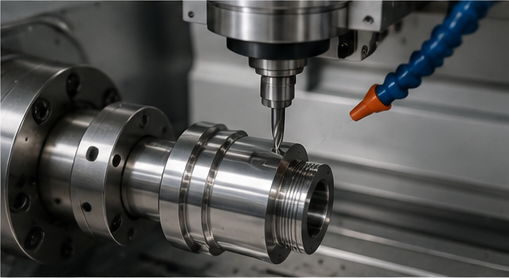
Medical parts often combine small features, tight tolerances, fine surfaces, and difficult materials. The machining process should be selected based on geometry, tolerance, batch size, and documentation needs.
| Process | Best For | Medical Part Examples |
| CNC Milling | Complex profiles, pockets, housings | Device housings, brackets, fixtures |
| CNC Turning | Round parts, shafts, threaded components | Connectors, pins, bushings |
| Turn-Mill Machining | Multi-feature cylindrical parts | Surgical tool handles, complex connectors |
| 5-Axis CNC Machining | Multi-angle complex parts | Robotic joints, orthopedic-related parts |
| Wire EDM | Fine slots, sharp internal profiles | Precision plates, micro features |
CNC Milling, CNC Turning, and Turn-Mill Machining
Medical CNC turning is suitable for cylindrical components such as pins, shafts, sleeves, bushings, and connectors. CNC milling is better for housings, manifolds, brackets, fixtures, and components with complex pockets or flat surfaces.
Turn-mill machining can reduce setups and improve consistency for parts with both rotating and milled features. For medical parts, fewer setups often mean less accumulated tolerance error and better batch repeatability.
When 5-Axis Machining Reduces Tolerance Risk
For complex medical components, 5-axis CNC machining services can reduce repeated clamping and improve positional accuracy. This is useful for parts with angled surfaces, complex contours, multi-face features, and tight geometric requirements.
For high-value materials such as titanium or stainless steel, 5-axis machining may also help reduce rework risk by improving process stability.
Recommended Surface Finishes and Treatments
Surface quality matters because burrs, scratches, roughness, residue, or coating inconsistency can affect function, cleaning, sealing, appearance, and assembly.
| Surface Requirement | Recommended Option | Application |
| Burr control | Manual or mechanical deburring | Small holes, edges, threads |
| Smooth surface | Polishing | Surgical tools, visible parts |
| Corrosion resistance | Passivation or electrochemical treatment | Stainless steel parts |
| Aluminum protection | Anodizing | Housings and equipment parts |
| Appearance control | Sandblasting, brushing, polishing | Device housings |
| Special performance | Coating | Wear, color, or protection needs |
Deburring, Polishing, Passivation, Anodizing, and Coating
Deburring is one of the most important steps in medical machining. Sharp edges, loose burrs, and uncontrolled micro-burrs may affect safety, assembly, or cleanliness.
Polishing can improve surface smoothness and appearance. Passivation is commonly used for stainless steel parts to improve corrosion resistance. Anodizing is often used for aluminum housings or equipment parts. Coating may be selected when wear resistance, color identification, or special surface performance is required.
Recommended Inspection and Documentation
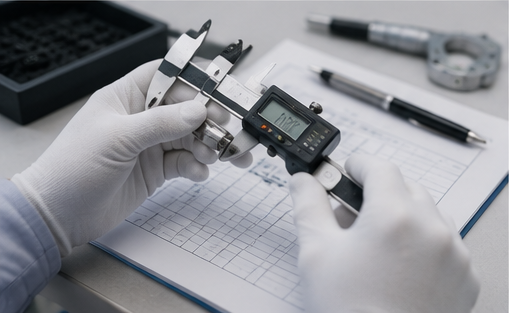
For medical parts, inspection should be defined before machining. If the drawing requires GD&T, thread gauges, surface roughness, or CMM reports, the supplier should know this before quoting.
| Documentation | Why It Matters |
| Material certificate | Confirms grade, batch, and source |
| First Article Inspection report | Verifies first production output |
| Full dimensional report | Confirms critical drawing dimensions |
| CMM inspection report | Supports GD&T and complex geometry checks |
| Surface roughness report | Confirms Ra or finish requirements |
| Surface treatment record | Tracks coating, anodizing, polishing, or passivation |
| Batch traceability record | Supports quality review and supplier control |
| Certificate of Conformance | Confirms parts meet agreed requirements |
Inspection Reports, Material Certificates, and Traceability
A strong CMM inspection plan helps reduce disputes after delivery. For medical buyers, a complete RFQ should include drawing revision, material grade, tolerance class, critical dimensions, surface finish, inspection report format, quantity, and packaging requirements.
The clearer the inspection and documentation requirements are before production, the lower the risk of misunderstanding, delay, or rejected parts.
Common Problems and Risk Points
Medical device parts often fail because requirements are not clear enough before production. Common risks include incomplete drawings, unclear surface finish callouts, uncontrolled burrs, material substitution, missing material certificates, poor cleaning expectations, coating thickness variation, and undocumented process changes.
| Risk Point | Possible Impact | Prevention Method |
| Unclear tolerance priority | Higher inspection dispute risk | Mark critical-to-quality dimensions |
| Missing material certificate | Traceability issue | Confirm certificate requirements before ordering |
| Uncontrolled burrs | Assembly or safety problem | Define deburring and edge break requirements |
| Poor surface finish control | Sealing, cleaning, or appearance issue | Specify Ra value or finish standard |
| Coating thickness variation | Final dimension out of tolerance | Account for coating thickness in design |
| Material substitution | Validation and quality risk | Require approval before any material change |
| Weak packaging control | Scratches or contamination | Define packaging and handling requirements |
A practical way to reduce risk is to mark critical-to-quality dimensions on the drawing and confirm documentation before placing the order.
How Sino-V-Rise Supports Medical Device Machining Projects?
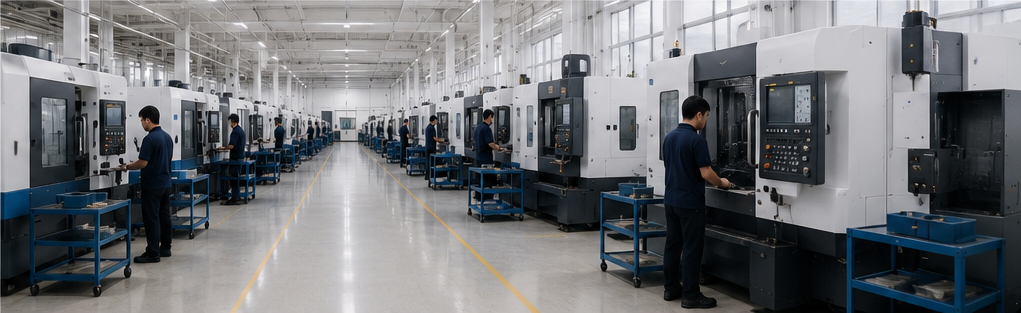
Sino-V-Rise supports precision medical machining projects with CNC milling, CNC turning, turning-milling, wire cutting, 5-axis machining, surface finishing, and inspection capabilities. The company works with custom metal and plastic parts, including stainless steel, titanium alloys, aluminum alloys, brass, copper, and engineering plastics.
For medical device projects, Sino-V-Rise can support drawing review, material selection, tolerance feasibility review, machining process planning, surface finish recommendations, inspection reporting, and export delivery. This is especially useful for prototype, small-batch, and medium-batch medical parts that require precision, consistency, and reliable documentation.
Sino-V-Rise is also focused on industries such as medical devices, low-altitude aircraft, semiconductor equipment, robotics, optical instruments, automotive parts, and motorcycle components. For buyers, this article can connect naturally to the medical industry page, precision CNC machining service page, CNC turning-milling service page, 5-axis CNC machining service page, and surface treatment service page.
FAQ: Medical Device CNC Machining
What is medical CNC machining?
Medical CNC machining is the production of precision metal or plastic components for medical devices, surgical instruments, diagnostic equipment, robotic systems, and related healthcare equipment.
What tolerances are required for medical device machining?
Tolerance depends on the part’s function. Medical parts may require tight dimensional tolerances, GD&T control, fine surface roughness, accurate threads, controlled flatness, concentricity, and strict burr control.
What materials are used for medical CNC parts?
Common materials include stainless steel, titanium, aluminum, PEEK, brass, copper, and other engineering plastics. The best material depends on contact risk, strength, corrosion resistance, cleaning, surface finish, and documentation requirements.
Why is documentation important for medical device machining?
Documentation supports traceability, supplier control, inspection review, validation, and quality system management. Common documents include material certificates, inspection reports, CMM reports, surface treatment records, and certificates of conformance.
Is ISO 13485 required for every medical machining supplier?
Not always. It depends on the customer, device program, and supplier qualification requirements. However, ISO 13485 alignment, traceability, controlled documentation, and stable quality management are often important in medical device supply chains.
What surface finishes are common for medical machined parts?
Common options include deburring, polishing, passivation, anodizing, sandblasting, electroplating, and coating. The right finish depends on material, function, cleaning, appearance, and contact requirements.
What should be included in a medical machining RFQ?
A complete RFQ should include 2D drawings, 3D files, material grade, tolerance requirements, critical dimensions, surface finish, quantity, inspection requirements, documentation requirements, packaging needs, and application information.
Conclusion
Medical device machining requires more than accurate CNC equipment. Buyers and engineers must evaluate tolerance, material grade, surface finish, inspection method, documentation, traceability, and process stability together.
For medical device CNC machining, the best supplier is not only the one that can machine the part, but the one that can help control risk from drawing review to final delivery. With multi-process CNC capabilities, material support, surface finishing, inspection, and small-to-medium batch production experience, Sino-V-Rise can support medical device component projects that require precision, consistency, and reliable documentation.