

Home / CNC-Machining / CNC Milling / CNC Machined Stainless Steel Hinge Block
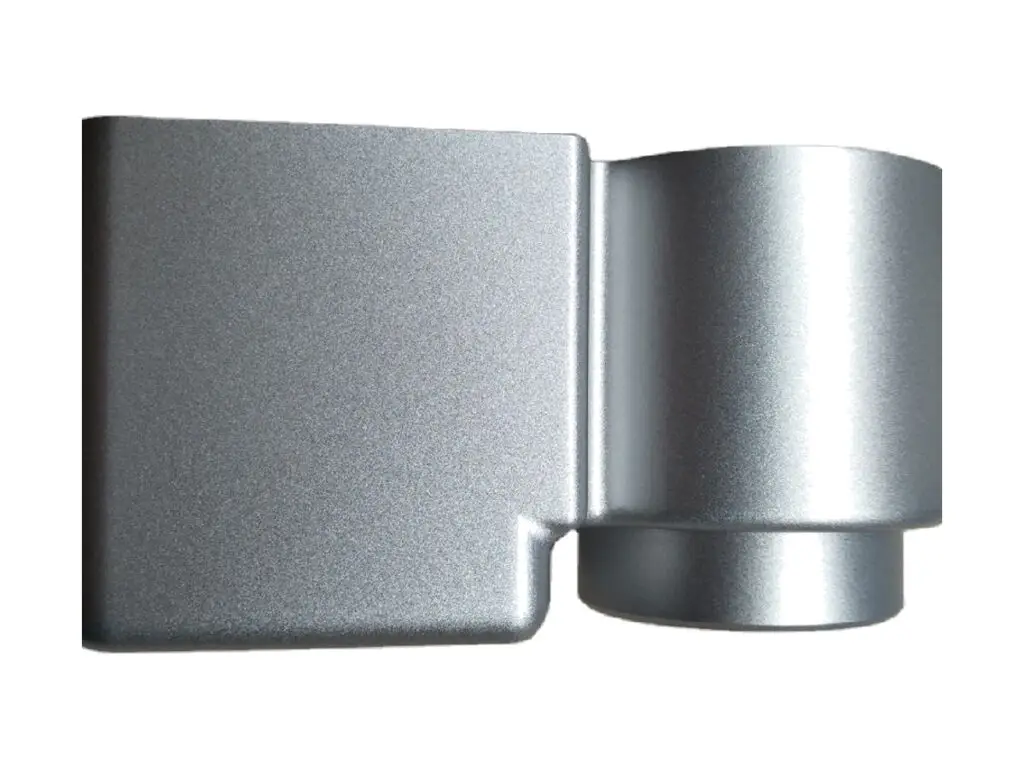
CNC machined 316L stainless steel hinge blocks with twin knuckle bores and a square mounting face

CNC Machined Stainless Steel Hinge Block

316L stainless hinge blocks milled from solid with two knuckle bores line bored to H7 and coaxial within 0.02 mm, a mounting face square to the pin bore within 0.02 mm and a knuckle gap controlled to 0.2 mm. Blocks are made as matched pairs so the pin aligns the leaves without a reamer on assembly.

*Send the pin diameter and the leaf thickness. The knuckle gap and the bore tolerance have to match the pin and the leaf that goes between the knuckles, and a gap that is 0.1 mm out shows as a sagging door.

Stainless Hinge Block Overview

A hinge block is judged by whether the pin goes in and the leaf swings without play. Both come down to the knuckle bores being coaxial and the mounting face being square to them, which is a boring problem rather than a milling one.

The block is squared on all six faces first, then the mounting holes and the knuckle pocket are milled. The two knuckle bores are cut last with a line boring bar through both walls in one pass, so they share an axis that no re-chucking can disturb.

Five-axis milling of an aluminum wrist housing for a robot arm
304L stainless steel round bar stock for CNC machining

316L Stainless Block

316L is the default for a hinge in washdown, marine or chemical service, where the pin bore would otherwise rust and seize. It work-hardens, so the bore is cut with a sharp tool and a constant feed rather than a dwell.

304L stainless steel plate and block stock for CNC machining

304 or 2205 Duplex

304 is used indoors where cost matters. 2205 duplex is chosen for offshore and chloride service, where 316L would pit in the stagnant gap between the knuckles.

The gap between knuckles is where corrosion starts, because it stays wet. In chloride service that gap decides the alloy more than the load does.

Stainless Hinge Block Specifications

Milling and boring data for hinge blocks, with the bore, squareness and gap values that decide whether the pin fits and the leaf swings true.

SpecificationMachining DataSpecificationMachining Data
ProductHinge Block / Knuckle BlockMachining Process3-Axis CNC Milling, Boring, Line Reaming
Material316L Stainless BlockBlock Size40 × 40 × 20 to 200 × 120 × 60 mm
Pin BoreØ 6 – 40 mm, H7Knuckle Coaxiality0.02 mm
Mounting Face Squareness0.02 mm to the Pin BoreBore Surface FinishRa 1.6 µm
Knuckle Gap0.05 – 0.2 mm ClearanceMounting HolesØ 5 – 14 mm, ±0.05 mm
Wall Around BoreMinimum 1.5 × Bore DiameterPassivationASTM A967
CustomizationGrease Groove, Pin Retention Thread, Stop Lug, Weld PrepLead Time6 – 8 Days Sample, 13 – 17 Days Batch
InspectionPin Gauge Through Both Knuckles, CMM Squareness, Thread GaugesPackingPair-Matched, VCI Wrap, Carton

Key Features of Our Hinge Blocks

Line bored through both knuckles, squared before boring.

Knuckles Line Bored Together

Both bores are cut with a line bar in one pass, so they are coaxial to 0.02 mm and the pin slides through from either side without a reamer.

Mounting Face Square to the Bore

The face that bolts to the frame is machined before boring and used as the datum, holding squareness to 0.02 mm so the leaf hangs straight.

Knuckle Gap Controlled

The gap is milled to the leaf thickness plus clearance and checked with a gauge, because a gap that is too tight binds the leaf and one that is too wide lets it sag.

Pairs Matched Before Passivation

Blocks are made as a pair and matched on the pin before coating, so the two leaves that ship together already fit each other.

Hinge that has to swing without play?

Surface Finishes for Hinge Blocks

The pin bore is a fit and the gap between knuckles is a corrosion trap, so both are specified separately.

FinishMain PurposeFinishMain Purpose
PassivationRemoves free iron from bored holesElectropolishingHygienic finish for food and pharma doors
Glass Bead BlastingEven matte exterior that hides mill marksMasked Pin BoreKeeps the bore at H7 where a coating is applied
Laser MarkingPair number and pin size on the blockDry Film LubricantPin bore that runs without grease

*Coating inside a pin bore closes the fit. Bores are masked when a coating is required, and the pin is gauged through both knuckles after coating.

logo

Put your CNC milling parts into production today

All information and uploads are secure and confidential.

Trusted for Precision CNC Machined Components

Supporting OEM projects with accurate machining, flexible production, and reliable component quality.

Mechanical Equipment Customer
The pin slides through both knuckles by hand, and the leaf swings without play.

Industrial Components Buyer
The square face meant the door hangs straight without packing at the hinges.

Equipment Manufacturer
The gap was right for the leaf, so there is no binding at the top of the swing.

OEM Customer
OEM Customer
The pair matched, so both hinges on the door behave the same.

Automation Industry Customer
The customized machining solution provided the dimensional accuracy required for our rotating equipment components.
Trusted for Precision CNC Milling.

Machining Process for Hinge Blocks

Both knuckles are bored in one pass with a line bar, so the hinge pin slides through from either side without a reamer.

01. Pin and Leaf Review

Check the pin diameter, the leaf thickness and the required swing angle, then set the knuckle gap and the bore tolerance from those three numbers.

02. Square the Block

Machine all six faces square and mark the mounting face, since the bores and the mounting holes are all called from that face.

03. Mill Pockets and Holes

Mill the knuckle pocket, the stop lug and the mounting holes, leaving the bore walls at full thickness until the boring operation.

04. Line Bore the Knuckles

Cut both knuckle bores with a line boring bar in one pass, check coaxiality with a pin through both and record the result before release.

05. Passivate and Match

Deburr the bore entries, passivate, gauge the pin through the pair, mark the pair number and pack them together so they stay a set.

Send the pin and the leaf thickness, and we will quote the hinge block with the knuckles bored on a single axis.

Stainless Hinge Block FAQs

0.02 mm, because both are cut with a line bar in one pass. Bored separately, the same block typically shows 0.08 mm and the pin needs a reamer to go through.

Leaf thickness plus 0.1 mm as standard, controlled to ±0.05 mm. The gap is checked with a gauge before the block is passivated.

Yes, a circumferential groove inside the bore with a cross hole to a grease nipple thread, cut before the bore is finished so the groove does not raise a burr.

Not if the pin and bore are a running fit and the gap is kept clear. In chloride service we recommend 2205 duplex for the block and a matching pin.

Yes, with a weld prep chamfer on the mounting edges. The bore is line bored after welding if the block is supplied as a weldment, which is a separate process.

Blocks are marked with a pair number and packed as a set with the pin, so a mixed crate cannot put two halves of different pairs on one door.

Other CNC Machined Mechanical Components

Explore additional precision CNC machined components manufactured for OEM applications and customized production needs.

Custom CNC machined aluminium housings for automation and electronic equipment.

Explore custom shock mount CNC milled parts in 6061 or 7075 aluminum, engineered for precise fit, stable suspension support, and.

304L stainless bearing support blocks with a bored bearing seat to H7, seat and base parallel to 0.02 mm, and clamp-screw flats.

CNC machined aluminium circular positioning bases with a turned register, bolt circle to ±0.02 mm and a flat seating face, red or.

Custom CNC machined aluminum automotive housings for sensor, actuator and pump assemblies.

Get high‑quality machined parts in as fast as 4 days with our expanded automated CNC milling!

Scroll to Top