

Home / CNC-Machining / CNC Milling / CNC Milled Aluminum Robot Joint Adapter Plate
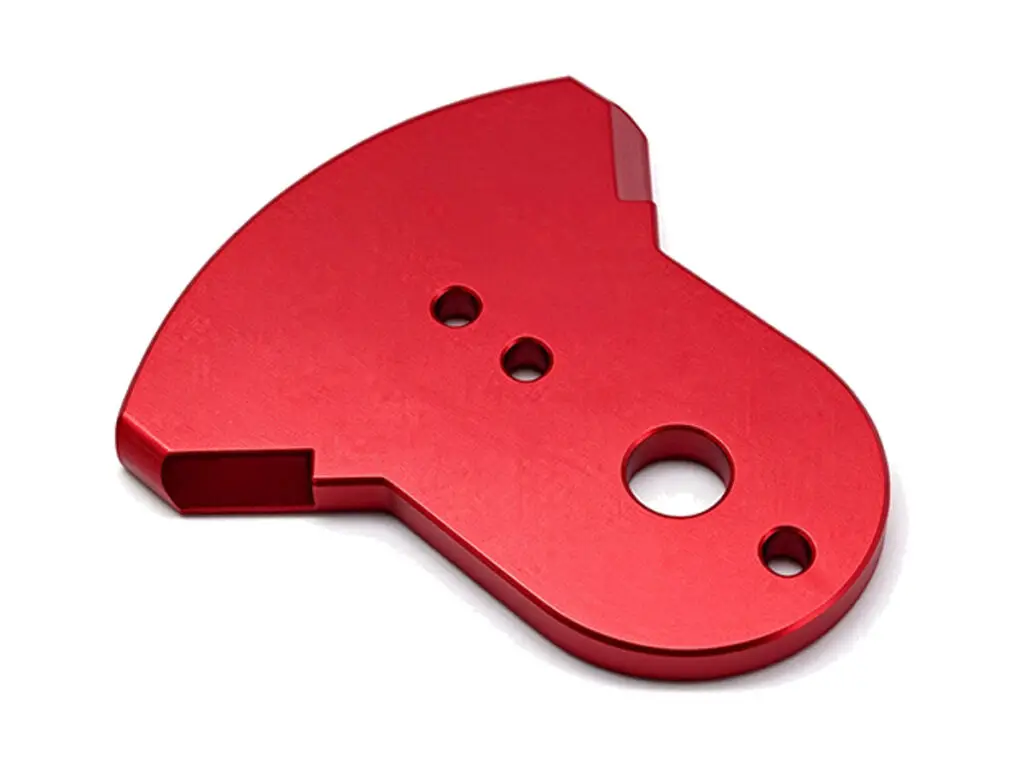
Red anodized aluminium robot joint adapter plate with registers on both faces and a bolt circle

CNC Milled Aluminum Robot Joint Adapter Plate

CNC milled aluminium adapter plates that join a robot wrist to an end effector, a gripper or a vision mount, with a turned register on each side, bolt circles positioned within ±0.02 mm and faces flat to 0.02 mm. Lightening pockets are cut between the bolt groups, not through them.

*Send both interface drawings with the tool centre point marked. The register and the bolt circle on each side have to be machined from one datum, or the TCP moves every time the plate is changed.

Robot Joint Adapter Plate Overview

An adapter plate is a tolerance translator: it takes one bolt pattern and register and reproduces another. Everything that matters happens between the two faces, so the plate is machined from one datum and both registers are cut in the same set-up rather than flipped and re-clamped.

The plate is faced on both sides, the registers are bored, and the two bolt circles are drilled from the same centre. Lightening pockets are placed between bolt groups so the plate loses weight without reducing the clamp area under the bolt heads.

Five-axis milling of an aluminum wrist housing for a robot arm
6061-T6 aluminium flat plate stock for CNC milling

6061-T6 Aluminium Plate

6061-T6 is used because an adapter plate should be light and stiff, and it holds a bored register without springing when the tooling is bolted down. It anodizes to a uniform colour, which helps when several adapters belong to one cell.

7075-T6 aluminium billet block stock for CNC milling

7075-T6 for High Moment Loads

7075-T6 is specified when the end effector is heavy or offset, where the plate has to resist bending between the two bolt circles. It holds the register round at higher bolt torque.

Plate thickness follows the offset load, not the robot payload. A 10 mm plate is fine for a centred gripper and marginal for a 300 mm cantilever, whatever the payload rating says.

Robot Adapter Plate Specifications

Milling and boring data for adapter plates, with the register, bolt circle and flatness values that keep the tool centre point fixed.

SpecificationMachining DataSpecificationMachining Data
ProductRobot Joint / End Effector Adapter PlateMachining ProcessCNC Milling, Register Boring, Face Milling
Material6061-T6 Aluminium PlateRegister Diameterh7 (0 / −0.021 on 40 mm)
Thickness6 – 30 mmBolt Circle Position±0.02 mm on Both Interfaces
Envelope50 × 50 mm to 300 × 300 mmFace Flatness0.02 mm Across the Plate
Register Height2 – 8 mm Each SideParallelism of Faces0.02 mm
Bolt SizesM3 to M12, Through, Tapped or CounterboredRegister to Bolt Circle0.015 mm Concentricity
LighteningPockets Between Bolt GroupsSurface FinishRa 1.6 µm Registers, Ra 3.2 µm Faces
CustomizationRegister Step, Bolt Pattern, Cable Cut-Out, MarkingLead Time6 – 9 Days (Sample), 12 – 16 Days (Batch)
InspectionCMM Both Interfaces, Flatness, Register GaugePackingFoam Interleaved, Bagged, Carton

Key Features of Our Adapter Plates

One datum, two interfaces, no shift when the tooling is swapped.

Both Interfaces From One Datum

The two registers and both bolt circles are cut without re-clamping, so the relative position of the interfaces is held by the machine rather than by a fixture.

Registers Bored, Not Interpolated

Each register is bored with a single-point tool, staying round within 0.01 mm so the tooling seats on the face instead of rocking on the register.

Pockets Away From Bolt Groups

Lightening pockets are kept clear of the clamp area under each bolt head, so removing weight does not reduce the preload the joint can carry.

Orientation Marks Machined In

An index mark is cut into the edge on the same set-up, so the plate can only be fitted the way it was machined and programmed.

Need an adapter that keeps the TCP fixed?

Surface Finishes for Robot Adapter Plates

The registers are fit surfaces, so the coating is either kept out of them or the bore is sized after anodizing.

FinishMain PurposeFinishMain Purpose
Type II AnodizingColour coding and corrosion protection on the plateHard AnodizingWear face where tooling is repeatedly bolted and removed
Bead BlastingMatte finish so the dye reads uniform across the plateMasked AnodizingBare register where a press fit is specified
Laser MarkingTool number and interface orientation on the edgeChromate ConversionConductive finish for grounded tooling

*Anodizing adds 7 to 10 µm per surface. Registers that locate a tool are masked, or bored 0.02 mm oversize and finished after the dye so the fit is unchanged.

logo

Put your CNC milling parts into production today

All information and uploads are secure and confidential.

Trusted for Precision CNC Machined Components

Supporting OEM projects with accurate machining, flexible production, and reliable component quality.

Mechanical Equipment Customer
Registers on both faces are concentric, so the joint and the tool line up without a shim stack.

Industrial Components Buyer
Bolt circle was indexed right, so the plate only goes on one way and the cable exit lands where it should.

Equipment Manufacturer
Flatness held, so the plate does not rock against the joint face when the bolts are torqued.

OEM Customer
OEM Customer
Weight came in under our limit, which let us keep the payload rating.

Automation Industry Customer
The customized machining solution provided the dimensional accuracy required for our rotating equipment components.
Trusted for Precision CNC Milling.

Milling Process for Robot Adapter Plates

Both interfaces are machined from one datum, so the tool centre point does not shift when the adapter is swapped.

01. Interface and TCP Review

Check both bolt patterns, both registers and the tool centre point on the drawings, and confirm which face is the datum before programming.

02. Plate Prep and Facing

Square the plate, face both sides to release stress, then re-face the datum side and mark it so every feature is cut from that surface.

03. Bore, Drill and Pocket

Bore the register, drill and tap both bolt circles from the same centre, then cut the lightening pockets between the bolt groups.

04. Flip and Second Register

Flip the plate on the machined face, bore the second register and drill its bolt circle from the same datum, then break all edges by 0.3 mm.

05. Anodize, CMM and Pack

Mask the registers if required, anodize to colour, measure both interfaces on a CMM, then pack with foam so the faces do not rub.

Send both interface drawings with the TCP marked, and we will quote the plate with both registers and bolt circles defined.

Robot Adapter Plate FAQs

Nothing measurable if both interfaces are cut from one datum: the relative position is held to ±0.02 mm. A plate machined in two set-ups typically adds 0.05 to 0.1 mm, which is enough to need a TCP re-teach.

Yes. Any pattern up to twelve holes per side is drilled from the same centre, and slotted holes are available where the two interfaces are not perfectly aligned in service.

6 mm for a small gripper interface, and 10 to 12 mm for a tooling plate over 150 mm across. Thinner plates deflect between bolt groups, which shows up as a rocking tool.

Yes. Dowel holes are reamed to H7 and positioned with the bolt circle, and they are the preferred alignment feature when the tool has to be refitted without re-teaching.

It adds about 0.01 mm per side. Registers that locate the tool are masked, and when the fit is critical the bore is finished after anodizing and checked with a plug gauge.

Six to nine days for a sample pair including programming, machining, anodizing and CMM. Batches of 20 to 100 pieces run twelve to sixteen days depending on the number of colours and masking points.

Other CNC Machined Mechanical Components

Explore additional precision CNC machined components manufactured for OEM applications and customized production needs.

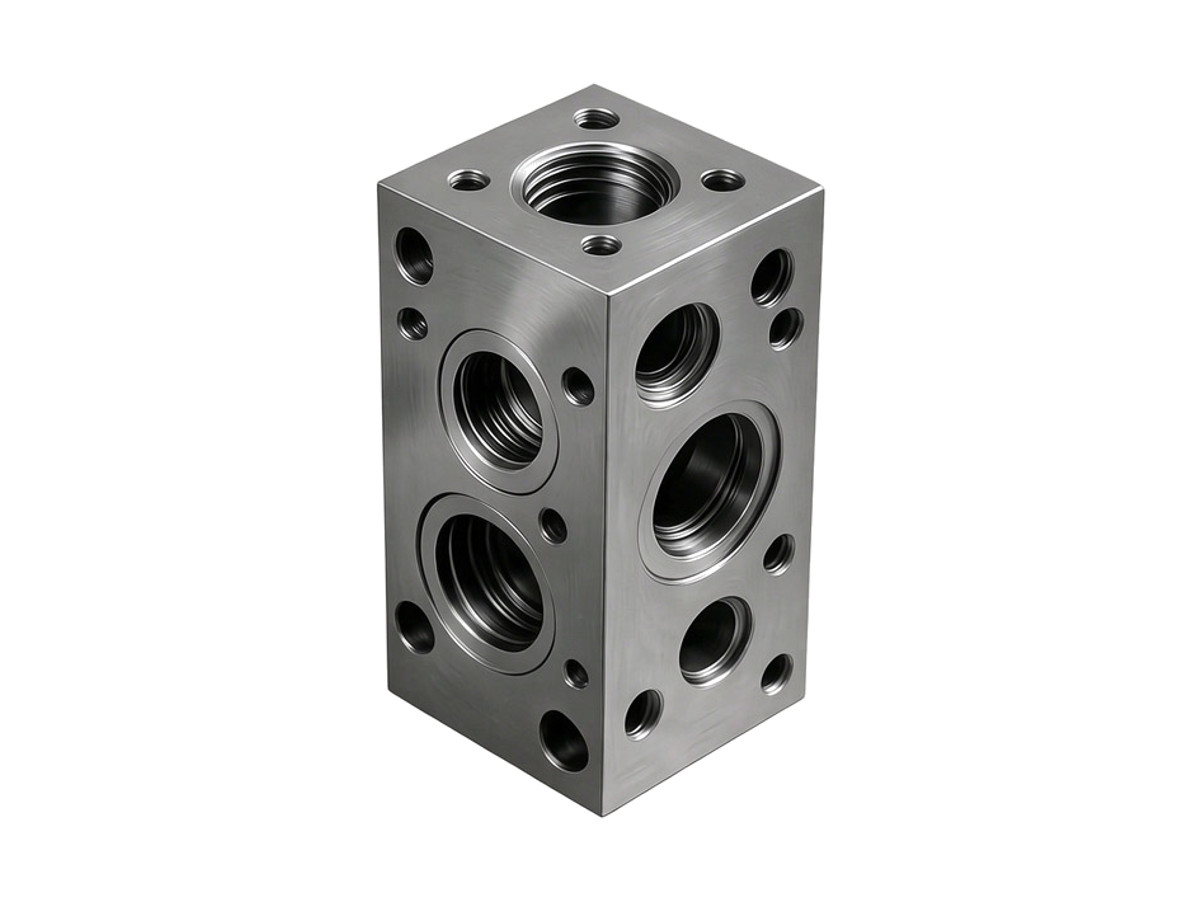
Custom CNC machined steel hydraulic manifold blocks with cross-drilled galleries and gauged ports.

Custom CNC machined stainless steel fixtures for automated assembly cells.

Precision CNC machined stainless steel rotary joint housings for robot arms and fluid transfer.

Custom CNC machined aluminum double tube clamps for motorcycle frames, bicycle builds and hydraulic lines.

Custom CNC machined hardened steel sleeves for robotic joints and motion assemblies.

Get high‑quality machined parts in as fast as 4 days with our expanded automated CNC milling!

Scroll to Top