Home / CNC-Machining / CNC-Turning / CNC Turned Aluminum Threaded Sensor Housing
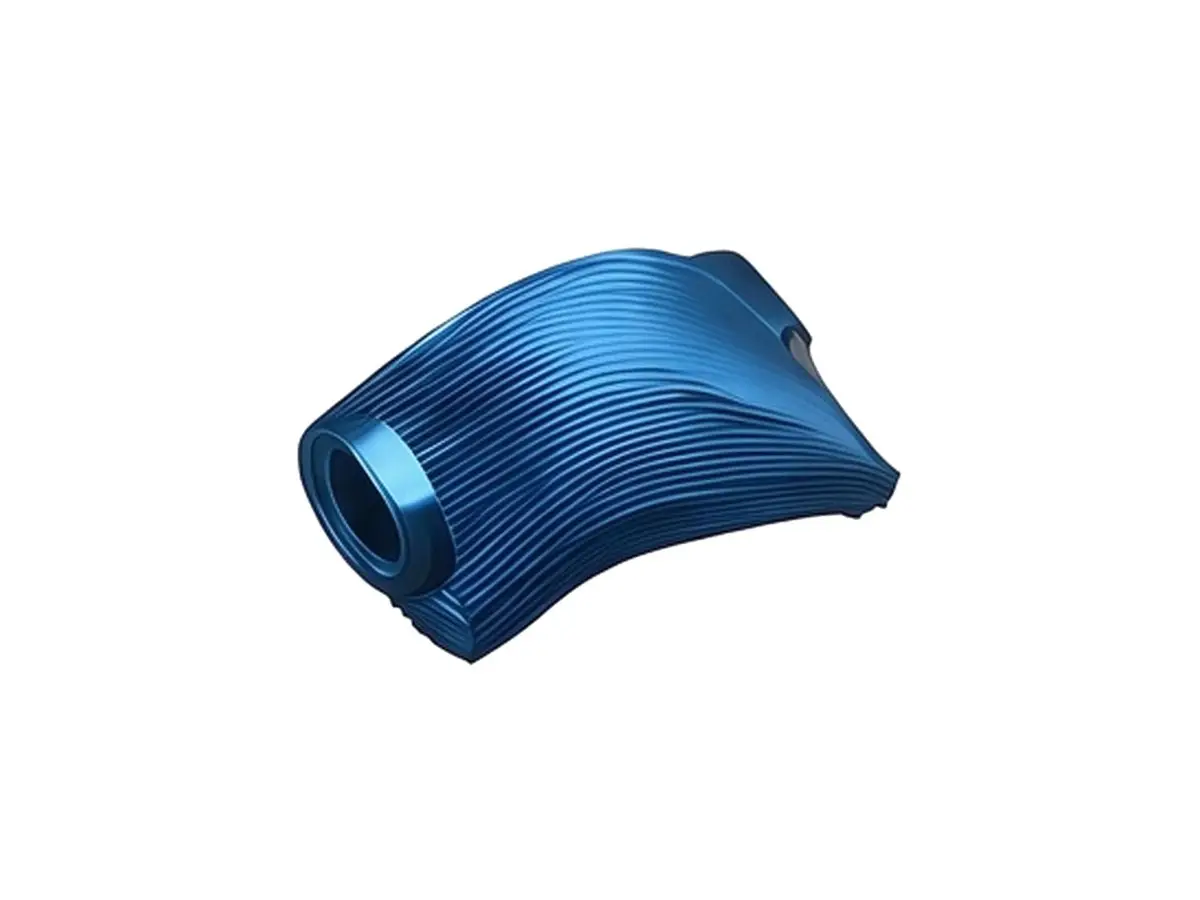
Blue anodized aluminium threaded sensor housings turned with a thin wall and a sealing shoulder

CNC Turned Aluminum Threaded Sensor Housing

CNC turned aluminium threaded sensor housings for proximity probes, pressure sensors and temperature barrels, machined from 6061-T6 with M12 to M30 threads, a bore concentric to the thread within 0.02 mm and a shoulder square to 0.03 mm. Anodized blue or black, with a side cable exit cut to the angle you specify.

*Tell us the cable exit direction relative to the thread start. If the exit angle is not fixed, the cable will come out facing the machine frame on at least one installation.

Aluminum Threaded Sensor Housing Overview

A sensor housing is a thin-walled barrel with a thread on one end, a seal on the other and a cable exit somewhere in between. The wall is thin because the bore has to fit the sensor, so every operation has to be planned around the fact that the part will deflect if it is held too hard.

The barrel is turned between centres or on a bar feeder with a support collet, threaded in the same cycle as the bore, and the cable exit is cross-drilled before anodizing so the hole does not break the coating at a sharp edge. The shoulder is faced against the thread so the O-ring compresses evenly.

Anodizing of a flanged manifold housing and a cylinder head deck plate
6061-T6 aluminium round bar stock for CNC turning

6061-T6 Aluminium Bar

6061-T6 is used because it turns cleanly at thin wall sections and anodizes to a consistent colour, which matters when housings are colour coded by sensor type. It needs a coating in wet or washdown areas.

7075-T6 aluminium round disc blank for CNC machining

6082 / 7075 for Strength

6082 is the alternative when the housing is welded to a bracket, since it is more weldable than 6061. 7075 is used where the wall is clamped hard and must not ovalise.

For a housing that is clamped in a block, 7075 holds its roundness better. For one that is welded or heavily anodized, 6082 or 6061 is the safer choice.

Aluminum Sensor Housing Specifications

Turning and anodizing data for threaded housings, with the wall and concentricity values that decide whether the sensor fits and seals.

SpecificationMachining DataSpecificationMachining Data
ProductThreaded Sensor Housing / Probe BarrelMachining ProcessCNC Turning, Thread Milling, Cross-Hole Drilling
Material6061-T6 Aluminium BarThread Tolerance6g, Gauged
Thread RangeM12 × 1 to M30 × 1.5, G1/4 to G3/4Bore to Thread Concentricity0.02 mm
Outer Diameter12 – 45 mmWall Thickness1.5 – 5 mm, Held ±0.1 mm
Length Range25 – 120 mmSquareness of Shoulder0.03 mm to Thread Axis
Cable ExitSide Hole 3 – 8 mm, Slot, or Threaded GlandSurface FinishRa 1.6 µm Bore, Ra 1.6 µm OD
SealingO-Ring Groove at Shoulder, Face Seal, IP67 TargetAnodizingType II 15 – 20 µm, Blue or Black
CustomizationLength, Thread, Cable Exit Angle, Window, MarkingLead Time5 – 8 Days (Sample), 12 – 16 Days (Batch)
InspectionThread Gauge, Bore Pin, Concentricity, Anodize ThicknessPackingThread Caps, Bagged, Carton

Key Features of Our Turned Sensor Housings

Thin-walled barrels turned without ovalising, threaded without taper.

Thread Cut With the Bore

Bore and thread are cut in one cycle on the same axis, so the sensor slides in without rubbing and the shoulder pulls down square.

Supported Thin-Wall Turning

The barrel is turned with a support collet or a plug mandrel so a 1.5 mm wall stays round instead of springing into an oval under chuck pressure.

Cable Exit Drilled Before Anodizing

The exit hole is cross-drilled and deburred before the dye, so the anodized edge is continuous and the cable gland seals on coating rather than on bare metal.

Shoulder Faced Against the Thread

The sealing shoulder is faced in a second operation held on the thread, which puts the O-ring compression square to the port face.

Need a housing that seals at the shoulder?

Surface Finishes for Aluminum Sensor Housings

Anodizing adds thickness to the thread and the bore, so any fit that matters is masked or sized after coating.

FinishMain PurposeFinishMain Purpose
Type II AnodizingColour coding and corrosion protection on the barrelHard AnodizingWear resistance where the housing is clamped repeatedly
Bead BlastingMatte surface before dyeing so the colour is evenMasked AnodizingBare thread and bore where electrical contact is needed
Laser MarkingSensor type and pinout on the barrelChromate ConversionConductive finish for earthed housings

*Type II anodizing adds 7 to 10 µm per surface. Threads that must gauge after coating are cut to a pre-plate size, and bores with a sliding sensor fit are masked.

logo

Put your CNC milling parts into production today

All information and uploads are secure and confidential.

Trusted for Precision CNC Machined Components

Supporting OEM projects with accurate machining, flexible production, and reliable component quality.

Mechanical Equipment Customer
The thread ran true to the sealing shoulder, so the sensor seats without cross-threading.

Industrial Components Buyer
Wall thickness was even all round, so the housing did not distort when the connector was tightened.

Equipment Manufacturer
Blue anodizing was consistent across the batch, and the thread was masked so it still starts by hand.

OEM Customer
OEM Customer
They held the shoulder depth to a few hundredths, which fixed the gap we had at the panel.

Automation Industry Customer
The customized machining solution provided the dimensional accuracy required for our rotating equipment components.

Trusted for Precision CNC Milling.

Turning Process for Aluminum Sensor Housings

The thread, the shoulder and the bore are turned on one axis, so the sensor sits square in the port and the O-ring seals on its face, not its edge.

01. Sensor and Port Review

Check the sensor body diameter, the port thread and the cable exit direction, then confirm whether the shoulder carries an O-ring or a bonded washer.

02. Bar and First Op

Cut 6061 bar, face it, drill and bore the sensor bore, turn the OD and cut the thread, supporting the thin wall with a collet or plug.

03. Cable Exit and Shoulder

Cross-drill or slot the cable exit, deburr it internally, then hold on the thread to face the shoulder and cut the O-ring groove.

04. Anodize and Mask

Anodize to the specified colour, masking the thread and bore where the drawing calls for a bare fit, and check coating thickness on a test coupon.

05. Gauge and Pack

Gauge the thread, pin-gauge the bore, check concentricity on a mandrel, then cap the thread and bag each housing with a batch label.

Send the sensor datasheet, the port thread and the cable route, and we will quote the housing with the exit angle and finish defined.

Aluminum Sensor Housing FAQs

1.5 mm in 6061-T6 for housings up to 30 mm diameter, provided the bore is drilled and bored rather than just drilled. Below 1.2 mm the wall starts to ovalise during anodizing.

It can, by up to 0.02 mm on the bore. When the sensor has a sliding fit, the bore is masked or machined oversize and reamed after coating so the fit is unchanged.

Yes. The cross-hole is indexed to the thread start and checked on a fixture, so the exit faces the same direction every time the housing is threaded into the port.

Yes, if you specify the gland thread. The exit is tapped to the gland size and the shoulder is faced so the gland seals against coating rather than against a raw machined edge.

IP67 with an O-ring at the shoulder and a sealed gland at the cable exit, tested by immersion for 30 minutes. IP68 needs a bonded end cap rather than a threaded one.

The part is turned with a plug mandrel inside the bore for the second operation, so the thread and the shoulder are cut while the wall is supported rather than clamped.

Other CNC Machined Mechanical Components

Explore additional precision CNC machined components manufactured for OEM applications and customized production needs.

Custom CNC machined stainless steel fixtures for automated assembly cells.

Precision CNC machined stainless steel rotary joint housings for robot arms and fluid transfer.

Custom CNC machined aluminum double tube clamps for motorcycle frames, bicycle builds and hydraulic lines.

Custom CNC machined aluminium indexing disks for rotary positioning systems.

Custom CNC machined aluminium housings for automation and electronic equipment.

Get high‑quality machined parts in as fast as 4 days with our expanded automated CNC milling!

Scroll to Top