
Quick Answer
Surface finish and roughness help buyers translate drawing requirements into clear CNC purchasing decisions by matching Ra values, materials, surface treatments, part functions, and inspection needs.
Key Takeaways
- Surface finish affects appearance, fit, friction, sealing, corrosion resistance, coating adhesion, and part performance.
- Ra is a common roughness value, but it should be selected according to function, not simply made as low as possible.
- Ra 3.2 μm is often a practical as-machined baseline for many CNC machining services.
- Ra 1.6 μm, 0.8 μm, or lower values usually require more process control, finishing time, and inspection.
- The right surface treatment depends on material, tolerance, working environment, appearance, cost, and delivery requirements.
- Buyers should describe surface requirements in both drawing language and purchasing language to reduce quotation errors.
Abstract
Surface finish is one of the most important details in CNC machined parts, but it is also one of the most easily misunderstood. Engineers may define Ra values, surface symbols, coating notes, or polishing requirements on drawings, while purchasing teams often need to turn these technical terms into clear RFQ requirements.
This guide explains common CNC surface finish types, typical Ra values, roughness selection methods, and practical surface treatment options. It also helps buyers connect drawing requirements with real manufacturing, inspection, and application needs across industries such as medical devices, robotics, optical instruments, semiconductor equipment, drones, and automotive parts.
What Does Surface Finish and Roughness Mean in CNC Machining?
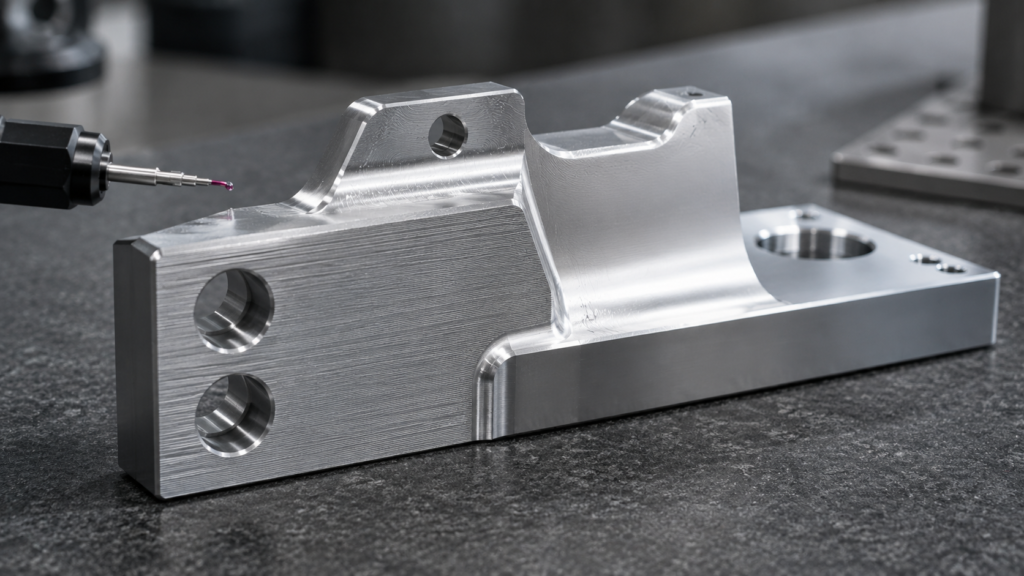
Surface finish and roughness describe the final condition of a machined part surface after cutting, deburring, finishing, or post-processing. In CNC machining, buyers often use terms such as “smooth surface,” “matte finish,” “Ra 1.6,” “black anodized,” “polished surface,” or “no visible tool marks.” However, these expressions do not always mean the same thing in production.
For engineers, surface finish is a technical requirement. For purchasing teams, it affects quotation accuracy, cost, lead time, supplier capability, and inspection method. A good CNC supplier should help connect both sides clearly.
Surface Finish vs Surface Roughness
Surface finish is a broad description of how a surface looks and performs. It may include machining marks, gloss, texture, color, burr control, corrosion resistance, coating quality, and visual consistency.
Surface roughness is more specific. It measures small surface irregularities, usually with values such as Ra or Rz. Ra, or average roughness, is commonly used because it gives a numerical way to describe how smooth or rough a surface is.
A part may look clean but still have the wrong roughness for sealing, sliding, coating, or precision assembly. That is why buyers should not only request a “good finish.” They should define what the surface needs to do.
Why Ra Values Matter in CNC Purchasing
Ra values help turn drawing requirements into measurable purchasing requirements. They allow engineers, buyers, and suppliers to discuss surface quality with less ambiguity.
| Drawing Language | Purchasing Language | What the Supplier Needs to Know |
| Ra 3.2 μm | Standard machined surface | Usually suitable for general structural parts |
| Ra 1.6 μm | Smoother functional surface | May require controlled finishing passes |
| Ra 0.8 μm | Precision contact surface | Needs tighter process control and inspection |
| Ra 0.4 μm or lower | Fine or polished requirement | May need polishing, grinding, or special finishing |
This translation helps reduce quotation errors and allows the supplier to estimate machining time, finishing cost, inspection requirements, and delivery risk more accurately.
Common Metal Finishes for CNC Machined Parts
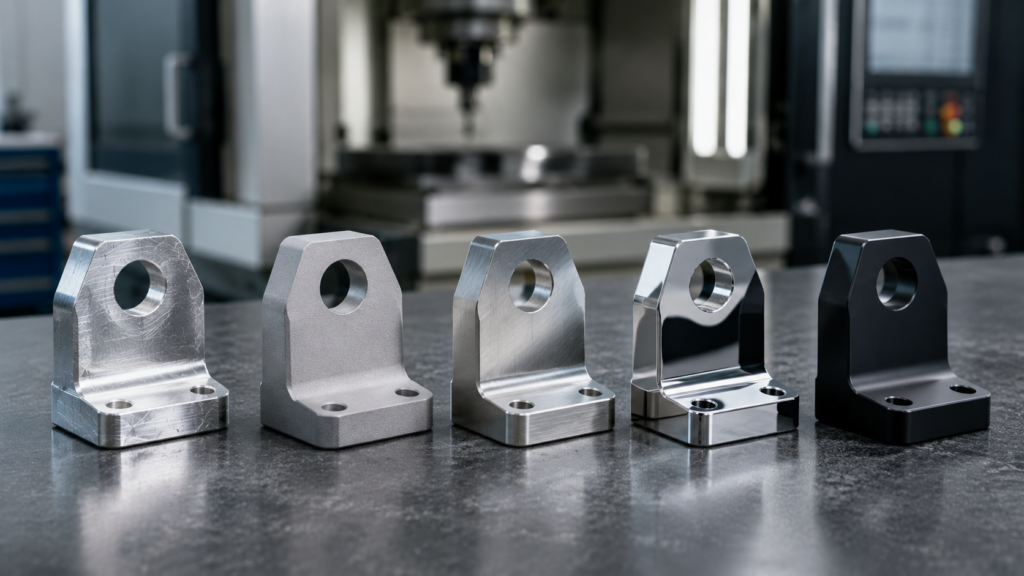
Metal finishes are selected based on material, function, appearance, working environment, and cost. The same aluminum part may need an as-machined finish for a prototype, anodizing for corrosion resistance, sandblasting for matte appearance, or polishing for a more refined visible surface.
As-Machined Finish
An as-machined finish is the surface directly produced by CNC milling, CNC turning, or other machining processes. It usually keeps visible tool marks and is one of the most cost-effective choices.
It is suitable for internal structures, prototypes, fixtures, brackets, housings, and parts where appearance is not the main concern. It is also useful when tight dimensions must be controlled before any coating or post-treatment.
For many general CNC-machined parts, as-machined finish is the best starting point because it supports faster delivery and lower cost.
Sandblasting, Polishing, Anodizing, Plating and Coating
Different surface treatment options solve different problems. Buyers should select the finish according to the part’s actual function instead of choosing only by appearance.
| Finish Type | Main Purpose | Typical Use |
| Sandblast finish | Matte texture and reduced tool marks | Aluminum housings, drone frames, visible mechanical parts |
| Metal polish | Smoother and brighter surface | Decorative parts, medical parts, optical components |
| Anodizing | Corrosion resistance, color, and surface hardness | Aluminum CNC parts |
| Electroplating | Wear resistance, conductivity, or appearance | Steel, brass, copper, and functional metal parts |
| Powder coating | Durable color and surface protection | Structural parts and outdoor components |
| Passivation | Improved corrosion resistance | Stainless steel parts |
| Electropolishing | Micro-smoothing and cleaner surface | Medical, clean equipment, and precision components |
For example, anodizing may be suitable for aluminum parts used in drones or robotic equipment, while passivation is often more suitable for stainless steel parts that need better corrosion resistance.
CNC Surface Roughness Ra Values: From Drawing Language to RFQ Language
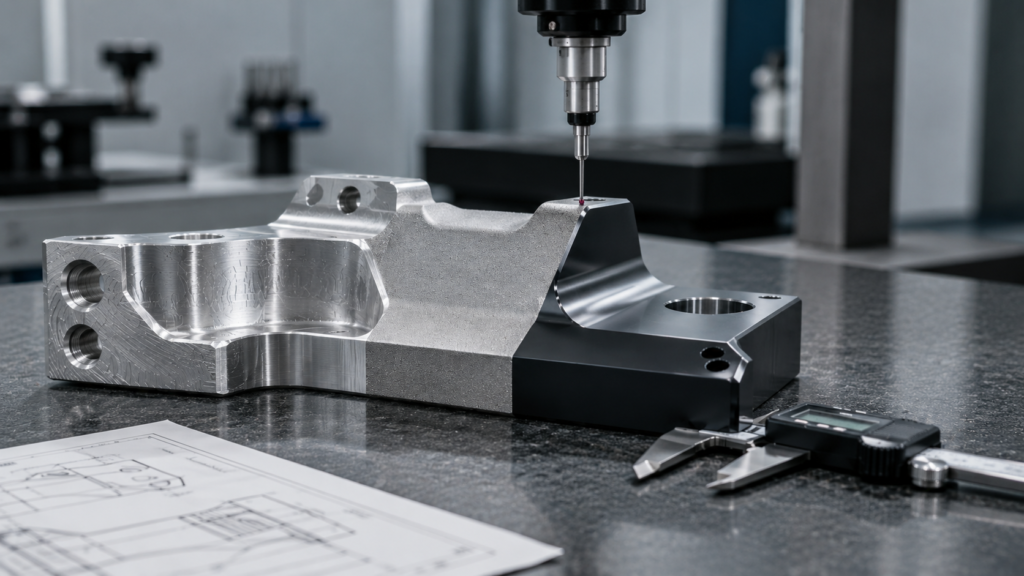
Ra values should be used as a communication tool between design, engineering, purchasing, and production. When a buyer sends an RFQ, the supplier needs to know which surfaces are critical and which surfaces can remain standard.
Typical Ra Value Selection Table
| Ra Value | Practical Meaning | Recommended Application | Cost Impact |
| Ra 6.3 μm | Rougher machined surface | Non-critical surfaces or rough machining areas | Lower |
| Ra 3.2 μm | Standard as-machined finish | Brackets, frames, housings, general mechanical parts | Baseline |
| Ra 1.6 μm | Smoother machined surface | Visible parts, light sliding surfaces, assembly areas | Moderate |
| Ra 0.8 μm | High-quality functional surface | Bearing seats, sealing areas, precision fit components | Higher |
| Ra 0.4 μm | Fine finish or polished surface | Optical, medical, mold, or high-speed contact surfaces | Highest |
These values are practical references. The final choice should depend on material, geometry, machining process, tolerance, and inspection method.
When Lower Ra Is Not Always Better?
A lower Ra value does not always mean a better part. It may increase machining time, require extra finishing, raise cost, and affect dimensional tolerance.
For example, polishing can improve smoothness and appearance, but it may remove material from edges or change critical dimensions. Sandblasting can create a uniform matte texture, but small holes, threads, and precision surfaces may need masking. Coating can improve corrosion protection, but film thickness must be considered in assembly clearance.
The best requirement is not “as smooth as possible.” The best requirement is “smooth enough for the function.”
How to Choose Surface Treatment by Function and Industry?
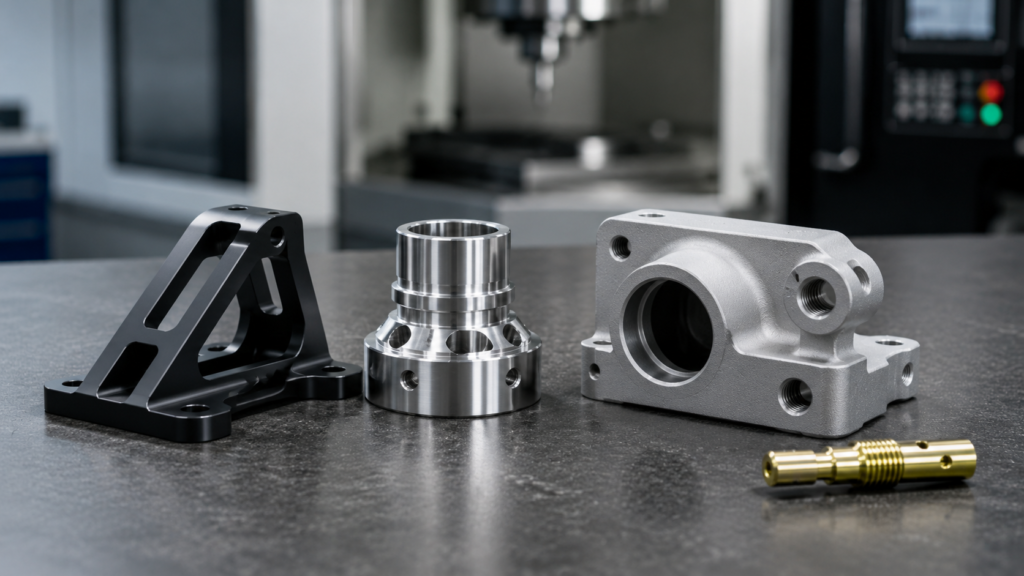
The right surface treatment should start from the part’s working purpose. Buyers can use the following selection logic before sending an RFQ.
Functional Surface Finish Selection Table
| Functional Need | Recommended Finish | Notes for RFQ |
| Lower cost and faster delivery | As-machined deburring | Good for prototypes and internal parts |
| Better appearance | Sandblasting, brushing, polishing, anodizing | Define color, texture, and visible surfaces |
| Corrosion resistance | Anodizing, passivation, plating, powder coating | Specify working environment if needed |
| Wear resistance | Hard anodizing, plating, heat treatment | Check coating thickness and mating surfaces |
| Smooth contact surface | Fine machining, polishing, electropolishing | Mark only critical surfaces on the drawing |
| Coating adhesion | Sandblasting or surface preparation | Useful before painting or powder coating |
This method helps buyers avoid vague descriptions such as “nice surface” or “high-quality finish.” Instead, they can communicate surface requirements in a way that is easier to quote, manufacture, and inspect.
Industry Application Recommendations
| Industry | Common Surface Requirement | Recommended Direction |
| Medical devices | Clean surfaces, corrosion resistance, burr control | Passivation, polishing, electropolishing |
| Robotics | Lightweight structure, wear resistance, stable assembly | Anodizing, hard anodizing, fine machining |
| Semiconductor equipment | Cleanliness, dimensional stability, low particle risk | Fine machining, polishing, electropolishing |
| Optical instruments | Smooth contact, high precision, low reflection | Fine Ra control, black anodizing, polishing |
| UAV and drone parts | Lightweight, corrosion resistance, cosmetic quality | Anodizing, sandblasting, hard anodizing |
| Auto and motorcycle parts | Strength, wear resistance, appearance, outdoor durability | Plating, anodizing, powder coating, polishing |
For industry applications, surface finish should not be treated as an isolated detail. It should be connected with tolerance, assembly, environment, cleaning, packaging, and final product use.
How Sino-V-Rise Support Surface Finishing Services?
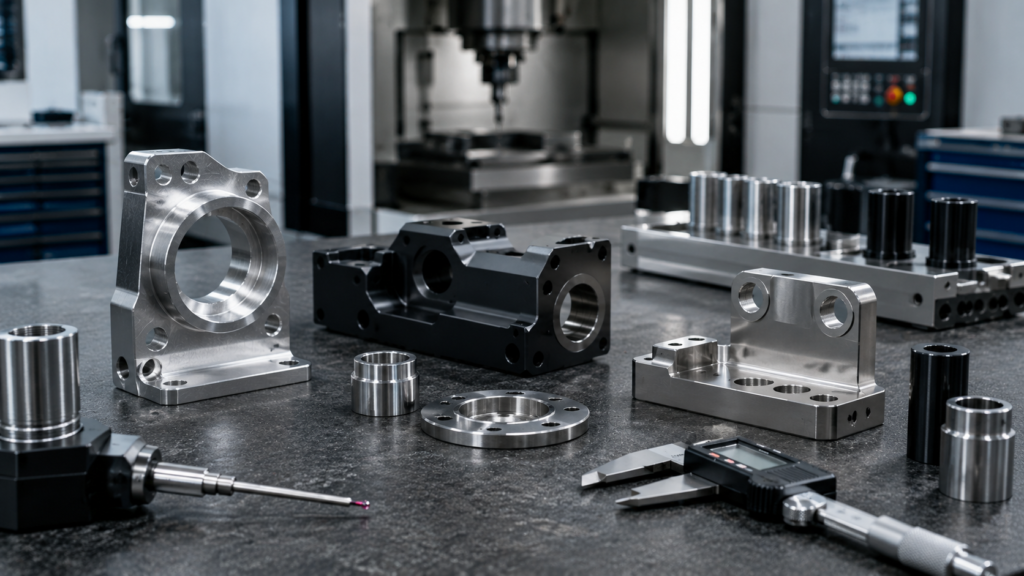
Sino-V-Rise provides precision CNC machining support from prototypes to small and medium-batch production. For surface finish selection, the value is not only making the part but also helping buyers define the right combination of material, machining process, Ra value, surface treatment, inspection, and delivery plan.
Engineering Review Before Quoting
Before quoting, Sino-V-Rise can review drawings and application requirements to identify which surfaces are functionally critical and which surfaces can use standard machining quality.
Typical review points include the following:
Whether the Ra requirement is necessary for the part function
Whether the surface treatment will affect dimensional tolerance
Whether coating thickness changes assembly clearance
Whether holes, threads, or precision fits need masking
Whether a lower-cost finish can still meet the application
Whether CNC milling, CNC turning, turning-milling, or 5-axis machining is more suitable
This helps buyers avoid overspecification and reduce unexpected manufacturing costs.
Inspection and Delivery Considerations
For precision CNC machining, surface quality should be checked together with dimensions. A complete surface finish plan may include dimensional inspection, visual inspection, burr control, coating thickness checks, and roughness measurement for critical surfaces.
For industries such as medical devices, robotics, optical instruments, semiconductor equipment, drones, and automotive parts, the best practice is to confirm finish requirements during the DFM stage, not after production. This makes the RFQ clearer and reduces rework risk.
FAQ About CNC Surface Finish
What Is the Standard Surface Finish for CNC Machining?
A common standard as-machined finish is around Ra 3.2 μm, but the actual result depends on material, toolpath, cutting parameters, machine condition, and supplier capability.
What Ra value should I choose for CNC machined parts?
Choose Ra based on function. Ra 3.2 μm is often suitable for general parts. Ra 1.6 μm works for smoother functional surfaces. Ra 0.8 μm is used for precision contact areas. Ra 0.4 μm or lower is usually reserved for highly demanding applications.
Is Ra 0.8 better than Ra 1.6?
Ra 0.8 is smoother than Ra 1.6, but it is not always better. If the part does not need that level of smoothness, Ra 1.6 may be more cost-effective and easier to manufacture.
Does Surface Treatment Affect Part Dimensions?
Yes. Coating, plating, anodizing, polishing, and blasting can affect surface dimensions or edge conditions. Critical holes, threads, sealing surfaces, and precision fits should be clearly marked before production.
Which Finish Is Best for Aluminum CNC Parts?
Anodizing is commonly used for aluminum CNC parts because it improves corrosion resistance, surface hardness, and appearance. Sandblasting before anodizing can also create a more uniform matte texture.
How Should I Describe Surface Finish in an RFQ?
A good RFQ should include material, drawing, required Ra value, visible surfaces, functional surfaces, surface treatment, color, masking areas, tolerance notes, and inspection requirements. If some surfaces are not critical, they should also be clearly identified to control cost.
Conclusion
(图片alt:Surface finish and roughness )
Surface finish and roughness are important details in CNC part sourcing. They connect drawing symbols, Ra values, material behavior, surface treatments, inspection plans, cost, and final product performance.
For buyers, the best practice is to define the part function first, then choose the right Ra value and finish. For critical parts, only the necessary surfaces should receive tight roughness requirements. This keeps the project practical, cost-controlled, and easier to manufacture.
Sino-V-Rise helps buyers turn engineering drawings into clear manufacturing and purchasing requirements through CNC machining, metal surface finishing services, DFM review, inspection planning, and one-stop support from prototype to small and medium-batch production.