
Summary
CNC milling is one of the most widely used precision machining processes for producing complex metal and plastic components. By using computer-controlled cutting tools to remove material from a workpiece, CNC milling can create accurate parts with consistent quality, tight tolerances, and repeatable results.
For engineers, designers, and purchasing teams, understanding how CNC milling works helps make better decisions when selecting materials, designing parts, evaluating manufacturing feasibility, and choosing the right machining partner.
This guide explains what CNC milling is, how the machining process works, the different types of CNC milling machines, common operations, materials, accuracy considerations, and how to determine whether CNC milling is suitable for your project.
What Is CNC Milling?
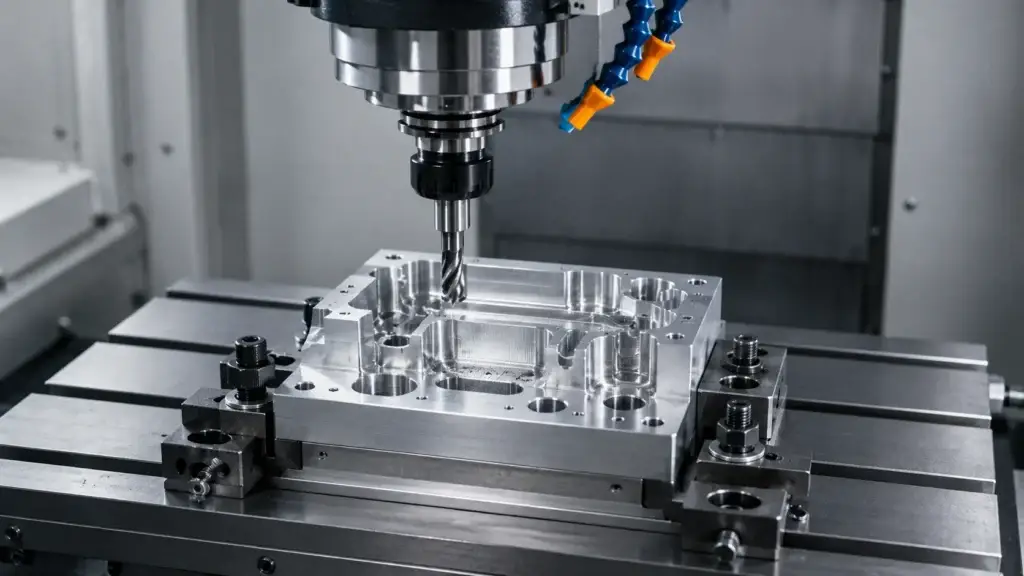
CNC milling is a subtractive manufacturing process that uses computer-controlled machines and rotating cutting tools to remove material from a solid workpiece and produce precision components based on digital designs.
Unlike additive manufacturing methods that build parts layer by layer, CNC milling starts with a block, bar, or sheet of material and gradually removes unwanted material until the desired geometry is achieved.
The process is widely used for manufacturing prototypes, custom parts, and production components because it offers excellent accuracy, repeatability, and flexibility across a wide range of materials, including aluminum, stainless steel, brass, copper, and engineering plastics.
From medical device components and semiconductor fixtures to robotic parts and optical equipment structures, CNC milling plays an important role in industries where dimensional accuracy and reliable performance are critical.
How Does CNC Milling Differ from Traditional Milling?
The basic concept of milling has existed for many years, but CNC technology has significantly improved how machining is performed.
Traditional milling machines require operators to manually control tool movement, which means production quality can depend heavily on operator experience. CNC milling machines, however, use programmed instructions to control machine movements automatically.
The main differences include:
| Traditional Milling | CNC Milling |
| Manual machine operation | Computer-controlled operation |
| Operator controls movement directly | Machine follows programmed tool paths |
| More variation between parts | High repeatability between batches |
| Suitable for simple machining tasks | Suitable for complex geometries and precision components |
For modern manufacturing projects, CNC milling provides greater consistency, especially when producing multiple identical parts or components with complex features.
How Does CNC Milling Work?
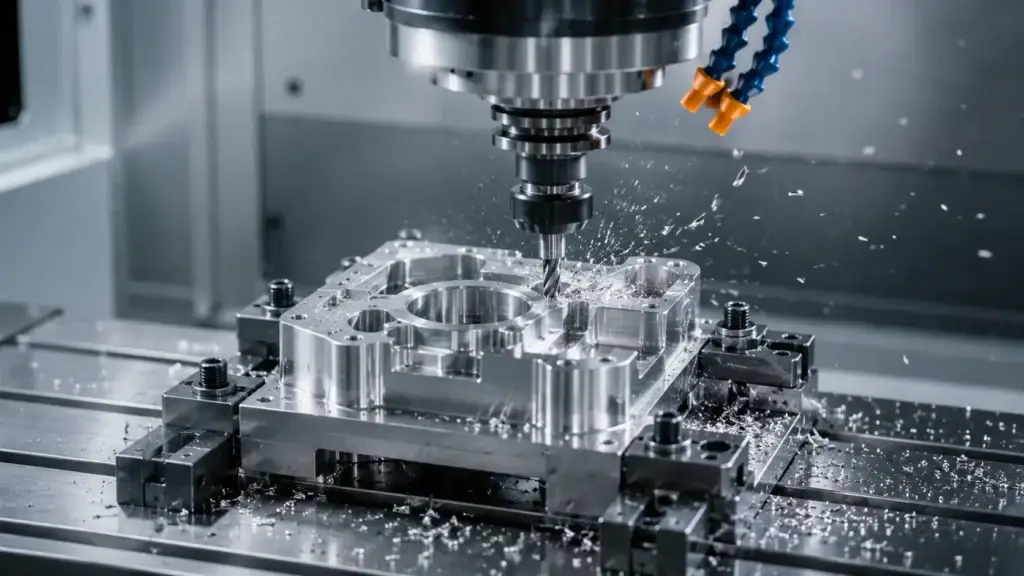
The CNC milling process involves several stages, starting from a digital design and ending with a finished, inspected component.
Although the cutting operation is performed automatically, high-quality CNC machining depends on careful preparation before the machine starts running. Tool selection, programming strategy, material properties, and inspection methods all influence the final result.
A typical CNC milling workflow includes:
CAD design → CAM programming → Machine setup → CNC machining → Inspection
Each stage plays an important role in achieving the required accuracy and surface quality.
Step 1: CAD Design and Engineering Preparation
The CNC milling process begins with a digital model created using Computer-Aided Design (CAD) software.
Engineers typically provide:
- 2D engineering drawings
- 3D CAD models
- Material requirements
- Dimensional tolerances
- Surface finish specifications
The CAD model defines the final shape of the component, including critical dimensions, holes, pockets, curves, and other geometric features.
At this stage, experienced manufacturers also review the design for manufacturability. Some designs may require adjustments to improve machining efficiency, reduce unnecessary complexity, or achieve better cost performance.
For example, internal corner radius, wall thickness, tool accessibility, and tolerance requirements can directly affect machining difficulty and production time.
Step 2: CAM Programming and Toolpath Generation
After the CAD model is completed, the design is transferred into CAM (Computer-Aided Manufacturing) software.
CAM software converts the 3D model into machine instructions by generating:
- Cutting paths
- Tool movements
- Cutting speeds
- Feed rates
- Machining sequences
The final program is usually converted into G-code, which tells the CNC machine how to move the cutting tool and perform each machining operation.
A well-developed machining program is essential because inefficient tool paths can increase machining time, reduce tool life, or affect surface quality.
Step 3: CNC Machine Setup
Before machining begins, operators prepare the CNC milling machine according to the production requirements.
The setup process typically includes:
Material Installation
The workpiece must be securely fixed to prevent movement during cutting. Proper workholding is especially important when machining parts with tight tolerances.
Tool Selection
Different cutting tools are selected depending on:
- Material hardness
- Feature size
- Required surface finish
- Machining operation
For example, aluminum components may require different tooling strategies compared with stainless steel parts.
Machine Calibration
The machine coordinate system, tool offsets, and workpiece position must be accurately configured before machining starts.
A precise setup helps ensure that the final part matches the original engineering design.
Step 4: Material Removal and Machining
During CNC milling, the spindle rotates the cutting tool at high speed while the machine moves the workpiece or cutting tool along programmed axes.
The cutting tool removes material gradually to create the required shape.
Common movements include:
- X-axis movement
- Y-axis movement
- Z-axis movement
Advanced CNC milling machines may also include additional rotational axes, allowing manufacturers to machine more complex geometries with fewer setups.
During machining, factors such as cutting speed, feed rate, tool condition, and coolant management influence:
- Dimensional accuracy
- Surface finish
- Tool life
- Production efficiency
What Are the Main Components of a CNC Milling Machine?
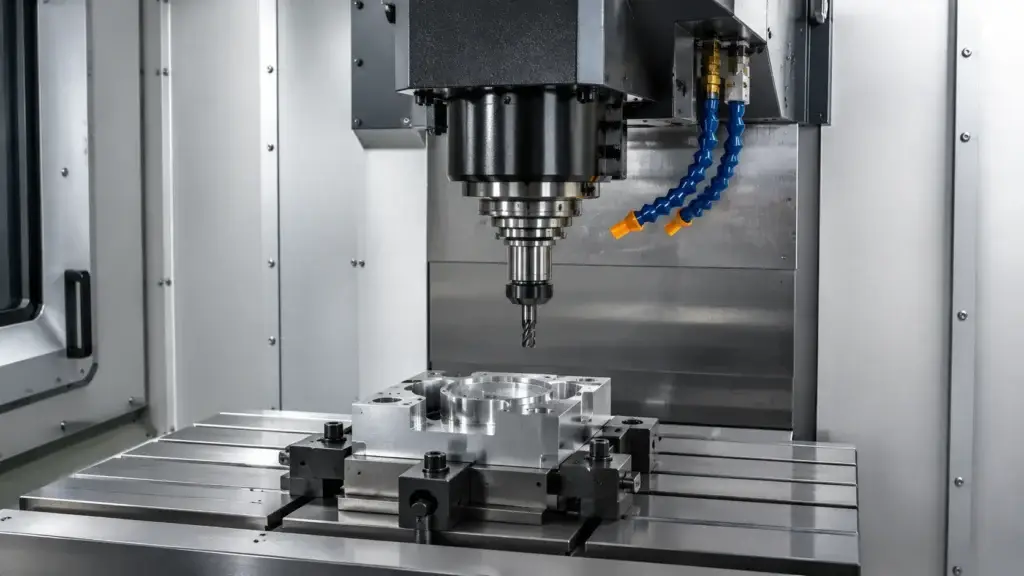
A CNC milling machine is a combination of mechanical systems, cutting tools, and computer controls that work together to produce accurate parts.
Understanding the main components helps engineers and buyers better evaluate machining capability, especially when selecting a manufacturing partner for precision components.
The key components include the spindle, cutting tools, worktable, CNC controller, and machine axes.
Spindle: The Power Source of Cutting Performance
The spindle is one of the most important components of a CNC milling machine. It holds and rotates the cutting tool at a controlled speed, allowing the tool to remove material from the workpiece.
Spindle performance affects:
- Cutting efficiency
- Surface finish quality
- Material removal capability
- Tool stability
For example, softer materials such as aluminum can often be machined at higher speeds, while harder materials like stainless steel require carefully controlled cutting parameters to maintain tool life and machining accuracy.
A stable spindle system is especially important when machining precision parts with tight dimensional requirements.
Cutting Tools: Determining Machining Capability
Cutting tools directly interact with the material and determine how accurately different features can be produced.
Common CNC milling tools include:
- End mills
- Face mills
- Ball nose cutters
- Drills
- Slot cutters
Different tools are selected depending on the machining purpose.
For example:
- End mills are commonly used for creating pockets and profiles.
- Ball nose cutters are suitable for curved surfaces and complex 3D geometries.
- Drills are used for accurate holes.
Choosing the correct tool helps achieve better surface quality, reduce machining time, and improve production consistency.
CNC Controller: The Brain of the Machine
The CNC controller interprets programmed instructions and controls the movement of the machine.
It manages:
- Axis movement
- Cutting speed
- Feed rate
- Tool changes
- Machining sequences
Modern CNC controllers allow manufacturers to produce highly complex parts with consistent results because every machining step follows the programmed parameters.
Machine Axes: Defining Machining Capability
The number of axes determines how the cutting tool can move around the workpiece.
A standard CNC milling machine usually operates on three linear axes:
- X-axis: left and right movement
- Y-axis: front and back movement
- Z-axis: vertical movement
Additional rotational axes allow the machine to access more surfaces and produce more complex geometries.
This is why choosing between 3-axis, 4-axis, and 5-axis CNC milling is an important consideration for engineers during the design and manufacturing process.
What Types of CNC Milling Machines Are Available?
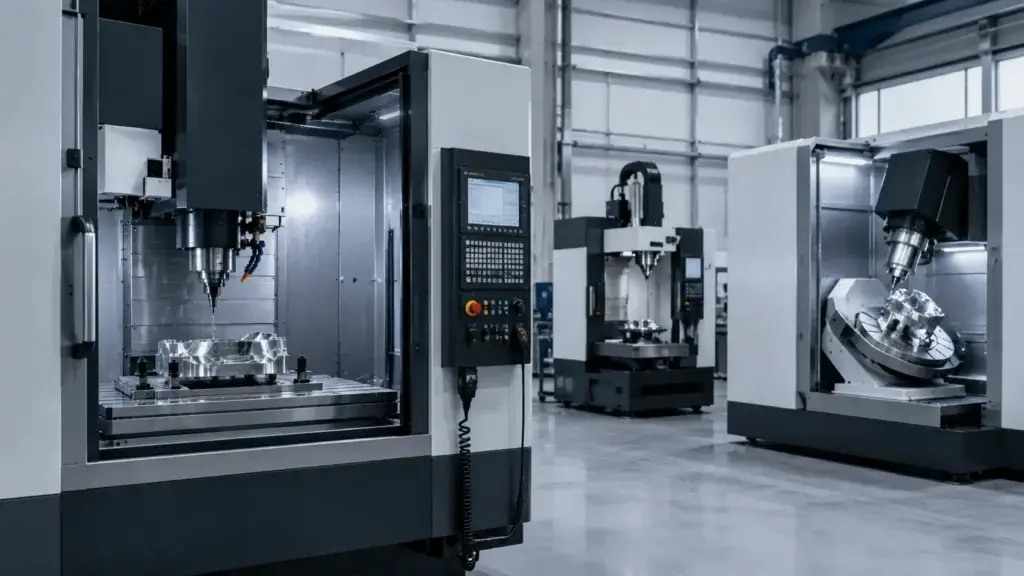
CNC milling machines are available in different configurations depending on part complexity, production requirements, and machining accuracy.
The most common types include 3-axis, 4-axis, and 5-axis CNC milling machines.
The right choice depends on factors such as:
- Part geometry
- Required tolerances
- Number of setups
- Production volume
- Surface requirements
3-Axis CNC Milling
3-axis CNC milling is the most common and widely used machining method.
The cutting tool moves along three linear directions:
- X-axis
- Y-axis
- Z-axis
This configuration is suitable for many standard components, including:
- Plates
- Brackets
- Housings
- Mechanical fixtures
- Flat components
Advantages of 3-axis CNC milling include:
- Lower machining cost
- High availability
- Efficient production for standard geometries
However, complex parts with features on multiple sides may require additional setups, which can increase machining time and potential alignment errors.
4-Axis CNC Milling
4-axis CNC milling adds a rotational axis to the standard three-axis movement.
This allows the workpiece to rotate during machining, enabling access to additional surfaces without manually repositioning the part.
It is often used for components requiring:
- Side machining
- Cylindrical features
- Multiple surface operations
Compared with 3-axis machining, 4-axis milling can reduce setups and improve consistency for more complex parts.
5-Axis CNC Milling
5-axis CNC milling provides the highest level of flexibility among standard CNC milling configurations.
The machine can move along three linear axes while simultaneously controlling two rotational axes.
This capability allows manufacturers to machine complex geometries from multiple angles in a single setup.
- Typical applications include:
- Medical components
- Optical parts
- Semiconductor equipment components
- Aerospace structures
- Complex mechanical parts
Benefits of 5-axis CNC milling include:
- Reduced setup time
- Improved accuracy for complex parts
- Better surface finish
- Ability to machine difficult geometries
For highly complex precision components, 5-axis machining often provides better efficiency and consistency compared with multiple setups on conventional machines.
What CNC Milling Operations Can Be Performed?
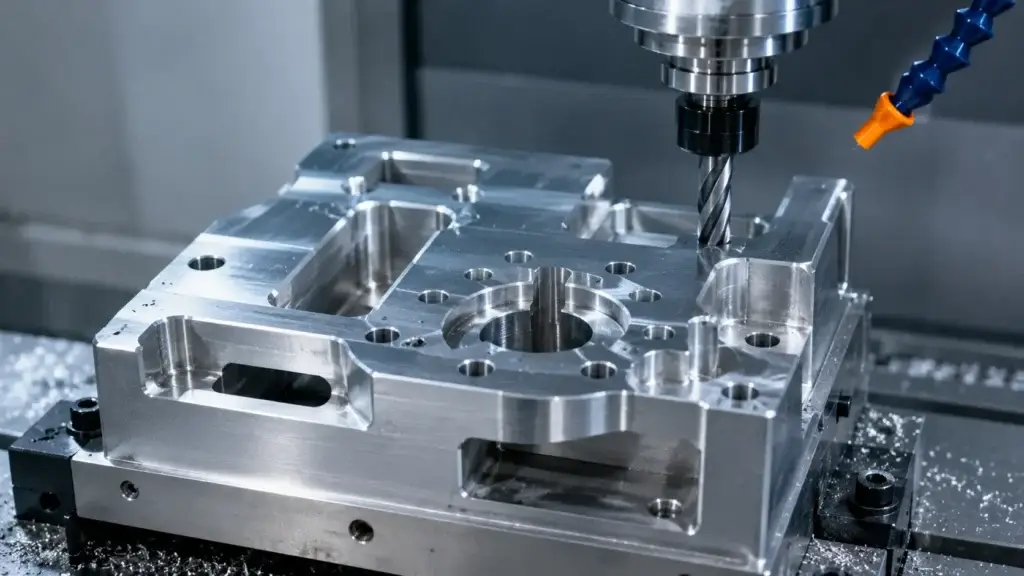
CNC milling machines can perform various operations to create different shapes, features, and surface conditions.
The machining operation selected depends on the final part requirements.
Common CNC milling operations include:
Face Milling
Face milling is used to create flat surfaces on the workpiece.
The cutting tool removes material from the top surface to achieve:
- Accurate flatness
- Improved surface finish
- Proper dimensional control
This operation is often one of the first steps when preparing raw material for further machining.
Pocket Milling
Pocket milling creates recessed areas or cavities within a component.
Common applications include:
- Electronic housings
- Mechanical brackets
- Lightweight structural parts
The machining strategy must consider tool accessibility, corner radius, and material removal efficiency.
Slot Milling
Slot milling creates narrow grooves or channels in a workpiece.
It is commonly used for:
- Assembly features
- Mechanical positioning structures
- Keyways
- Functional channels
Proper tool selection is important because narrow slots can create challenges related to tool deflection and chip removal.
Drilling
Although drilling is often considered a separate process, CNC milling machines can accurately create holes using programmed tool movements.
Applications include:
- Mounting holes
- Precision alignment holes
- Thread preparation
Hole accuracy depends on factors such as tooling quality, machine stability, and programming accuracy.
Contour Milling
Contour milling is used to create curved surfaces, angled edges, and complex profiles.
It is commonly applied to parts requiring:
- Smooth external shapes
- Aerodynamic surfaces
- Complex 3D geometries
This operation is especially important for industries such as medical equipment, robotics, and optical instruments where part geometry can be highly specialized.
What Materials Can Be CNC Milled?
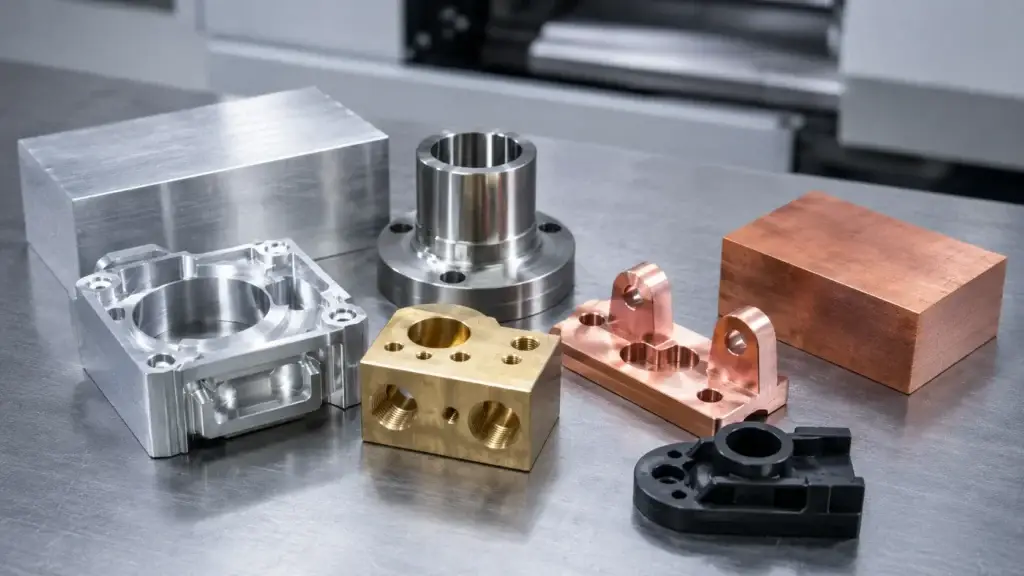
One of the major advantages of CNC milling is its ability to process a wide range of materials.
The best material choice depends on the application requirements, including strength, weight, corrosion resistance, thermal properties, and cost.
Aluminum
Aluminum is one of the most commonly used CNC milling materials because it offers:
- Lightweight characteristics
- Good machinability
- Corrosion resistance
- Excellent strength-to-weight ratio
It is widely used for:
- Robotics components
- Medical equipment parts
- Aerospace structures
- Precision housings
Stainless Steel
Stainless steel is selected when strength, durability, and corrosion resistance are important.
It is commonly used in:
- Medical devices
- Industrial equipment
- Semiconductor-related components
Compared with aluminum, stainless steel requires more careful machining parameters because of its higher hardness and lower machinability.
Brass and Copper
Brass and copper are commonly used where electrical conductivity or specific mechanical properties are required.
Applications include:
- Electrical components
- Connectors
- Precision fittings
Engineering Plastics
CNC milling can also process various engineering plastics, including:
- PEEK
- Delrin (POM)
- Nylon
- Acrylic
These materials are often selected for applications requiring:
- Low weight
- Chemical resistance
- Electrical insulation
- Reduced friction
How Accurate Is CNC Milling?
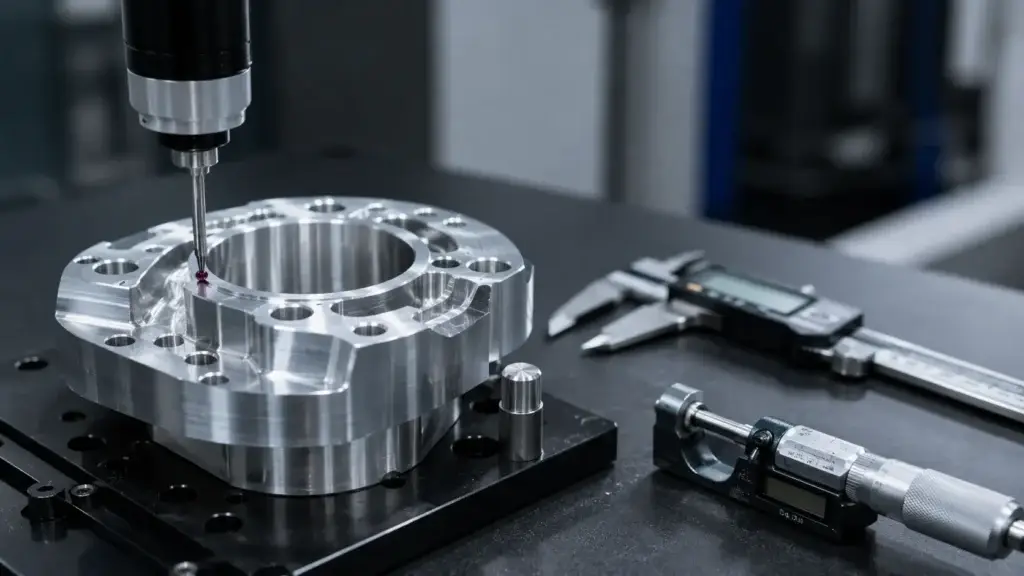
CNC milling is widely recognized for producing high-precision components, but actual accuracy depends on multiple factors rather than the machine alone.
A reliable machining result requires coordination between equipment capability, programming quality, tooling, material control, and inspection processes.
Factors Affecting CNC Milling Accuracy
Machine Capability
The rigidity, calibration condition, and overall performance of the CNC machine directly affect dimensional accuracy.
High-quality machines provide better stability during cutting, especially for tight-tolerance components.
Tool Selection and Condition
Worn or unsuitable cutting tools can cause:
- Dimensional variation
- Poor surface finish
- Increased machining errors
Regular tool management is essential for maintaining consistent quality.
Material Characteristics
Different materials behave differently during machining.
Factors such as:
- Thermal expansion
- Material hardness
- Internal stress
can influence final dimensions.
Inspection and Quality Control
Precision machining requires accurate inspection methods to verify final results.
Professional CNC manufacturers typically use measurement equipment such as:
- Coordinate Measuring Machines (CMM)
- Height gauges
- Optical measuring systems
to confirm critical dimensions and tolerances.
SINO-V-RISE applies ISO9001 quality management practices and uses precision inspection equipment, including CMM and other measurement tools, to support consistent part quality.
CNC Milling Design Considerations for Better Machining Results
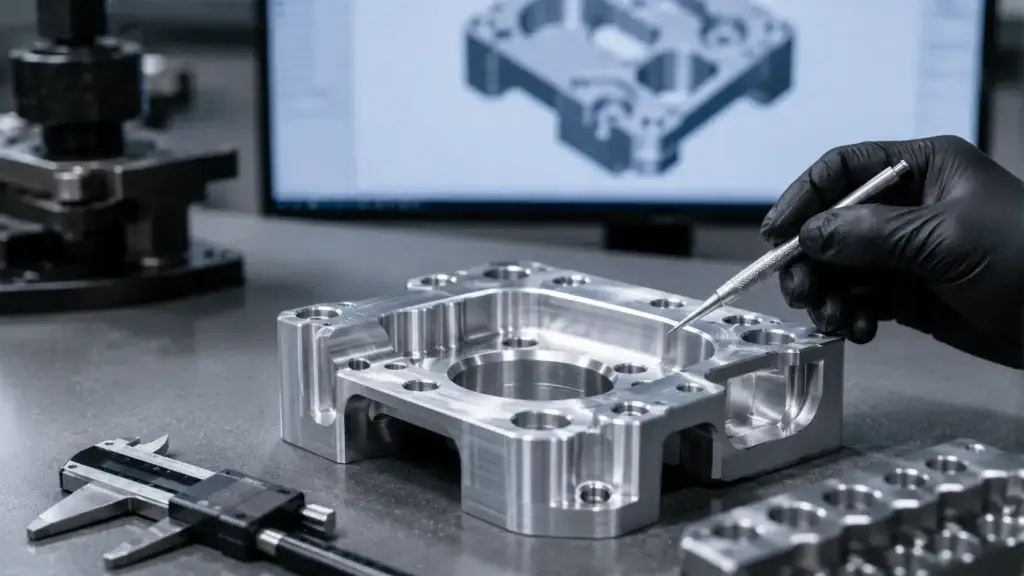
A successful CNC milling project does not start when the machine begins cutting. It starts during the design stage.
A part that is designed with manufacturing requirements in mind is easier to machine, more cost-effective to produce, and more likely to achieve the required performance.
For engineers developing new components, considering machining limitations early can help avoid unnecessary redesigns and production delays.
Consider Wall Thickness
Wall thickness is an important factor in CNC milling because thin walls are more sensitive to cutting forces and vibration.
If a design includes extremely thin sections, the cutting tool may cause:
- Part deformation
- Reduced dimensional accuracy
- Poor surface finish
When designing CNC milled components, engineers should balance weight reduction with structural stability.
For lightweight parts, such as robotic components or precision housings, proper wall thickness helps maintain both strength and machining reliability.
Consider Internal Corner Radius
CNC milling tools are typically round rather than square, which means internal corners naturally have a radius.
Sharp internal corners often require smaller cutting tools or additional machining processes, which may increase:
- Machining time
- Tool wear
- Production cost
Adding appropriate corner radii allows the cutting tool to move more efficiently and improves machining consistency.
Define Realistic Tolerances
Tighter tolerances require more precise machining processes and stricter quality control.
Although CNC milling can achieve high accuracy, not every feature requires extremely tight tolerances.
Over-specifying tolerances can unnecessarily increase manufacturing costs without improving part performance.
Engineers should identify critical dimensions that directly affect:
- Assembly
- Function
- Performance
while allowing reasonable tolerances for non-critical features.
Ensure Proper Tool Accessibility
Tool accessibility is another important design consideration.
Deep cavities, narrow channels, and complex internal structures may create challenges because cutting tools need sufficient clearance to reach the machining area.
During the design review process, manufacturers often evaluate:
- Tool reach
- Cutting direction
- Fixture requirements
- Number of setups
A design that considers machining accessibility can significantly improve production efficiency.
What Industries Use CNC Milling?
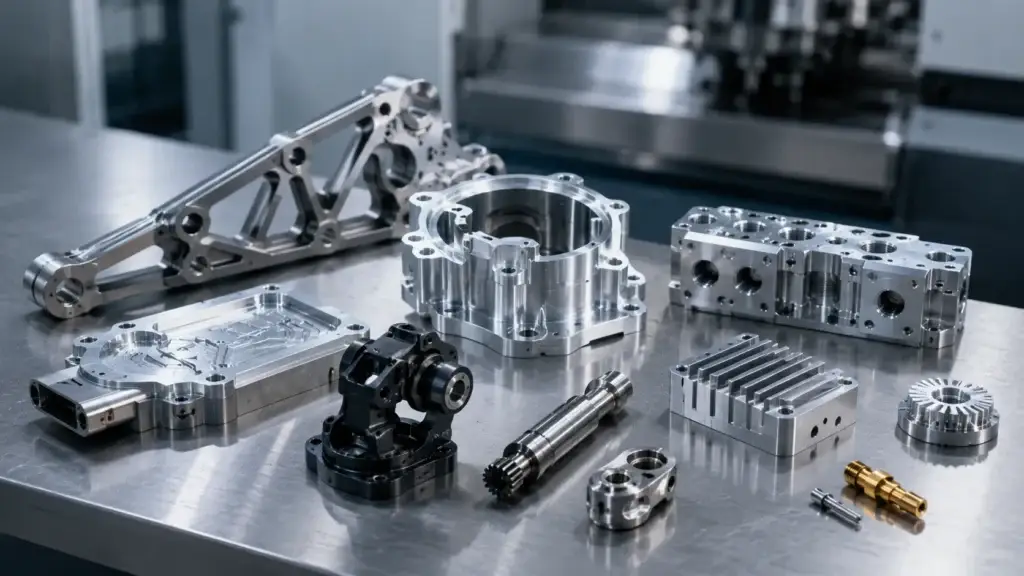
CNC milling is widely used across industries that require accurate, reliable, and customized components.
Its flexibility makes it suitable for both prototype development and small-to-medium batch production.
Medical CNC Milling Applications
Medical equipment often requires components with strict dimensional requirements and reliable performance.
CNC milling is commonly used to produce:
- Medical device housings
- Surgical instrument components
- Precision fixtures
- Testing equipment parts
Because medical applications often involve complex geometries and strict quality requirements, manufacturers must have strong process control and inspection capabilities.
Semiconductor CNC Machining Applications
Semiconductor manufacturing equipment requires components with high precision and excellent dimensional stability.
CNC milling is used for producing:
- Vacuum chamber components
- Mounting plates
- Sensor brackets
- Precision fixtures
These parts often require careful material selection, tight tolerances, and consistent surface quality to support stable equipment operation.
Robotics CNC Machining Applications
Robotic systems rely on lightweight yet strong components to achieve accurate movement.
CNC milling is commonly used for:
- Robot arms
- Structural brackets
- Mechanical joints
- Custom automation components
Aluminum CNC milling is especially popular in robotics applications because it provides a good balance between strength and weight reduction.
UAV and Aerospace Component Applications
Unmanned aerial vehicles and aerospace-related equipment often require components with:
- Lightweight structures
- High strength
- Complex geometries
CNC milling enables manufacturers to produce customized parts that meet these demanding requirements.
Optical Instrument Applications
Optical equipment requires precise positioning and stable mechanical structures.
CNC milling is used for:
- Optical mounts
- Adjustment components
- Precision frames
- Instrument housings
Machining accuracy and surface quality are especially important because small dimensional variations can affect equipment performance.
What Factors Affect CNC Milling Cost?
The cost of CNC milling depends on several factors rather than a single machining parameter.
Understanding these factors helps engineers make better decisions during product development and supplier selection.
Material Selection
Different materials have different machining characteristics.
For example:
- Aluminum is generally easier to machine and offers shorter production cycles.
- Stainless steel requires slower cutting speeds and more careful tool management.
- Engineering plastics may require special considerations to prevent deformation.
Material choice directly influences machining time, tooling requirements, and overall cost.
Part Complexity
Complex geometries usually require:
- More programming time
- Additional machining operations
- More advanced equipment
A simple three-axis component may require significantly less machining effort than a complex five-axis part with multiple curved surfaces.
Tolerance Requirements
Tighter tolerances increase manufacturing requirements.
Parts requiring extremely precise dimensions may need:
- Additional finishing operations
- More detailed inspection
- Controlled machining conditions
Therefore, specifying only the necessary tolerances can help achieve a better balance between quality and cost.
Production Quantity
Production volume also affects CNC milling cost.
For prototypes and low-volume production, programming and setup costs represent a larger portion of total cost.
For repeated production, these initial costs can be distributed across more parts, improving overall efficiency.
Frequently Asked Questions About CNC Milling
What is CNC milling used for?
CNC milling is used to manufacture precision components with complex shapes, accurate dimensions, and repeatable quality.
Common applications include medical parts, robotics components, semiconductor equipment parts, optical instruments, automotive components, and custom mechanical assemblies.
How does a CNC milling machine work?
A CNC milling machine works by following computer-generated instructions that control cutting tool movement.
The process usually involves CAD design, CAM programming, machine setup, material cutting, and final inspection.
The rotating cutting tool removes material from the workpiece until the required shape and dimensions are achieved.
What materials can be CNC milled?
CNC milling can process a wide range of materials, including:
- Aluminum
- Stainless steel
- Brass
- Copper
- Engineering plastics such as PEEK, POM, and nylon
The best material depends on the required strength, weight, durability, electrical properties, and application environment.
What is the difference between CNC milling and CNC turning?
The main difference is how the material and cutting tool move.
In CNC milling, the cutting tool rotates and moves around a stationary workpiece.
In CNC turning, the workpiece rotates while a cutting tool removes material.
CNC milling is typically preferred for parts with complex surfaces, pockets, slots, and multiple geometric features, while CNC turning is commonly used for cylindrical components.
Is CNC milling suitable for small batch production?
Yes. CNC milling is widely used for prototype development and small batch manufacturing because it does not require expensive molds or dedicated tooling.
It allows manufacturers to produce customized parts efficiently while maintaining consistent quality.
Conclusion
CNC milling is more than simply removing material from a metal block. It is a complete manufacturing process that combines engineering design, programming expertise, machine capability, and quality control to produce accurate functional components.
Understanding how CNC milling works helps engineers make better decisions about part design, material selection, machining methods, and supplier evaluation.
For projects requiring precision CNC milled parts, working with an experienced manufacturer can reduce development risks and ensure consistent production results.
With multi-process machining capability, precision inspection systems, and experience supporting industries such as medical, robotics, semiconductor, and optical equipment, SINO-V-RISE helps global customers transform ideas and designs into reliable precision components.