
Quick Answer
Surface treatment is a process that modifies a part’s surface to improve corrosion resistance, wear performance, appearance, roughness, hardness, cleanliness, or coating adhesion.
Key Takeaways
- Surface treatment changes the outer layer of a part without changing the whole material.
- Common metal surface treatment methods include anodizing, electroplating, passivation, polishing, sandblasting, and powder coating.
- Surface treatment can improve corrosion resistance, wear resistance, hardness, color, texture, and assembly performance.
- The right finish depends on material, environment, function, tolerance, appearance, and cost.
- For CNC parts, surface treatment should be planned early because it can affect dimensions, roughness, masking, and inspection.
Abstract
Surface treatment is an important step in manufacturing because many parts fail or succeed at the surface. A CNC machined part may have the correct material and dimensions but still need extra protection, smoother contact surfaces, better appearance, improved corrosion resistance, or a controlled matte texture.
This guide explains what surface treatment means, how it works, common treatment types, suitable materials, benefits, limitations, and how to choose the right finish for CNC machined metal and plastic parts.
What Is Surface Treatment?
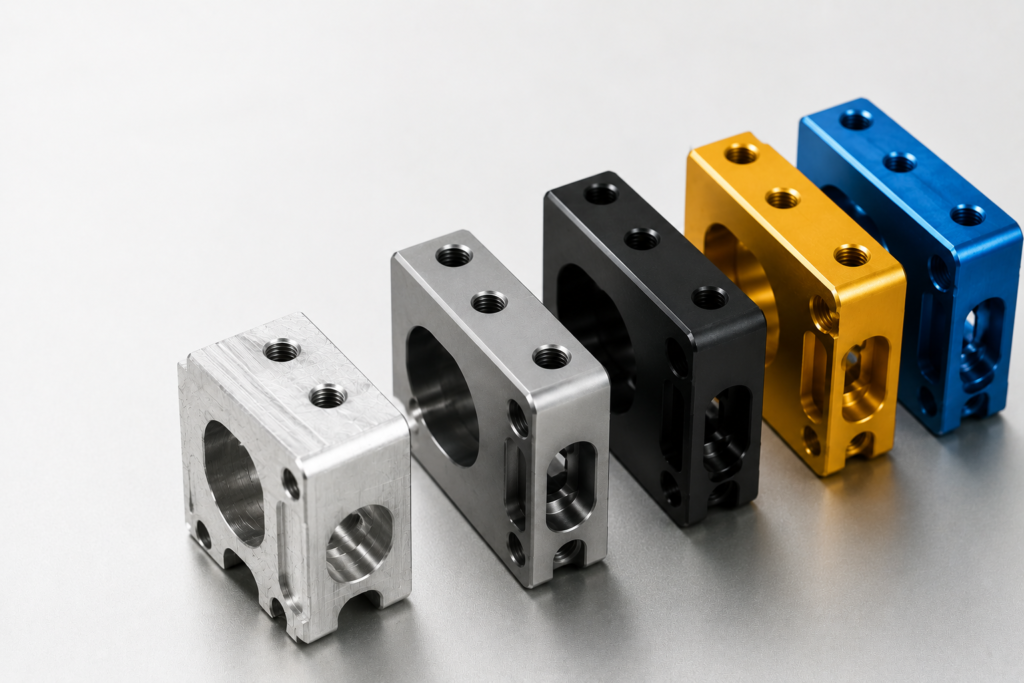
Surface treatment is any manufacturing process that changes, protects, cleans, coats, or improves the surface of a material. The purpose is to give the surface properties that the base material alone may not provide.
For CNC machined parts, surface treatment is often used after milling, turning, drilling, grinding, or deburring. It can improve the final part’s corrosion resistance, wear resistance, surface texture, color, gloss, friction, conductivity, or cleanliness.
In simple terms, the base material gives the part its main strength and structure, while surface treatment gives the outside layer the required performance.
Surface Treatment vs Surface Finish
These two terms are related, but not exactly the same.
| Term | Meaning | Example |
| Surface treatment | A process that changes or protects the surface | Anodizing, passivation, electroplating |
| Surface finish | The final surface condition or appearance | Matte, polished, brushed, Ra 0.8 μm |
| Surface roughness | A measurable texture value | Ra, Rz, or other drawing requirements |
| Metal finishes | General term for final metal surface results | Polished stainless steel, black anodized aluminum |
A part may need both a treatment and a defined finish. For example, an aluminum housing may need black anodizing plus a controlled matte appearance.
How Does Metal Surface Treatment Work?
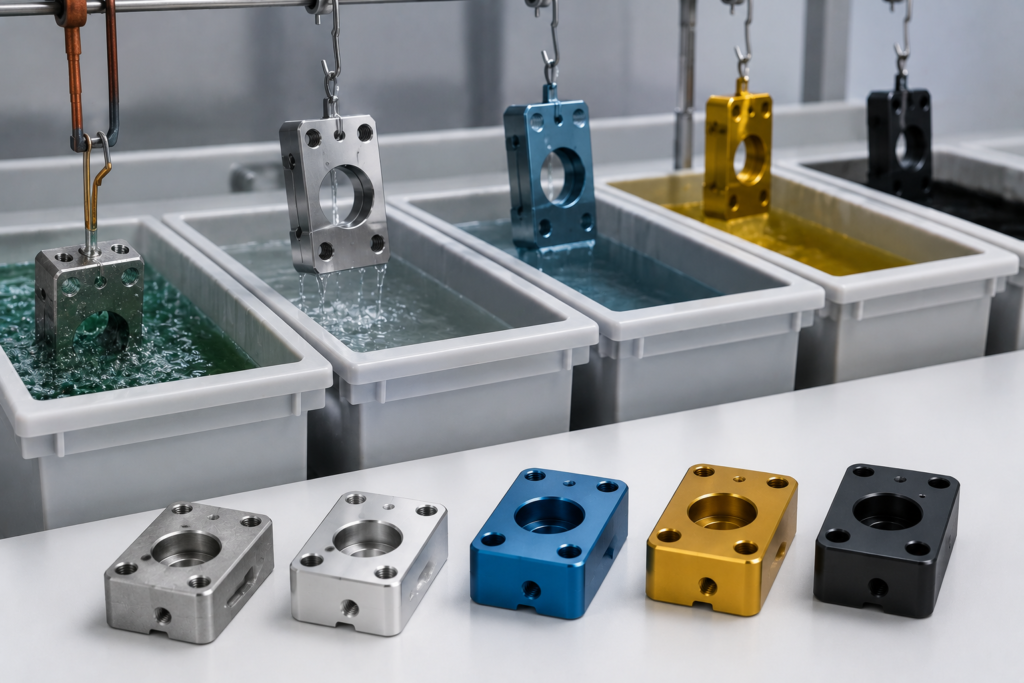
Metal surface treatment works by modifying the outer surface layer through cleaning, abrasion, chemical reaction, electrochemical conversion, coating, or deposition.
The process depends on the part material and the required function. For example, anodizing converts the surface of aluminum into a protective oxide layer. Passivation helps stainless steel form a cleaner passive layer. Electroplating deposits a thin metal layer onto another surface. Sandblasting changes texture by impacting the surface with abrasive media.
The Basic Surface Treatment Workflow
| Step | What Happens | Why It Matters |
| 1. Part review | Material, drawing, tolerance, and function are checked | Confirms whether the treatment is suitable |
| 2. Cleaning | Oil, chips, dust, and contaminants are removed | Prevents defects and poor adhesion |
| 3. Surface preparation | Deburring, masking, polishing, or blasting may be applied | Controls texture and protected areas |
| 4. Treatment process | Coating, plating, anodizing, passivation, or polishing is performed | Creates the final surface property |
| 5. Inspection | Appearance, thickness, roughness, and dimensions are checked | Confirms the part meets requirements |
| 6. Packing | Treated surfaces are protected before shipping | Reduces scratches and handling damage |
For precision CNC parts, surface treatment should not be treated as an afterthought. Coating thickness, masking areas, and roughness requirements may affect machining allowances and final inspection.
Common Types of Surface Treatment Technology
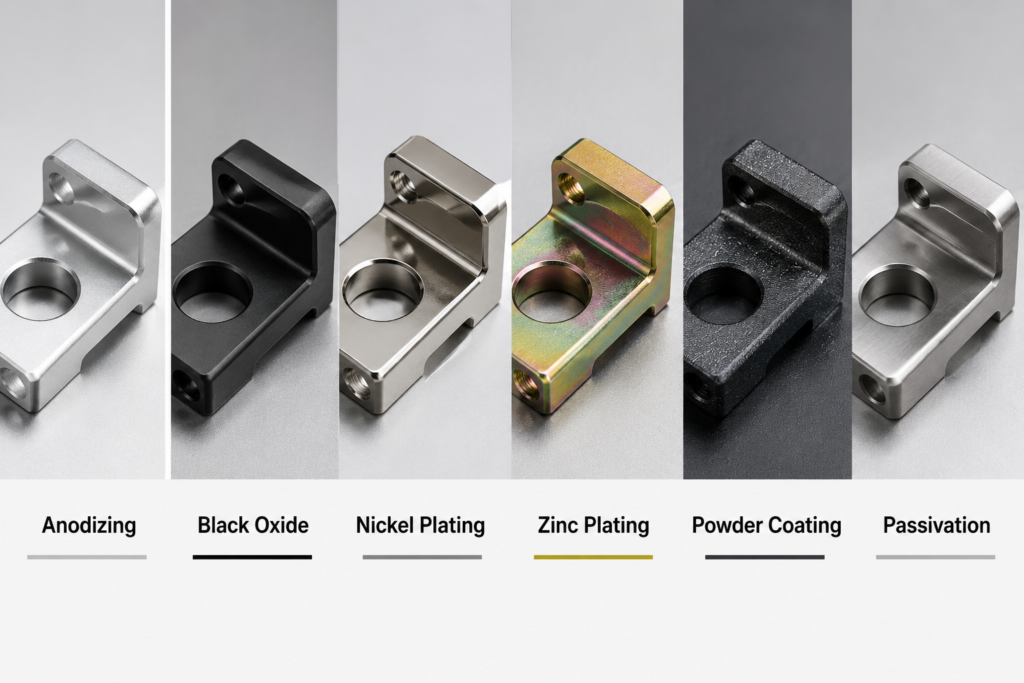
There are many types of surface treatment technology, but most can be grouped into four categories: mechanical treatment, chemical treatment, electrochemical treatment, and coating treatment.
Mechanical, Chemical, Electrochemical, and Coating Methods
| Surface Treatment Type | Common Methods | Typical Purpose |
| Mechanical treatment | metal polish, brushing, grinding, sandblast finish | Improve appearance, texture, smoothness |
| Chemical treatment | Passivation, chemical conversion coating | Improve corrosion resistance or surface cleanliness |
| Electrochemical treatment | Anodizing, electroplating, electropolishing | Add oxide layer, metal layer, or smooth surface |
| Coating treatment | powder coating surface, painting, PVD coating | Add color, protection, hardness, or wear resistance |
Common Surface Treatment Methods
| Method | Best For | Main Benefit |
| Anodizing | Aluminum CNC parts | Corrosion resistance, color, hardness |
| Passivation | Stainless steel parts | Cleaner surface and improved corrosion resistance |
| Electroplating | Steel, brass, copper, functional metal parts | Conductivity, wear resistance, decorative finish |
| Sandblasting | Aluminum, stainless steel, steel | Uniform matte texture |
| Polishing | Stainless steel, aluminum, brass | Smooth surface and bright appearance |
| Powder coating | Sheet metal and structural parts | Durable color coating and protection |
| Black oxide | Steel components | Dark appearance and mild corrosion resistance |
| Brushing | Visible metal panels and covers | Directional satin texture |
Surface Finish and Roughness: Why They Matter
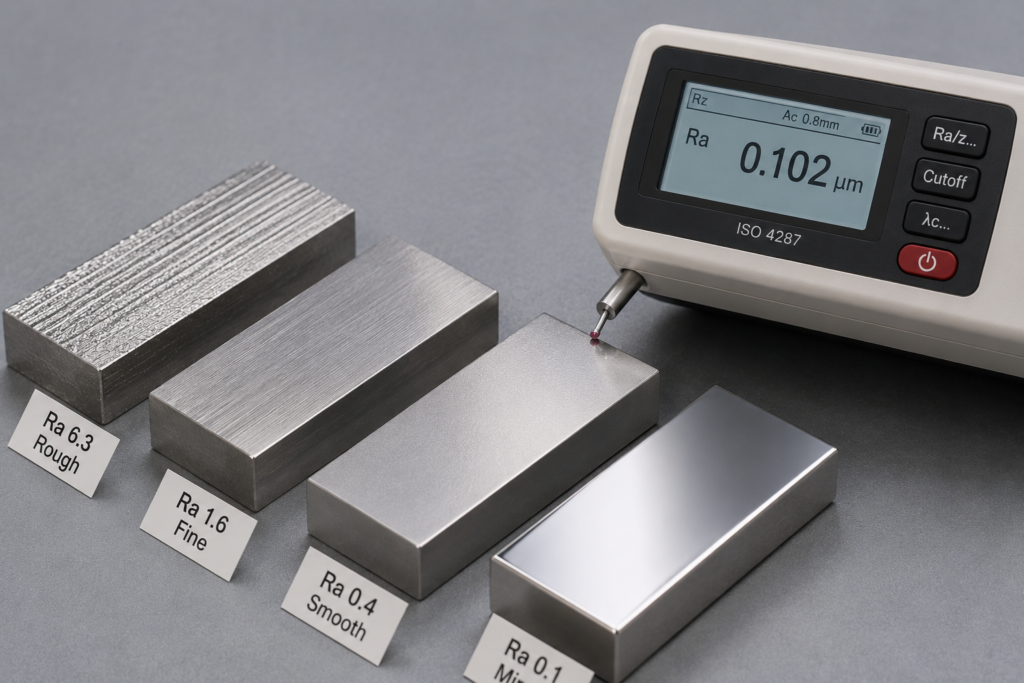
Surface finish and roughness affect how a part looks, seals, slides, fits, reflects light, and resists wear. In precision manufacturing, surface quality is not only cosmetic.
For example, a medical device part may need smooth, burr-free surfaces for cleanability. An optical instrument bracket may need a matte black finish to reduce reflection. A robotic shaft may need controlled roughness for smooth motion. A semiconductor equipment component may need a clean and stable surface to reduce contamination risk.
Functional Surfaces vs Cosmetic Surfaces
| Surface Requirement | Main Concern | Example |
| Cosmetic surface | Color, gloss, texture, visible scratches | Consumer-facing aluminum cover |
| Functional surface | Wear, sealing, friction, contact | Shaft, bearing seat, sliding block |
| Clean surface | Burrs, residue, contamination | Medical or semiconductor part |
| Protective surface | Corrosion, oxidation, chemical exposure | Outdoor bracket or marine part |
| Optical surface | Reflection, light absorption, stability | Black anodized optical mount |
If a drawing specifies Ra, coating thickness, masking, or color standard, these requirements should be reviewed before machining starts.
Common Materials for Surface Treatment metal finishes
Different materials respond differently to metal finishes. A finish that works well on aluminum may not be suitable for stainless steel or plastic.
| Material | Common Surface Treatments | Typical Applications |
| Aluminum | Anodizing, sandblasting, polishing, powder coating | Housings, brackets, drone parts, optical mounts |
| Stainless steel | Passivation, polishing, brushing, electropolishing | Medical parts, food equipment, precision fixtures |
| Carbon steel | Black oxide, zinc plating, nickel plating, painting | Shafts, brackets, hardware, machine components |
| Brass | Polishing, nickel plating, chrome plating | Connectors, decorative parts, fittings |
| Copper | Tin plating, nickel plating, polishing | Electrical parts, heat transfer components |
| Titanium | Anodizing, polishing, passivation-like cleaning | Medical, aerospace, lightweight parts |
| Plastics | Painting, vapor smoothing, texturing | Housings, prototypes, appearance parts |
For CNC manufacturing, material and surface treatment should be selected together. If the wrong material is chosen first, the desired finish may become difficult, expensive, or unreliable.
Benefits and Limitations of Surface Treatment surface finishing services
Professional surface finishing services can improve a CNC part’s performance and appearance, but they cannot solve every problem.
Benefits of Surface Treatment
| Benefit | What It Improves |
| Corrosion resistance | Helps protect parts from moisture, oxidation, salt, or chemicals |
| Wear resistance | Extends service life for moving or contact surfaces |
| Appearance | Adds color, gloss, matte texture, or decorative finish |
| Cleanability | Reduces burrs, roughness, or contamination traps |
| Hardness | Improves surface durability for some materials |
| Adhesion | Prepares the surface for coating or bonding |
| Identification | Uses color or finish to distinguish part versions |
What Surface Treatment Can and Cannot Fix
Surface treatment can improve the surface, but it cannot fully correct poor design, wrong material selection, unstable machining, deep scratches, or unrealistic tolerances.
| Limitation | Why It Matters |
| Coating adds thickness | Threads, holes, and tight fits may need masking or allowance |
| Color may vary | Batch, material grade, and surface texture can affect color |
| Surface defects may remain | Deep machining marks can show through thin finishes |
| Some finishes reduce conductivity | Coatings may insulate surfaces |
| Not every finish suits every material | Aluminum, steel, stainless steel, and plastic need different methods |
This is why early DFM review is important for surface-treated CNC parts.
How to Choose the Right Surface Treatment for CNC Parts?
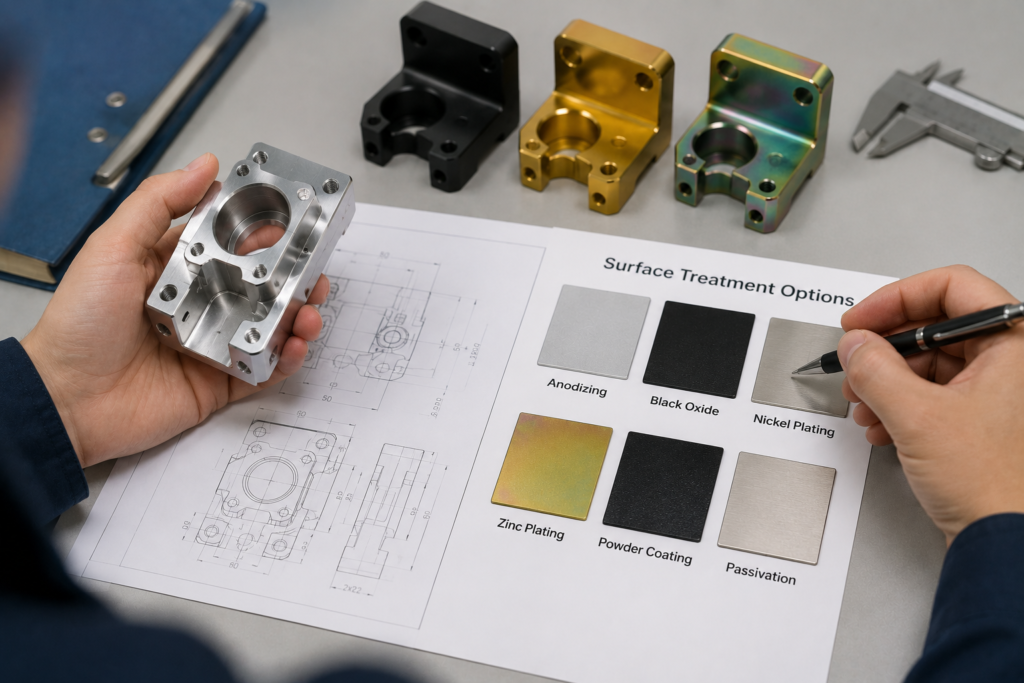
Choosing metal surface finishing services should start from the part’s function, not only appearance.
A good selection process should ask:
- What material is the part made from?
- Will the part be used indoors, outdoors, in chemicals, or near saltwater?
- Is the surface cosmetic, functional, or both?
- Are there tight holes, threads, sealing faces, or bearing surfaces?
- Does the drawing require Ra, coating thickness, color, or masking?
- Is the part for prototype, small batch, or production?
- What inspection method is required after finishing?
Sino-V-Rise supports custom CNC machining with multiple material and surface finish options. Its capabilities are especially relevant when parts require both precision machining and controlled surface quality, such as medical device components, UAV parts, semiconductor equipment parts, robotic components, optical instrument parts, and automotive or motorcycle parts.
RFQ Checklist for Surface Treated CNC Parts
| RFQ Information | Why It Helps |
| 3D CAD file | Confirms geometry and machining feasibility |
| 2D drawing | Defines tolerances, threads, Ra, coating, and inspection points |
| Material grade | Determines which treatment is suitable |
| Surface treatment requirement | Confirms anodizing, plating, passivation, polishing, blasting, or coating |
| Color or appearance sample | Reduces color and texture misunderstanding |
| Masking areas | Protects threads, holes, contacts, and sealing surfaces |
| Working environment | Helps select corrosion or wear protection |
| Quantity | Affects batch planning, cost, and lead time |
| Inspection requirement | Confirms roughness, coating thickness, CMM, or visual standards |
For precision parts, sharing the finish requirement at the RFQ stage is safer than adding it after machining. This helps avoid tolerance conflicts, coating buildup problems, and unexpected rework.
FAQ About Surface Treatment
What is surface treatment in manufacturing?
Surface treatment is a process used to modify, protect, clean, coat, or improve the surface of a manufactured part. It is used to improve performance, appearance, corrosion resistance, wear resistance, or surface texture.
What are the common types of metal surface treatment?
Common metal surface treatment types include anodizing, passivation, electroplating, electropolishing, polishing, brushing, sandblasting, powder coating, painting, black oxide, and conversion coating.
Is surface treatment the same as surface finishing?
Not exactly. Surface treatment refers to the process, while surface finishing often refers to the final surface condition, such as matte, polished, brushed, black anodized, or a specific roughness value.
Why is surface treatment important for CNC parts?
CNC parts often need surface treatment to improve corrosion resistance, appearance, hardness, wear resistance, cleanliness, friction, or assembly performance. It can also help the final part meet industry-specific requirements.
Which surface treatment is best for aluminum CNC parts?
Anodizing is one of the most common choices for aluminum CNC parts. Sandblasting, polishing, brushing, and powder coating are also used depending on appearance, corrosion resistance, and functional requirements.
Which surface treatment is best for stainless steel parts?
Passivation, polishing, brushing, and electropolishing are common choices for stainless steel parts. Passivation is often used when corrosion resistance and surface cleanliness are important.
Can surface treatment affect dimensions?
Yes. Coatings, plating, anodizing, and powder coating can change part dimensions. Tight holes, threads, sealing faces, and mating surfaces may need masking or machining allowance.
Conclusion
Surface treatment is more than a cosmetic step. It helps CNC machined parts resist corrosion, reduce wear, control roughness, improve appearance, and meet real application requirements. The best treatment depends on the part material, working environment, function, tolerance, surface finish, and inspection needs.
For buyers of CNC parts, the safest approach is to define surface treatment early in the project. A complete RFQ should include material grade, drawing requirements, surface finish, color, masking areas, working environment, and inspection standards. This allows the machining supplier to plan the process correctly and deliver parts that meet both dimensional and surface performance requirements.