
We Provide Various Precision Metal Stamping
Materials for Your Manufacturing Needs
-
17+ years of material application experience to match materials with processes
and working conditions—so you avoid trial-and-error and reduce cost.
- Complete Coverage of Metal Materials
- Industry-specific Selection Guidance
- Compliance-ready
Precision Metal Fabrication: The Core Choice for High-end Manufacturing
Precisely matched by industry, working conditions, and processes to recommend the most suitable material combination.
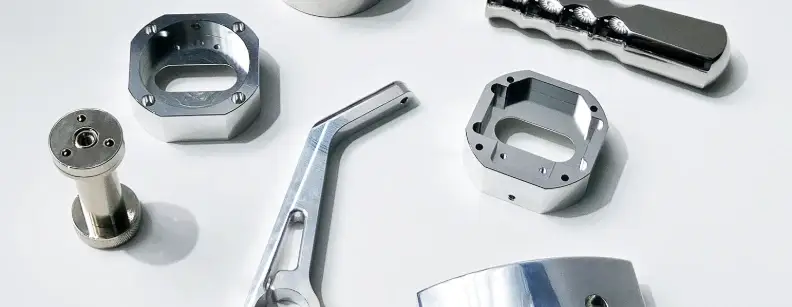
Supported Materials
Suitable for core components such as load-bearing, structural, wear-resistant, and fatigue-resistant parts. Balancing strength and machinability, with tolerances controllable to ±0.005mm. Custom heat treatment and surface treatment available. Widely applicable to scenes such as robot joints, medical devices, automotive transmission parts, semiconductor equipment components, and more.
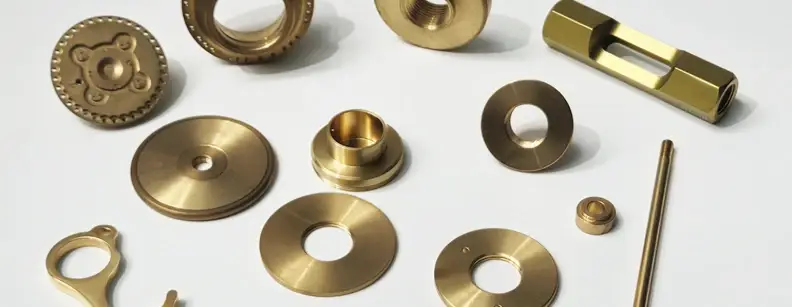
Material Assurance
All materials are RoHS/REACH compliant, with spectral analysis reports and surface treatment test data provided to ensure both quality and compliance standards are met.
Metal Machining Coverage for 90% of High-end Manufacturing Scenarios
Full grade coverage + selection guidance + compliance—so every material is used correctly and delivers real value.
Aluminum
Lightweight with multiple series available to fit demanding applications; national-standard or commercial grades can be selected as needed.
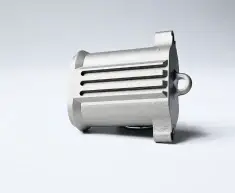
Die Casting Aluminum
Examples: ADC12 / A380
ADC12: Aluminum alloy per Japanese industrial standard; great fluidity, ideal for complex, thin-wall die castings.
A380: Aluminum alloy per American industrial standard; higher strength than ADC12, suitable for die-cast parts with higher load requirements.
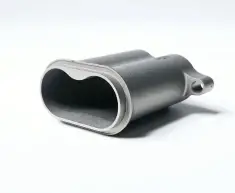
1000 Series
Examples: AL1050 / AL1060 / AL1070
Features: commercially pure aluminum, Al content >99%; excellent electrical and thermal conductivity, relatively low strength.
Applications: simple structural parts, conductive components.
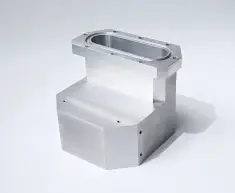
3000 Series
Example: 3003
Features: aluminum-manganese alloy with good anti-corrosion and easy cutting.
Applications: parts used in humid environments such as refrigerators and air conditioners.
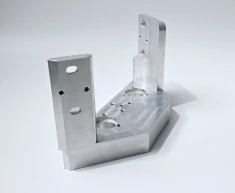
5000 Series
Example: AL5052
Features: magnesium alloyed; low density, good tensile strength, high elongation, excellent bending performance.
Applications: bent parts, sheet metal structures, brackets, visible exterior parts.
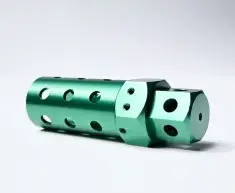
6000 Series
Examples: AL6061 / AL6063 / AL6082
Features: magnesium + silicon alloy; medium strength, good corrosion resistance, excellent weldability—general-purpose structural aluminum.
Applications: appearance and structural parts such as UAV frames, robot structures, automotive & motorcycle components.
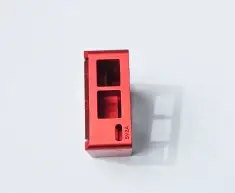
7000 Series
Example: AL7075
Features: zinc-alloyed, very high strength and hardness, commonly used for aerospace-grade structural components.
Applications: UAV propeller shafts, military drivetrain components
(note: weldability is poor and anodized appearance requires tighter process control).
Stainless Steel
Corrosion-resistant & rust-proof, suitable for harsh environments, with magnetic or non-magnetic options as needed.
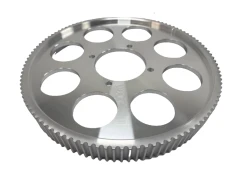
SUS301
Features: martensitic stainless steel, magnetic, with good elasticity.
Applications: springs, clips, snap-fit parts.
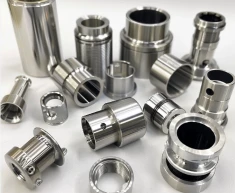
Medium Carbon Steel
Features: austenitic stainless steel, non-magnetic; ~0.15% carbon, easy to machine (surface finish slightly lower than 304/316).
Applications: metal parts requiring high machining efficiency.

SUS304
Features: austenitic stainless steel, non-magnetic, stable machining performance, highly versatile.
Applications: food-grade components and general industrial parts.
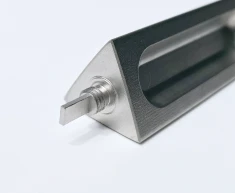
SUS316
Features: austenitic stainless steel with molybdenum, corrosion resistance better than SUS304.
Applications: medical devices, marine environment components.
Carbon Steel / Alloy Steel
High strength + cost-effective, ideal for structural parts—strength level matched to your actual needs.
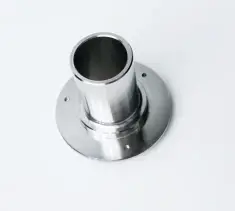
Low Carbon Steel
Features: carbon content 0.06%–0.25%; good ductility and weldability.
Applications: sheet metal parts, simple structural components.
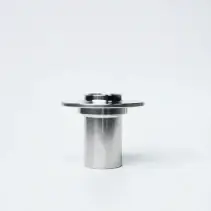
Medium Carbon Steel
Features: carbon content 0.25%–0.60%; higher strength and hardness.
Applications: load-bearing structures, gears, shafts and similar parts.
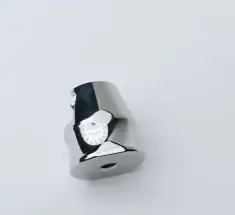
High Carbon Steel
Features: carbon content 0.6%–2.0%; very hard with excellent wear resistance.
Applications: cutting tools, springs and other special components.
Alloy Steel
Features: alloy elements (such as chromium, nickel) are added to significantly improve heat treatment response and mechanical properties.
Applications: high-strength, high-fatigue, high-wear components.
Copper / Brass & Titanium
High conductivity / high specific strength + lightweight, tailored for high-end applications with full compliance support.
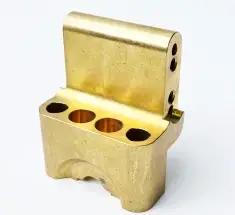
Copper & Brass
Features: excellent electrical and thermal conductivity.
Applications: Often used in combination with electroplating, passivation, and mechanical treatments (such as brushing and polishing) for surface enhancement.
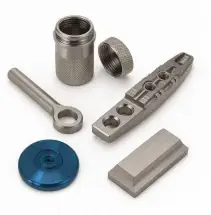
Titanium & Titanium Alloys
Features: very high specific strength, lightweight, excellent corrosion resistance, and biocompatibility.
Applications: high-end UAV parts, structural components in medical (subject to regulations) and military sectors, and other demanding fields.
How do you choose the most suitable material?
17+ years of Sinorise experience—helping you choose right, not just expensive.
Basic Principle of Material Selection:
Start from working conditions, not from what’s in stock.
We look at:
Application conditions: temperature range, load type, environment
(corrosive media, humidity, indoor/outdoor, coastal, etc.), safety and industry regulations.
Structure & precision: machining process, tolerance requirements, manufacturability, and whether subsequent assembly, sealing or motion fit is involved.
Cost & supply: under the premise of meeting performance targets, we use DFM + material optimization to help you achieve 10–25% cost reduction.
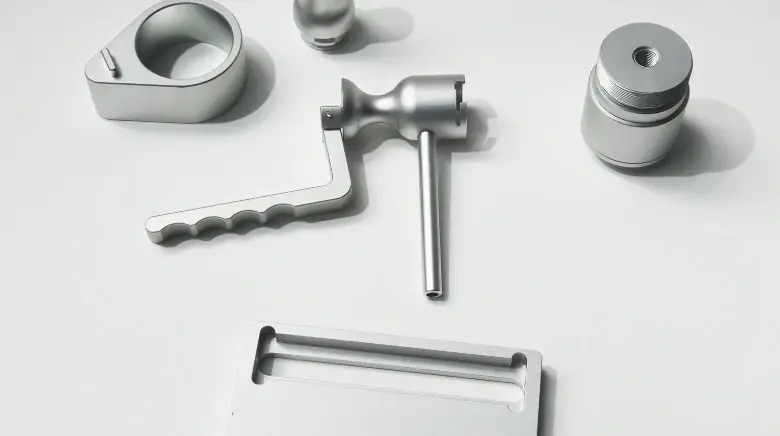
All of this is backed by 10+ year senior engineers providing 1:1 guidance.
Material Selection FAQs
High-frequency questions, answered in one place.
A: National-standard materials have tighter control on dimensional tolerances, mechanical properties and surface treatment performance, and are typically 15–20% more expensive than commercial grades. In general:For appearance parts and precision components, we recommend national-standard materials. For internal, non-visible or rough-machined parts, commercial-grade is usually more economical. We’ll recommend the most cost-effective option based on your actual application.
A: Yes. You can exact grades or brands, and we can also propose equivalent or better alternatives to balance performance and cost.
A:Yes. As standard, we can provide mill certificates. If third-party testing is required (composition, mechanical properties, etc.), we can arrange it and supply official reports according to project needs
A:Absolutely. Just tell us the application environment, basic structure, and your expectations for strength / weight / appearance, and our engineers will recommend materials and processes and explain the reasoning.
A:We have stable supply channels. For special materials with longer lead times, we will clearly communicate the procurement lead time at the quotation stage and suggest alternative options where possible.
A:We minimize this risk via upfront DFM and working condition evaluation. If issues still arise later, we’ll help reassess the material combination and support you with structural, process, and cost optimization.
A: Yes. We can select materials compliant with RoHS, REACH and other standards as required, and manufacture under the ISO14001 environmental management system, providing relevant documentation.
Not sure which material to choose? Not sure what’s most cost-effective?
Leave it to us—let our engineers use real experience and data to give you the answer.
Get a 1-on-1 material selection and cost optimization plan.